


Have you ever noticed how your mind instantly slows down when you step into a park, sit near trees, or walk barefoot on grass? That deep sense of ease isn’t random, it’s rooted in the powerful connection between nature and mental health. From reducing stress to calming anxiety, nature has a scientifically backed and emotionally profound impact on your mind and body.
In today’s fast-paced, screen-heavy world, feeling overwhelmed, restless, or mentally drained has become common. But the moment you step outside into greenery, something shifts. Let’s explore the psychology of nature and understand why you feel calm, grounded, and more like yourself when you’re surrounded by it.
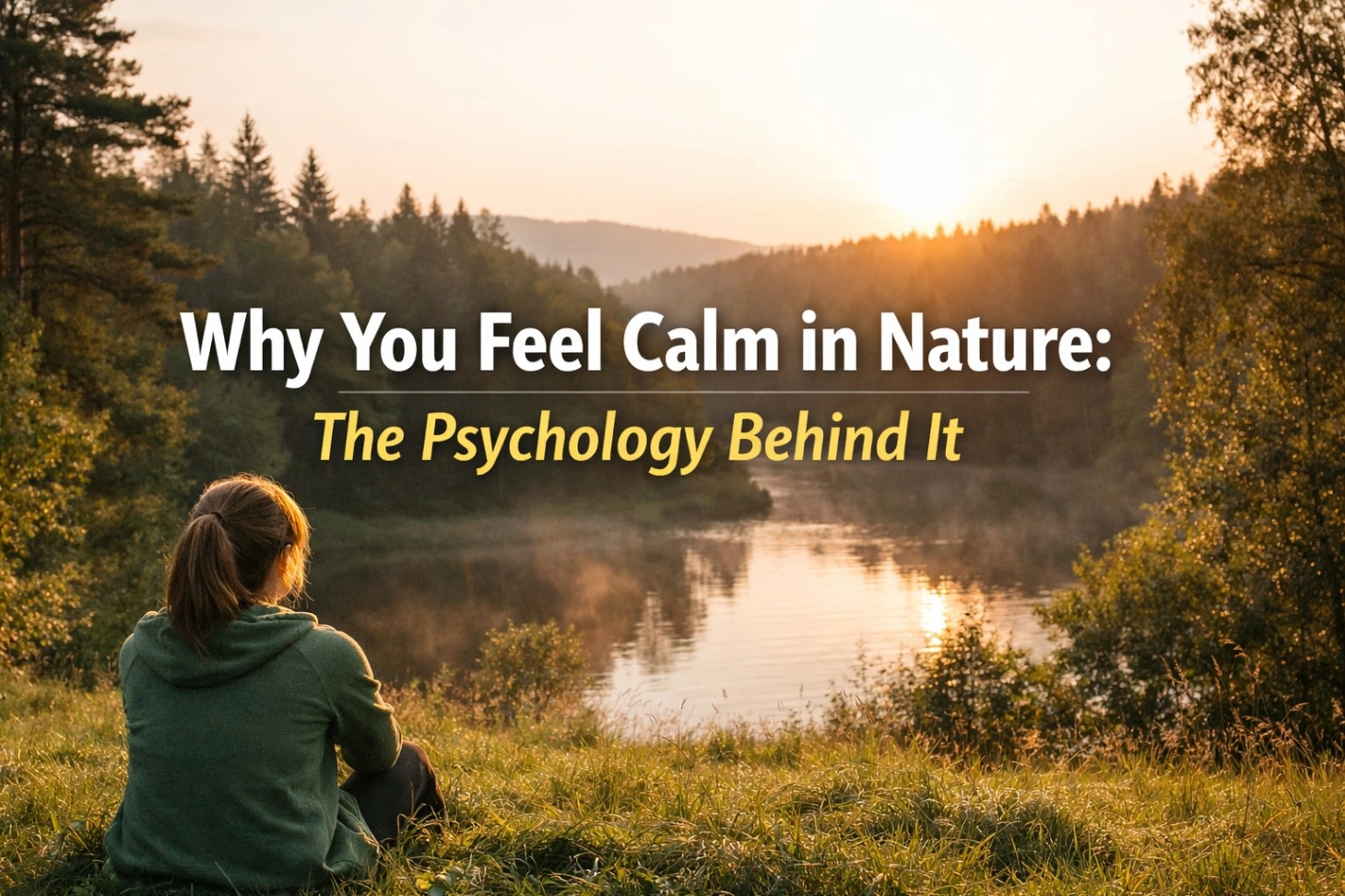
The Science Behind Why Nature Is Calming
At a psychological level, your brain responds differently to natural environments compared to urban settings. Studies in environmental psychology show that exposure to nature reduces activity in the part of the brain linked to stress and overthinking.
When you’re in nature:
Your cortisol levels (stress hormone) drop
Your heart rate slows down
Your nervous system shifts from “fight or flight” to “rest and relax”
This is why how nature reduces stress is not just emotional, it’s biological.
Natural elements like trees, water, and open skies create a sense of safety and softness. Your brain interprets these surroundings as non-threatening, allowing it to relax deeply.
Personal Session
Feeling stuck, overwhelmed, or disconnected? Book a personal session with Sakshi Shree and receive guidance tailored to your life, emotions, and spiritual growth. Sometimes, one conversation can change everything.
Book NowNature and the Brain: What Actually Happens?
The effects of nature on the brain are powerful and immediate.
When you spend time outdoors:
The prefrontal cortex (responsible for overthinking) becomes less active
Your mood-regulating chemicals like serotonin and dopamine increase
Mental fatigue reduces significantly
This explains why spending time in nature benefits your focus, creativity, and emotional stability.
In simple terms the nature quiets the noise inside your head.
Why Being in Nature Feels So Good
There’s a reason you feel peaceful when you’re surrounded by greenery. The answer lies in something called Attention Restoration Theory.
Your brain gets exhausted from constant stimulation like notifications, screens, conversations. Nature, on the other hand, offers “soft fascination.” This means it gently holds your attention without overwhelming you.
Think about:
Watching leaves move in the wind
Listening to birds chirping
Feeling the breeze on your skin
These small experiences allow your mind to rest and reset. That’s the core of nature therapy.
Nature and Anxiety Relief: A Natural Solution
If you’ve ever felt anxious and then gone for a walk outside, you’ve likely noticed a shift.
That’s because nature and anxiety relief are deeply connected.
Nature:
Grounds your thoughts in the present moment
Reduces overthinking
Creates emotional space
When your mind is racing, being outdoors helps you slow down naturally, without forcing it. That’s why many therapists now recommend outdoor activities as part of healing.
Why Walking in Nature Improves Mental Health
Walking in nature is one of the simplest yet most effective ways to calm your mind.
It combines:
Movement (which releases tension)
Fresh air (which energizes your body)
Natural surroundings (which soothe your mind)
This is why why walking in nature improves mental health is such a commonly searched question.
Even a 10–15 minute walk in a green space can:
Improve mood
Reduce anxiety
Increase clarity
It’s not about doing something complex, it’s about reconnecting with something natural.
Nature and Emotional Well-Being
Your emotional state is deeply influenced by your environment. Constant exposure to noise, screens, and artificial settings can lead to emotional exhaustion.
But nature works differently.
The healing power of nature helps:
Release emotional heaviness
Create a sense of inner peace
Restore balance
This is why many people say they feel “lighter” after spending time outdoors.
Nature doesn’t force healing, it allows it.
Does Nature Help With Overthinking?
Yes, and this is one of its most underrated benefits.
If you’re someone who constantly overthinks, nature can help interrupt that cycle.
Here’s how:
It shifts your focus outward
It reduces mental clutter
It brings you back to the present
The next time your thoughts feel overwhelming, try stepping outside. You’ll notice how quickly your mind starts to settle.
The Psychology of Feeling Peaceful in Nature
So, why do you feel calm in nature?
Because it:
Matches your natural rhythm
Reduces sensory overload
Creates a safe, open environment
Humans evolved in natural surroundings, not in crowded cities or digital spaces. Your mind and body are designed to feel at ease in nature.
That’s why even a short time outdoors can feel like a reset.
How to Use Nature for Healing (Even in Cities)
You don’t need mountains or forests to experience nature and mindfulness.
Simple ways to bring nature into your daily life:
Take a walk in a nearby park
Sit under a tree for 10 minutes
Keep plants in your room
Watch the sunrise or sunset
Spend time in natural light
Even small moments of connection can make a big difference.
Natural Ways to Reduce Anxiety Through Nature
If you’re looking for natural stress relief methods, here are some simple practices:
Grounding (Earthing): Walk barefoot on grass
Deep breathing outdoors: Combine fresh air with slow breaths
Nature observation: Sit quietly and observe your surroundings
Journaling in nature: Reflect while being outdoors
These practices help you feel calm without forcing your mind.
Mental Peace Through Nature
In a world that constantly demands your attention, nature gives you permission to pause.
It reminds you:
You don’t have to rush
You don’t have to think all the time
You can just exist
That’s the true essence of mental peace through nature.
The next time you feel stressed, anxious, or emotionally drained, don’t overcomplicate the solution.
Step outside.
Nature has a quiet, powerful way of healing you is without effort, without pressure, and without noise.
Sometimes, the calm you’re searching for isn’t inside your phone or your thoughts.
It’s just outside your door.
Design Your Destiny
If you’re ready to go deeper into self-awareness, emotional healing, and inner transformation, explore Design Your Destiny—a powerful journey to reconnect with yourself and create a life aligned with peace and purpose.
Start Your Journey Today!