

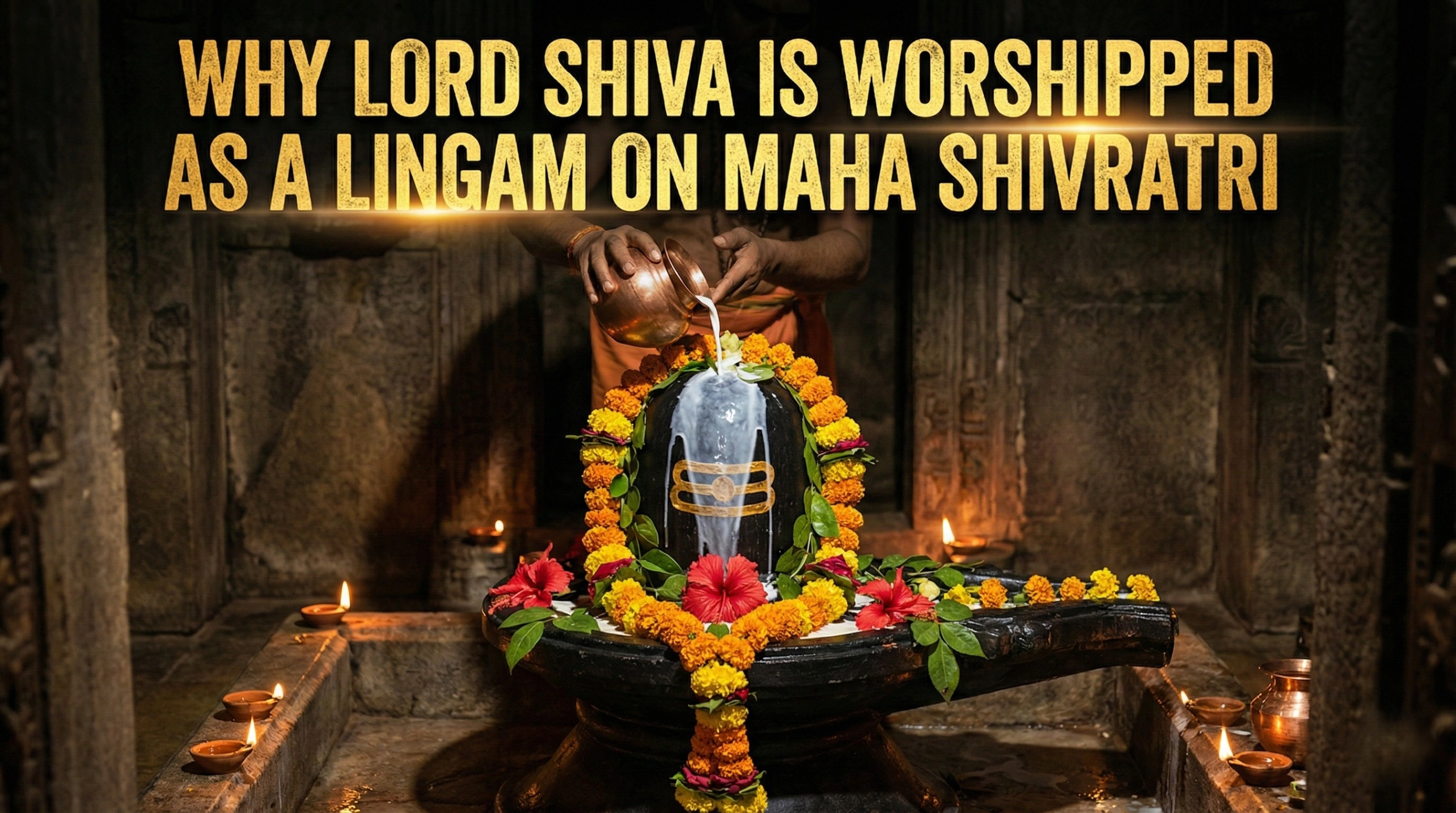
If you’ve ever stood before a Shiva temple on Maha Shivratri and wondered why Lord Shiva is worshipped as Lingam, you’re not alone. This question arises in the minds of devotees, spiritual seekers, and even curious observers every year. Unlike most Hindu deities worshipped in human form, Shiva is revered primarily through the Shiva Lingam— a form that appears simple, abstract, and deeply symbolic.
On Maha Shivratri, when millions of devotees pour milk, water, and sacred offerings over the Lingam, the act carries layers of meaning far beyond ritual. To understand why Shiva is worshipped in Lingam form, we must move beyond surface interpretations and enter the realms of symbolism, scripture, energy science, and spiritual psychology.
This is not merely about form; it is about consciousness itself.
Understanding the Shiva Lingam: Beyond Shape and Symbol
The Shiva Lingam meaning has often been misunderstood, especially when viewed through a literal or limited lens. In Sanskrit, the word Lingam means “mark,” “symbol,” or “sign” that which points toward something beyond form.
The Lingam does not represent Shiva’s body. It represents Shiva’s formless nature.
Shiva, unlike other deities, is described as Nirguna (without attributes) and Nirakara (without form). Worshipping him in a Lingam form allows devotees to connect with the infinite, timeless, unmanifest aspect of existence something no human image can fully capture.
This is why Lord Shiva Lingam worship meaning is deeply philosophical rather than ornamental.
Why Shiva Is Not Worshipped in Human Form
A common question is: why Shiva is not worshipped in human form like Vishnu or Devi?
The answer lies in Shiva’s role in the cosmic order. Shiva is not a personality; he is pure consciousness. He is not acting within creation; he is the silent witness of it.
Human forms naturally limit perception. They give shape, emotion, identity. Shiva transcends identity itself. The Lingam, with no face, limbs, or expression, invites the devotee to meditate on being rather than becoming.
This is why the Lingam becomes a perfect spiritual tool— minimal, silent, and infinite.
The Lingodbhava Story: Origin of Shiva Lingam
One of the most important mythological explanations comes from the Lingodbhava story, found in several Puranas.
According to the story, Brahma and Vishnu once argued about who was supreme. At that moment, an endless pillar of light— the Shiva Lingam appeared before them. Neither could find its beginning or end. Shiva then emerged from the Lingam, revealing that the absolute truth is beyond hierarchy, ego, and form.
This story explains the Shiva Lingam origin story beautifully:
The Lingam represents that which has no beginning and no end.
It is not an idol. It is a cosmic axis.
Shiva Lingam and Cosmic Energy
From a spiritual science perspective, the Shiva Lingam energy significance is profound.
The oval shape of the Lingam is not accidental. It is considered a powerfully stable geometric form, capable of holding and radiating energy evenly in all directions. This is why many ancient temples placed Lingams at energy centers where spiritual vibrations were believed to be strongest.
This also answers questions like:
why Shiva Lingam is oval shaped
Shiva Lingam and cosmic energy
Shiva Lingam energy center
The Lingam is said to balance masculine (Shiva) and feminine (Shakti) energies; stillness and movement, awareness and creation.
Shiva Lingam Masculine and Feminine Energy
Contrary to popular misconceptions, the Shiva Lingam does not represent only masculine energy. It is always worshipped with the Yoni base, symbolizing Shakti.
Together, they represent creation through balance.
This union explains:
Shiva Lingam masculine feminine energy
why Shiva Lingam represents creation
why Lingam worship is central to Hindu cosmology
Creation does not happen through force; it happens through harmony.
Why Milk Is Offered on the Shiva Lingam
Many wonder why Lingam is offered milk, especially on Maha Shivratri.
Symbolically, milk represents purity, nourishment, and calmness qualities associated with the mind in meditation. Offering milk is an act of cooling the intense energy of Shiva, who is often depicted as fiery, ascetic, and intense.
Spiritually, the act of abhishekam (ritual bathing) represents washing away ego, ignorance, and restlessness.
On Maha Shivratri, this act becomes even more powerful.
Maha Shivratri Significance in Lingam Worship
Maha Shivratri significance lies in its timing and symbolism. It is believed to be the night when Shiva entered the Lingam form or performed the cosmic dance of dissolution and renewal.
This is why:
Maha Shivratri Shiva Lingam
why Shiva Lingam is worshipped on Maha Shivratri
Maha Shivratri rituals Lingam
Devotees stay awake through the night, symbolizing awareness over ignorance, and worship the Lingam to align with Shiva’s still, meditative consciousness.
Shiva Lingam According to Puranas and Scriptures
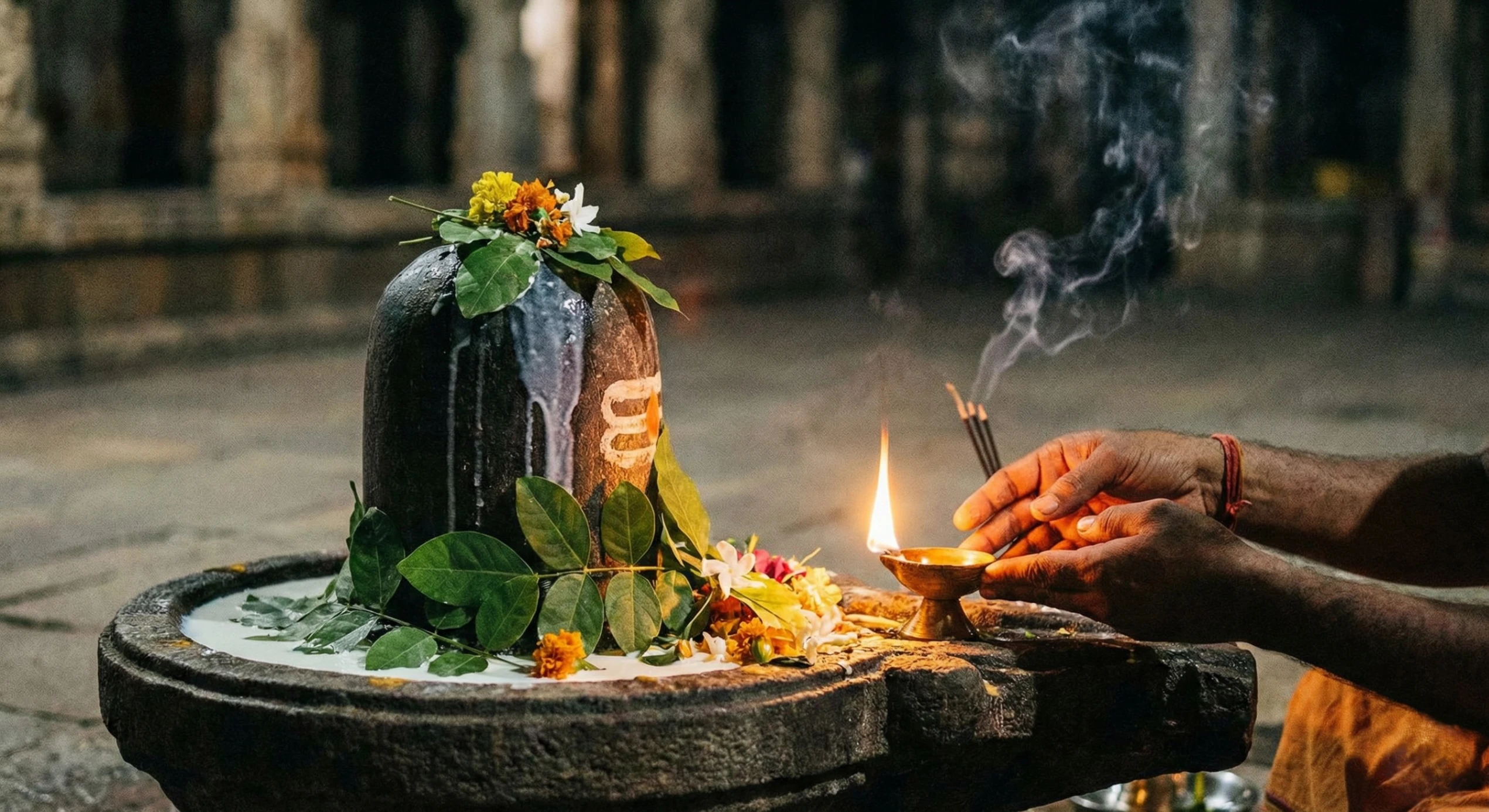
The Shiva Lingam according to Puranas is described as the highest form of worship for Shiva. Texts emphasize that devotion to the Lingam leads the mind inward rather than outward.
The Shiva Lingam in Hindu scriptures is associated with liberation (moksha), not material gain. It is worship without expectation; pure surrender.
This is why many saints and yogis preferred Lingam worship over elaborate rituals.
Shiva Lingam and Meditation
The simplicity of the Lingam makes it a powerful focus for meditation. Its form allows the mind to settle without distraction.
This explains:
Shiva Lingam and meditation
Shiva consciousness symbolism
Shiva Lingam spiritual science
To meditate on the Lingam is to meditate on existence itself; silent, steady, and infinite.
Is Shiva Lingam a Symbol or an Idol?
A frequently asked question is: is Shiva Lingam a symbol or idol?
The answer is clear; it is a symbolic representation, not an idol. It does not depict Shiva; it points toward Shiva.
That distinction is crucial.
Why Do Hindus Worship Shiva Lingam?
Ultimately, why do Hindus worship Shiva Lingam comes down to one truth:
The Lingam allows the devotee to connect with the formless reality behind all forms.
It invites silence, humility, and inner transformation qualities at the heart of true spirituality.
The significance of Shiva Lingam on Maha Shivratri lies not in ritual alone, but in what the ritual awakens within us. On this sacred night, worshipping the Lingam becomes an invitation to dissolve ego, embrace stillness, and remember that the divine is not outside us, but within.
Understanding why Lord Shiva is worshipped as a Lingam is just the beginning. Maha Shivratri is a powerful night of transformation, devotion, and inner awakening and knowing the exact date, spiritual significance, correct puja vidhi, and fasting rules can help you observe it with clarity and intention.
Read next: Maha Shivaratri 2026: Date, Significance, Puja Vidhi & Fasting Rules
Discover how to observe this sacred night the right way mindfully, devotionally, and in alignment with ancient wisdom.