

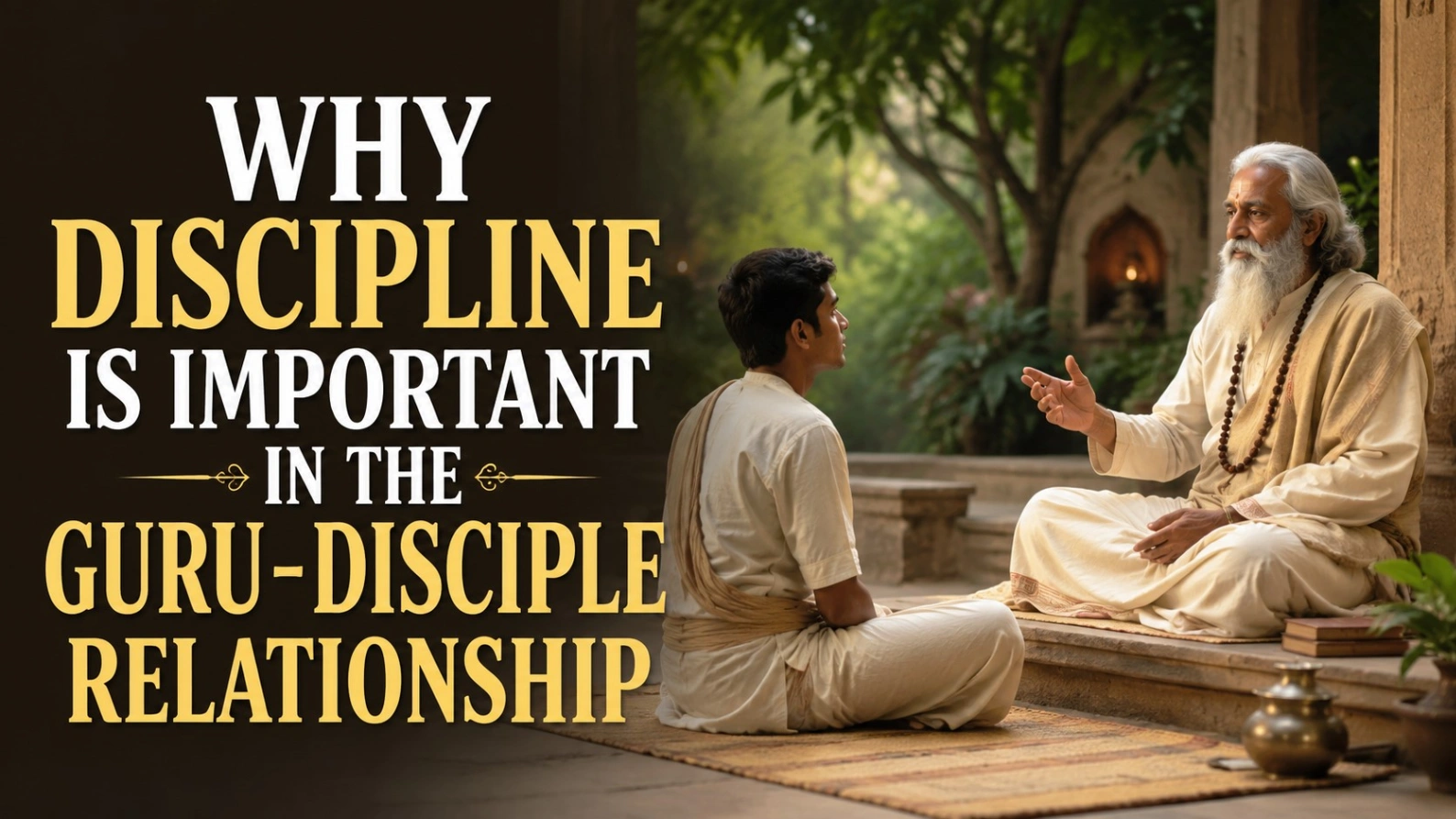
The Guru-disciple relationship is one of the most sacred relationships on the spiritual path. It is not built only on admiration, emotion or intellectual learning. Its true foundation lies in trust, discipline, sincerity and a willingness to grow.
A spiritual Guru does not merely provide information. The Guru helps the disciple recognise limiting habits, overcome the ego and move toward greater awareness. However, even the most profound Guru teachings can create little change if the disciple is unwilling to practise them consistently.
This is why understanding the importance of discipline in the Guru-disciple relationship is essential. Discipline converts spiritual knowledge into lived experience. It helps the disciple remain committed during periods of inspiration as well as during moments of confusion, resistance or doubt.
The Guru may show the path, but the disciple must walk it with patience, awareness and dedication.
Understanding the Guru-Disciple Relationship
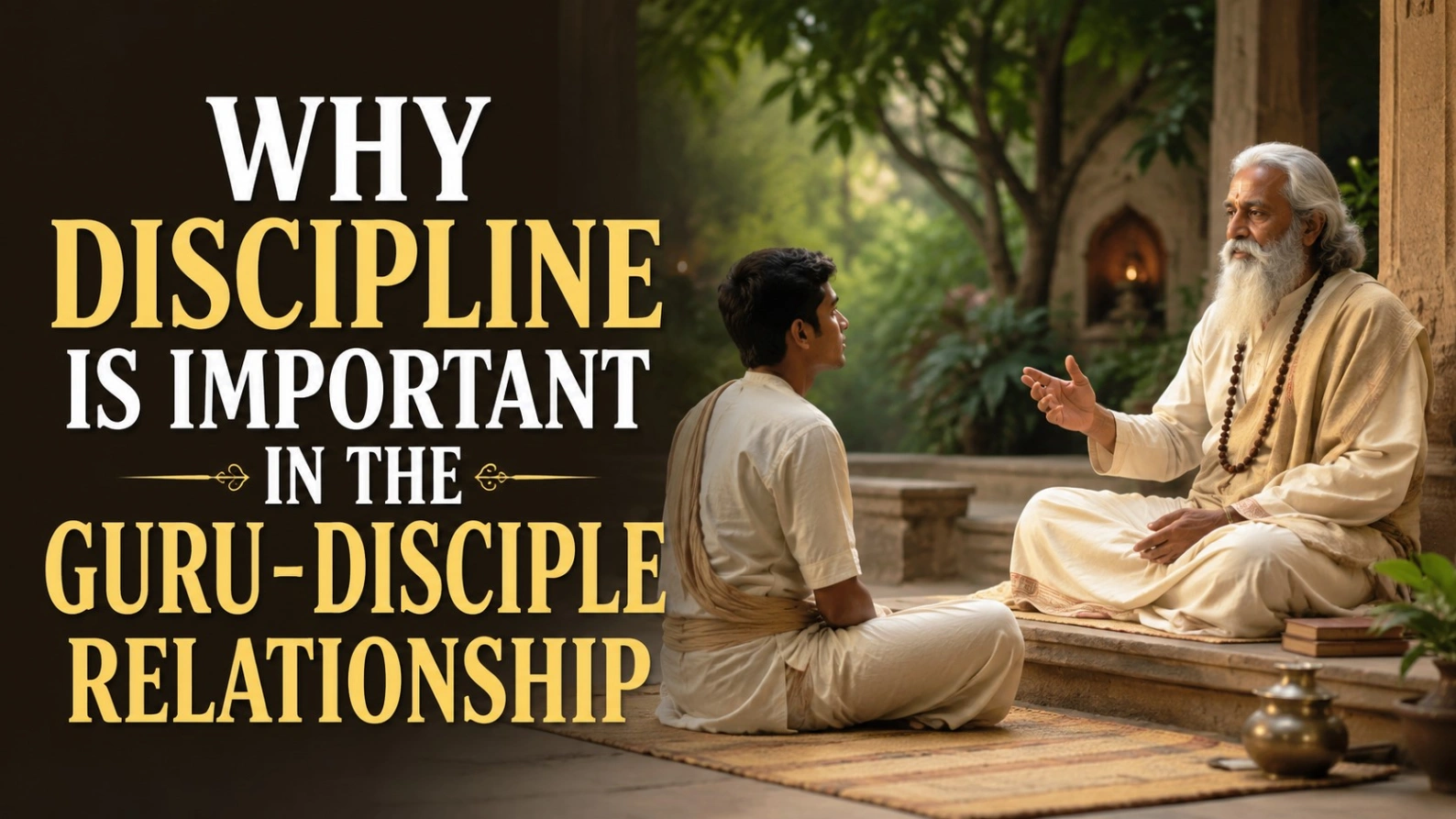
The Guru-disciple relationship is much deeper than the ordinary relationship between a teacher and a student. A teacher generally helps a person develop knowledge or skills in a particular subject. A spiritual Guru, however, guides the disciple toward inner awakening, self-understanding and freedom from ignorance.
The word “Guru” is traditionally associated with the one who removes darkness and leads a seeker toward light. This darkness may appear as fear, attachment, confusion, ego, anger or a lack of clarity about life.
The disciple is not simply a passive follower. A sincere disciple observes, questions, learns and applies the Guru’s guidance in daily life. The relationship becomes meaningful when spiritual wisdom is transformed into conscious action.
This is also why the Guru-disciple bond requires responsibility from both sides. The Guru offers spiritual guidance, while the disciple develops receptivity through humility, discipline and sincere practice.
Design Your Destiny
Are limiting beliefs, emotional patterns and inner confusion preventing you from living with clarity and purpose? Design Your Destiny offers practical spiritual guidance to help you understand your mind, develop self-discipline and move toward a more conscious life.
Start Your Journey Today!Why Spiritual Discipline Is Necessary
Spiritual progress rarely happens through occasional effort. A person may feel peaceful after attending a spiritual discourse, practising meditation or spending time in the presence of a Guru. However, maintaining that inner peace in ordinary life requires spiritual discipline.
Discipline creates continuity. It encourages a disciple to practise meditation even when the mind is restless, observe thoughts when emotions are intense and remember the Guru’s teachings during difficult situations.
Without discipline, spiritual practices may depend entirely on mood. The disciple may practise enthusiastically for a few days and then abandon the practice when immediate results do not appear.
True spiritual growth requires patience. Discipline helps the seeker continue without constantly demanding visible rewards.
It teaches the disciple to value the process of transformation rather than chase temporary spiritual experiences.
Discipline Turns Guru Teachings into Daily Practice
Listening to spiritual teachings can inspire the mind, but inspiration alone does not transform life. Transformation begins when the teachings are repeatedly applied.
A Guru may teach the disciple to remain aware, speak truthfully, observe the ego, release attachment or respond calmly during conflict. These principles may appear simple while listening to them, but practising them in real situations requires self-discipline.
For example, it is easy to understand the value of patience. It is much harder to remain patient when someone behaves unfairly. Similarly, it is easy to speak about surrender, but difficult to release control when life does not unfold according to personal expectations.
Discipline helps bridge this gap between understanding and experience.
Through regular practice, the disciple gradually begins to embody the Guru’s wisdom. The teaching no longer remains a collection of beautiful words. It becomes a way of living.
How Discipline Strengthens Trust
Trust is central to the Guru-disciple relationship, but genuine trust is not blind dependence. It grows through experience, observation and inner understanding.
A disciple may not immediately understand every instruction offered by the Guru. Some teachings may challenge deeply rooted habits or personal beliefs. Discipline gives the disciple enough patience to practise the guidance before rejecting it because it feels uncomfortable.
This does not mean that a disciple should stop thinking or asking sincere questions. A healthy spiritual relationship allows thoughtful inquiry. However, questions should arise from a desire to understand, not from a need to defend the ego.
As the disciple practises consistently and experiences inner changes, trust becomes stronger. The disciple recognises that the Guru’s guidance is directed toward freedom rather than control.
The Role of Obedience in Spiritual Learning
The importance of obedience in the Guru-disciple relationship is often misunderstood. Spiritual obedience should not mean fear, helplessness or the loss of personal intelligence.
In a genuine spiritual context, obedience means becoming willing to follow a disciplined process. It means respecting the path enough to practise it sincerely.
Consider a person learning meditation. The Guru may recommend sitting at a fixed time, maintaining awareness of the breath and observing thoughts without judgment. If the disciple repeatedly changes the method, avoids regular practice or follows only the convenient parts, meaningful progress may become difficult.
Obedience provides structure. It prevents the restless mind from continuously searching for easier methods or more exciting experiences.
At the same time, spiritual guidance should encourage awareness, maturity and responsibility. A true Guru helps the disciple become inwardly free rather than emotionally dependent.

How a Guru Disciplines a Disciple
A Guru may discipline a disciple by correcting behaviour, questioning assumptions or encouraging greater consistency. Such discipline is not intended to humiliate the disciple. Its purpose is to reveal unconscious patterns that prevent spiritual progress.
Sometimes the Guru’s words may appear direct because the ego prefers appreciation over correction. A disciple may happily accept praise but resist any teaching that exposes impatience, pride or attachment.
A sincere Guru does not always tell the disciple what the disciple wants to hear. The Guru offers what may support the disciple’s growth.
The disciple’s responsibility is to observe the reaction that arises. Instead of immediately becoming defensive, the disciple can ask, “Why has this affected me so deeply? Is there something here that I need to understand?”
This self-observation is itself a form of spiritual discipline.
Discipline Helps the Disciple Overcome Ego
The ego often seeks comfort, recognition and control. It wants spiritual growth without inconvenience and wisdom without self-examination.
Discipline challenges these tendencies.
When a disciple follows a regular spiritual practice, the mind may produce many excuses. It may say there is not enough time, the practice is not working or another path would provide quicker results.
By observing these excuses without automatically following them, the disciple begins to understand the mind more clearly.
The role of Guru in overcoming ego is not to destroy the disciple’s individuality. It is to help the disciple recognise false identification. The Guru encourages the seeker to look beyond labels, opinions and emotional reactions.
Discipline supports this process by creating a stable space for self-observation. Slowly, the disciple becomes less controlled by immediate impulses and more guided by awareness.
Surrender and Discipline Are Connected
The importance of surrender to a spiritual Guru is another subject that can easily be misunderstood. Surrender does not mean abandoning common sense or giving another person complete control over life.
Spiritual surrender means releasing resistance to truth. It means becoming willing to let go of habits, beliefs and attachments that create suffering.
Discipline makes surrender practical.
A disciple may claim to have surrendered, but true surrender becomes visible in daily actions. Is the disciple willing to practise consistently? Can the disciple accept correction? Can the disciple remain committed when the path becomes challenging?
Surrender without discipline may remain emotional. Discipline gives surrender depth, stability and direction.

Qualities of a Good Spiritual Disciple
The qualities of a good spiritual disciple are not measured by external appearance or the number of spiritual activities performed. They are reflected in sincerity, humility and willingness to transform.
A true disciple develops patience because inner change takes time. The disciple practises self-observation instead of blaming others for every difficulty. The disciple respects the Guru’s wisdom without becoming intellectually inactive.
Other important qualities include consistency, gratitude, honesty and openness to correction.
A good disciple is also willing to take responsibility. Instead of expecting the Guru to remove every challenge, the disciple uses the Guru’s guidance to meet life with greater awareness.
This responsibility is important because a Guru can point toward the truth, but the disciple must personally experience it.
Why Discipline Is Important for Spiritual Growth
Spiritual growth does not always feel comfortable. It often involves recognising painful patterns, releasing old identities and becoming aware of how the mind creates suffering.
During such moments, discipline provides stability.
It helps the disciple avoid making decisions based only on temporary emotions. A disciplined seeker learns to pause, observe and respond consciously.
Over time, this practice produces greater clarity. Emotional reactions become easier to recognise. The disciple becomes more patient in relationships and less disturbed by situations that once created intense stress.
This is how discipline helps in spiritual awakening. It prepares the mind to become quieter, more receptive and more aware.
Awakening is not necessarily a dramatic event. It may begin through simple but consistent changes in perception, behaviour and understanding.
The Importance of a Guru in Life
The importance of Guru in life becomes especially clear during periods of confusion. A person may possess knowledge, success and social recognition yet still feel internally lost.
A spiritual Guru helps the seeker look beyond temporary achievements and examine the deeper purpose of life. The Guru may help the disciple understand the causes of suffering, recognise unconscious attachments and develop a more meaningful relationship with the self.
The role of Guru in life is not to make every decision for the disciple. It is to awaken the intelligence through which the disciple can make clearer decisions.
Through spiritual guidance, the disciple gradually learns to distinguish between the voice of awareness and the demands of fear or ego.
This is one of the greatest gifts of the Guru-disciple tradition.

Guru Purnima and the Value of Discipline
Guru Purnima is traditionally observed as a time to honour spiritual Gurus, teachers and sources of wisdom. The deeper Guru Purnima significance extends beyond offering greetings or participating in ceremonies.
It provides an opportunity for self-reflection.
A disciple can ask whether the Guru’s teachings are being applied sincerely. Has meditation become regular? Is awareness being practised during difficult moments? Has gratitude become part of daily life?
As people prepare spiritual content and observances around Guru Purnima 2026, it is valuable to remember that the greatest offering to a Guru is not merely a verbal expression of respect. It is the honest practice of the wisdom received.
The true Guru Purnima meaning lies in moving from darkness toward understanding. Discipline supports this movement every day, not only during a festival.
Discipline and Self-Realization
The path of self-realization requires more than collecting spiritual information. It involves directly understanding the nature of the mind, ego and consciousness.
A Guru can provide methods, teachings and guidance, but self-realization cannot be borrowed from another person. The disciple must develop the awareness to recognise truth directly.
Discipline prepares the seeker for this recognition. Regular meditation, self-inquiry and conscious living help the mind become less distracted.
As awareness deepens, the disciple may begin to understand that peace is not something that must always be obtained from the outside. It is discovered by becoming less identified with restless thoughts and emotional reactions.
The Guru’s blessings support the journey, but the disciple’s commitment allows those blessings to be received and expressed through life.
Discipline Is Not Punishment
Many people associate discipline with punishment, pressure or rigid control. Spiritual discipline has a different purpose.
It is an act of self-respect.
When a disciple chooses regular meditation, mindful speech or conscious action, the disciple is not restricting life. The disciple is becoming free from unconscious habits.
True discipline should gradually create inner balance, not fear. It should make the disciple more aware, compassionate and responsible.
If a practice creates constant guilt or emotional dependence, it may need to be examined carefully. Authentic spiritual discipline encourages freedom, clarity and maturity.
The Guru helps the disciple discover this balance between sincere effort and inner ease.

How to Develop Discipline on the Spiritual Path
A disciple can begin by choosing a few meaningful practices instead of attempting too many activities at once. A short meditation performed regularly is often more valuable than a long practice performed occasionally.
Setting a consistent time for meditation, reading the Guru’s teachings and reflecting on daily actions can help build stability.
The disciple can also observe one recurring habit, such as anger, impatience or overthinking. Rather than judging the habit, the disciple can study how it arises and how it influences behaviour.
Regular reflection is equally important. At the end of the day, the disciple may ask, “Where was I aware today? Where did I react unconsciously? How can I respond differently tomorrow?”
These simple practices gradually strengthen self-discipline and make spiritual teachings part of everyday life.
The Guru-disciple relationship becomes powerful when wisdom is supported by disciplined practice. The Guru provides direction, but the disciple’s sincerity determines how deeply that direction is followed.
Discipline strengthens trust, develops patience and helps the disciple move beyond ego-driven reactions. It transforms Guru teachings into daily experience and gives practical meaning to surrender.
A disciplined disciple does not become rigid or fearful. Instead, the disciple becomes more conscious, responsible and inwardly free.
The greatest respect a disciple can offer a Guru is not only praise or devotion. It is the willingness to live according to the truth that has been revealed.
Through consistent practice, the sacred Guru-disciple bond becomes a path toward spiritual growth, inner clarity and self-realization.
Personal Session
Every spiritual journey is unique. If you are experiencing confusion, emotional challenges, relationship difficulties or uncertainty about your life’s direction, a personal session can offer focused guidance based on your individual needs.
Book Now