

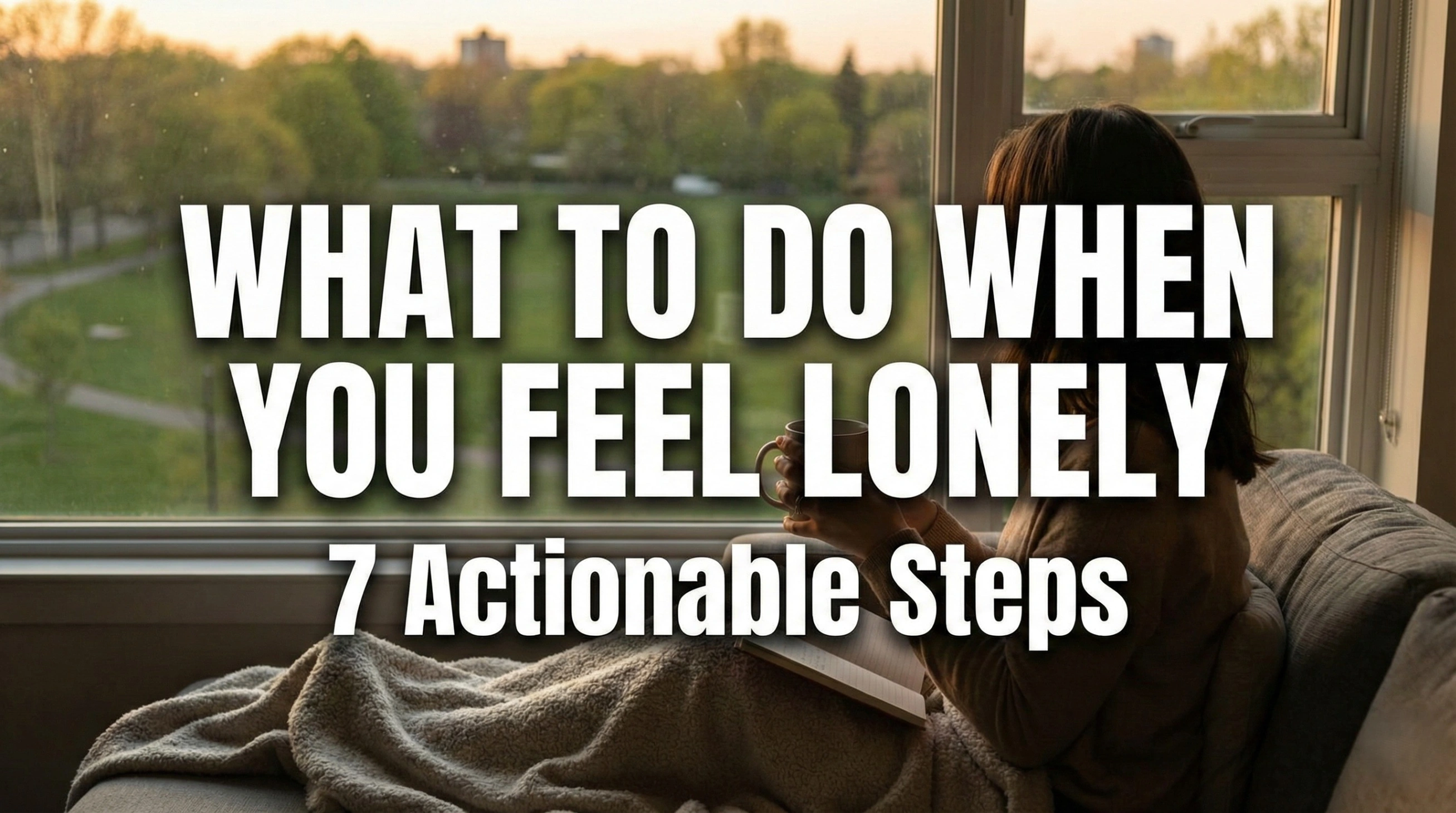
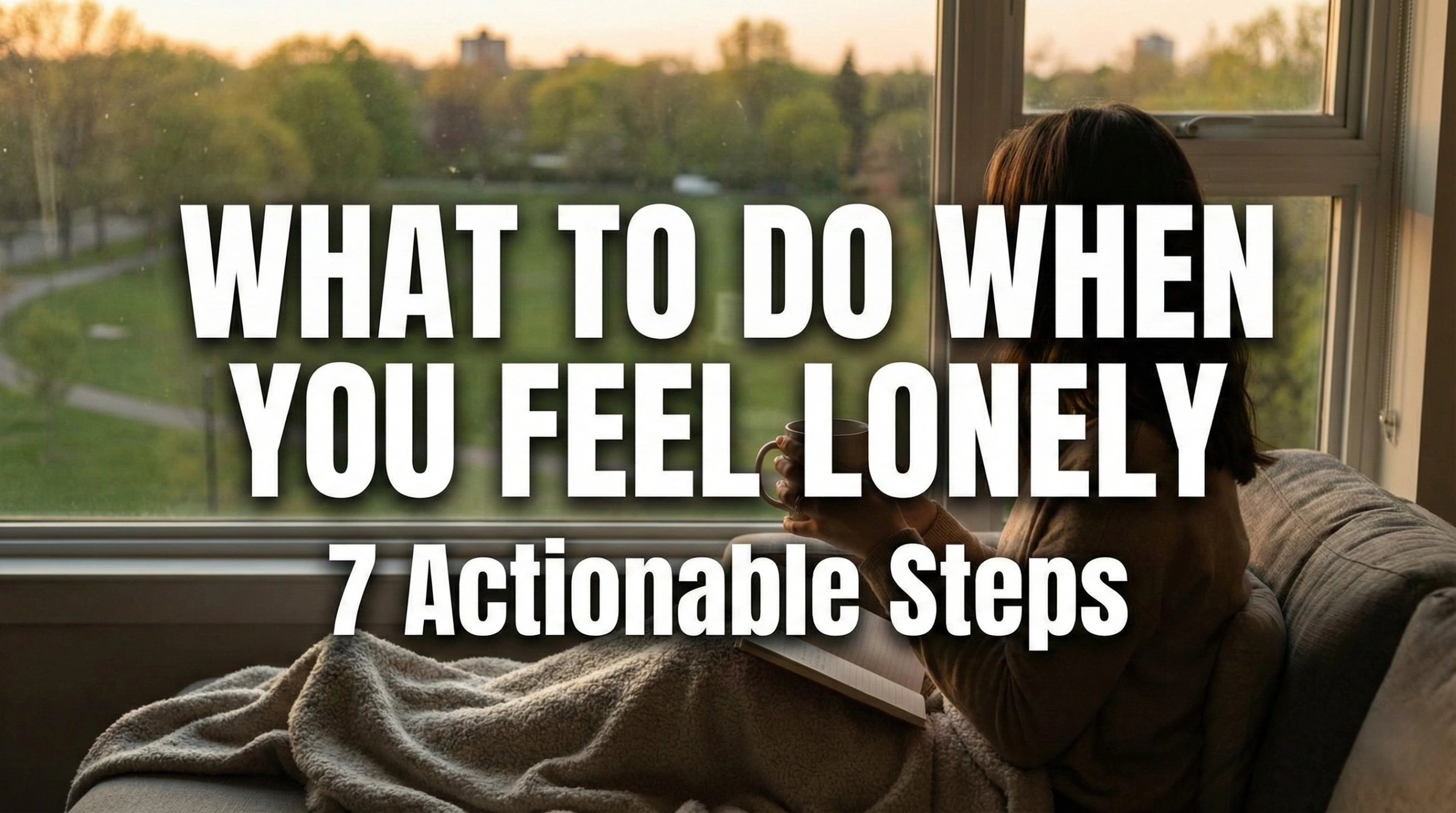
It hits you on a quiet Tuesday night, or perhaps in the middle of a crowded room. That sinking, hollow feeling in your chest that whispers, "You are the only one feeling this way."
Here is the truth: You aren't. Loneliness is one of the most universal human experiences, yet it is the one we talk about the least. It’s a signal, much like hunger or thirst, telling us that a fundamental human need connection isn't being met.
If you are wondering what to do when you feel lonely, it can be paralyzing to know where to start. The silence can feel loud, and the effort to reach out can feel heavy. But moving through this feeling doesn't require a massive life overhaul. Often, small, intentional shifts in how you spend your day can bridge the gap between isolation and connection.
In this guide, we are going to walk through 7 actionable, realistic steps you can take right now to navigate these feelings and find your way back to yourself and others.
1. Reach Out to a Trusted Friend or Family Member
Let’s start with the most obvious, yet often the hardest step. When we feel lonely, our instinct is often to retreat further. We convince ourselves that we are a burden, or that if people wanted to talk to us, they would have called already. This is the "loneliness lie."
One of the most effective strategies to improve your mood is simply breaking the silence. You don’t need to have a profound, heavy conversation about your mental state. In fact, keeping it light can sometimes be more helpful.
How to do it:
Send a low-stakes text: "Hey, I saw this meme and thought of you," or "Thinking of you, how has your week been?"
The 10-minute rule: Call a family member or friend and say, "I only have 10 minutes, but I just wanted to hear your voice." This removes the pressure of a long conversation.
Reaching out to a trusted friend or family member for a quick chat reminds you that your network exists, even if you haven't seen them in a while.

2. Limit Your Social Media Usage
It seems counterintuitive, right? If you are lonely, shouldn't you look at what everyone else is doing?
Actually, no. Scrolling through Instagram or TikTok often exacerbates the problem. When you are feeling low, social media acts as a highlight reel of everyone else’s "perfect" life. You see parties you weren't invited to, relationships that look flawless, and vacations you can't afford. This leads to "compare and despair."
The Action Plan:
Curate your feed: Unfollow accounts that make you feel inadequate.
Set a timer: Allow yourself 15 minutes of scrolling, then physically put the phone in another room.
Interact, don’t just lurk: If you are going to be online, comment and engage. Passive scrolling breeds isolation; interaction breeds connection.
By limiting your social media usage to reduce negative comparisons, you stop feeding the voice in your head that says everyone else is happier than you.
3. Volunteer Your Time
One of the fastest ways to get out of your own head is to focus on someone else’s needs. Loneliness often makes us hyper-focused on our own internal narrative. Volunteering forces a perspective shift.
When you help others, your brain releases oxytocin and dopamine; the "feel-good" chemicals. It provides a structured way to interact with people without the pressure of "making friends" immediately. You have a shared task and a shared purpose.
Ideas to get started:
Walk dogs at a local animal shelter.
Sort food at a community food bank.
Participate in a local park cleanup.
Volunteering your time to create a sense of purpose and connection reminds you that you are a valuable part of a larger community. You aren't just a person feeling lonely; you are a person making a difference.
4. Join a Local Class or Interest Group
Making friends as an adult is difficult because we lack the structured environments we had in school. We don't have recess or study halls anymore. We have to create those environments.
The "Third Place" concept refers to a social surrounding that is separate from the two usual social environments of home ("First Place") and the workplace ("Second Place"). You need a third place.
Why this works:
Shared interest: The conversation is built-in. If you join a pottery class, you talk about the clay. If you join a run club, you talk about the route. You don't need to worry about breaking the ice.
Consistency: Seeing the same faces week after week builds familiarity, which is the foundation of friendship.
Joining a local class or interest group to meet like-minded people is a long-term investment in your social health.
5. Engage in Physical Exercise
Sometimes, loneliness feels like a physical weight. You feel lethargic, heavy, and stuck. Changing your physiology can change your psychology.
You don't need to run a marathon. You just need to move. When you exercise, your body releases endorphins, which are natural mood lifters. It also reduces cortisol, the stress hormone that is often spiked when we feel isolated and anxious.
Simple ways to move:
Put on your favorite song and dance in your kitchen.
Do a 15-minute yoga flow via YouTube.
Go for a brisk walk around the block.
Engaging in physical exercise to naturally boost your endorphins gives you a quick "win" for the day. It proves to you that you have control over how your body feels, which can be incredibly empowering when you feel emotionally out of control.
6. Spend Time Outdoors in Nature
Have you ever noticed that problems seem smaller when you are standing next to a massive oak tree or looking at the ocean?
Nature has a grounding effect. In Japan, the practice of Shinrin-yoku, or "forest bathing," is prescribed to lower stress and combat depression. Being indoors for days on end, under artificial lights, can mess with your circadian rhythm and mood.
Try this:
Leave your headphones at home. Listen to the birds, the wind, and the city sounds.
Find a park bench and just sit for 20 minutes.
Feel the sun on your face.
Spending time outdoors in nature to feel more grounded reconnects you to the living world. It is a gentle reminder that you are a living, breathing part of this planet, not separate from it.
7. Start a New Creative Hobby
Loneliness creates a void. Creativity fills it.
When you are lonely, you are often bored and seeking consumption (TV, food, social media). Flipping the switch to creation changes your brain state. It induces "flow" a mental state where you are fully immersed in a feeling of energized focus.
It does not matter if you are "good" at it. In fact, being bad at it is part of the fun. The goal is expression, not perfection.
Low-barrier hobbies:
Journaling: Write down exactly how you feel. Get it out of your head and onto paper.
Adult Coloring Books: A great way to focus the mind.
Cooking: Try a recipe you’ve never made before.
Starting a new creative hobby to distract your mind and foster self-expression turns your alone time into "solitude."

Solitude vs. Loneliness: A Shift in Mindset
As you work through these steps, it is helpful to distinguish between being alone and being lonely.
Loneliness is the pain of being alone. It feels like a punishment.
Solitude is the glory of being alone. It feels like a restoration.
Many of the steps above especially nature, exercise, and hobbies are designed to help you alchemize loneliness into solitude. When you learn to enjoy your own company, you become less desperate for the company of others, which ironically makes you more attractive to be around.
When to Seek Professional Help
If you try these strategies and the feeling of loneliness persists for weeks, affects your sleep or appetite, or makes you feel hopeless, it may be time to seek professional support. Therapists can help you untangle deep-seated beliefs about worthiness and connection that might be keeping you isolated.
Final Thoughts
If you are currently scrolling through this article feeling that ache in your chest, take a deep breath. You have already taken the first step by acknowledging the feeling and looking for a solution.
You don't have to do all 7 things on this list today. Pick one. Send that text. Put on your walking shoes. Buy the sketchbook. Small actions create momentum, and momentum creates change. You are capable of connection, and you are worthy of it.