
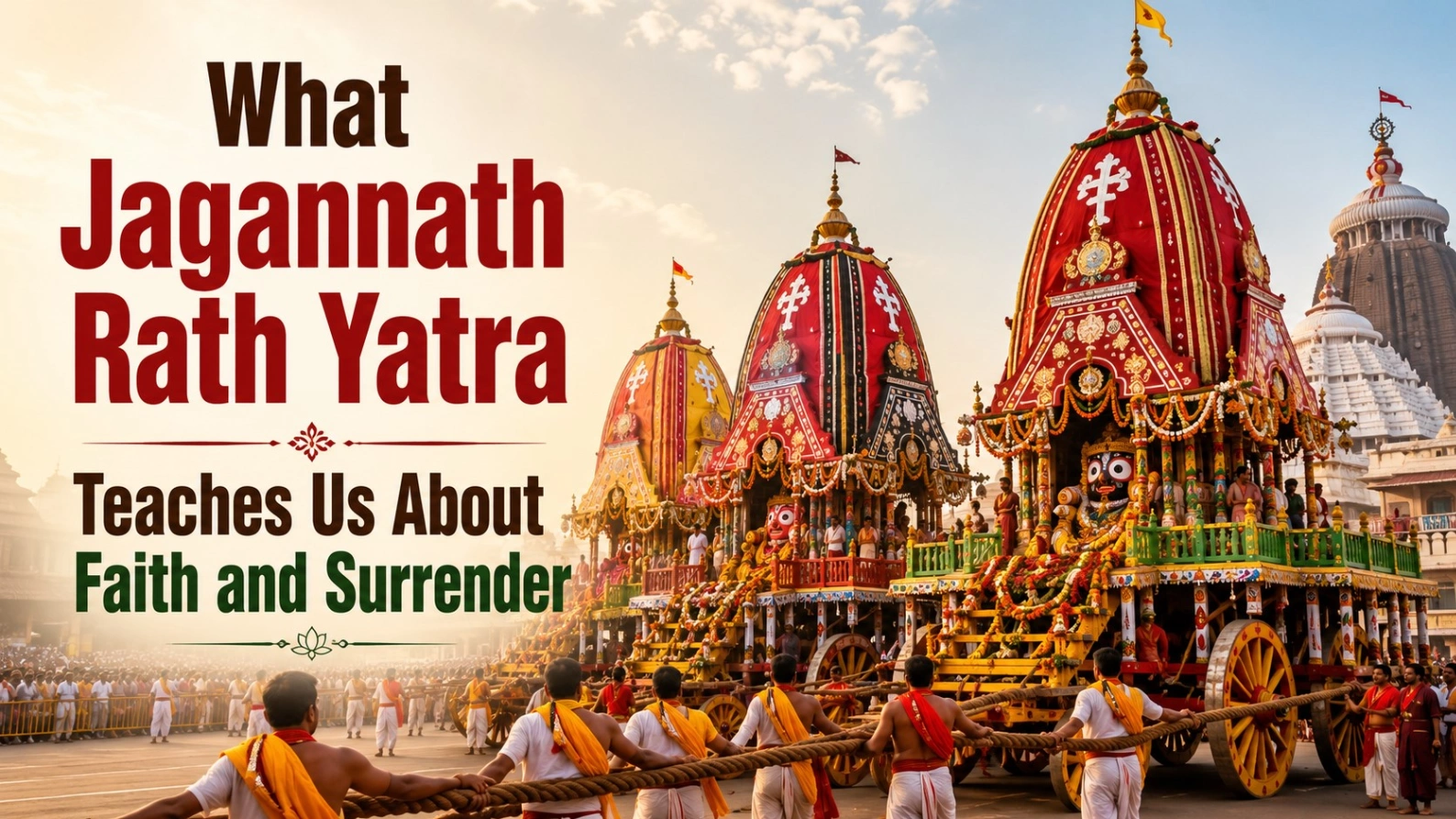
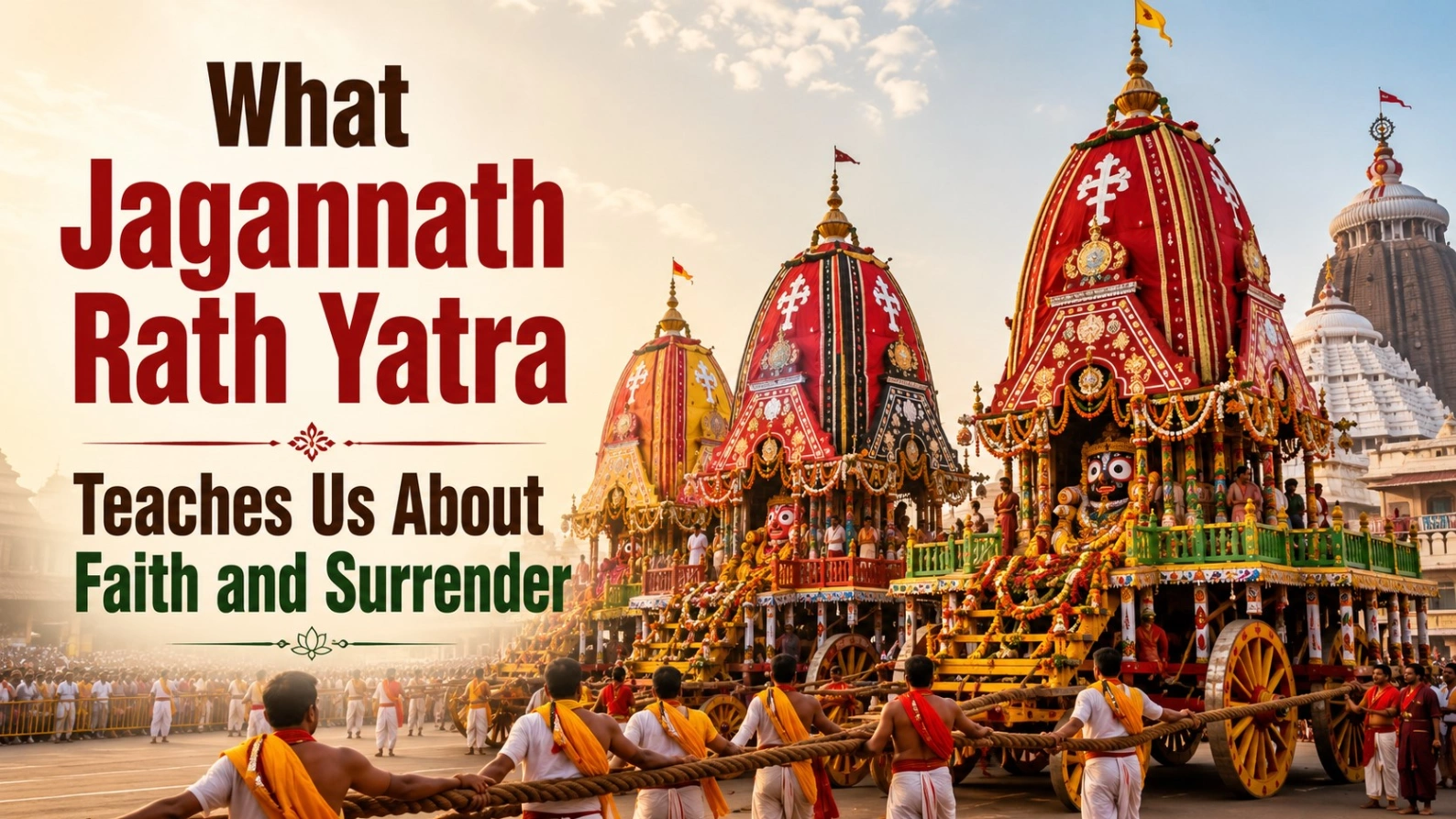
The Jagannath Rath Yatra is much more than a magnificent procession of decorated chariots. It is a sacred expression of faith, devotion and surrender that brings Lord Jagannath closer to his devotees. Every year, countless people gather in Puri to witness Lord Jagannath, Lord Balabhadra and Goddess Subhadra leave the sanctity of the temple and travel among the people.
The sight of the deities moving through the streets creates an atmosphere of extraordinary spiritual energy. Devotees sing, pray and pull the enormous chariots with deep love in their hearts. Yet behind the grandeur of the Puri Rath Yatra lies a simple message: when we trust the Divine and surrender our need to control everything, we begin to experience inner freedom.
In 2026, the main Jagannath Rath Yatra falls on July 16, 2026. The festival is traditionally observed on Shukla Paksha Dwitiya in the Hindu month of Ashadha.
As we understand the deeper Jagannath Rath Yatra significance, we discover that its teachings are not limited to a particular festival or place. They can guide us through uncertainty, disappointment, success, relationships and every stage of our spiritual journey.
The Sacred Journey of Lord Jagannath
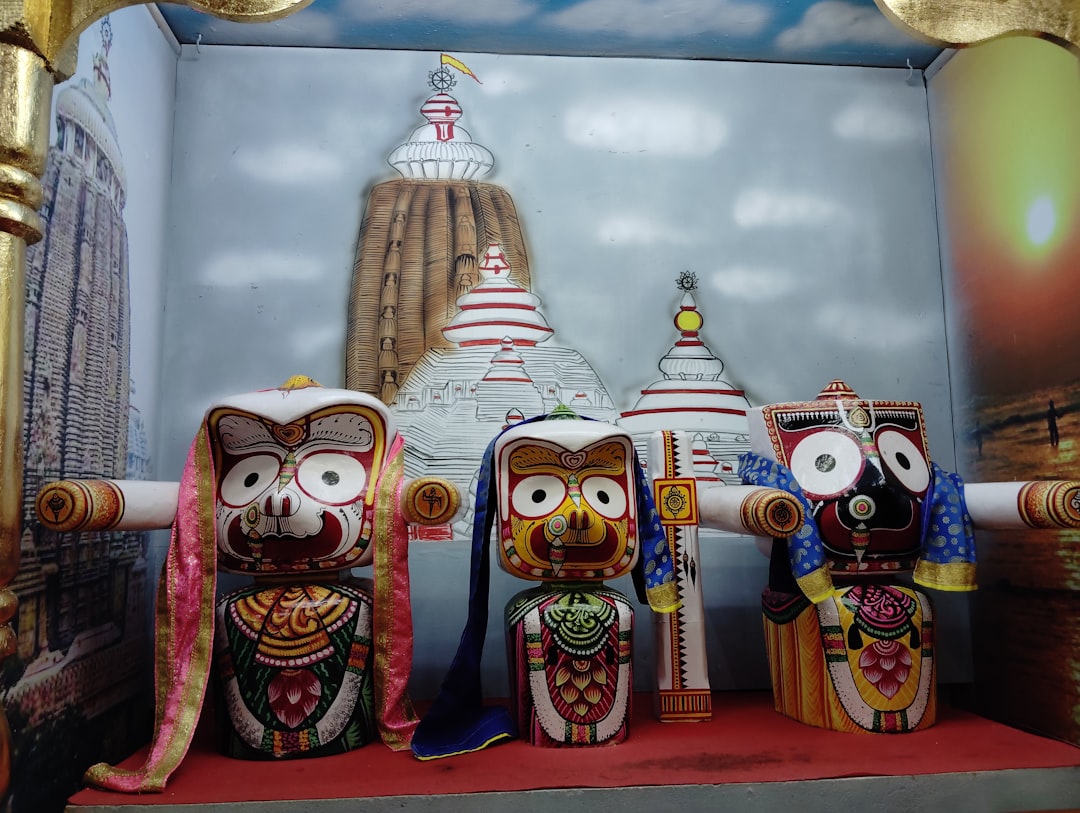
The Lord Jagannath Rath Yatra marks the ceremonial journey of Lord Jagannath, his elder brother Lord Balabhadra and his sister Goddess Subhadra from the Jagannath Temple to the Gundicha Temple.
The three deities travel in separate, beautifully decorated wooden chariots. Thousands of devotees participate in pulling these chariots along the Grand Road of Puri. The deities remain at the Gundicha Temple before undertaking their return journey, known as the Bahuda Yatra.
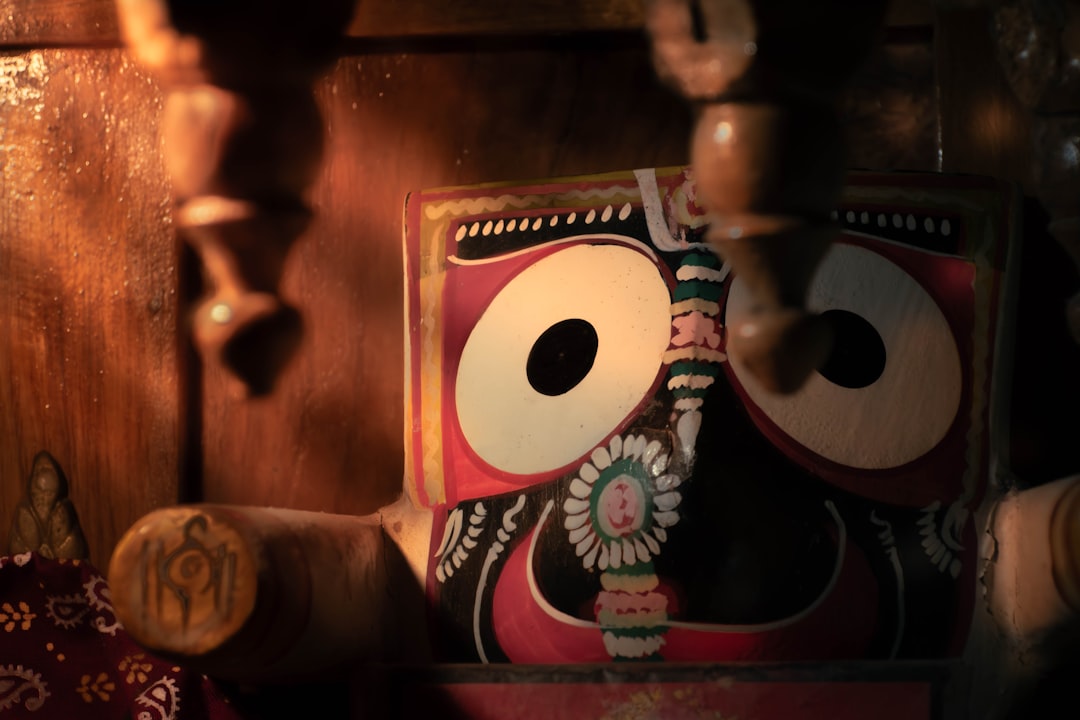
The Festival of Chariots is remarkable because the deities leave the inner temple and appear publicly before everyone. The Divine does not remain distant or inaccessible. Lord Jagannath comes out to meet the people, allowing devotees from different backgrounds to receive his darshan.
This movement from the temple to the streets carries an important spiritual message. God is not confined to a particular building, ritual or image. Divine presence can be experienced wherever there is sincere faith and an open heart.
Design Your Destiny
Are fear, uncertainty and attachment to outcomes preventing you from living peacefully? Design Your Destiny can help you understand your inner patterns, strengthen your faith and develop the courage to move through life with greater awareness. Begin your journey towards clarity, conscious action and inner transformation.
Start Your Journey Today!Faith Means Moving Forward Without Knowing Everything
One of the greatest lessons from Jagannath Rath Yatra is the importance of faith.
The devotees pulling the chariots cannot control every movement of the journey. They may not know exactly how quickly the chariot will move or when it will pause. Still, they continue pulling together with trust and devotion.
Our lives often unfold in a similar way. We make plans, but unexpected situations change our direction. A career opportunity may not work out. A relationship may become difficult. A dream may take longer than expected. During such moments, faith does not mean pretending that everything is easy.
Faith means believing that there can be a deeper purpose even when we cannot see the complete path.
The faith in Lord Jagannath displayed during the Yatra reminds us that spiritual trust grows when we continue walking despite uncertainty. We do not need to understand every event immediately. Sometimes, we simply need the courage to take the next step.
Surrender Is Not Weakness
The idea of surrender to God is sometimes misunderstood. People may think that surrender means becoming passive, avoiding responsibility or giving up on their goals.
True surrender is very different.
Divine surrender means doing everything sincerely while releasing excessive attachment to the outcome. We make the best effort possible, but we do not allow fear of failure or hunger for success to control our peace.
During the Rath Yatra, thousands of hands pull the ropes, but no single individual can claim complete ownership of the journey. Everyone contributes, yet the movement belongs to something greater than any one person.
This is the essence of faith and surrender. We participate fully in life while remembering that not everything is under our personal control.
Surrender is therefore not weakness. It requires great inner strength to say, “I will do my duty with devotion, but I will trust the Divine with the result.”
The Chariot as a Symbol of Human Life
The chariot of Lord Jagannath can also be understood as a symbol of our life journey.
Our body is like the chariot. Our thoughts and emotions are like forces pulling us in different directions. Our desires, fears and attachments can either support our growth or create confusion. Without inner awareness, we may allow temporary emotions to decide our direction.
The spiritual significance of Rath Yatra encourages us to invite Divine wisdom into the centre of our lives. When spiritual awareness becomes our guide, our choices begin to reflect greater patience, compassion and clarity.
This does not mean that problems disappear. Instead, we develop a stronger foundation from which to face them.
The chariot continues to move despite the weight it carries. In the same way, faith gives us the strength to continue despite emotional burdens and difficult circumstances.
Devotion Turns Effort into Worship
Another important message of the Jagannath Yatra is that ordinary effort becomes sacred when it is offered with devotion.
Pulling a rope may appear to be a simple physical action. During the Rath Yatra, however, it becomes an expression of love for Lord Jagannath. Devotees do not participate only to complete a task. They participate because their hearts are filled with Bhakti.
This teaches us that spirituality does not have to remain separate from daily life.
Cooking for our family can become an act of love. Working honestly can become an expression of responsibility. Helping another person can become a form of service. Even our struggles can support spiritual growth when we face them with awareness.
The devotion to Lord Jagannath shown during the procession reminds us that intention gives meaning to action. When our intention is sincere, even a small act can become an offering.
The Power of Collective Faith
No single devotee could easily move the enormous chariots alone. The journey becomes possible because thousands of people come together with one purpose.
This is one of the most beautiful spiritual lessons from Rath Yatra. Faith does not only transform individuals. It can unite communities.
During the festival, social differences become less important. People stand together, chant together and pull the same ropes. Their individual identities remain, but for that sacred moment, they are connected through devotion.
This collective experience teaches us that spiritual growth does not always have to happen in isolation. The right community can strengthen our faith, encourage us during difficult times and remind us of values we may forget.
When people come together with humility instead of ego, even a heavy chariot can move forward. Similarly, many challenges in society can be overcome when people cooperate with compassion and shared purpose.
Humility Opens the Door to Grace
The grandeur of the Puri Rath Yatra does not glorify human achievement. Instead, it invites people to bow before something greater than themselves.
Humility is central to the path of devotion. It does not mean considering ourselves worthless. It means recognising that our talents, opportunities and achievements are not entirely created by us alone.
We depend on countless visible and invisible forms of support. Our families, teachers, colleagues, communities and circumstances all contribute to our growth.
The Rath Yatra reminds us to remain grateful even when we succeed. Pride makes us believe that we control everything. Humility allows us to recognise grace.
When we become humble, asking for guidance becomes easier. We listen more carefully, learn more openly and become less defensive. This is why humility is closely connected with Bhakti and surrender.
Letting Go of the Need to Control
Much of human stress comes from trying to control situations that cannot be completely controlled.
We want people to behave according to our expectations. We want every plan to produce a predictable result. We want immediate answers to difficult questions. When life moves differently, we feel anxious or disappointed.
The Rath Yatra significance lies partly in its reminder that life is a journey of participation, not total control.
The devotee holds the rope and makes an effort. Yet the devotee also moves as part of a much larger flow. This balance between action and acceptance is essential for inner peace.
Letting go does not mean becoming careless. It means distinguishing between what we can influence and what we must accept.
We can control the sincerity of our actions, but we cannot control every result. We can communicate honestly, but we cannot control another person’s response. We can prepare carefully, but we cannot guarantee that every plan will unfold perfectly.
Learning this balance is part of the path of devotion.
Lord Jagannath Comes to Everyone
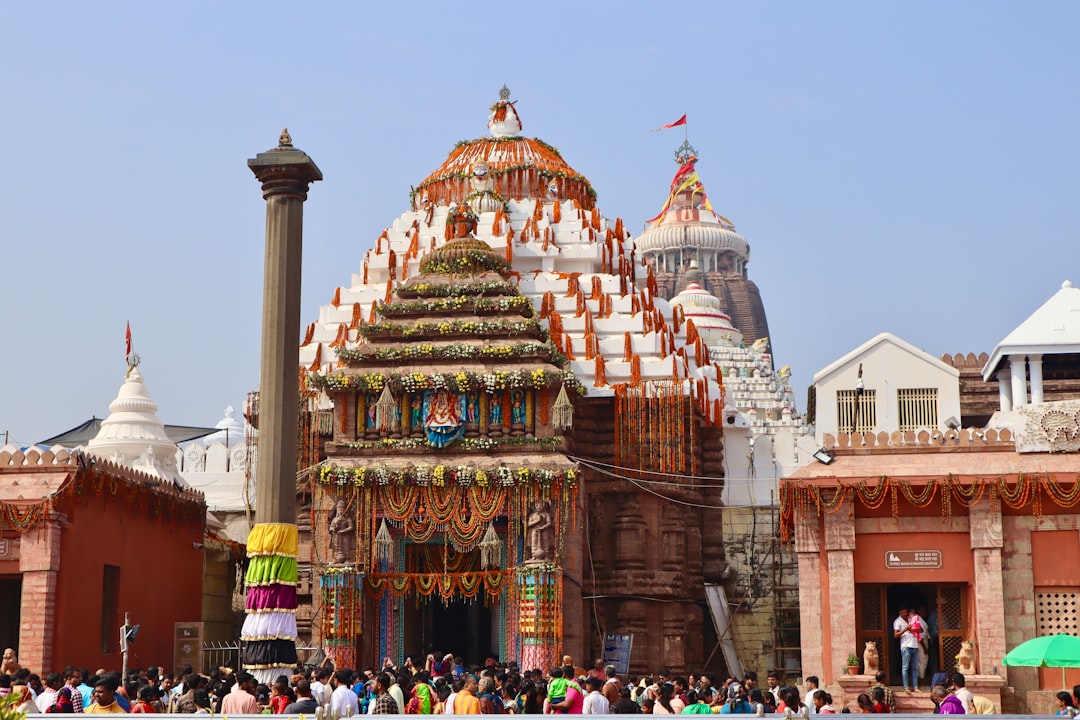
One of the most moving aspects of the festival is that Lord Jagannath leaves the temple and appears before the public. Odisha Tourism describes Rath Yatra as the moment when Lord Jagannath, Lord Balabhadra and Goddess Subhadra come out among the people rather than remaining behind temple walls.
Spiritually, this represents the accessibility of divine grace.
We may sometimes feel that we are not spiritual enough, disciplined enough or worthy enough to approach God. Rath Yatra challenges this feeling. The Divine moves towards the devotee.
The teaching is simple: sincere love is more important than perfection.
A person does not need to have every answer before beginning a spiritual journey. Faith can begin with one prayer, one moment of silence or one honest desire to change.
Lord Jagannath’s journey tells us that divine compassion is not reserved for a select few. It is available to anyone willing to open the heart.
Trusting the Divine During Difficult Times
It is easy to speak about faith when life is comfortable. The real test comes when circumstances become uncertain.
During difficult periods, trusting the Divine does not mean ignoring pain. It means refusing to believe that pain is the end of our story.
Challenges can reveal qualities we did not know we possessed. They may teach patience, courage, forgiveness or detachment. Sometimes they redirect us towards a path more aligned with our deeper purpose.
The Lord Jagannath teachings reflected through the Yatra encourage us to keep moving. A chariot may pause, but a pause is not the end of the journey.
Similarly, delays in life are not always denials. A period of stillness may be preparing us for the next stage of growth.
Faith gives us the strength to remain hopeful without demanding immediate certainty.
The Return Journey and the Meaning of Inner Renewal
After staying at the Gundicha Temple, the deities begin their return journey to the Jagannath Temple. This return procession is called Bahuda Yatra.
The outward and return journeys can be viewed as symbols of spiritual exploration and inner renewal. We step away from familiar patterns, learn from new experiences and eventually return to ourselves with deeper understanding.
Every spiritual practice should bring us back to daily life with greater awareness. Meditation should help us become calmer in relationships. Prayer should make us more compassionate. Devotion should reduce ego rather than increase spiritual pride.
The true value of a pilgrimage is not measured only by the distance travelled. It is measured by the transformation that remains after the journey is complete.
Applying the Lessons of Rath Yatra in Daily Life
The life lessons from Rath Yatra can be practised throughout the year.
Begin by doing your responsibilities sincerely without becoming obsessed with results. When plans change, pause before reacting and ask what the situation may be teaching you.
Make time for prayer, meditation or quiet reflection. These practices help create space between an event and your emotional response.
Serve others without always expecting recognition. Devotion becomes deeper when it expresses itself through kindness.
Practise gratitude during both comfortable and difficult periods. Gratitude does not deny problems. It prevents problems from hiding every blessing.
Most importantly, remember that surrender is a daily practice. It may begin with a simple inner statement: “I will do my best, and I will trust the Divine with what follows.”
The importance of Jagannath Rath Yatra extends far beyond its majestic chariots and public celebrations. It offers a living lesson in devotion, humility, unity, faith and surrender.
Lord Jagannath’s journey from the temple to the streets reminds us that the Divine is never truly distant. The pulling of the chariot teaches us to participate fully without claiming complete control. The gathering of devotees shows the strength of collective faith. The return journey reminds us that every spiritual experience should lead to inner transformation.
Ultimately, Jagannath Rath Yatra invites us to live with courage and trust. We must act sincerely, love deeply and serve humbly. At the same time, we must learn to release our fear of outcomes.
When effort is guided by devotion and surrender is supported by faith, life itself becomes a sacred journey.
Personal Session
Sometimes, surrender becomes difficult when the mind is carrying unanswered questions, emotional pressure or confusion. Book a personal session for focused spiritual guidance that can help you understand your challenges, reconnect with your inner strength and move forward with greater peace, trust and clarity.
Book Now