
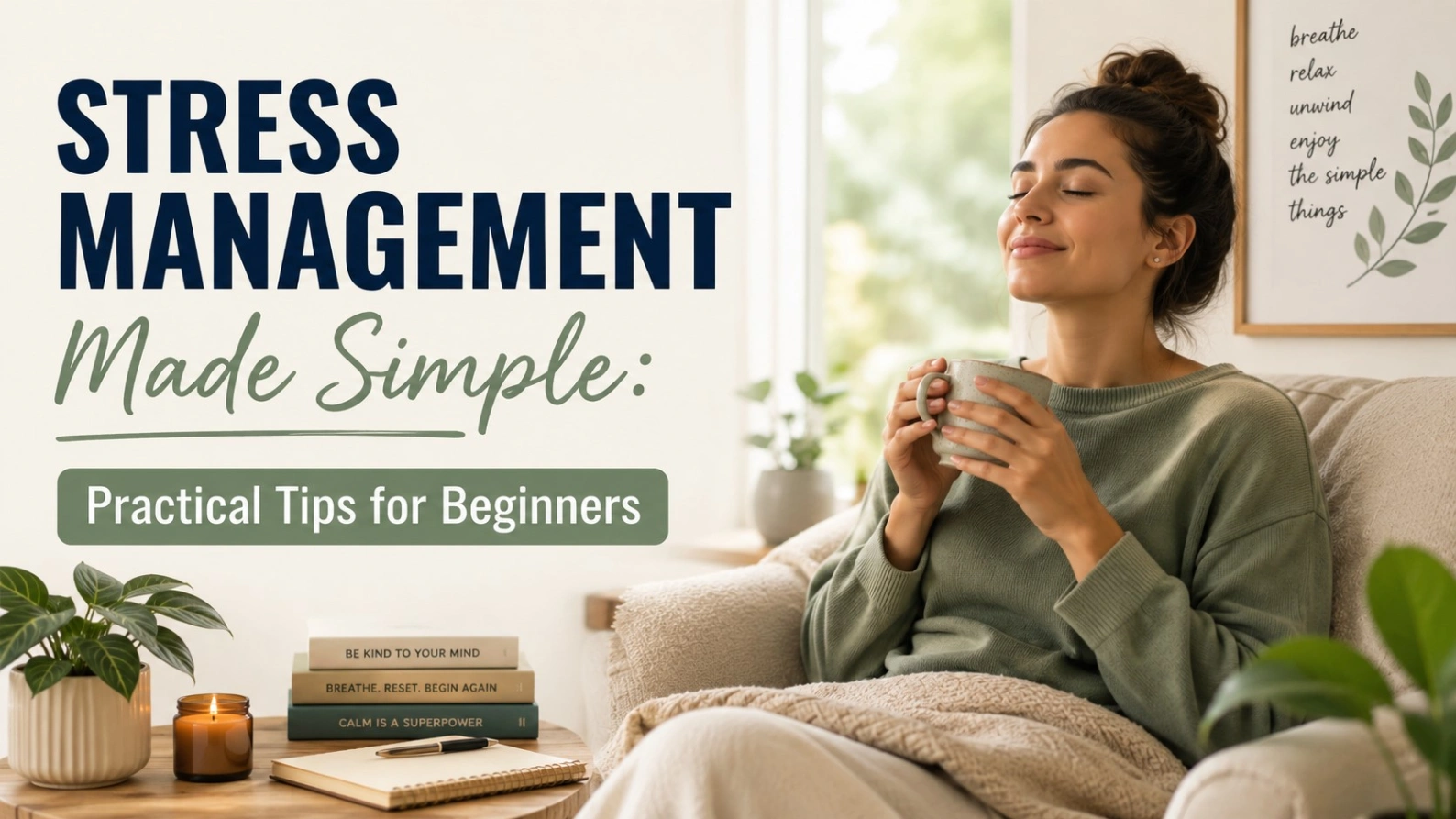
Stress management techniques are not only for people going through major life problems. They are useful for everyone who wants to feel calmer, think clearly, and handle daily responsibilities without feeling emotionally drained. In today’s busy life, stress can come from work, relationships, family duties, health concerns, studies, finances, or even constant overthinking. Sometimes, the stress is not caused by one big problem but by many small pressures building up silently.
The good news is that stress management does not have to be complicated. You do not need to change your whole life in one day. You simply need to start with small, practical steps that help your mind and body feel safe, relaxed, and balanced again.
This beginner-friendly guide will help you understand how to manage stress, how to reduce stress naturally, and how to build simple habits that support mental peace, emotional balance, and inner calm.
What Is Stress Management?
Stress management means learning how to respond to pressure in a healthier way. It does not mean that stress will completely disappear from life. Challenges will still come. Responsibilities will still exist. But when you practice stress management, you become better at handling situations without losing your peace of mind.
For example, two people may face the same difficult situation. One person may panic, overthink, and feel helpless. Another person may pause, breathe, think clearly, and take one step at a time. The difference is not always the situation itself. Often, the difference lies in how the mind responds.
Stress management helps you create that inner pause. It gives you space between the problem and your reaction. In that space, you can choose calmness over panic and clarity over confusion.
CTA for Design Your Destiny
If you want to move beyond stress and create a life filled with clarity, confidence, and inner peace, join the Design Your Destiny program. Learn practical spiritual tools, self-awareness techniques, and mindset practices that help you manage stress, understand yourself better, and shape your life with purpose.
Start Your Journey!Why Beginners Should Take Stress Seriously
Many people ignore stress because they think it is normal. They say things like, “Everyone is stressed,” or “This is just part of life.” While some level of pressure is common, constant stress should not be ignored.
Stress can affect your mood, sleep, focus, energy, relationships, and daily happiness. It may make you irritable, tired, restless, or emotionally sensitive. You may find yourself overthinking small things, reacting quickly, or feeling mentally exhausted even when you have not done much physical work.
This is why stress management for beginners is so important. When you learn simple ways to manage stress early, you prevent it from controlling your thoughts and emotions. You also build emotional strength, which helps you face life with more patience and confidence.
Common Signs That You Need Stress Relief
Before learning stress relief techniques, it is important to recognize when your body and mind are asking for help. Stress does not always look dramatic. Sometimes, it shows up quietly in everyday behavior.
You may need stress relief if you often feel mentally tired, emotionally heavy, easily irritated, unable to focus, or stuck in overthinking. You may also notice changes in sleep, appetite, motivation, or mood. Some people become silent and withdrawn, while others become restless and reactive.
The purpose of noticing these signs is not to judge yourself. It is to understand yourself. Awareness is the first step toward healing. Once you know that stress is affecting you, you can begin taking simple steps to feel better.
1. Start With Deep Breathing
One of the simplest stress management exercises is deep breathing. When you are stressed, your breathing often becomes shallow and fast. This sends a signal to your body that something is wrong. Deep breathing helps reverse that signal and brings your body back to a calmer state.
A simple breathing practice is to sit comfortably, inhale slowly, pause for a moment, and exhale gently. Do this for a few minutes. You do not have to force anything. Just let your breath become slower and softer.
Breathing exercises for stress are helpful because they can be done anywhere. You can practice them at home, at work, before sleep, or during a stressful moment. Whenever your mind feels crowded, your breath can become an anchor.
2. Practice Mindfulness for Stress Relief
Mindfulness for stress relief means bringing your attention to the present moment. Most stress comes from thinking too much about the past or worrying about the future. Mindfulness gently brings you back to what is happening right now.
You can practice mindfulness while drinking tea, walking, eating, or sitting quietly. Notice what you see, hear, feel, and experience without rushing. If your mind wanders, bring it back gently.
This simple habit helps reduce mental stress because it teaches your mind to stop running in too many directions. Over time, mindfulness creates emotional balance and improves your ability to stay calm under pressure.

3. Use Meditation to Relax Your Mind
Meditation for stress relief is one of the most powerful ways to calm your mind naturally. Many beginners think meditation means stopping all thoughts, but that is not true. Meditation means observing your thoughts without getting lost in them.
Start with just five minutes a day. Sit quietly, close your eyes, and focus on your breath. Thoughts will come. Let them come and go without fighting them. Each time your mind wanders, return to your breathing.
This practice slowly trains your mind to become less reactive. You begin to understand that thoughts are temporary. Worries come and go. Emotions rise and settle. You are not your stress. You are the awareness behind it.
4. Reduce Overthinking With One Small Action
Overthinking is one of the biggest causes of mental stress. When the mind keeps repeating the same problem, it creates emotional pressure. You may feel stuck because you are thinking too much but doing too little.
One practical stress management tip is to ask yourself, “What is one small action I can take right now?” It could be writing down your thoughts, making a phone call, cleaning your space, completing one task, or taking a short walk.
Action breaks the cycle of overthinking. It gives your mind direction. Even a small step can make you feel more in control and less helpless.
5. Create a Simple Daily Routine
A peaceful routine can reduce stress in daily life. When your day feels chaotic, your mind also feels chaotic. A simple routine gives structure to your time and helps you feel more grounded.
You do not need a perfect routine. Start with basic habits like waking up at a regular time, drinking enough water, taking short breaks, eating mindfully, and sleeping on time. Add a few minutes of breathing, meditation, or journaling if possible.
Daily stress management tips work best when they are easy to follow. Do not create a routine that feels like another burden. Create one that supports you.
6. Take Breaks Before You Feel Burnt Out
Many people wait until they are completely exhausted before they rest. But stress relief works better when you pause early. Short breaks during the day can protect your energy and improve your focus.
A break does not always mean scrolling on your phone. In fact, too much screen time can sometimes make the mind more restless. A better break may include stretching, walking, sitting quietly, listening to calming music, or simply closing your eyes for a few minutes.
Rest is not laziness. It is a part of healthy stress management. When you allow yourself to pause, you return to your work and responsibilities with better clarity.

7. Talk About What You Feel
Stress becomes heavier when you keep everything inside. Talking to someone you trust can bring emotional relief. You do not always need advice. Sometimes, you simply need to express what is going on in your mind.
Choose someone who listens without judging. Share honestly, but gently. If you do not feel ready to talk, write your thoughts in a journal. Writing can also help you understand your emotions more clearly.
Emotional stress relief begins when you stop pretending that everything is fine. Accepting your feelings is not weakness. It is self-awareness.
8. Use Positive Thinking Wisely
Positive thinking for stress relief does not mean ignoring problems. It means reminding yourself that every problem can be handled step by step. It means choosing thoughts that support you instead of thoughts that break you down.
For example, instead of saying, “I cannot handle this,” you can say, “This is difficult, but I can take one step at a time.” Instead of saying, “Everything is going wrong,” you can say, “I will focus on what I can control.”
This shift may look small, but it changes your emotional energy. Your words influence your mind. Speak to yourself with kindness.
9. Try Spiritual Stress Relief
Spiritual stress relief helps you connect with something deeper than daily worries. Spirituality does not always mean rituals. It can mean silence, prayer, gratitude, meditation, self-reflection, or remembering that life is bigger than one stressful moment.
When you feel overwhelmed, sit quietly and place your attention on your inner self. Ask yourself, “What is this situation teaching me?” or “How can I respond with calmness?” Such questions create spiritual awareness.
Spiritual ways to reduce stress help you move from fear to faith, from restlessness to surrender, and from confusion to inner peace. They remind you that you do not have to control everything at once.

10. Focus on What You Can Control
Stress often increases when we try to control things that are not in our hands. Other people’s behavior, the past, unexpected delays, and uncertain outcomes are not always under our control. But our response, effort, attitude, and choices are within our control.
Make two mental lists. One list is for things you can control. The other is for things you cannot. Put your energy into the first list. Release the second list slowly.
This practice brings peace of mind because it helps you stop wasting energy on things that only create frustration.
11. Build Inner Peace Through Small Habits
Inner peace is not created in one day. It is built through small choices repeated daily. Choosing to breathe before reacting, choosing to rest before burning out, choosing to speak kindly to yourself, and choosing to let go of unnecessary thoughts are all powerful habits.
Stress-free living does not mean life has no problems. It means you are learning how to stay centered even when problems appear. That is real emotional balance.
Start small. Choose one or two practices from this blog and follow them consistently. Do not try to do everything at once. The goal is progress, not perfection.

Stress management made simple begins with awareness. When you understand your stress, you can respond to it with patience instead of panic. Simple practices like deep breathing, mindfulness, meditation, journaling, positive thinking, and spiritual reflection can help you reduce stress naturally and feel better in daily life.
As a beginner, remember that you do not need to become calm overnight. You only need to begin. One deep breath, one peaceful thought, one mindful pause, and one small action can slowly change the way you handle stress.
Your mind deserves rest. Your emotions deserve care. And your life deserves a peaceful, balanced, and positive direction.
CTA for Personal Session
Feeling stressed, confused, or emotionally stuck? Book a personal session to receive guided support for your inner journey. Get practical direction, spiritual clarity, and personalized guidance to manage stress, find emotional balance, and move forward with peace.
Book Now