

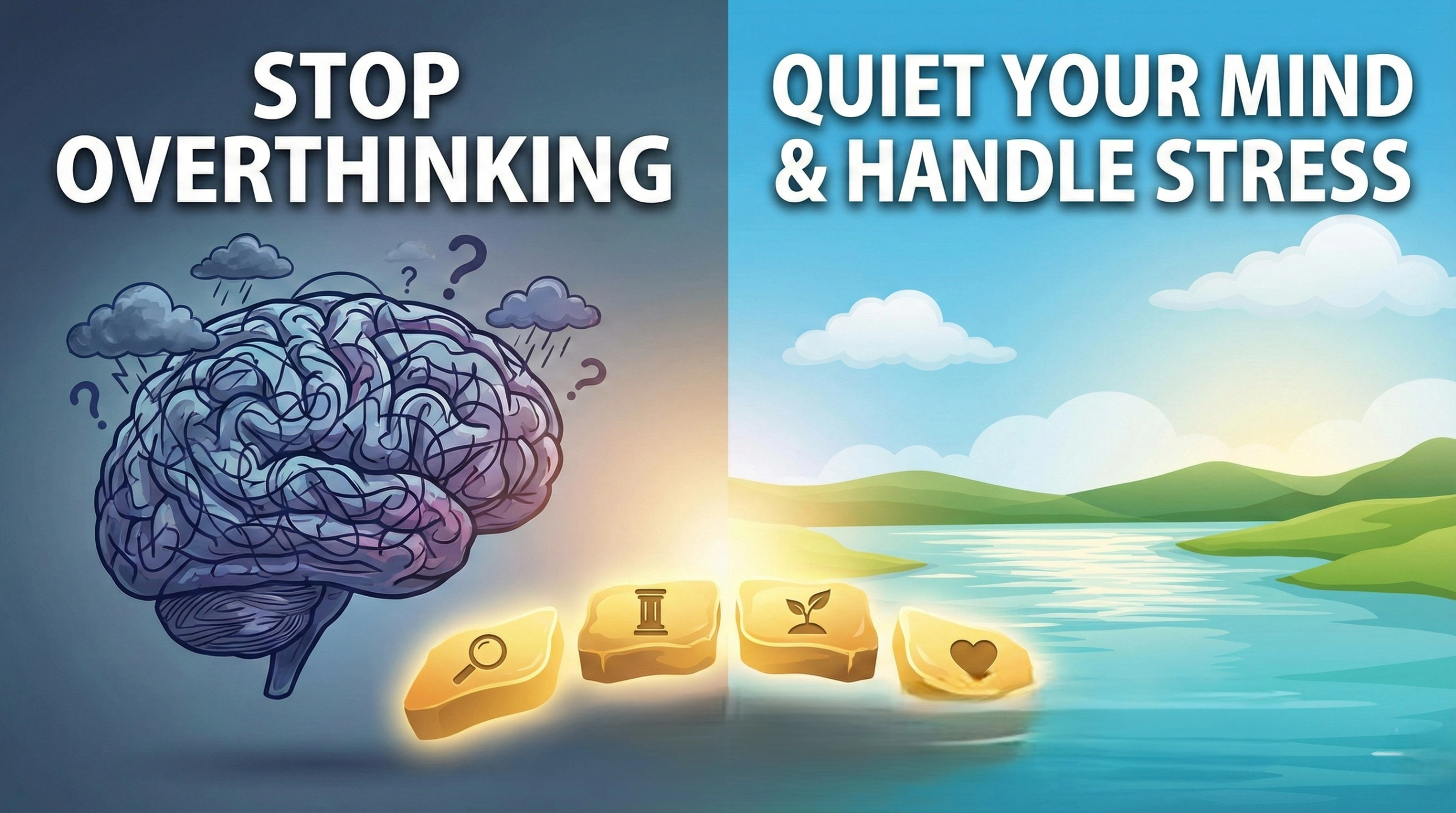
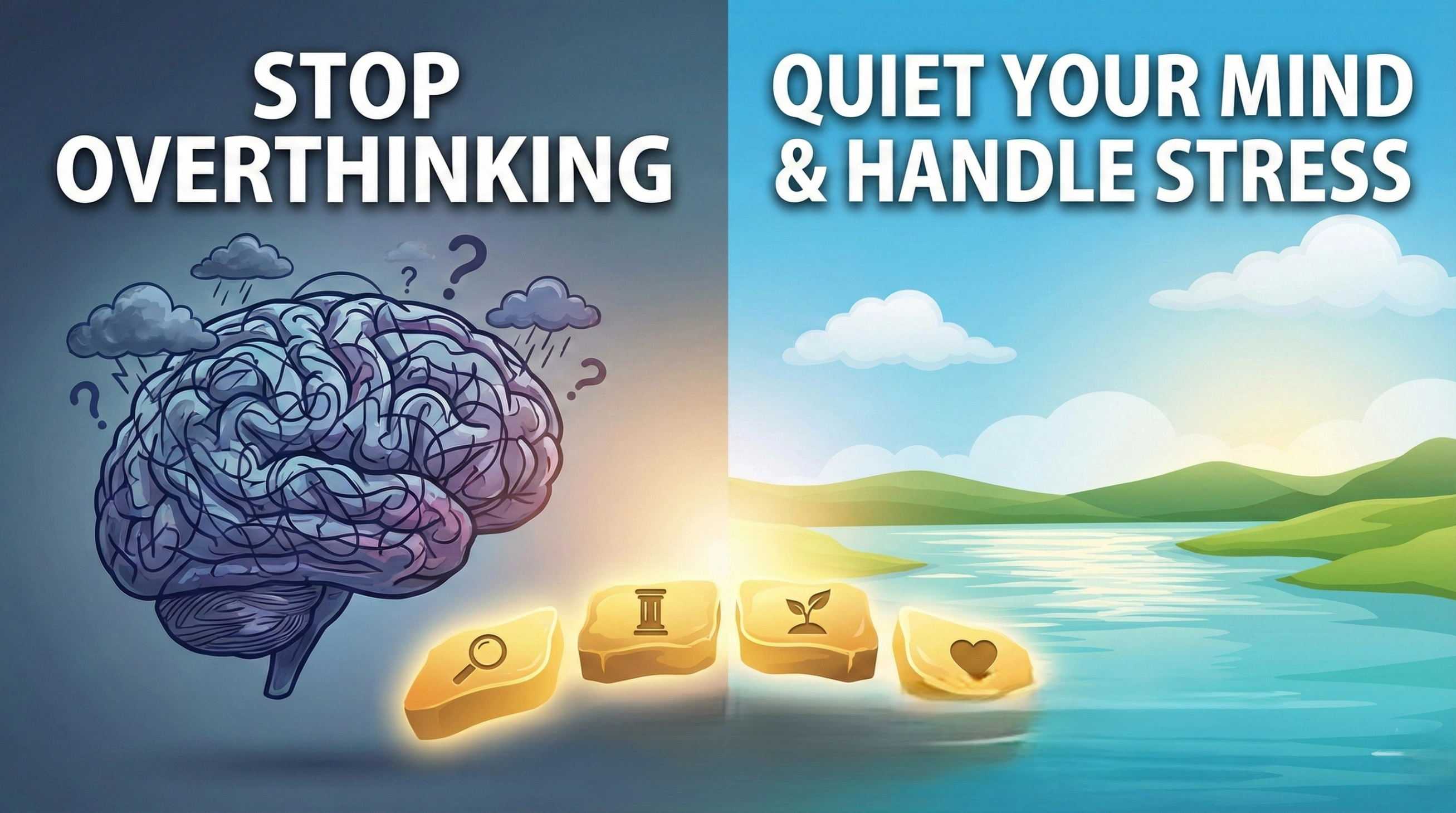
We have all been there. It’s 2:00 AM, the house is silent, but your brain is screaming. You are replaying a conversation from three years ago, worrying about a meeting next week, or stressing over things entirely out of your control.
When you can’t shut off the noise, it feels like your own thoughts are holding you hostage.
The truth is, learning how to control your mind isn't about forcing your thoughts to stop. It’s about changing how you relate to them. It is about developing specific perspectives that act as a filter, allowing you to process life without getting overwhelmed by it.
If you are ready to master your mind and finally find some peace, you don’t need a complicated expensive retreat. You just need a mindset shift. Here are four powerful attitudes you can develop right now to quiet your mind, handle stress, and regain control of your life.
1. The "Observer" Attitude: Detachment Over Reaction
The first step to finding inner peace is realizing that you are not your thoughts; you are the one hearing them.
Most of us lack emotional regulation because we treat every thought that pops into our heads as an urgent emergency. We fuse with our thoughts. If we think, “I’m going to fail,” we immediately believe it and feel the anxiety of failure.
The "Observer" attitude is about mindfulness practice in its purest form. It asks you to step back and watch the traffic of your mind without jumping in front of the cars.

Why This Builds Mental Strength
When you are stuck in the mud, you can’t see the path out. By stepping up onto the bank becoming the observer; you gain perspective. This is the core of mental discipline. You stop reacting impulsively to every trigger and start responding with intention.
How to Practice This
To take charge of your life, you need to create a gap between the stimulus (what happens) and your response (what you do).
Label your thoughts. When a stressful thought arises, say to yourself, "I am having the thought that I might fail." This subtle shift separates you from the thought.
Visualize the clouds. Imagine your thoughts are clouds passing across a blue sky. You don't scream at clouds to move faster or stop moving; you just watch them float by.
Pause before acting. Self-control techniques often boil down to the "strategic pause." Take three deep breaths before responding to a stressful email or a difficult person.
2. The Stoic Attitude: Focusing on the Controllable
One of the biggest causes of mental exhaustion is trying to control the uncontrollable. We worry about the weather, the economy, other people’s opinions, and the future. This is a recipe for burnout.
Developing a Stoic mindset is the antidote to this anxiety. Ancient Stoics believed that peace of mind comes from understanding the difference between what is up to us and what is not.
The Art of Letting Go
If you are trying to handle stress, look at your current list of worries. How many of them are things you can actually change?
You can control: Your words, your actions, your effort, and your attitude.
You cannot control: The outcome, other people's reactions, or the past.
When you focus on the former, you build mental resilience. When you focus on the latter, you build anxiety.
How to Practice This
To build a strong mindset, you must ruthlessly curate your focus.
The "Circle of Control" Exercise. Draw a circle. Inside, write what you can do. Outside, write what you can't. If a worry falls outside the circle, give yourself permission to let it go.
Acceptance is not passivity. Accepting that you can’t control the economy doesn't mean you do nothing; it means you focus your energy on your budget and your skills (things you can control).
Embrace uncertainty. Overcoming adversity often requires accepting that we don't know what will happen next, and trusting our ability to handle it when it does.
3. The "Learner" Attitude: The Growth Mindset
Perfectionism is the enemy of mental toughness. If you view every mistake as a catastrophe, your mind will constantly be on high alert, scanning for potential failures. This keeps you in a state of chronic stress.
The "Learner" attitude shifts you from a "Fixed Mindset" (I am who I am, and mistakes prove I'm not good enough) to a growth mindset (I can change, and mistakes are how I learn).

Transforming Failure into Feedback
People with mental strength don't fear failure; they use it. When you adopt a positive attitude toward learning, you remove the fear that causes overthinking. You stop asking, "What if I mess up?" and start asking, "What will I learn if I try?"
This is essential for personal development. You cannot grow if you are too afraid to move.
How to Practice This
Change your vocabulary. Swap "failing" for "learning." Instead of saying "I messed up," say "I found a way that doesn't work."
Celebrate the effort, not just the result. Self-improvement tips often focus on outcomes, but true confidence comes from knowing you put in the work.
Ask "What is this teaching me?" When things go wrong, force your brain to find the lesson. This instantly moves you from a victim mentality to a proactive mentality.
4. The "Self-Ally" Attitude: Compassion Over Criticism
How do you talk to yourself when you drop a glass or forget a deadline? If you are like most people, your inner critic is harsh, abusive, and relentless.
"You're so stupid. You always mess this up."
You cannot develop inner peace if you are living with a bully inside your head. The "Self-Ally" attitude is about developing a positive attitude toward yourself. It isn't about fake positivity or ignoring your flaws; it is about treating yourself with the same respect you would offer a friend.
Why Compassion Builds Resilience
Research shows that self-compassion, not self-criticism, is the key to building resilience. When you beat yourself up, you trigger your body's threat system (fight or flight), which increases stress and shuts down the creative parts of your brain.
When you are kind to yourself, you activate the caregiving system, which releases oxytocin and helps you calm down, assess the situation, and try again.
How to Practice This
The "Friend" Filter. Before you accept a thought about yourself, ask: "Would I say this to my best friend?" If the answer is no, don't say it to yourself.
Constructive Correction. Instead of attacking your character ("I am lazy"), address the behavior ("I procrastinated today, so tomorrow I will start earlier").
Forgive yourself. Mental discipline includes the discipline to let go of past mistakes so they don't weigh down your future.
Knowing these attitudes is one thing; living them is another. Personal development is a practice, not a destination. You won't master your mind overnight, and that is okay.
To start, pick just one of these attitudes to focus on this week.
Monday: Practice the Observer Attitude. Watch your stress without engaging.
Wednesday: Practice the Stoic Mindset. Identify what you can control.
Friday: Practice the Growth Mindset. Look for the lesson in a difficulty.
By consistently applying these perspectives, you naturally begin quieting your mind. You will find that situations which used to ruin your week now only ruin your hour, or maybe just a few minutes.
You have the power to take charge of your life. It starts with the way you think.