
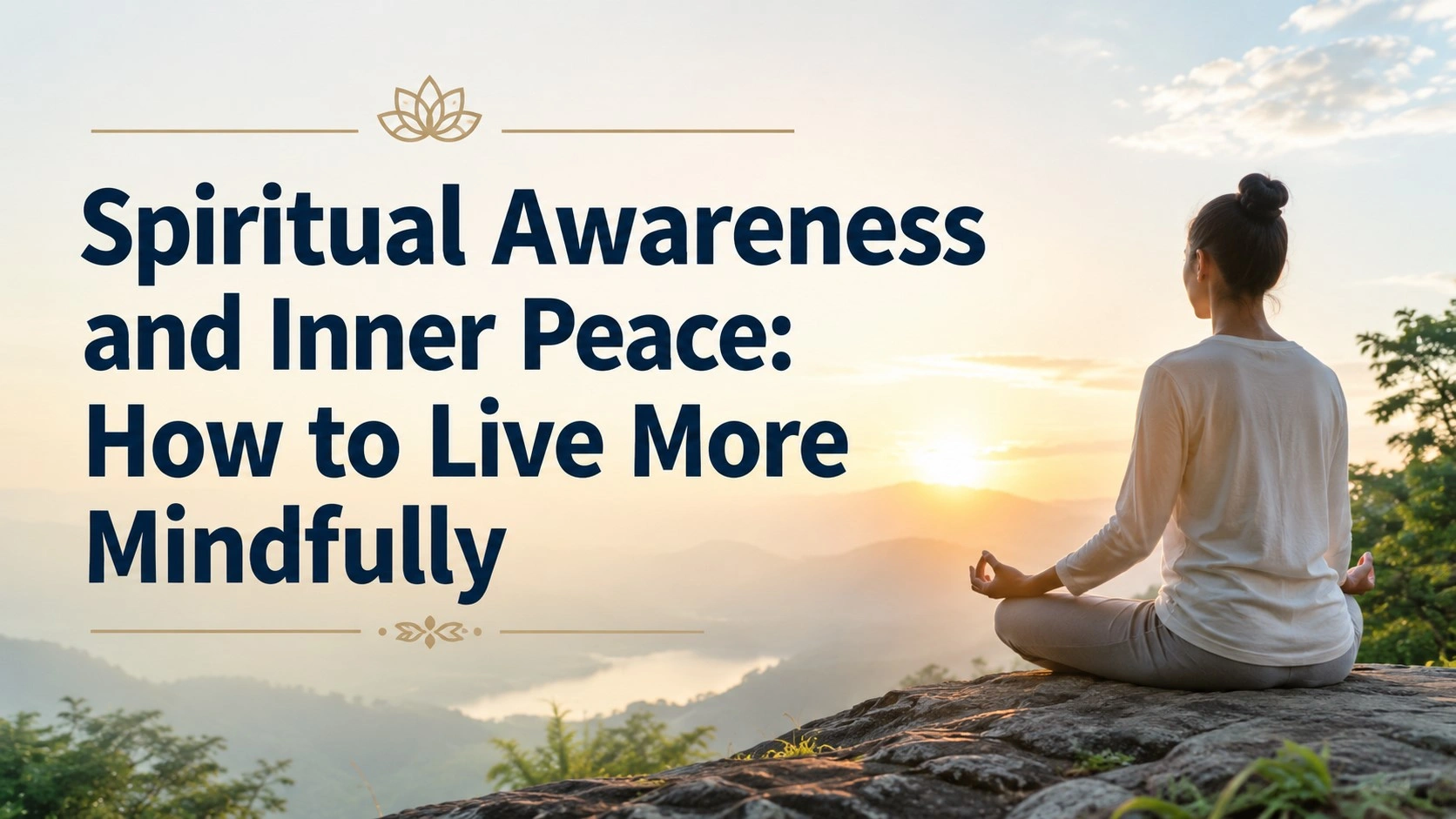
In today’s fast-moving world, many people are searching for spiritual awareness, inner peace, and mindfulness because life often feels noisy, stressful, and emotionally heavy. We may be surrounded by comfort, technology, and constant information, yet still feel disconnected from ourselves. This is where spiritual awareness becomes important. It helps us pause, look within, and understand life beyond daily pressure, overthinking, and emotional reactions.
Spiritual awareness does not mean leaving your responsibilities or becoming distant from the world. It means becoming more conscious of your thoughts, emotions, actions, and inner state while living your everyday life. When you become spiritually aware, you start noticing how your mind works, why certain situations disturb you, and what truly brings peace to your heart.
Inner peace is not something you find only in silence, temples, mountains, or meditation halls. It begins inside you. It grows when you learn how to calm your mind, control your thoughts, and live with more self awareness. Mindfulness, meditation, and daily spiritual practices can help you experience this peace in a practical way.
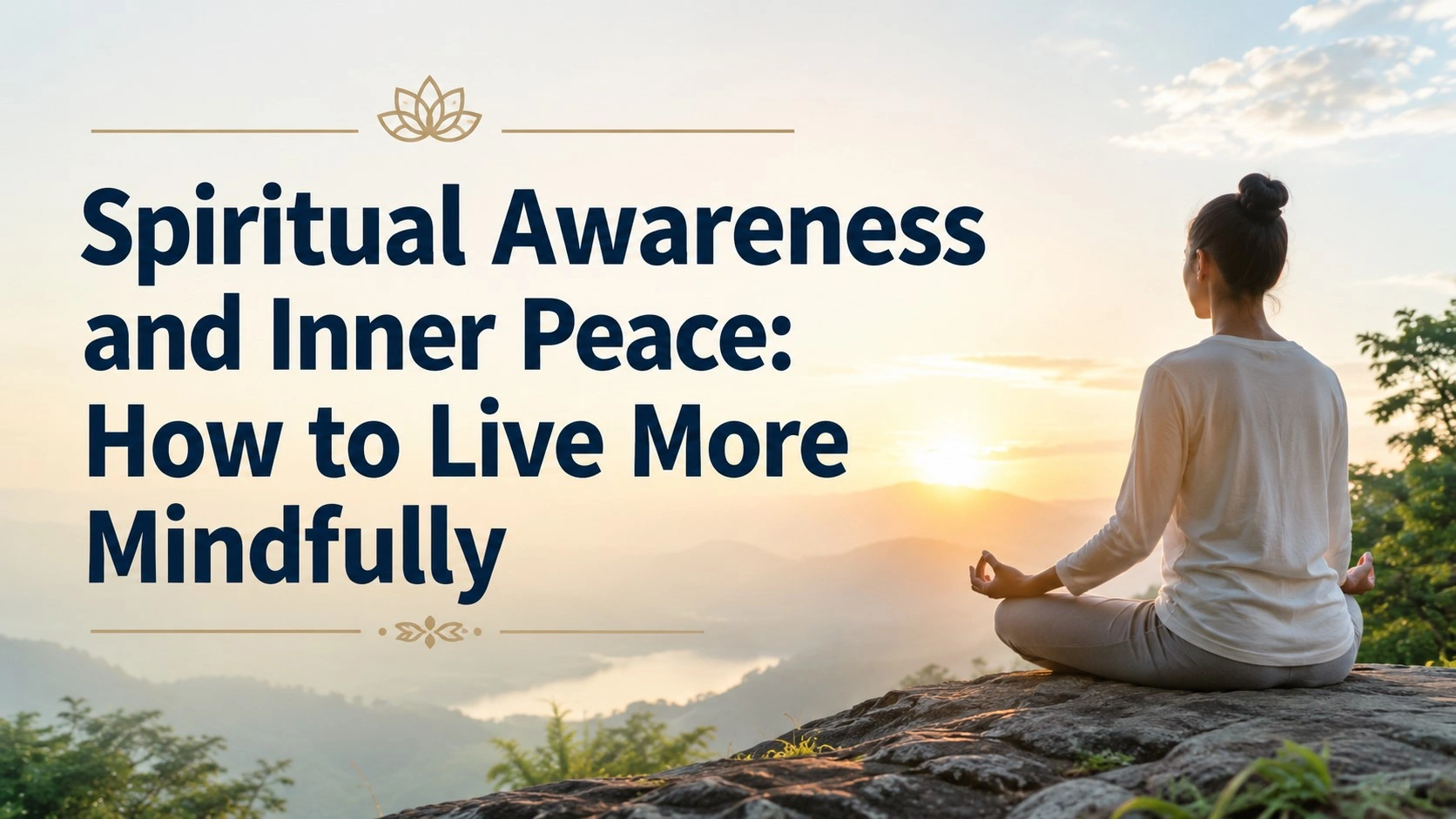
What Is Spiritual Awareness?
Spiritual awareness is the ability to become conscious of your inner self. It is the understanding that you are not just your body, thoughts, emotions, job, identity, or social role. There is something deeper within you that quietly observes everything.
When you are spiritually aware, you begin to notice your thoughts instead of blindly following them. You understand your emotions instead of being controlled by them. You become more careful with your words, actions, and choices. This awareness slowly brings clarity, emotional balance, mental peace, and positive energy into your life.
For beginners, spiritual awareness may simply mean asking yourself, “Why am I reacting this way?” or “What is happening inside me right now?” These small questions can open the door to deep spiritual growth.
CTA for Design Your Destiny
Are you ready to live with more clarity, peace, and purpose? Join the Design Your Destiny program and learn practical spiritual tools to calm your mind, increase self awareness, and create a more conscious life from within.
Start Your Journey!Why Inner Peace Matters in Daily Life
Inner peace is one of the greatest needs of modern life. Many people have busy schedules, personal responsibilities, career pressure, relationship challenges, and constant digital distractions. Because of this, the mind rarely gets time to rest.
When inner peace is missing, even small problems feel big. A simple comment can hurt deeply. A small delay can create anger. A minor failure can lead to self doubt. But when inner peace grows, you become stable from within. You still face challenges, but they do not break you so easily.
Inner peace helps you respond instead of react. It gives you the strength to stay calm in difficult situations. It also helps you build better relationships because you are no longer operating only from anger, fear, ego, or insecurity.
Spiritual awareness and inner peace go hand in hand. Awareness helps you understand your inner disturbance, and peace comes when you stop fighting with every thought and emotion.
Mindfulness: The Bridge Between Awareness and Peace
Mindfulness means being fully present in the moment. It is the practice of paying attention to what is happening right now without judgment. When you eat, you eat with awareness. When you walk, you notice each step. When you speak, you listen to your own words. When you breathe, you feel the breath.
Mindfulness for inner peace is powerful because most mental stress comes from living in the past or future. The mind keeps replaying old pain or imagining future problems. But life is actually happening in the present moment.
Through mindfulness meditation, guided meditation, or simple breathing practices, you can train your mind to return to the present. This does not mean your thoughts will disappear completely. It means you will stop becoming a slave to them.
How to Become More Spiritually Aware
Spiritual awareness for beginners does not need to be complicated. You can begin with simple spiritual awareness practices in your daily routine.
Start by observing your thoughts. Sit quietly for a few minutes and notice what is going on in your mind. Do not judge the thoughts as good or bad. Just watch them. This is also called observing thoughts meditation. Slowly, you will realize that thoughts come and go, but you are the one watching them.
This practice is connected to witness consciousness. Witness consciousness means becoming the observer of your thoughts, feelings, and experiences. Instead of saying, “I am angry,” you begin to notice, “Anger is arising in me.” This small shift creates distance between you and the emotion.
You can also practice self awareness during conversations. Notice when your ego wants to prove something. Notice when you feel hurt. Notice when you want attention, approval, or control. This awareness is not meant to create guilt. It is meant to help you understand yourself better.
Daily Spiritual Practices for Inner Peace
Daily spiritual practices help you stay connected with your inner self. You do not need hours of practice every day. Even 10 to 15 minutes of sincere practice can make a difference over time.
Begin your morning with silence. Before checking your phone, sit quietly and take a few deep breaths. Set a peaceful intention for the day. You may say, “Today, I will remain aware of my thoughts and actions.”
Meditation for inner peace is another powerful practice. Sit comfortably, close your eyes, and focus on your breath. When thoughts come, gently bring your attention back to breathing. This simple practice can help calm your mind and improve emotional balance.
You can also write a journal. At the end of the day, ask yourself: What disturbed me today? Where did I react unconsciously? What made me feel peaceful? Journaling increases self awareness and helps you understand your emotional patterns.
Gratitude is also a beautiful spiritual practice. When you focus only on what is missing, the mind becomes restless. But when you notice what is already present, your heart becomes softer and more peaceful.

How to Calm Your Mind and Control Thoughts
Many people ask how to calm your mind or how to control thoughts. The first thing to understand is that controlling thoughts by force usually does not work. The more you fight with thoughts, the stronger they become.
Instead of forcing the mind to become silent, start watching it. Observe your thoughts like clouds passing in the sky. Some thoughts may be pleasant. Some may be painful. Some may be completely random. But all of them are temporary.
Mindfulness teaches you not to identify with every thought. A thought may say, “I am not good enough,” but awareness helps you see that it is only a thought, not the truth. A thought may say, “Something bad will happen,” but awareness helps you return to the present moment.
Guided meditation can also help beginners because it gives direction to the mind. If sitting silently feels difficult, you can listen to a calming guided meditation for mindfulness, peace of mind, or spiritual healing.
Conscious Living: Bringing Awareness into Everyday Life
Conscious living means living with awareness instead of living on autopilot. Many people wake up, work, eat, scroll, react, sleep, and repeat the same cycle every day. Spiritual awareness breaks this unconscious pattern.
To live consciously, begin with small actions. Eat without rushing. Listen without interrupting. Speak with kindness. Work with full attention. Walk while noticing your breath and surroundings. These small acts bring mindful living into your daily routine.
Conscious living also means being aware of the energy you carry. Are your thoughts filled with fear, jealousy, anger, or comparison? Or are they moving toward peace, compassion, and understanding? Your inner state affects your outer life.
When you live more consciously, you naturally become more responsible for your thoughts, words, and actions. This is an important part of spiritual growth.
Spiritual Awakening and Higher Consciousness
Spiritual awakening is often misunderstood as a sudden magical experience. In reality, it can also be a slow and gentle process of becoming more aware. You start questioning old patterns. You feel drawn toward truth, peace, meditation, and self realization. You may no longer find satisfaction in superficial distractions.
Higher consciousness means rising above narrow thinking. You begin to see life with more depth. You understand that everyone is struggling in their own way. Compassion increases. Ego begins to soften. You feel more connected to yourself, others, nature, and existence.
Non dual awareness is a deeper spiritual understanding where the sense of separation begins to dissolve. It points toward the realization that life is interconnected. While this may sound advanced, the journey begins with simple awareness in daily life.

How Spiritual Awareness Helps Emotional Balance
Emotions are a natural part of life. Spiritual awareness does not mean you will never feel sadness, anger, fear, or pain. It means you will learn to understand emotions without being completely controlled by them.
When you become aware, you can pause before reacting. You can ask, “Is my response coming from wisdom or from hurt?” This pause creates emotional balance.
Spiritual healing begins when you stop running away from your inner pain. Instead of suppressing emotions, you observe them with kindness. You allow yourself to feel, understand, and release them slowly.
This is why mindfulness, meditation, and spiritual awareness practices are helpful for mental peace. They allow the mind and heart to settle naturally.
How to Connect with Your Inner Self
To connect with your inner self, you need silence, honesty, and patience. Your inner self is not loud. It is often hidden beneath thoughts, desires, fears, and social conditioning.
Spend time alone without distractions. Sit quietly and ask yourself what you truly feel. Notice what gives you peace and what drains your energy. Pay attention to your intuition. Your inner self often speaks through calm clarity, not mental noise.
Meditation, prayer, journaling, self reflection, and mindful living can help you build this connection. Over time, you may begin to feel more grounded, centered, and peaceful.
How to Live a Peaceful Life
A peaceful life does not mean a problem-free life. It means having the inner strength to stay balanced even when life is uncertain.
To live a peaceful life, simplify your thoughts. Do not carry unnecessary grudges. Reduce comparison. Practice forgiveness. Spend time in silence. Choose your words carefully. Take care of your body. Keep good company. Feed your mind with positive energy.
Most importantly, remember that peace is a daily practice. It is not achieved once and then kept forever without effort. Every day gives you new opportunities to choose awareness over reaction and peace over disturbance.

Spiritual awareness and inner peace are not separate from daily life. They are meant to be practiced in your thoughts, relationships, work, choices, and reactions. Mindfulness helps you return to the present moment. Meditation helps you calm your mind. Self awareness helps you understand your inner world. Conscious living helps you move through life with clarity and purpose.
When you become more spiritually aware, you begin to live with more peace, compassion, and balance. You stop searching for happiness only outside and start discovering the quiet strength within you.
The journey begins with one simple step: pause, breathe, and observe. In that moment of awareness, inner peace begins.
CTA for Personal Session
If you feel stuck, emotionally disturbed, or disconnected from your inner self, book a personal session for guided support. Take the next step toward inner peace, spiritual awareness, and mindful living with personalized guidance.
Book Now