


You toss and turn at night, check the clock, and wonder, why can’t I sleep?
If you’re dealing with sleep problems, insomnia, or poor sleep quality, you’re not alone. Millions struggle with sleepless nights, even when they feel exhausted.
But here’s the truth most people miss:
Sleep isn’t always the real problem.
What if your inability to sleep has more to do with your mind, habits, and inner state than your bed or routine?
Let’s explore the hidden causes of sleep problems and what you can actually do to fix them.

1. Your Mind Doesn’t Know How to Switch Off
One of the most common reasons for insomnia is overthinking.
You lie down, but your brain suddenly becomes active:
replaying conversations
planning tomorrow
worrying about the future
This is why so many people say, “I’m tired, but I can’t sleep.”
Your body is ready to rest, but your mind isn’t.
This is known as racing thoughts at night, and it’s one of the biggest triggers behind sleep issues.
What helps:
Deep breathing before sleep
Writing your thoughts down
Avoiding stimulating content at night
Personal Session with Sakshi Shree
If your mind feels constantly active and you’re struggling to find peace, a personal session with Sakshi Shree can help you gain clarity, calm your thoughts, and restore balance in your life.
Book Now
2. Your Sleep Routine Is Quietly Sabotaging You
Sometimes, the issue isn’t obvious, it’s your daily habits.
Common bad sleep habits include:
scrolling your phone before bed
irregular sleep timings
consuming caffeine late
no proper bedtime routine
These habits disrupt your body’s natural rhythm, also known as the sleep cycle.
If your schedule is inconsistent, your body doesn’t know when to sleep, leading to difficulty sleeping.
What helps:
Fixed sleep and wake time
Limiting screen time before bed
Creating a calming bedtime routine
3. Stress and Anxiety Are Running in the Background
Even if you don’t feel stressed consciously, your body might be.
Stress and sleep problems are deeply connected.
You may experience:
tightness in your chest
restlessness
waking up at night
This is why people often search:
“Why do I wake up at night and can’t go back to sleep?”
The answer often lies in hidden anxiety or mental fatigue.
What helps:
Gentle stretching or yoga
Reducing stimulation before bed
Practicing mindfulness
4. Your Sleep Cycle Is Disrupted
Your body follows a natural rhythm called the circadian cycle.
But modern lifestyle habits like:
late-night work
binge-watching
irregular meals
can disturb this cycle.
Once your rhythm is off, you may:
feel sleepy during the day
stay awake at night
struggle to fall asleep
This leads to poor sleep quality and ongoing fatigue.
What helps:
Exposure to sunlight in the morning
Avoiding naps during the day
Sleeping at the same time daily
5. Screen Time Is Affecting Your Sleep More Than You Think
Using your phone before bed might seem harmless, but it’s one of the biggest causes of sleep problems today.
Blue light from screens:
reduces melatonin (sleep hormone)
keeps your brain active
delays sleep
This is why mobile use before sleep directly impacts your ability to fall asleep fast.
What helps:
Avoid screens 30–60 minutes before bed
Use night mode if necessary
Replace scrolling with calming activities

6. Caffeine and Diet Choices Matter
That evening coffee or late-night snack? It might be the reason behind your sleepless nights.
Caffeine stays in your system for hours and can:
delay sleep
reduce sleep depth
increase restlessness
Similarly, heavy meals before bed can disturb your digestion and sleep quality.
What helps:
Avoid caffeine after evening
Eat light dinners
Stay hydrated
7. Your Inner State Is Not at Rest (Spiritual Perspective)
Sometimes, sleep problems go beyond physical or mental causes.
If your mind feels restless or unsettled, it reflects in your sleep.
This is where many people resonate with:
restless mind at night meaning
insomnia spiritual reasons
energy imbalance and sleep
When your inner state is disturbed, your body struggles to relax.
What helps:
Meditation for better sleep
Practicing awareness
Letting go of mental clutter
Because sometimes,
you don’t need more sleep, you need more stillness.
8. You’re Trying Too Hard to Sleep
Ironically, the more you try to force sleep, the harder it becomes.
Constantly thinking:
“I need to sleep now”
“What if I don’t sleep?”
creates pressure, and that pressure keeps you awake.
This is a common but overlooked cause of insomnia.
What helps:
Letting go of control
Accepting wakefulness
Relaxing without expectations
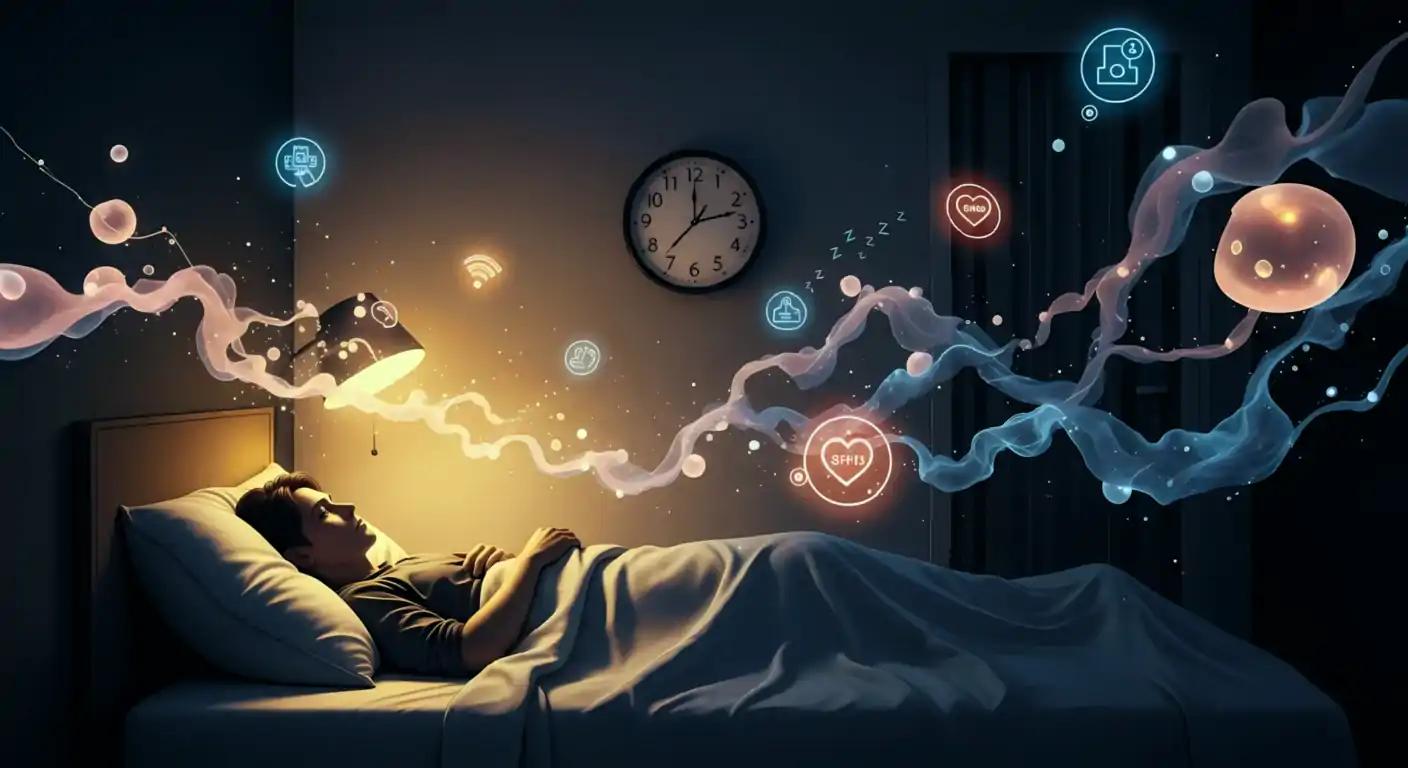
How to Fix Sleep Problems Naturally
If you’re wondering how to cure insomnia naturally, start simple.
Here’s a practical approach:
Night Routine
Dim lights 1 hour before bed
Avoid screens
Do deep breathing or meditation
Mind Relaxation
Journal your thoughts
Practice mindfulness
Let go of mental stress
Consistency
Sleep and wake at the same time
Avoid irregular schedules
Daytime Habits
Get sunlight exposure
Stay active
Limit naps
Why Do You Wake Up at 3 AM?
Waking up in the middle of the night is common.
It can be due to:
stress or anxiety
disrupted sleep cycle
overthinking
But instead of panicking, try:
slow breathing
relaxing your body
avoiding your phone
If you’re struggling with sleep, don’t just focus on sleep.
Look deeper.
Your thoughts, habits, and inner state play a much bigger role than you think.
Because the truth is:
Sleep is not something you force… it’s something that happens when you’re at ease.

Design Your Destiny
Feeling stuck, restless, or overwhelmed? Join our Design Your Destiny program and learn how to take control of your thoughts, habits, and inner state — the foundation of a peaceful mind and better sleep.
Start Your Journey Today!