

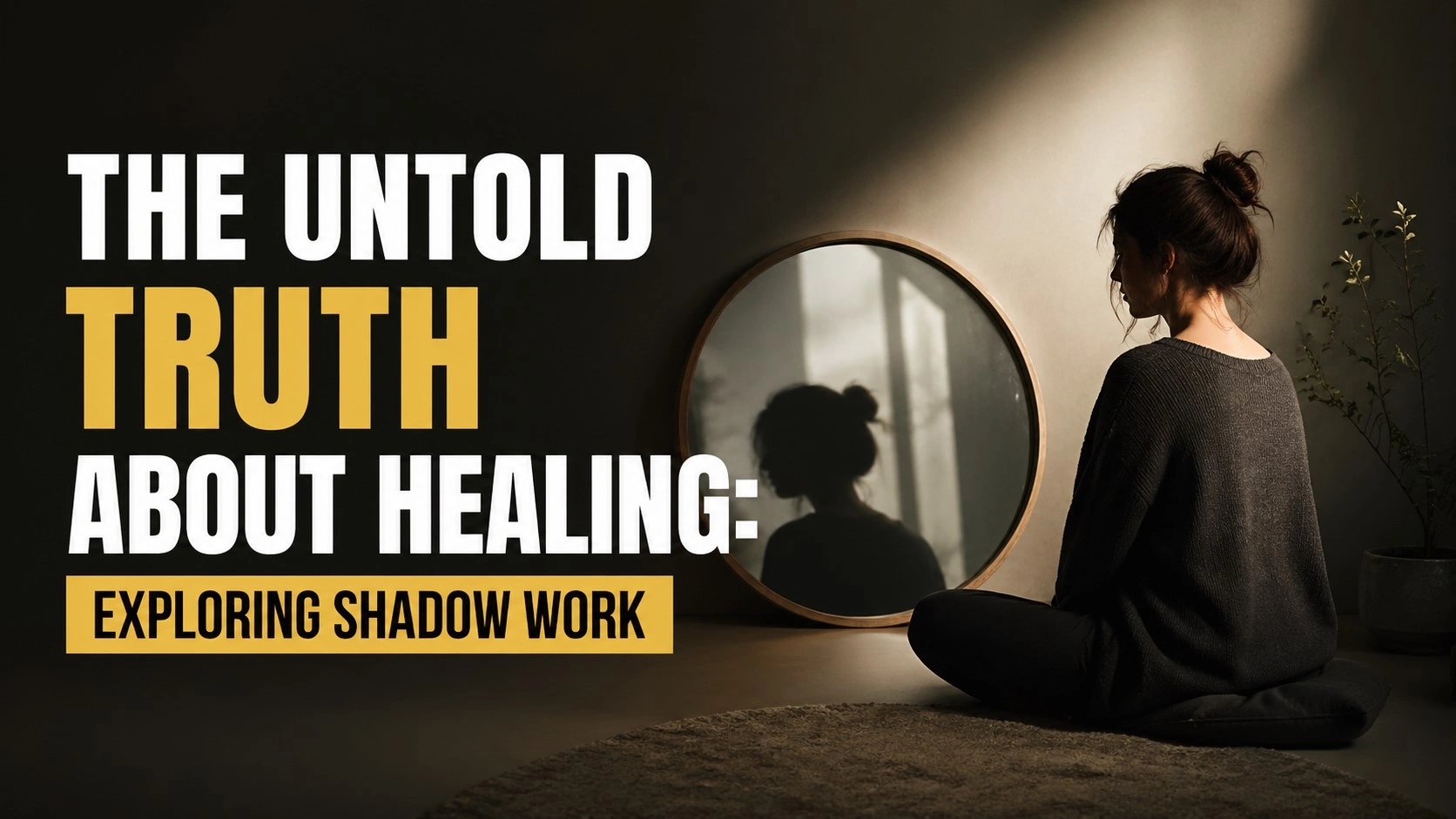
Healing is often portrayed as peaceful, calm, and full of light. But the truth is, shadow work reveals a completely different side of the journey. If you’ve ever wondered why healing feels painful, why emotions resurface unexpectedly, or why growth feels uncomfortable, you’re already touching the deeper layers of your shadow self.
This blog will help you understand what is shadow work, why it matters, and how it plays a powerful role in your emotional healing journey.
What Is Shadow Work?
At its core, shadow work is the process of exploring the hidden parts of your personality—the emotions, memories, and traits you’ve suppressed or ignored.
The term was popularized by Carl Jung, who described the shadow self as the unconscious part of the mind that contains everything we reject about ourselves.
This includes:
Unhealed emotional wounds
Repressed anger, guilt, or fear
Insecurities and limiting beliefs
Childhood conditioning and patterns
Understanding shadow work meaning is simple:
It’s not about becoming someone new.
It’s about accepting what already exists within you.
Personal Session with Sakshi Shree
If you’re ready for deeper guidance in your self discovery journey, connect for a personal session with Sakshi Shree.
Book NowWhy Healing Feels Painful (The Truth No One Tells You)
Many people start their self healing journey expecting peace but instead, they feel overwhelmed. That’s because:
Healing is not linear.
When you begin shadow work healing, you’re not adding positivity, you’re uncovering what was hidden.
You might notice:
Old memories resurfacing
Emotional triggers becoming stronger
Feeling worse before feeling better
This is why many ask: “Why do I feel worse during healing?”
The answer lies in awareness.
When unconscious patterns become visible, your mind reacts. That discomfort is not failure—it’s progress in disguise.
The Psychology Behind Shadow Work
If you're wondering what is shadow work in psychology, it's deeply rooted in understanding the subconscious mind.
Your brain stores unresolved experiences to protect you. Over time, these buried emotions influence:
Your reactions
Your relationships
Your habits
Without realizing it, you repeat patterns, this is where breaking toxic cycles begins.
Through subconscious mind healing, you start identifying:
Why certain things trigger you
Why you react the way you do
What emotional wounds still need attention
Signs You Need Shadow Work
Not everyone realizes they need it. But your life often shows clues.
You may need shadow work for emotional healing if:
You feel stuck in repeated patterns
You get triggered easily
You overthink or feel emotionally overwhelmed
You struggle with self-worth
You avoid certain emotions or conversations
These are not flaws, they are invitations toward self awareness practices.
The Real Benefits of Shadow Work
Despite its intensity, shadow work brings deep transformation.
Here’s what changes when you commit to inner work:
Emotional Freedom
You stop suppressing feelings and start processing them.
Self Awareness
You understand your thoughts instead of being controlled by them.
Healthier Relationships
You stop projecting unresolved emotions onto others.
Breaking Patterns
You finally release repetitive cycles and limiting beliefs.
Inner Peace
Not because everything is perfect but because you understand yourself.
This is the real shadow work glow up not external, but deeply internal.

How To Do Shadow Work (Step-by-Step)
If you’re wondering how to do shadow work step by step, start simple.
1. Observe Your Triggers
Every emotional reaction is a clue. Ask yourself:
Why did this affect me so much?
2. Journal Honestly
Use shadow work prompts for healing like:
What am I avoiding right now?
What part of myself do I reject?
When did I first feel this way?
3. Accept Without Judgment
This is the hardest step.
Healing begins when you stop labeling parts of yourself as “bad.”
4. Practice Mindfulness
Through mindfulness and awareness, you learn to observe thoughts instead of reacting instantly.
5. Integrate, Don’t Suppress
The goal is not to eliminate your shadow but to understand and integrate it.
Shadow Work for Beginners at Home
You don’t need anything complicated to begin.
Simple shadow work exercises for self healing include:
Daily journaling
Meditation for awareness
Reflecting on emotional triggers
Practicing self-compassion
Consistency matters more than perfection.
Inner Child Healing & Shadow Work
Many emotional patterns come from childhood.
Through inner child healing, you reconnect with parts of yourself that felt:
Ignored
Unloved
Unsafe
When you address these experiences, your present behavior starts to change naturally.
This is where healing trauma and inner pain truly begins.

Why Most People Avoid Shadow Work
Let’s be honest, shadow work is not easy.
People avoid it because:
It challenges their identity
It forces them to face uncomfortable truths
It requires emotional honesty
But avoiding it doesn’t make it disappear.
Instead, those unresolved parts show up as:
Anxiety
Overthinking
Emotional reactivity
Facing your shadow is difficult, but avoiding it is even more exhausting.
Awareness vs Overthinking
One common confusion is between awareness vs overthinking.
Overthinking traps you in loops of worry
Awareness observes thoughts without attachment
Shadow work helps you shift from reacting to observing.
That’s where consciousness and healing begin.
Emotional Release Techniques
To support your deep healing process, you can use:
Breathwork
Writing unsent letters
Speaking your emotions out loud
Body-based release practices
These help in emotional release techniques, allowing stored feelings to move instead of staying stuck.

The Spiritual Side of Shadow Work
Beyond psychology, shadow work is also deeply spiritual.
It connects with:
Consciousness expansion
Energy awareness
Letting go of ego-based identity
The spiritual healing reality is not about becoming perfect,
It’s about becoming whole.
The Truth About Healing
The real truth is simple:
Healing is not about becoming positive all the time
Healing is about becoming real with yourself
Your darkness is not your enemy, it’s your guide.
When you stop running from your shadow, you start understanding yourself.
And that’s where personal growth and healing truly begin.

Design Your Destiny
Ready to go beyond surface-level healing? Join Design Your Destiny and learn how to transform your inner world with powerful awareness and spiritual tools.
Start your transformation today.