

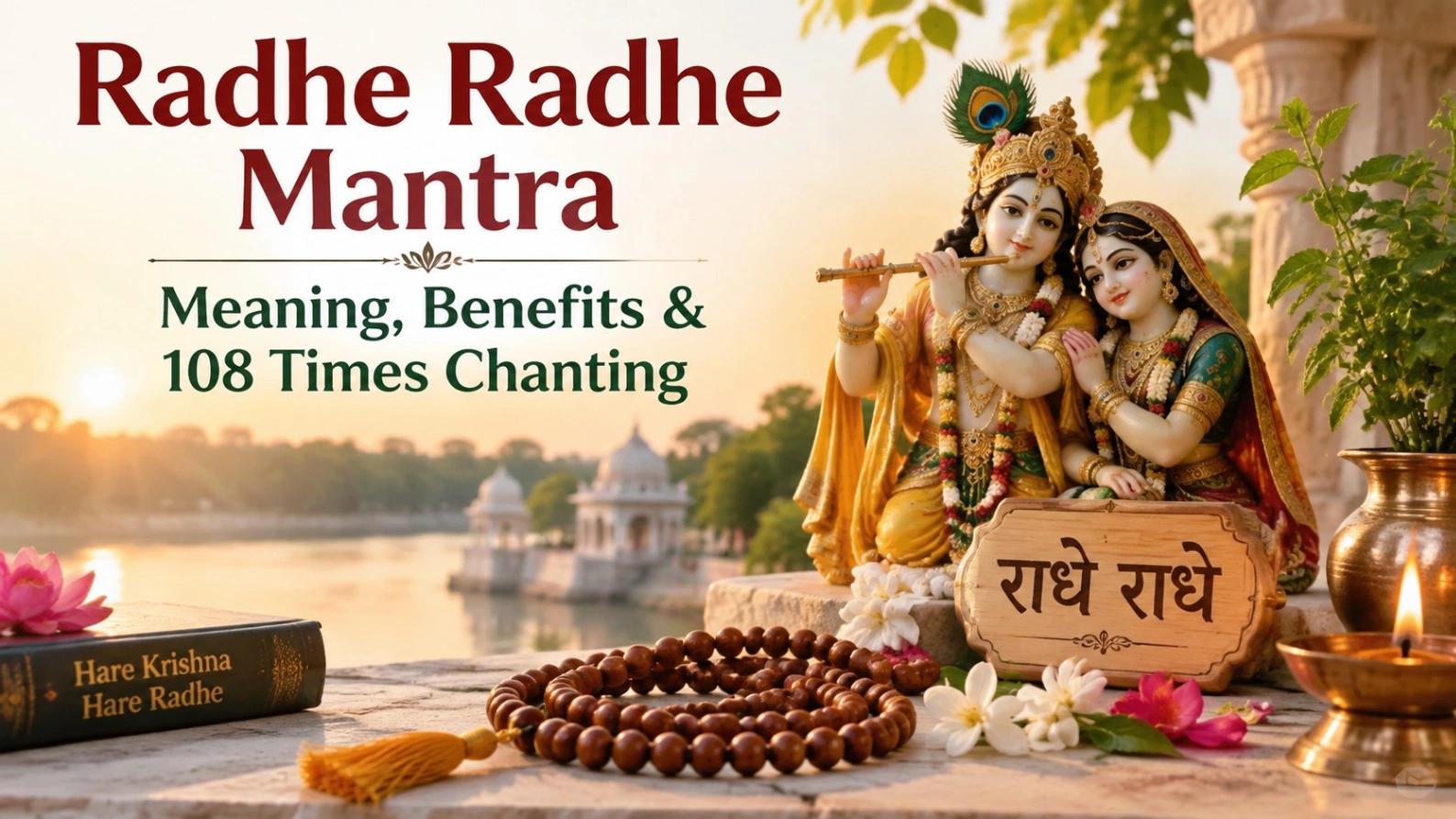
“Radhe Radhe” is more than a familiar devotional greeting. For countless devotees, repeating the divine name of Radha Rani is a simple form of bhakti that helps bring the mind back to love, devotion and remembrance of the Divine.
Unlike lengthy mantras that may require memorisation, the Radhe Radhe mantra consists simply of the repeated name of Radha. This simplicity is one reason why Radhe Radhe naam jap can easily become part of everyday spiritual practice.
You may chant while sitting in prayer, using a mala, walking quietly, or during a few peaceful moments in your day. Some devotees prefer Radhe Radhe chanting 108 times, completing one traditional round of naam jap.
But what does Radhe Radhe actually mean? Why is the name repeated 108 times? And what are the spiritual benefits associated with Radha naam jap?
Let us understand the meaning, practice and devotional significance of the Radhe Radhe mantra in detail.
What Is the Radhe Radhe Mantra?
The mantra is beautifully simple:
राधे राधे
Radhe Radhe
“Radhe” is a loving invocation or calling of Radha Rani.
Repeating it becomes a form of naam jap, or remembrance of the Divine through repetition of a sacred name.
Radha occupies a central place in Radha-Krishna devotion and represents the highest expression of loving devotion, surrender and divine love in many bhakti traditions.
Therefore, when devotees repeat “Radhe Radhe,” their focus is not merely on pronouncing two words. The practice is intended to cultivate remembrance, devotion and loving surrender.
This is what gives Radhe Radhe chanting its spiritual significance.
Design Your Destiny
Spiritual wisdom becomes truly powerful when it moves beyond reading and becomes part of the way you think, choose and live. Explore Design Your Destiny and discover practical spiritual insights that can help you understand yourself more deeply, develop greater awareness and consciously shape the direction of your life.
Start Your Journey Today!Radhe Radhe Mantra Meaning
The simplest Radhe Radhe mantra meaning is:
“O Radha! O Radha!”
It is a loving call to Radha Rani.
Spiritually, however, devotees understand this invocation at a deeper level. Radha represents pure devotion and unconditional divine love.
Repeating her name can therefore become a reminder to cultivate qualities such as:
Love
Devotion
Compassion
Humility
Surrender
Faith
Remembrance of God
The purpose of naam jap is not simply to complete a particular number of repetitions. The deeper purpose is to gradually turn attention away from constant mental distraction and toward devotion.
Why Do Devotees Chant Radhe Radhe?
Naam jap has occupied an important place in the bhakti tradition because it provides a simple way to remember the Divine.
You do not need elaborate rituals to begin chanting.
You can simply sit peacefully and repeat:
Radhe Radhe… Radhe Radhe… Radhe Radhe…
As the repetition continues, the mind may gradually become more focused on the sacred name.
For devotees, the beauty of Radhe Radhe naam jap lies precisely in its simplicity.
It can be practised by beginners as well as those who already maintain an established spiritual routine.
Radhe Radhe Mantra 108 Times: Why Chant 108 Times?
One of the most popular ways to perform naam jap is to repeat the Radhe Radhe mantra 108 times.
A traditional japa mala commonly contains 108 counting beads, allowing devotees to repeat the sacred name once on each bead.
Completing all 108 repetitions is generally referred to as completing one mala.
The number 108 holds symbolic and spiritual importance across several Indian spiritual traditions. Because of this long-standing tradition, many devotees use 108 repetitions as a practical structure for their daily chanting.
However, devotion should not become a competition about numbers.
If you are a beginner and cannot complete 108 repetitions every day, you can begin with a smaller number and gradually establish consistency.
Sincerity and attention matter more than chanting mechanically.
Radhe Radhe Mantra Benefits
The Radhe Radhe mantra benefits are primarily understood within the context of spiritual and devotional practice.
Here are some of the commonly described benefits of regular Radha naam jap.
1. Encourages Divine Remembrance
Daily chanting provides a simple way to repeatedly bring your attention toward Radha Rani and Radha-Krishna devotion.
Whenever the mind becomes distracted, the sacred name provides a point to which attention can return.
2. Develops Bhakti
The central purpose of Radhe Radhe chanting is devotion.
Regular repetition can become a way of expressing love, surrender and gratitude toward the Divine.
Rather than treating chanting as a ritual that must simply be completed, devotees are encouraged to chant with bhav, or heartfelt devotional feeling.
3. Creates Moments of Inner Quiet
Modern life often keeps the mind occupied with endless thoughts, screens, responsibilities and worries.
Sitting quietly for even a few minutes and repeating one sacred name creates an intentional pause.
The repetitive rhythm of naam jap may help practitioners feel more centred and inwardly focused during their spiritual practice.
4. Cultivates Love and Compassion
Radha is deeply associated with prema, or divine love.
For this reason, Radha naam jap is traditionally connected with cultivating loving devotion rather than seeking only material rewards.
A meaningful spiritual practice gradually encourages the devotee to bring qualities such as kindness, compassion and humility into everyday relationships.
5. Makes Spiritual Practice Simple
You do not necessarily need an elaborate setup for Radhe Radhe chanting.
Once you know the sacred name, you can remember it almost anywhere.
This accessibility makes naam jap especially suitable for people who want to introduce a short spiritual practice into a busy routine.
6. Builds Consistency in Sadhana
Chanting Radhe Radhe mantra 108 times provides a measurable daily practice.
One mala each morning or evening can become a simple spiritual discipline.
Over time, regularity itself becomes valuable because spirituality shifts from being something remembered occasionally to becoming part of everyday life.
How to Chant Radhe Radhe Mantra 108 Times
There is no need to make the practice unnecessarily complicated.
Here is a simple method for Radhe Radhe naam jap 108 times.
Step 1: Choose a Quiet Place
Find a peaceful corner where you are unlikely to be interrupted.
A home temple or meditation area is ideal, but any clean and calm place can work.
Step 2: Sit Comfortably
Sit in a comfortable position with your back naturally upright.
Relax your body before beginning.
Step 3: Calm Your Mind
Take a few slow breaths.
Allow the attention to gradually move away from daily concerns.
Step 4: Remember Radha Rani
Before beginning, mentally offer your chanting with devotion.
You may simply think:
“Radha Rani, may my mind remain connected with your divine name.”
Step 5: Begin Chanting
Repeat gently:
Radhe Radhe
You may chant aloud, softly, or mentally depending on your personal practice.
Step 6: Use a Mala
If using a 108-bead mala, repeat Radhe Radhe once on each counting bead.
Move one bead after each repetition.
Completing all 108 beads completes one round.
Step 7: End with Gratitude
After completing your chanting, remain silent for a few moments.
Rather than immediately returning to your phone or daily activities, allow yourself a short moment of gratitude and remembrance.
Best Time for Radhe Radhe Chanting
Naam jap can be performed whenever you are able to chant peacefully and sincerely.
Many devotees prefer:
Early morning
During morning puja
Evening prayer time
Before sleeping
During quiet meditation
Early morning is traditionally considered especially suitable for spiritual practices because the surroundings are generally calmer and distractions are fewer.
However, consistency matters more than waiting for a “perfect” time.
If evening is the only time you can practise regularly, an evening routine is better than repeatedly skipping your chanting.
Should You Chant Radhe Radhe Daily?
You can make Radhe Radhe naam jap a daily practice if it resonates with your devotional path.
Beginners may start with:
11 repetitions → 21 repetitions → 51 repetitions → 108 repetitions
Eventually, completing Radhe Radhe chanting 108 times may become your daily routine.
Avoid turning the number into pressure.
Naam jap should encourage devotion, not anxiety about whether a target has been completed.
Radhe Radhe Naam Jap With or Without a Mala?
Both approaches are possible.
Chanting With a Mala
Using a mala helps you:
Keep track of repetitions
Maintain concentration
Complete 108 repetitions systematically
Develop a structured routine
Chanting Without a Mala
You can also chant without counting.
For example, you may repeat Radhe Radhe quietly while travelling, walking, resting or performing simple daily activities.
Formal chanting with a mala can provide discipline, while informal remembrance can help bring devotion into everyday life.
The two approaches can complement each other.
Radhe Radhe Chanting: Common Mistakes to Avoid
Chanting Only for Numbers
Completing 108 repetitions while thinking about something entirely unrelated defeats much of the purpose of devotional chanting.
Bring your attention back whenever the mind wanders.
Chanting Too Quickly
There is no need to rush just to finish one mala.
Choose a comfortable pace.
Expecting Instant Results
Naam jap is a devotional practice, not a transaction.
Avoid thinking:
“I chanted 108 times today, so something must happen immediately.”
The deeper value lies in cultivating devotion and inner transformation.
Comparing Your Practice With Others
Someone may chant ten malas while another person chants one.
The number alone does not determine the depth of devotion.
Focus on sincerity and consistency.
Living The Gita Movement
The Bhagavad Gita is not merely something to be read or listened to. It is the art of awakening within oneself and experiencing the truth of life. The vision of the Living the Gita Movement is to bring the wisdom of the Gita out of books and transform it into a lived experience.
Join NowHow to Make Radhe Radhe Naam Jap Part of Daily Life
You do not have to restrict remembrance to a formal prayer session.
Try creating simple spiritual reminders throughout the day.
Chant Radhe Radhe:
When you wake up
Before beginning your morning work
During a quiet walk
Before meals
During evening prayer
Before going to sleep
Gradually, naam jap can move from being a scheduled activity to becoming a natural form of remembrance.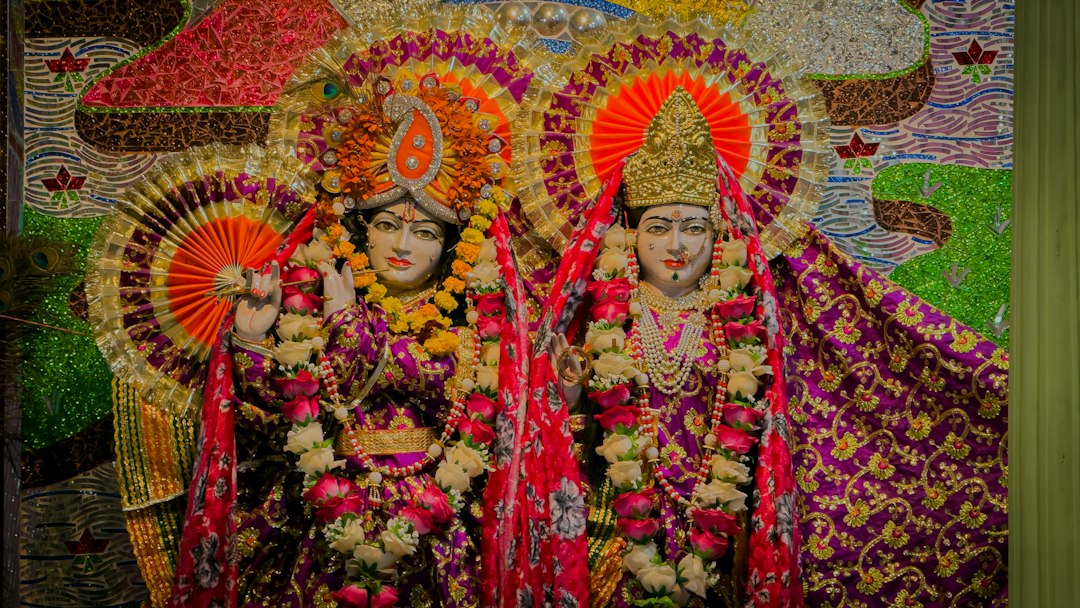
Spiritual Significance of Radhe Radhe
The deeper message behind the Radhe Radhe mantra is not simply repetition.
It is remembrance.
In a life filled with constant distractions, naam jap repeatedly asks the mind to return to something sacred.
Every repetition becomes an opportunity to remember divine love.
Every “Radhe” becomes an invitation to move from distraction toward awareness, from ego toward surrender and from restlessness toward devotion.
That is why something as simple as repeating two words can hold profound meaning for a devotee.
The Radhe Radhe mantra demonstrates that spiritual practice does not always need to be complicated.
Two simple words can become a powerful reminder of devotion:
Radhe Radhe.
Whether you begin with a few repetitions or practise Radhe Radhe mantra 108 times, what matters most is the awareness and devotion you bring to the practice.
Over time, regular Radhe Radhe naam jap can become more than a prayer routine. It can become a reminder to bring love, humility, gratitude and divine remembrance into everyday life.
Rather than merely repeating the name, allow yourself to experience its devotional meaning.
Radhe Radhe.
Personal Session
Every person's inner journey is different. If you are seeking deeper clarity about your life, spiritual growth, relationships, purpose or inner transformation, a personal session can help you explore your questions with focused guidance.
Book NowRead Latest Articles