

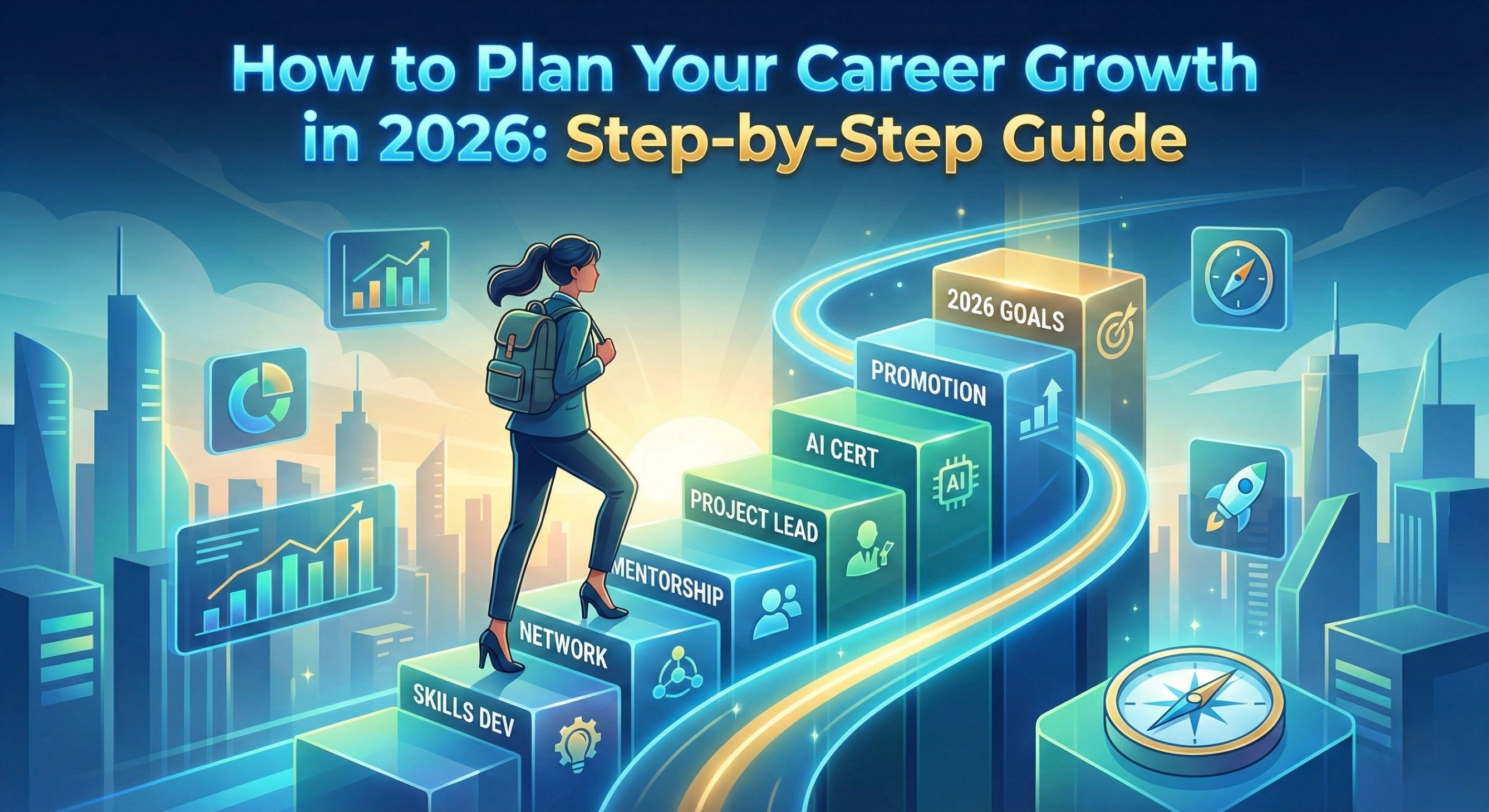
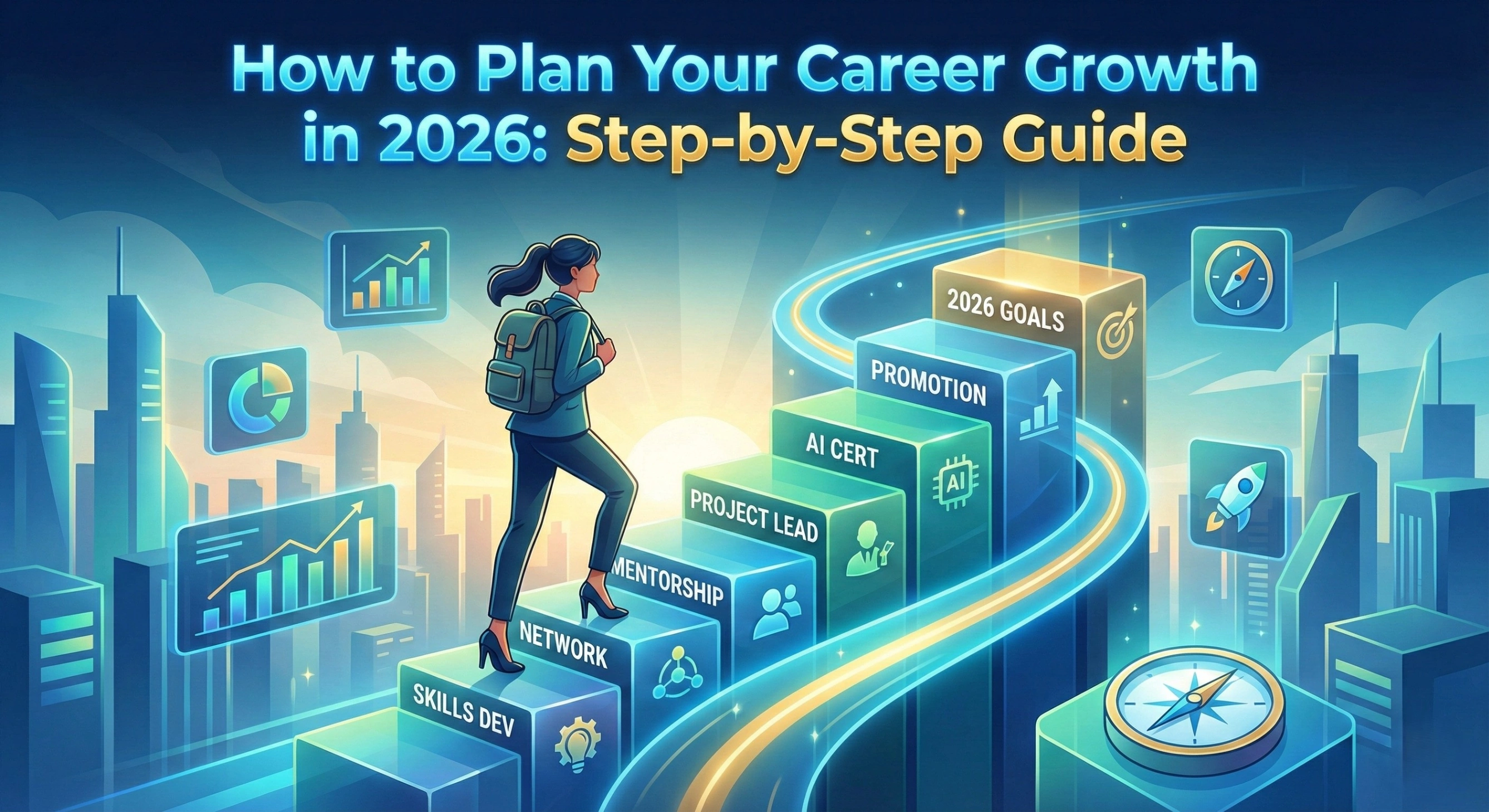
Planning your career growth in 2026 starts with a clear understanding of your current position and where you want to go. Career growth is not just about promotions or salary increases; it encompasses skill development, professional development, networking, and aligning your work with long-term goals. In this comprehensive guide, we’ll cover actionable steps to help you design a personalized roadmap for success.
1. Assess Your Current Career Situation
Before planning your career growth, evaluate your current skills, experiences, and achievements. Ask yourself:
What skills do I currently excel at?
Which areas need improvement?
Are my current responsibilities aligned with my long-term career goals?
Self-assessment tools and career development frameworks can help identify gaps and opportunities. Understanding where you stand is the foundation of effective career planning.
2. Define Clear Career Goals
Setting career goals is critical for focused career growth. Goals should be SMART — Specific, Measurable, Achievable, Relevant, and Time-bound. Examples include:
Achieving a promotion within your department by December 2026
Completing a professional certification relevant to your field
Expanding your network by attending industry conferences and webinars
Long-term and short-term goals work best when used together to create a step-by-step career roadmap.
3. Create a Step-by-Step Career Roadmap
A career roadmap outlines the steps needed to reach your objectives. This roadmap should include:
Skill Development Plan: Identify key skills required for your desired role and schedule training or courses.
Professional Growth Activities: Attend workshops, seek mentorship, and participate in projects that expand your expertise.
Networking Strategies: Build meaningful relationships within your industry for guidance, opportunities, and support.
Visualizing your roadmap for 2026 ensures a clear path and keeps you motivated to follow through.
4. Focus on Skill Development
Career growth strategies in 2026 heavily rely on skill building. Identify skills in demand for your industry whether technical, managerial, or interpersonal. Use online platforms, workshops, and professional courses to strengthen these areas. Continuous learning not only improves your current role performance but also positions you for future opportunities.
5. Leverage Professional Development Opportunities
Professional development is more than just formal education. It includes:
Attending industry events
Participating in webinars and seminars
Joining professional organizations
Seeking mentorship
Engaging in professional development ensures that you remain competitive, informed, and adaptable in your career path.

6. Track Your Progress Regularly
Regularly reviewing your career roadmap allows you to track progress and make adjustments. Set quarterly or semi-annual check-ins to evaluate if you’re meeting your goals and acquiring the skills necessary for your growth. Adjust your strategies based on feedback, industry changes, or personal interests.
7. Emphasize Networking and Mentorship
Networking strategies are crucial for career growth. Attend industry events, connect with professionals online, and seek mentors who can provide guidance. Mentorship can accelerate your career development by offering practical advice, feedback, and new opportunities.
8. Stay Updated with Industry Trends
Industry trends in 2026 will impact career growth. Stay informed about technological advances, market shifts, and emerging skills. Follow professional blogs, newsletters, and forums to ensure your career roadmap aligns with the changing landscape.
9. Balance Career Growth with Personal Goals
Career growth should complement your personal values and life goals. While planning promotions or certifications, consider your work-life balance, mental health, and personal growth objectives. A holistic approach to career planning ensures sustainable professional growth.

10. Use Tools to Organize Your Career Plan
Various tools can help you implement your career growth plan:
Digital planners or project management apps
Skill-tracking spreadsheets
Career development templates
Goal-setting apps
Organizing your plan makes it actionable and easy to follow, ensuring consistent progress toward career goals for 2026.
Planning your career growth in 2026 is a deliberate, structured process. By assessing your current situation, setting clear career goals, creating a roadmap, developing essential skills, and leveraging professional development, you can achieve meaningful growth. Regular tracking, networking, and adapting to industry trends ensure that your career remains on the path to success. Remember, career growth is a continuous journey with a thoughtful plan, 2026 can be your year of professional advancement.