
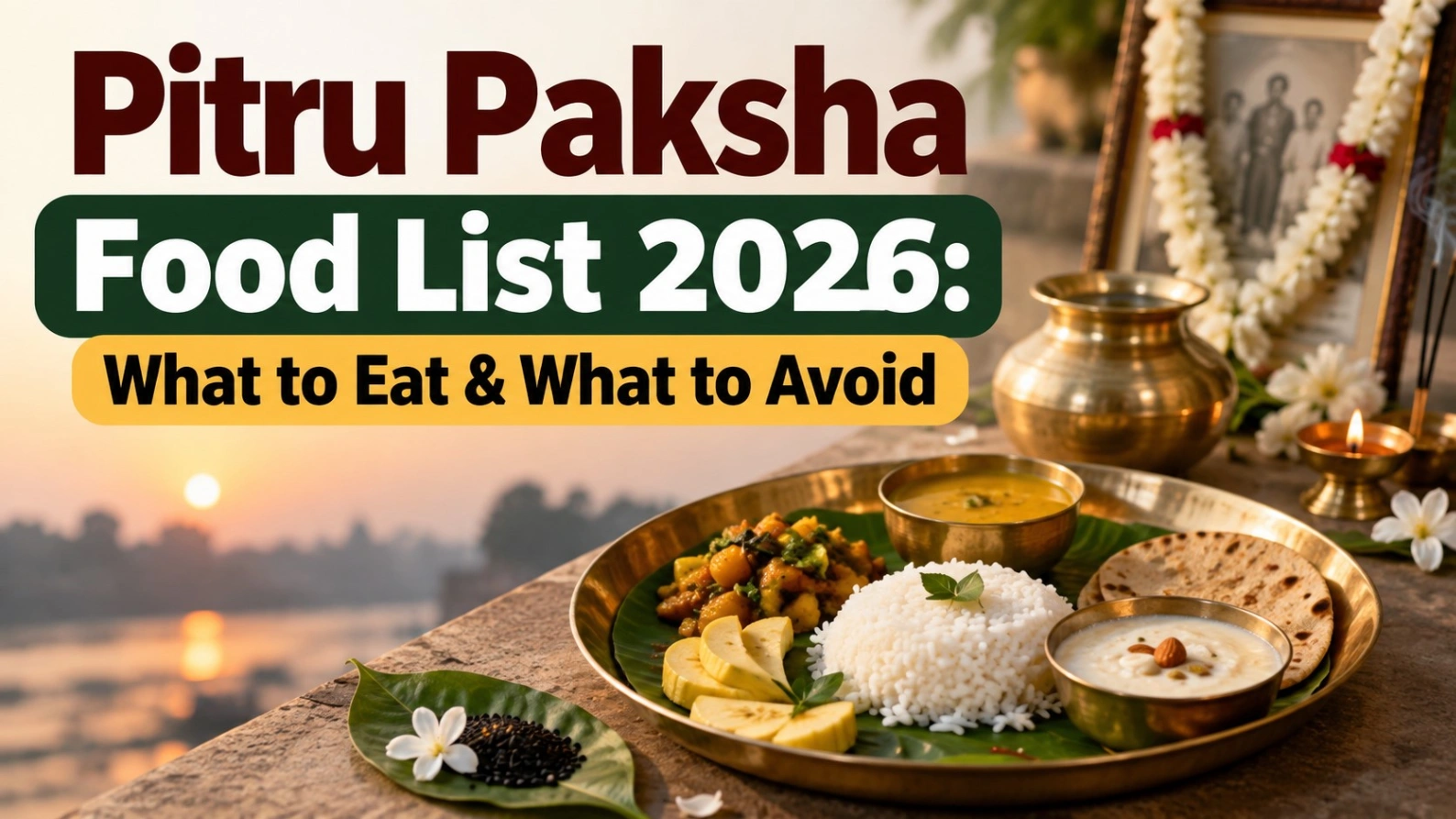
Pitru Paksha is a sacred period in the Hindu tradition dedicated to remembering and honouring one's ancestors. Families perform Shraddha, Tarpan, Pind Daan, charity and food offerings with gratitude and reverence for departed family members.
Food holds an especially important place in these observances. Many families prepare simple, fresh and Satvik food during Pitru Paksha, particularly on the day of Shraddha.
If you are wondering what to eat during Pitru Paksha, which foods are traditionally avoided, or what kind of meal should be prepared for Shraddha, this detailed Pitru Paksha food list will help you understand the commonly followed traditions.
In 2026, the Shraddha period in India falls from late September into October, concluding with Sarva Pitru Amavasya. Because lunar dates and ritual timings can vary depending on location, devotees should refer to their local Panchang or family priest for the exact Shraddha tithi.
It is also important to remember that Pitru Paksha food rules can differ according to region, community and family tradition. The guidelines below describe widely followed practices rather than one compulsory menu for every household.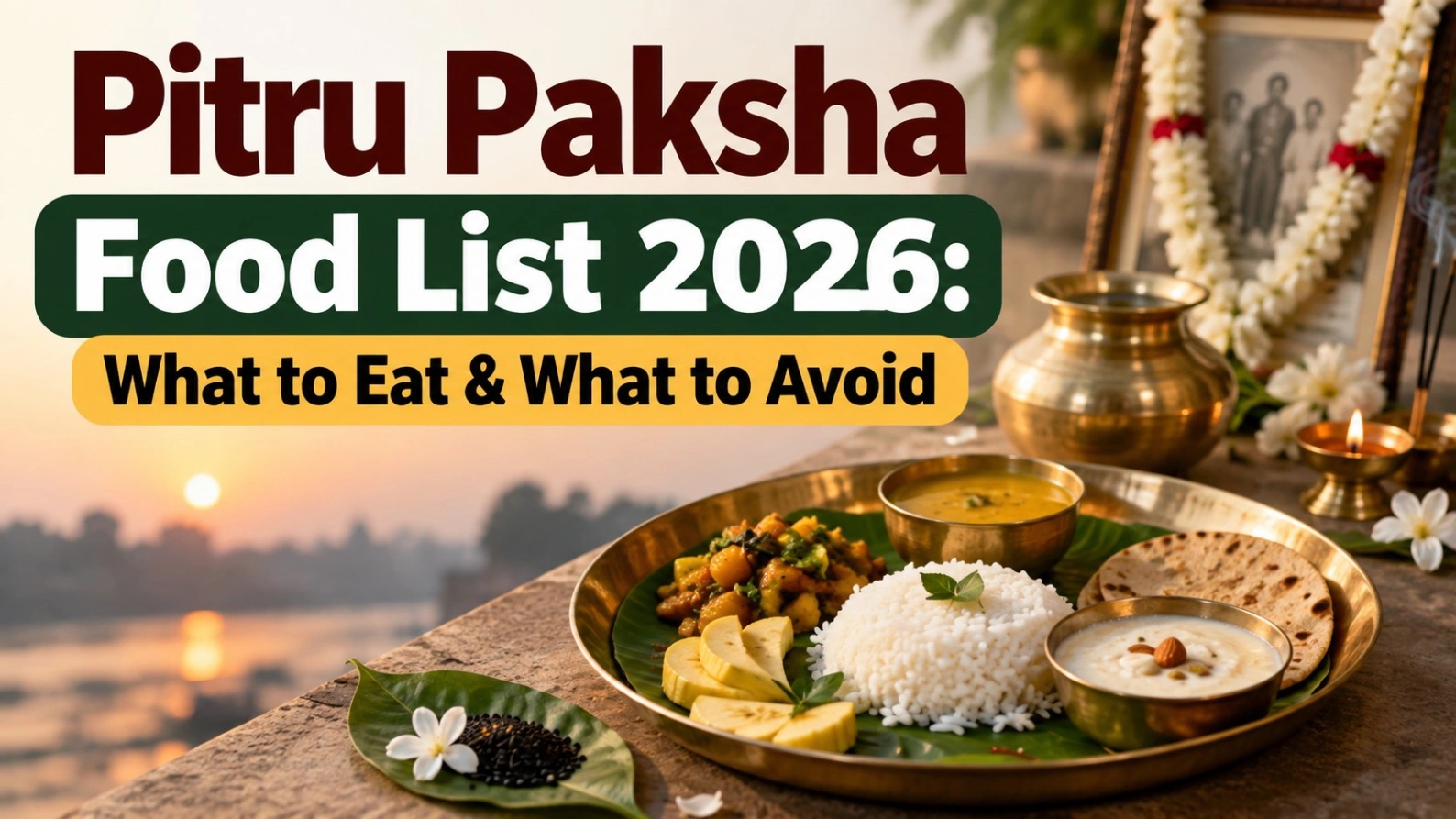
Why Is Food Important During Pitru Paksha?
Pitru Paksha is centred on Shraddha, an act performed with faith and devotion for one's ancestors.
Food prepared during Shraddha is therefore not treated simply as an ordinary meal. Traditionally, it is cooked with purity, simplicity and gratitude.
Many households choose Satvik ingredients because Satvik food is associated with simplicity, calmness and purity. Elaborate indulgence is generally replaced by freshly prepared home food.
Food may also form part of offerings made during Shraddha ceremonies according to family customs.
For this reason, people frequently search for a Pitru Paksha satvik food list before preparing meals during this period.
Design Your Destiny
Ancient wisdom becomes meaningful when it helps us transform the way we think, choose and live. Explore Design Your Destiny and discover practical spiritual wisdom that can help you understand yourself, break limiting patterns and create a more conscious direction for your life.
Start Your Journey Today!Pitru Paksha Food List: Foods Commonly Eaten
The exact menu differs from family to family, but simple vegetarian ingredients are commonly preferred.
1. Rice
Rice is one of the most commonly used ingredients during traditional Shraddha meals.
Plain steamed rice can be served with dal, vegetables and other simple preparations. Rice may also have ritual significance in certain offerings and ceremonies associated with ancestors.
Whenever preparing food for a ritual, follow your family's traditional method.
2. Wheat and Chapati
Simple wheat chapatis or rotis may be included in the meal.
They are generally prepared freshly and served with uncomplicated vegetable preparations rather than heavily spiced gravies.
3. Dal
Simple dal is another common component of a Satvik meal.
The type of lentil used can vary according to regional and family customs. If your household follows specific restrictions during Shraddha, prepare the lentil traditionally used by your family.
4. Seasonal Vegetables
Freshly cooked vegetables are commonly included among foods allowed during Pitru Paksha.
Depending on family customs, options may include vegetables such as:
Pumpkin
Bottle gourd
Ridge gourd
Raw banana
Potato
Colocasia
Green vegetables
Other locally accepted seasonal vegetables
Recipes are usually kept simple and moderately seasoned.
5. Kheer
Kheer is traditionally prepared in many households for religious occasions and Shraddha meals.
Rice, milk and sugar or another traditionally used sweetener may be combined to prepare a simple kheer.
The exact ingredients should follow household customs.
6. Puri
Some families prepare puri as part of the traditional Shraddha bhojan.
It may be served alongside vegetables, kheer and other dishes associated with the family's ancestral traditions.
7. Milk and Dairy Products
Milk, curd and ghee may form part of Satvik preparations.
Ghee in particular is traditionally associated with many Hindu religious practices and can be used for cooking or preparing specific offerings.
8. Fruits
Fresh seasonal fruits are generally considered a simple food option.
Bananas and locally available fruits can be included depending on the ritual and family tradition.
9. Sesame Seeds
Black sesame or til has special significance in many rituals associated with Pitru Paksha and Tarpan.
Its ritual use should be distinguished from everyday meal planning, and the appropriate method should be followed according to one's Shraddha tradition.
Shradh Puja at Home: Pitru Paksha Shradh, Samagri & Mantras
Simple Pitru Paksha Satvik Food List
If you want a straightforward meal, a typical Satvik-style plate could contain:
Rice + Dal + Simple Sabzi + Roti/Puri + Kheer + Fruit
However, there is no single universal Pitru Paksha food list followed throughout India.
Traditional Shraddha menus vary considerably between North India, South India, Bengal, Maharashtra, Gujarat and other regions.
Your family's established custom should therefore take priority over generic online lists.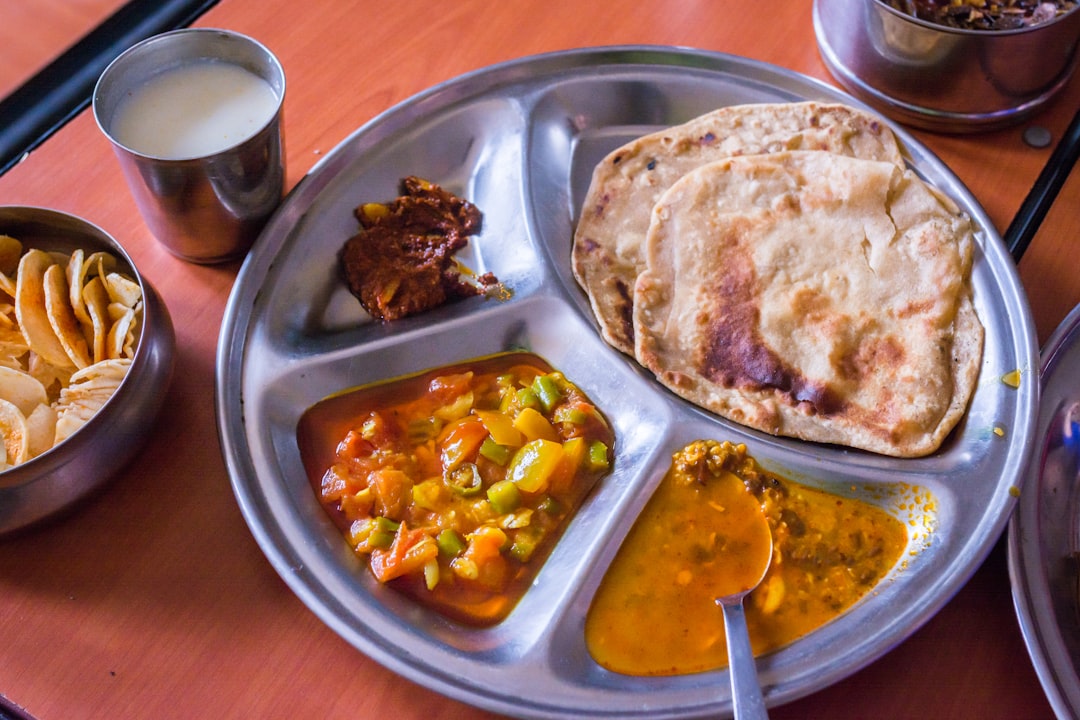
What Not to Eat During Pitru Paksha
Along with knowing what to eat during Pitru Paksha, many people want to know which foods are traditionally avoided.
The strictest food restrictions are usually associated with the family's Shraddha day, while some households observe them throughout Pitru Paksha.
1. Non-Vegetarian Food
Many families avoid meat, fish and other non-vegetarian food while performing Shraddha.
A vegetarian Satvik meal is usually preferred for the ritual day.
Some devotees voluntarily continue this discipline throughout Pitru Paksha.
2. Eggs
Households following a strict Satvik diet generally avoid eggs along with other non-vegetarian ingredients.
3. Onion and Garlic
Onion and garlic are commonly excluded from food prepared for religious rituals in many Hindu traditions.
As a result, Pitru Paksha sattvic food is often prepared without onion and garlic, especially on the day of Shraddha.
The practice followed across the entire Pitru Paksha period can vary by household.
4. Alcohol
Alcohol is traditionally avoided during Shraddha observances.
The period is intended for remembrance, restraint and spiritual reflection, so intoxicants are generally regarded as inconsistent with the nature of the observance.
5. Stale or Leftover Food
Freshly cooked meals are preferred for religious offerings.
Food prepared long beforehand or leftover from an earlier meal is generally avoided when preparing food specifically for Shraddha.
6. Excessively Rich or Indulgent Food
Pitru Paksha food traditionally emphasises simplicity.
Extremely rich restaurant-style dishes, highly processed meals and excessively indulgent food are therefore usually not the focus of Shraddha bhojan.
Pitru Paksha Food Rules to Follow
Understanding a few basic Pitru Paksha food rules can make meal preparation easier.
Prepare Fresh Food
Whenever food is being prepared specifically for Shraddha, freshly cooked food is traditionally preferred.
Maintain Cleanliness
The cooking space, utensils and ingredients should be kept clean.
The larger principle behind ritual cooking is purity of both preparation and intention.
Prefer Simple Satvik Food
Avoid turning the meal into an extravagant feast.
Simple vegetarian dishes prepared mindfully are more consistent with the reflective spirit of Pitru Paksha.
Follow Your Family Tradition
This is perhaps the most important rule.
Different regions and family lineages follow different Shraddha customs. An ingredient that is accepted in one household may not traditionally be used in another.
When in doubt, consult an elder in your family or a knowledgeable priest familiar with your tradition.
Avoid Food Waste
Because food is associated with gratitude and offering during Shraddha, prepare appropriate quantities and avoid unnecessary waste.
Pitru Paksha Diet Rules: Should You Follow Them for All 15–16 Days?
This is where many people become confused.
There is a distinction between the specific Shraddha day of one's ancestor and personal dietary observances followed throughout Pitru Paksha.
Many families follow stricter Satvik rules on the actual Shraddha day. Other households voluntarily maintain a vegetarian, onion-and-garlic-free or otherwise simplified diet throughout the entire period.
Therefore, there is no reason to assume that every household follows identical Pitru Paksha diet rules for every day.
If your family has an established tradition, follow that tradition first.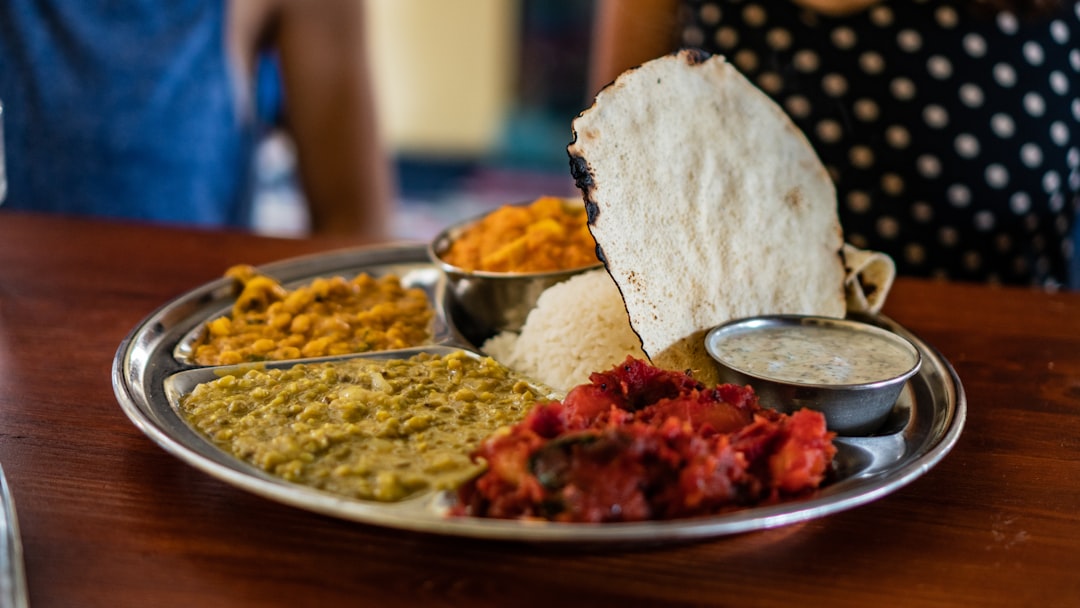
What Can You Eat During Pitru Paksha in Daily Meals?
For people maintaining a simple vegetarian diet throughout Pitru Paksha, everyday meals do not have to be complicated.
Breakfast
You could choose simple homemade options such as fruit, milk, poha or another food accepted according to your household's rules.
Lunch
A basic lunch may contain:
Roti
Rice
Dal
Seasonal vegetable
Curd
Evening
Fresh fruit, milk or a simple homemade snack can be chosen depending on your normal diet and religious practice.
Dinner
Keep dinner simple with roti, vegetables, dal or another freshly prepared vegetarian dish.
Pitru Paksha is not necessarily a fasting period for everyone. The emphasis is more commonly on simplicity, remembrance and adherence to one's Shraddha tradition.
Why Is Satvik Food Preferred During Pitru Paksha?
Satvik food is traditionally associated with simplicity, balance and clarity.
Shraddha is performed with remembrance and gratitude rather than celebration or sensory indulgence. For this reason, fresh and simple vegetarian meals naturally fit the spiritual mood of the observance.
The purpose is not merely to create a list of forbidden foods.
The deeper intention is to cultivate awareness, gratitude and respect for those who came before us.
Living The Gita Movement
The Bhagavad Gita is not merely something to be read or listened to. It is the art of awakening within oneself and experiencing the truth of life. The vision of the Living the Gita Movement is to bring the wisdom of the Gita out of books and transform it into a lived experience.
Join NowFoods Allowed During Pitru Paksha vs Foods Commonly Avoided
Foods Commonly Preferred | Foods Commonly Avoided |
|---|---|
Fresh vegetarian food | Meat and fish |
Rice | Eggs in strict Satvik households |
Roti/chapati | Onion and garlic in ritual meals |
Simple dal | Alcohol |
Seasonal vegetables | Stale or leftover food |
Milk and curd | Highly processed food |
Ghee | Excessively indulgent meals |
Fresh fruit | Foods prohibited by family tradition |
Kheer | Intoxicants |
Remember that this table is a general guide. Individual Shraddha traditions may differ.
Pitru Paksha 2026: Meaning, Significance and the Science of Gratitude
The Spiritual Meaning Behind Pitru Paksha Food
It is easy to focus only on what not to eat during Pitru Paksha, but the deeper meaning goes beyond food restrictions.
Pitru Paksha encourages us to remember that our lives are connected to generations that came before us.
Our family, upbringing, traditions and opportunities have all been influenced by our ancestors in some way.
Shraddha therefore becomes an expression of gratitude.
Preparing food respectfully, offering it according to tradition, feeding others and practising charity can turn an ordinary meal into an act of remembrance.
The intention behind the ritual is ultimately more meaningful than treating the observance as a complicated checklist.
The Pitru Paksha food list 2026 is centred around simple, fresh and traditionally accepted Satvik food.
Rice, dal, seasonal vegetables, roti, fruits, milk products and traditional preparations such as kheer are commonly included, while non-vegetarian food, alcohol, onion, garlic and stale food are often avoided during Shraddha observances.
However, Pitru Paksha food rules are not identical across India. Regional customs, family traditions and the specific Shraddha ritual being performed can determine which ingredients are appropriate.
Rather than becoming anxious about every ingredient, understand the deeper purpose of Pitru Paksha like gratitude, remembrance and respect for one's ancestors.
When food is prepared with cleanliness, simplicity and Shraddha, it becomes more than a meal. It becomes an expression of remembrance.
Personal Session
Sometimes general knowledge is not enough. Your questions, challenges and inner journey are uniquely yours. Book a Personal Session for focused guidance and deeper clarity to help you understand your situation and move forward with greater awareness.
Book NowRead Latest Articles