

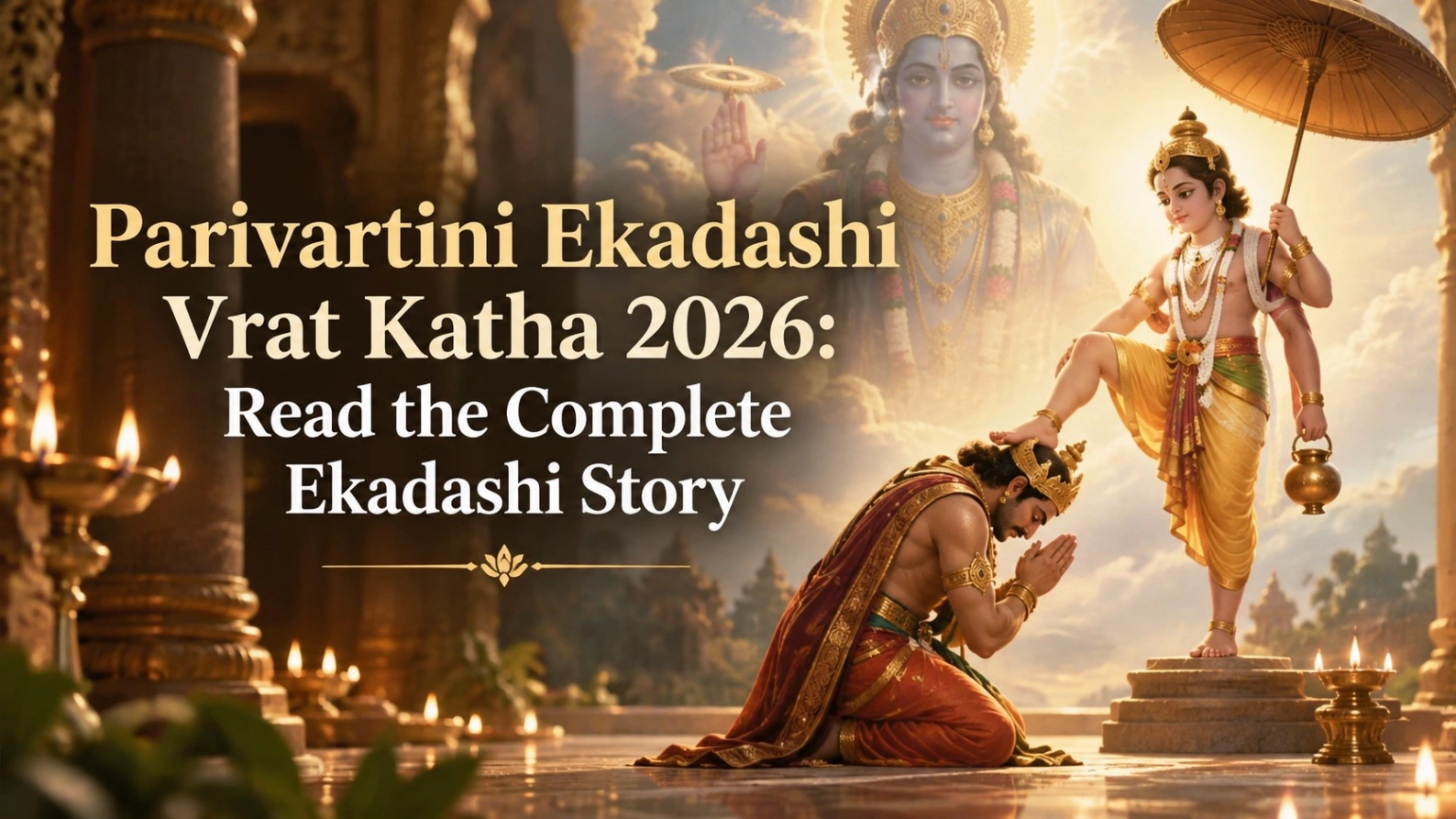
Parivartini Ekadashi Vrat Katha 2026 tells one of the most meaningful stories associated with Lord Vishnu, his Vamana avatar and the devoted King Bali. Observed during the Shukla Paksha of the Hindu month of Bhadrapada, Parivartini Ekadashi holds special significance for devotees of Lord Vishnu.
In 2026, Parivartini Ekadashi will be observed on Tuesday, September 22. The Ekadashi Tithi begins on September 21 and continues into September 22, although exact Panchang timings and Parana timings should always be checked according to your location.
The day is traditionally associated with Lord Vishnu changing his resting position during his cosmic Yoga Nidra in the Chaturmas period. This symbolic “turning” or parivartan gives the Ekadashi its name.
But the heart of the observance lies in the Parivartini Ekadashi Katha, the story of King Bali's generosity, Lord Vishnu's Vamana avatar and the transformative power of devotion and surrender.
What Is Parivartini Ekadashi?
Parivartini Ekadashi falls on the eleventh lunar day of the Shukla Paksha of Bhadrapada month.
It is also traditionally known by names such as:
Parsva Ekadashi
Vamana Ekadashi
Jayanti Ekadashi
The word Parivartini comes from the idea of transformation or turning. According to devotional tradition, Lord Vishnu rests in Yoga Nidra during Chaturmas and changes his position on this Ekadashi. For this reason, the festival represents not only divine rest but also inner transformation, spiritual renewal and a change in consciousness.
The day is especially associated with worship of Lord Vishnu in his Vamana form.
Design Your Destiny
Reading wisdom is only the beginning. The real transformation starts when you learn to apply it to your thoughts, choices, relationships and everyday life. Discover Design Your Destiny and explore practical spiritual principles that can help you understand yourself deeply, overcome limiting patterns and consciously create a more purposeful life.
Start Your Journey Today!Parivartini Ekadashi Vrat Katha 2026
The traditional Parivartini Ekadashi Vrat Ki Katha revolves around King Bali and Lord Vamana.
King Bali, the grandson of the great devotee Prahlada, was known as a powerful ruler. Despite belonging to the Daitya lineage, Bali was respected for his generosity, courage, discipline and devotion.
Through his strength, austerities and sacrifices, King Bali became extremely powerful and eventually established his authority over the three worlds.
His growing influence concerned the devas, who sought help from Lord Vishnu.
Rather than confronting Bali merely through force, Lord Vishnu chose a remarkable path.
He appeared in the form of Vamana, a young Brahmin of small stature.
This seemingly simple appearance would eventually reveal one of the most powerful lessons of surrender found in the traditional Ekadashi stories.
Lord Vamana Arrives at King Bali's Yajna
King Bali was performing a grand yajna and was offering gifts and donations to Brahmins and visitors.
At this time, Lord Vishnu appeared before him in the form of Vamana.
King Bali welcomed the young Brahmin respectfully and asked:
“What can I offer you?”
As a generous king, Bali was prepared to give wealth, cattle, land or anything else the Brahmin desired.
But Vamana made an unusually small request.
He asked for only three paces of land, measured by his own feet.
King Bali was surprised.
Why would someone ask such a small gift from a king who was prepared to offer far more?
Bali encouraged Vamana to ask for additional land or wealth.
But Vamana remained firm.
He wanted only three steps of land.
King Bali Gives His Word
King Bali agreed to Vamana's request.
According to traditional versions of the story, Bali's guru Shukracharya understood that this small Brahmin was no ordinary visitor. He recognized the divine presence of Lord Vishnu and warned Bali to reconsider the promise.
But King Bali believed that once he had given his word, he should honour it.
He chose truth and commitment over the fear of losing his possessions.
Bali therefore formally granted Vamana the three paces of land.
At that moment, everything changed.
The small Vamana began expanding into an immense cosmic form—Trivikrama.
The humble seeker asking for three steps of land now revealed the limitless form of the Divine.
The Three Steps of Lord Vamana
With his first great stride, Lord Vamana covered the earth.
With the second, he covered the heavens.
There was now no space remaining for the third step.
Lord Vamana turned to Bali and asked where he should place his final step.
King Bali understood what had happened.
Everything he believed he possessed had already been encompassed by the Divine.
Rather than resisting, arguing or running away, Bali surrendered.
He bowed before Lord Vamana and offered his own head as the place for the third step.
It was an extraordinary act of surrender.
Bali had already offered his kingdom.
Now he offered himself.
Lord Vamana placed the third step upon Bali, and traditional retellings say that Bali was granted sovereignty in the lower realm while being blessed for his devotion and commitment to his promise.
Several traditional versions further describe Lord Vishnu as remaining close to Bali because of the king's extraordinary devotion.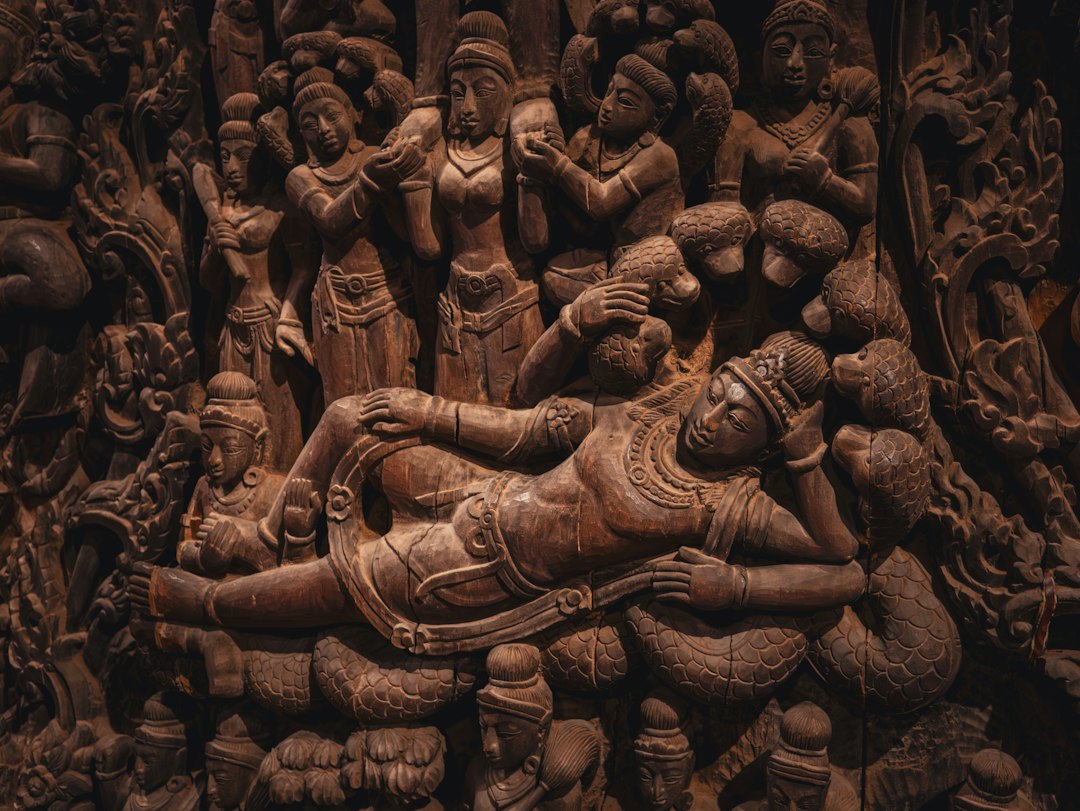
What Does the Parivartini Ekadashi Story Teach Us?
The Parivartini Ekadashi story is not merely about a king losing his kingdom.
Its deeper spiritual message is about what happens when attachment transforms into surrender.
1. Nothing truly belongs to us
King Bali ruled vast territories, yet the appearance of Vamana reminded him that worldly possessions are temporary.
We may accumulate wealth, status, recognition and possessions, but spiritual traditions repeatedly remind us that these are not our permanent identity.
2. A promise reveals character
Bali could have withdrawn his promise once he realized who Vamana was.
Instead, he honoured his word.
This makes integrity one of the central lessons of the Parivartini Ekadashi Katha.
3. Surrender is not weakness
When Bali offered his head for the third step, he was not simply accepting defeat.
Symbolically, he was surrendering the ego itself.
True surrender in spiritual life means letting go of the belief that everything must happen according to our personal desires.
4. Transformation begins within
The name Parivartini itself points toward change.
The most important transformation is not merely external.
It is the inner movement from:
ego to humility,
attachment to acceptance,
possession to offering,
fear to faith,
and knowledge to lived wisdom.
Why Is Lord Vamana Worshipped on Parivartini Ekadashi?
Parivartini Ekadashi is closely connected with the Vamana avatar of Lord Vishnu.
Vamana appears small and simple, but later reveals the cosmic Trivikrama form.
Spiritually, this can be understood as a reminder not to judge truth merely by outward appearance.
Something that looks small can contain limitless potential.
A simple act of faith can become transformative.
A small spiritual practice can gradually change the direction of life.
This is one reason devotees remember Lord Vamana while reading the Parivartini Ekadashi Vrat Katha.
Simple Parivartini Ekadashi Puja Vidhi
Devotional practices vary between families and traditions, but a simple Parivartini Ekadashi puja vidhi may include the following:
Wake up early and bathe before beginning worship.
Wear clean clothes and prepare a clean puja space.
Place an image or murti of Lord Vishnu or Lord Vamana.
Take a simple Sankalp to observe Ekadashi with devotion.
Light a diya and incense.
Offer flowers, fruits and other customary offerings.
Offer Tulsi to Lord Vishnu where appropriate according to your family tradition.
Chant Vishnu mantras such as “Om Namo Bhagavate Vasudevaya.”
Read or listen to the Parivartini Ekadashi Vrat Katha 2026.
Spend time in prayer, bhajan, meditation or remembrance of Lord Vishnu.
Complete Parana on Dwadashi according to the appropriate local Panchang time.
People with medical conditions, children, older adults, pregnant women or anyone taking medication should choose fasting practices suitable for their health rather than attempting an unnecessarily strict fast.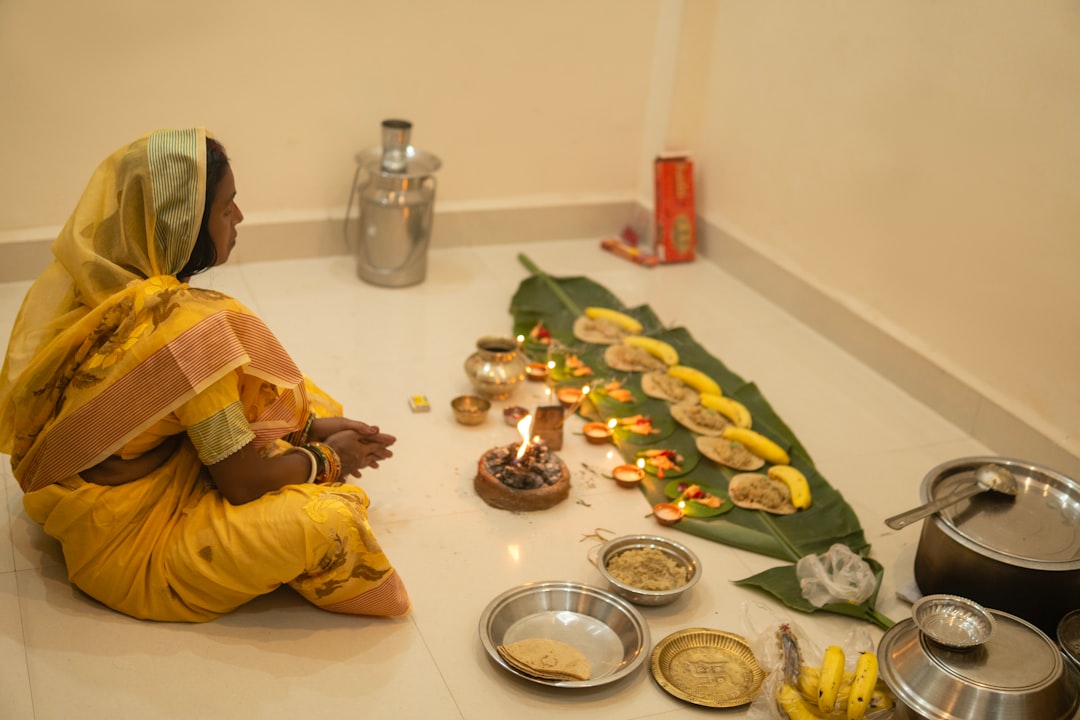
How to Read Parivartini Ekadashi Vrat Katha
The katha can be read after the main Vishnu puja or during a quiet period of prayer.
You do not need an elaborate arrangement to understand its message.
Read slowly and reflect on three questions:
What am I holding onto too tightly?
Where is ego preventing inner growth?
What positive transformation can I consciously begin today?
This turns the Parivartini Ekadashi Katha 2026 from something we simply read into wisdom we actively apply.
Living The Gita Movement
The Bhagavad Gita is not merely something to be read or listened to. It is the art of awakening within oneself and experiencing the truth of life. The vision of the Living the Gita Movement is to bring the wisdom of the Gita out of books and transform it into a lived experience.
Join NowParivartini Ekadashi Katha in Hindi – What Is the Story?
For readers searching for Parivartini Ekadashi Katha in Hindi or Parivartini Ekadashi Vrat Katha in Hindi, the story can be remembered simply as:
राजा बलि अपनी दानशीलता और वचन के लिए प्रसिद्ध थे। भगवान विष्णु वामन रूप में उनके यज्ञ में आए और तीन पग भूमि मांगी। राजा बलि ने वचन दे दिया। भगवान वामन ने विराट त्रिविक्रम रूप धारण कर दो पग में पृथ्वी और स्वर्ग नाप लिया। तीसरे पग के लिए स्थान न बचने पर राजा बलि ने अपना सिर भगवान के चरणों में अर्पित कर दिया। यह कथा समर्पण, सत्य, विनम्रता और भक्ति का संदेश देती है।
This short summary can also help users searching specifically for the Parivartini Ekadashi Vrat Ki Katha in Hindi.
Spiritual Significance of Parivartini Ekadashi
The festival represents much more than ritual fasting.
Its strongest message lies in its name Parivartan, or transformation.
Lord Vishnu's symbolic change of position becomes an invitation for us to examine the direction of our own lives.
Are we merely collecting spiritual knowledge, or are we changing because of it?
Are we holding tightly to ego, identity and possessions, or developing greater humility?
Are we reading sacred stories only as mythology, or discovering what they reveal about our behaviour today?
The Parivartini Ekadashi story 2026 gives devotees an opportunity to turn inward and consciously choose a more aware way of living.
The Parivartini Ekadashi Vrat Katha 2026 carries a timeless message hidden within the extraordinary story of Lord Vamana and King Bali.
The story reminds us that true spirituality is not simply about what we possess, know or perform externally. It is about the transformation that takes place within us.
King Bali's final offering represents the highest form of surrender, the willingness to place even one's ego before the Divine.
This Parivartini Ekadashi, as you read the Parivartini Ekadashi Katha, take a moment to ask:
What needs to change within me?
Perhaps that single question can become the beginning of your own parivartan.
Personal Session
Sometimes the next step becomes clearer when you receive guidance tailored to your own questions and life situation. Book a personal session to explore your challenges, understand your inner patterns and receive practical spiritual guidance for greater clarity, awareness and transformation.
Book NowRead Latest Articles