

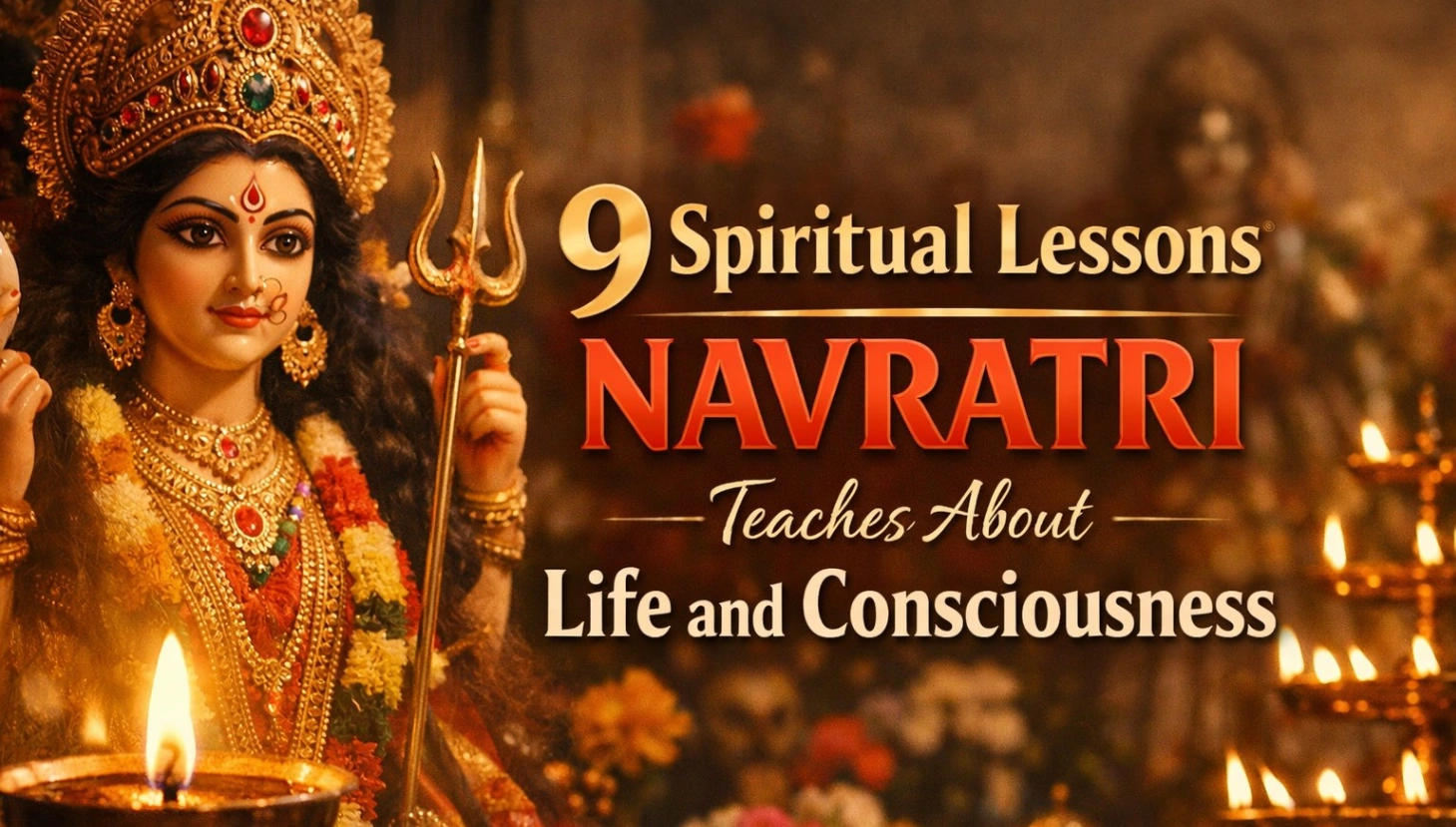
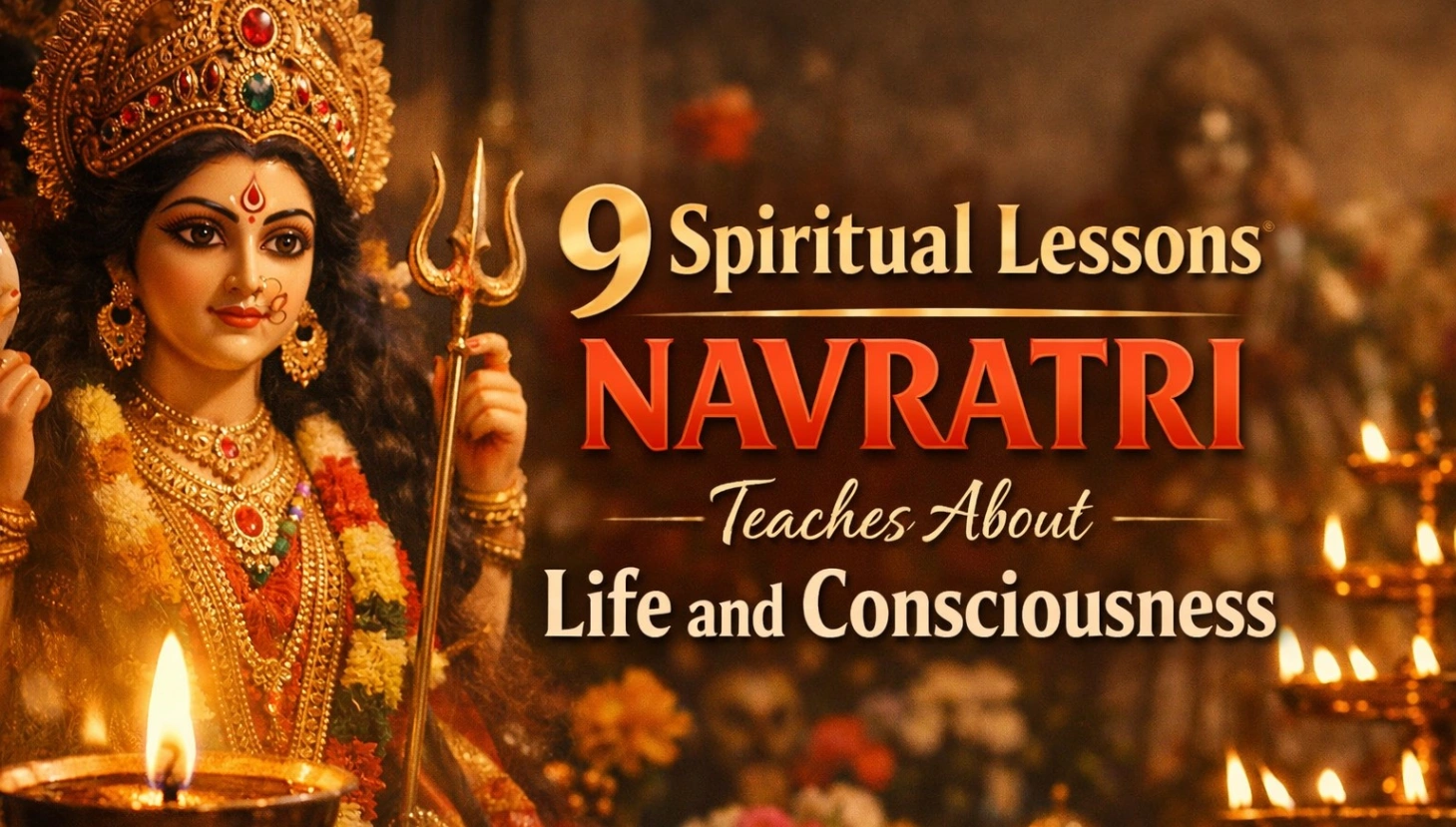
Navratri is one of the most powerful spiritual festivals in Hinduism. While many people celebrate it through fasting, prayers, and festivities, the deeper navratri spiritual meaning goes far beyond rituals. At its core, Navratri symbolizes the journey of inner transformation, spiritual awakening, and the awakening of divine consciousness within every human being.
The word Navratri literally means “nine nights.” These nine nights represent the gradual victory of light over darkness, awareness over ignorance, and consciousness over ego. The spiritual significance of Navratri lies in the process of awakening inner strength, wisdom, and purity through the symbolism of Goddess Durga and her nine forms.
When understood deeply, Navratri becomes a guide for life. It teaches how to overcome negativity, awaken inner power, and move toward spiritual growth and self-realization.
Here are 9 spiritual lessons Navratri teaches about life and consciousness.
1. Every Spiritual Journey Begins by Facing Inner Negativity
One of the most powerful aspects of the navratri symbolism and meaning is the story of Goddess Durga defeating the demon Mahishasura. Spiritually, this battle represents the struggle between higher consciousness and the negative tendencies of the human mind.
The demon symbolizes ego, anger, greed, jealousy, and ignorance. These inner forces often control our decisions and limit our growth.
The spiritual power of Durga Navratri reminds us that transformation begins when we become aware of these tendencies and consciously work to overcome them.
In simple words, Navratri teaches that spiritual growth begins with self-awareness.
2. Discipline is the Foundation of Spiritual Growth
During Navratri, millions of people practice fasting, meditation, prayer, and spiritual discipline. This is not just tradition, it represents the navratri spiritual practices that purify both body and mind.
Fasting, waking early, and maintaining positive thoughts create mental clarity. These practices reduce distractions and strengthen inner focus.
The spiritual importance of Navratri lies in reminding us that discipline is necessary for any form of transformation whether spiritual, emotional, or personal.
Without discipline, even the strongest intentions fail to bring change.
3. Divine Feminine Energy Exists Within Everyone
Navratri celebrates the power of Shakti, the divine feminine energy that sustains the universe. Spiritually, this energy is not limited to gender; it represents creativity, intuition, compassion, and inner strength.
The navratri and divine feminine energy message teaches that every person carries this power within.
When we connect with this energy through meditation and awareness, we awaken our deeper potential.
This is why Navratri and spiritual awakening are closely connected — the festival reminds us to rediscover our inner power.
4. Life Is a Journey of Inner Transformation
The navratri and inner transformation message reflects the gradual process of evolving consciousness.
Each of the nine days of Navratri symbolizes a stage in spiritual development. The journey begins with cleansing negativity and slowly moves toward wisdom, clarity, and self-realization.
The spiritual journey of Navratri teaches that transformation does not happen overnight. It is a gradual process that requires patience, awareness, and dedication.
Just like the nine nights lead to victory on the tenth day, every individual’s inner journey eventually leads to clarity and growth.
5. True Strength Comes From Within
Many people associate strength with physical power or social status. However, the deeper navratri and inner strength message tells us something different.
Real strength is the ability to remain calm during challenges, maintain clarity during confusion, and stay compassionate even when life becomes difficult.
Goddess Durga represents this inner resilience. The navratri and inner power symbolism teaches that the greatest victories in life happen inside the mind.
When consciousness becomes stronger than emotions and impulses, real transformation begins.
6. Conscious Living Leads to Spiritual Awakening

One of the lesser-discussed aspects of the navratri consciousness meaning is mindfulness.
Navratri invites people to become more aware of their thoughts, actions, and habits. Fasting and prayer create a pause from routine distractions, allowing individuals to reconnect with themselves.
This process supports navratri and mindfulness as well as navratri and consciousness awakening.
When awareness grows, life begins to change naturally. Decisions become clearer, emotions become balanced, and relationships become healthier.
This is the beginning of navratri and self realization.
7. Positive Energy Can Transform Your Life
During Navratri, homes, temples, and communities are filled with devotion, music, and celebrations. This collective energy creates a powerful atmosphere of positivity.
The spiritual energy of Navratri is believed to uplift mental and emotional states.
Whether someone approaches it spiritually or psychologically, the effect is the same: positive energy influences thoughts and behaviors.
The navratri and positive energy message reminds us that our environment and mindset play a major role in shaping our lives.
Surrounding ourselves with positivity can transform the way we think and act.
8. Letting Go Is Part of Spiritual Growth
Another important spiritual symbolism of Navratri is letting go of what no longer serves us.
In many traditions, Navratri represents the cleansing of negative energies and emotional burdens.
Spiritually, this symbolizes releasing attachments, toxic patterns, and limiting beliefs.
The navratri and overcoming negativity lesson teaches that growth requires courage to leave behind old habits and mental conditioning.
When we release negativity, new clarity emerges.
9. The Ultimate Goal Is Awakening Higher Consciousness
The final lesson of Navratri is the awakening of higher awareness.
The journey of nine nights ultimately leads to Vijayadashami, symbolizing victory not just over external forces, but over inner ignorance.
The deeper navratri philosophy and meaning reminds us that life itself is a spiritual journey.
When individuals cultivate awareness, discipline, compassion, and inner strength, they move closer to enlightenment.
This is the essence of navratri and soul awakening realizing the deeper truth of our existence.

The Deeper Meaning of Navratri
While many people celebrate Navratri through rituals and traditions, the deeper meaning of Navratri festival lies in understanding its spiritual message.
Navratri teaches:
Self-awareness
Discipline
Inner strength
Spiritual awakening
Conscious living
The navratri and personal growth message encourages individuals to look inward and transform their lives from within.
Ultimately, the festival reminds us that the battle between light and darkness happens not in the world, but within the human mind.
Navratri is far more than a cultural celebration. It is a powerful reminder of the journey from ignorance to awareness, from weakness to strength, and from ego to consciousness.
Understanding the navratri spiritual meaning allows us to see the festival as a guide for living a more mindful and awakened life.
When we embrace the spiritual lessons from Navratri, we begin to recognize the immense potential that exists within us.
The message of Navratri is simple yet profound:
True victory in life comes from awakening our inner consciousness.
If you want to go beyond rituals and truly understand the science of inner transformation, explore the Design Your Destiny program by Sakshi Shree.
This powerful program helps you understand the deeper connection between mind, consciousness, and spiritual growth, guiding you toward clarity, success, and inner peace.