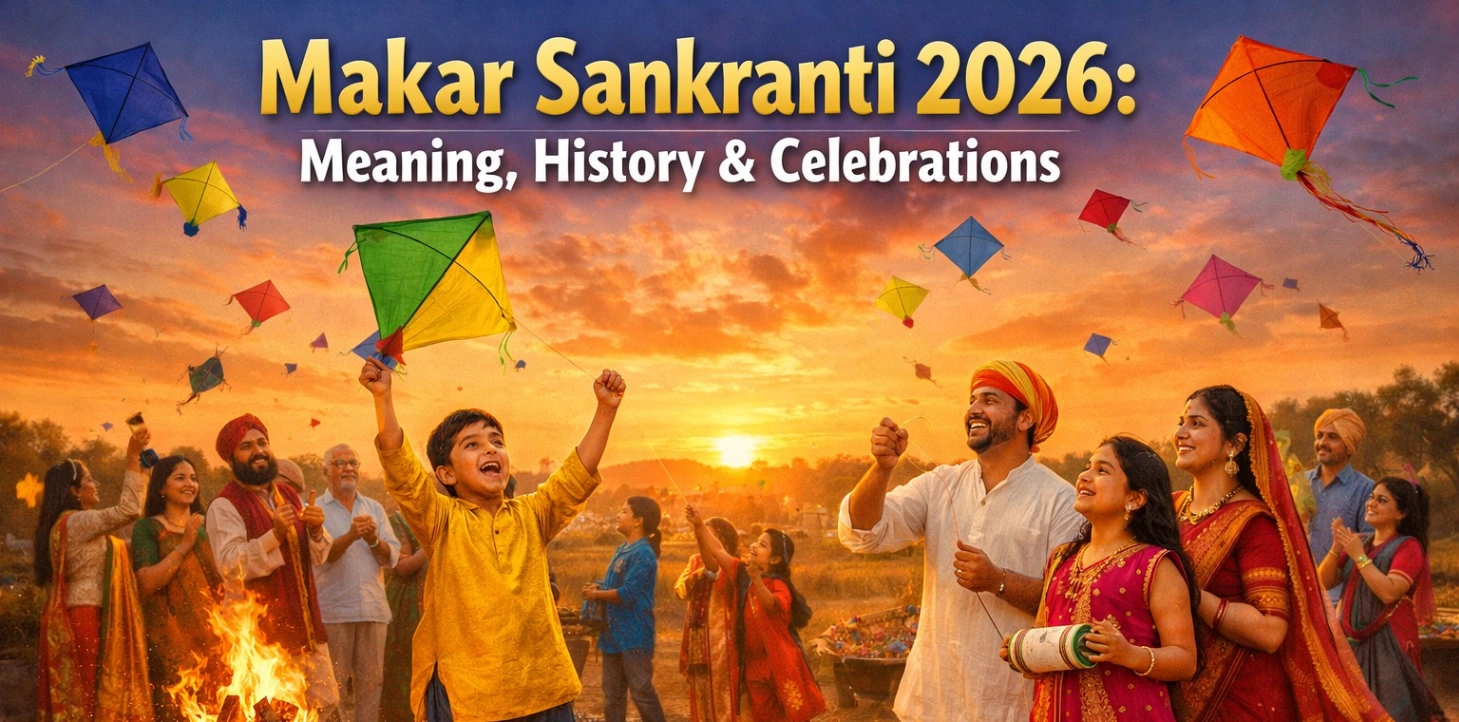
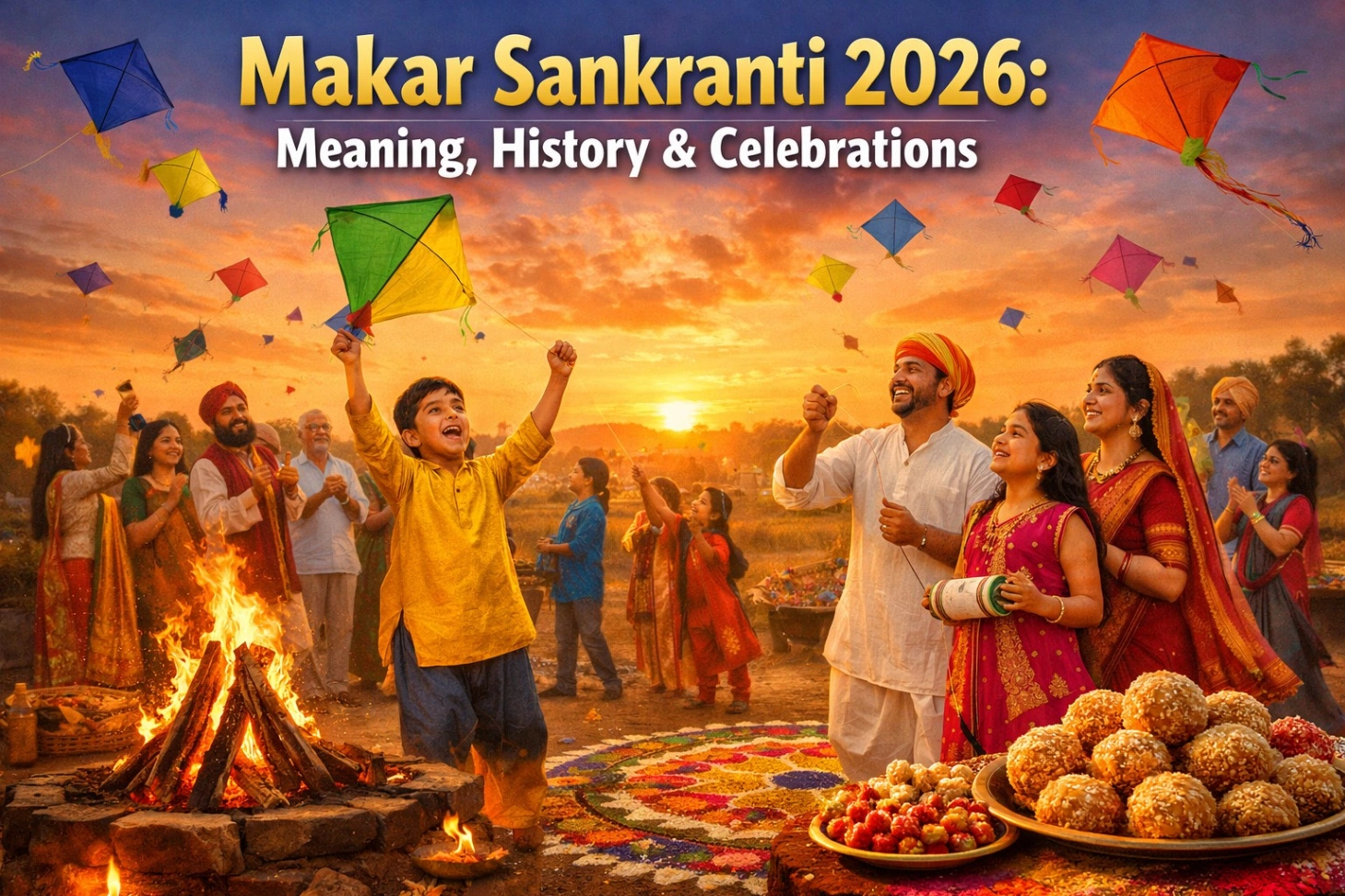
Makar Sankranti 2026 is one of India’s most joyous and widely celebrated festivals. Falling every year around 14th January, it marks the Sun’s transition into the zodiac sign of Capricorn, or Makara Rashi, and signifies the end of winter and the beginning of longer days. Known as a harvest festival, Makar Sankranti holds deep cultural and spiritual significance, bringing families and communities together through rituals, feasts, and vibrant celebrations.
Makar Sankranti Meaning
The word “Makar Sankranti” combines Makara (Capricorn) and Sankranti (transition). Essentially, it represents the Sun’s northward journey, called Uttarayan, which is considered highly auspicious in Hindu astrology. This transition is believed to bring prosperity, health, and happiness, making Makar Sankranti not just a seasonal marker but also a spiritual celebration of nature’s bounty.
History of Makar Sankranti
Makar Sankranti has been celebrated for thousands of years in India and finds mention in ancient Hindu texts like the Puranas. Traditionally, it was a festival that honored the Sun God, Surya, recognizing his role in sustaining life and crops. Farmers expressed gratitude for the harvest season, and communities came together to share food, light bonfires, and perform rituals. Over time, regional variations emerged, giving rise to unique customs across India, while the core significance of marking the Sun’s transition remained universal.
Significance of Makar Sankranti
Makar Sankranti carries multiple layers of significance:
Astronomical Importance: Marks the Sun’s entry into Capricorn and the start of Uttarayan.
Agricultural Significance: Celebrates the harvest season and pays respect to farmers’ hard work.
Spiritual Significance: Associated with prayers for prosperity, health, and spiritual awakening.
Cultural Importance: Brings communities together, reinforcing social bonds through shared rituals and celebrations.
Makar Sankranti Festival Traditions Across India
Makar Sankranti is celebrated differently in various regions, making it one of India’s most diverse festivals:
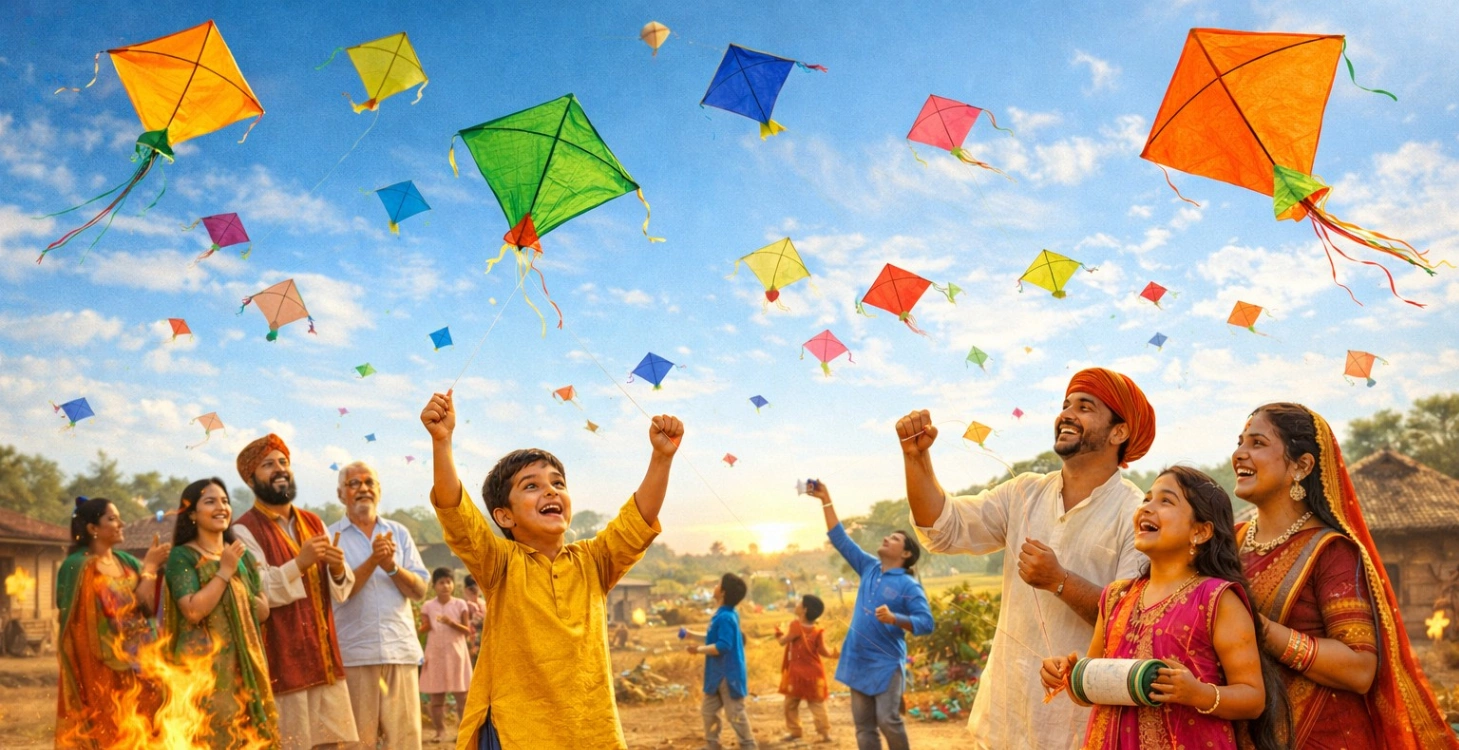
Gujarat – Uttarayan: Known for the kite festival, where the sky is filled with colorful kites, symbolizing joy and freedom.
Tamil Nadu – Pongal Festival 2026: Celebrated as a four-day festival, Pongal involves cooking rice with jaggery, milk, and spices as an offering to the Sun God.
Punjab – Lohri Celebrations: People light bonfires, sing folk songs, and throw sesame, popcorn, and jaggery into the flames.
Maharashtra – Tilgul Rituals: Exchanging sweets made of sesame (til) and jaggery while saying “Tilgul ghya, god god bola” symbolizes bonding and goodwill.
Karnataka – Suggi Habba: Farmers thank nature for the harvest, offering prayers in temples and participating in local fairs.
How is Makar Sankranti Celebrated?
Makar Sankranti celebration involves both ritualistic and fun activities:
Kite Flying: A highlight in many states, especially Gujarat and Rajasthan.
River Rituals: Devotees take holy dips in rivers like Ganga, Yamuna, Godavari, and Krishna.
Feasting: Traditional foods include sweets made with til (sesame seeds), jaggery, rice, and coconut, symbolizing energy, warmth, and prosperity.
Community Gatherings: Singing folk songs, dancing, and lighting bonfires foster social cohesion and festive spirit.
Makar Sankranti Food and Recipes
Food is an integral part of Makar Sankranti, reflecting regional diversity:
Til Ladoo (Maharashtra & Gujarat) – Sesame and jaggery balls for sweetness and warmth.
Pongal (Tamil Nadu) – Sweet and savory rice dishes prepared as an offering to Surya.
Rewri and Chikki (North India) – Crunchy sweets made from sesame and jaggery.
Khichdi (Uttar Pradesh) – A simple festive rice and lentil dish.
Cultural Celebrations and Significance in Hinduism
In Hindu belief, Makar Sankranti signifies the victory of light over darkness and is considered highly auspicious for new beginnings. Pilgrims visit holy places, and charitable activities like feeding the poor are common. The festival is not just about rituals but also about connecting with family, community, and nature.
Conclusion
Makar Sankranti 2026 is more than a harvest festival; it is a celebration of life, prosperity, and gratitude. Whether it’s flying kites in Gujarat, preparing Pongal in Tamil Nadu, or exchanging tilgul in Maharashtra, the festival’s essence remains the same: honoring the Sun God, sharing joy with loved ones, and welcoming a season of abundance. As we celebrate Makar Sankranti, we embrace traditions that unite communities and remind us of the timeless bond between humans and nature.