
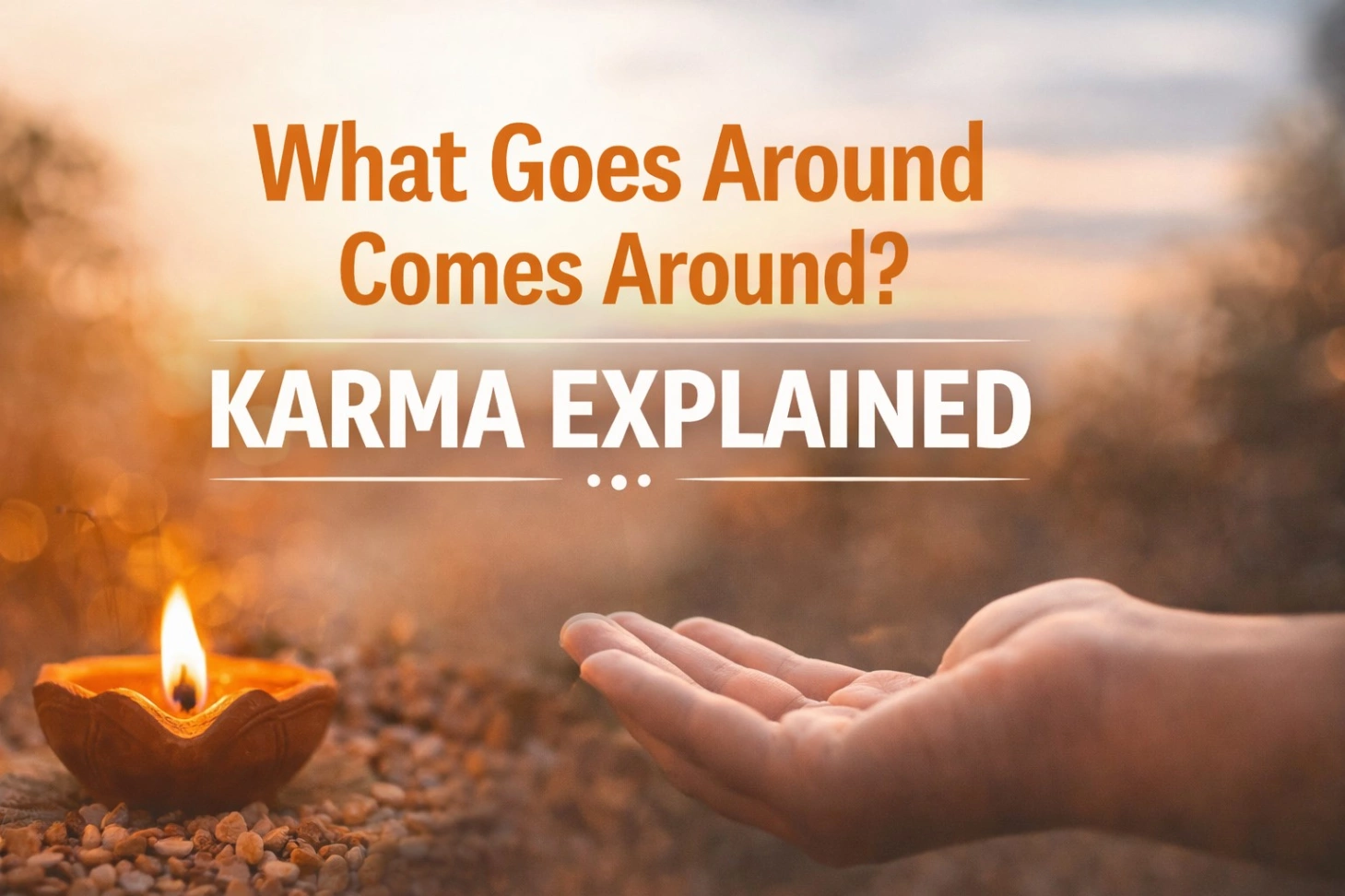
Karma is one of the most talked-about spiritual concepts, yet many people still wonder: what is karma really? You’ve probably heard the phrase, “what goes around comes around,” but understanding the true karma meaning goes far beyond this simple idea.
At its core, karma is the law of cause and effect, every action you take creates a reaction that eventually comes back to you. Whether you call it karma in life, karma in spirituality, or simply life’s natural balance, the principle remains the same: your actions shape your reality.
What Is Karma in Simple Words?
If you’re looking for a clear answer to what is karma in simple words, here it is:
Karma means that every action has a consequence.
This doesn’t just apply to physical actions but also thoughts and intentions. The way you think, speak, and behave creates energy and that energy returns to you.
This is why people say karma is real. It’s not about punishment or reward; it’s about balance.
Personal Session
Feeling stuck or confused about your life direction? Book a personal session to understand your patterns, shift your mindset, and align your actions with your highest potential.
Book Now!The Law of Karma Explained
The law of karma is simple yet powerful:
Good actions create positive outcomes
Negative actions create negative outcomes
But it’s not always immediate. Sometimes, karma unfolds over time, which is why people question, “does karma really work?”
The truth is, karma works in subtle ways:
Through experiences
Through relationships
Through life lessons
It’s not instant justice, it’s long-term alignment.
How Karma Works in Life
Understanding how karma works in life can change your perspective completely.
Think of life as a cycle of energy:
What you give → comes back to you
This is why what goes around comes around meaning is directly linked to karma.
For example:
Help someone → you receive help when needed
Spread negativity → you experience negativity
Act with awareness → life becomes smoother
Karma is not random, it is deeply connected to your actions and mindset.

Karma and Cause and Effect
At its core, karma is simply cause and effect in life.
Every action creates a ripple effect:
A kind word can uplift someone
A negative action can harm relationships
A positive mindset attracts opportunities
This is why karma is also called a universal law of spirituality.
Nothing happens without a cause.
Karma in Spirituality
In karma in spirituality, the focus is not just on actions but on awareness.
Spiritual teachings emphasize:
Conscious actions
Mindful living
Intentional behavior
Karma is closely linked to spiritual growth and karma, where every experience becomes a lesson for transformation.
Karma in Hinduism and Buddhism
The concept of karma is deeply rooted in traditions like karma in Hinduism and karma in Buddhism.
In these philosophies:
Karma is tied to actions across lifetimes
Intentions matter as much as actions
Awareness can change your karmic path
However, even without religious context, karma can be understood as a practical life principle.
Good Karma vs Bad Karma
One of the most common discussions is about good karma and bad karma.
Good Karma
Helping others
Being honest
Acting with kindness
Bad Karma
Hurting others
Acting selfishly
Negative intentions
But here’s the deeper truth:
Karma is not about labeling, it’s about learning.
Every experience teaches you something.
Karma Examples in Real Life
To understand karma examples in real life, think about everyday situations:
You treat people with respect → they respect you back
You work consistently → results follow
You hold negativity → it reflects in your life
These are not coincidences, they are patterns created by karma.
How Karma Affects Your Life
Many people ask: how karma affects your life?
The answer lies in patterns.
Your current life is shaped by:
Past actions
Current choices
Ongoing mindset
This is why karma and destiny explained often overlap, your actions influence your future.
Karma and Energy Connection
Karma is deeply connected to energy.
Everything you do creates a vibration:
Positive energy attracts positive experiences
Negative energy attracts challenges
This is why people say:
“What you give, you get back”
This concept also aligns with karma and manifestation and law of attraction karma.
How to Create Good Karma
If you’re wondering how to create good karma, here are simple steps:
Be Mindful
Think before you act
Act with Kindness
Small actions matter
Stay Honest
Integrity builds positive karma
Let Go of Negativity
Release resentment and anger
Practice Awareness
Conscious living leads to better outcomes
Karma and Conscious Living
The real purpose of karma is not fear, it’s awareness.
Conscious living karma means:
Being aware of your actions
Understanding their impact
Choosing growth over reaction
This is where karma becomes a tool for inner transformation.
The Truth About Karma
Here’s the truth most people miss:
Karma is not punishment
Karma is not reward
Karma is feedback
Life constantly shows you the results of your actions so you can evolve.
Life Lessons from Karma
Some of the biggest life lessons karma teaches:
You are responsible for your life
Your actions matter
Growth comes through awareness
Karma is not something to fear, it’s something to understand.
Design Your Destiny
Ready to take control of your life and break unconscious patterns? Join “Design Your Destiny” and learn how your thoughts, actions, and energy shape your reality. Start creating the life you truly want.
Start Your Journey Today!