

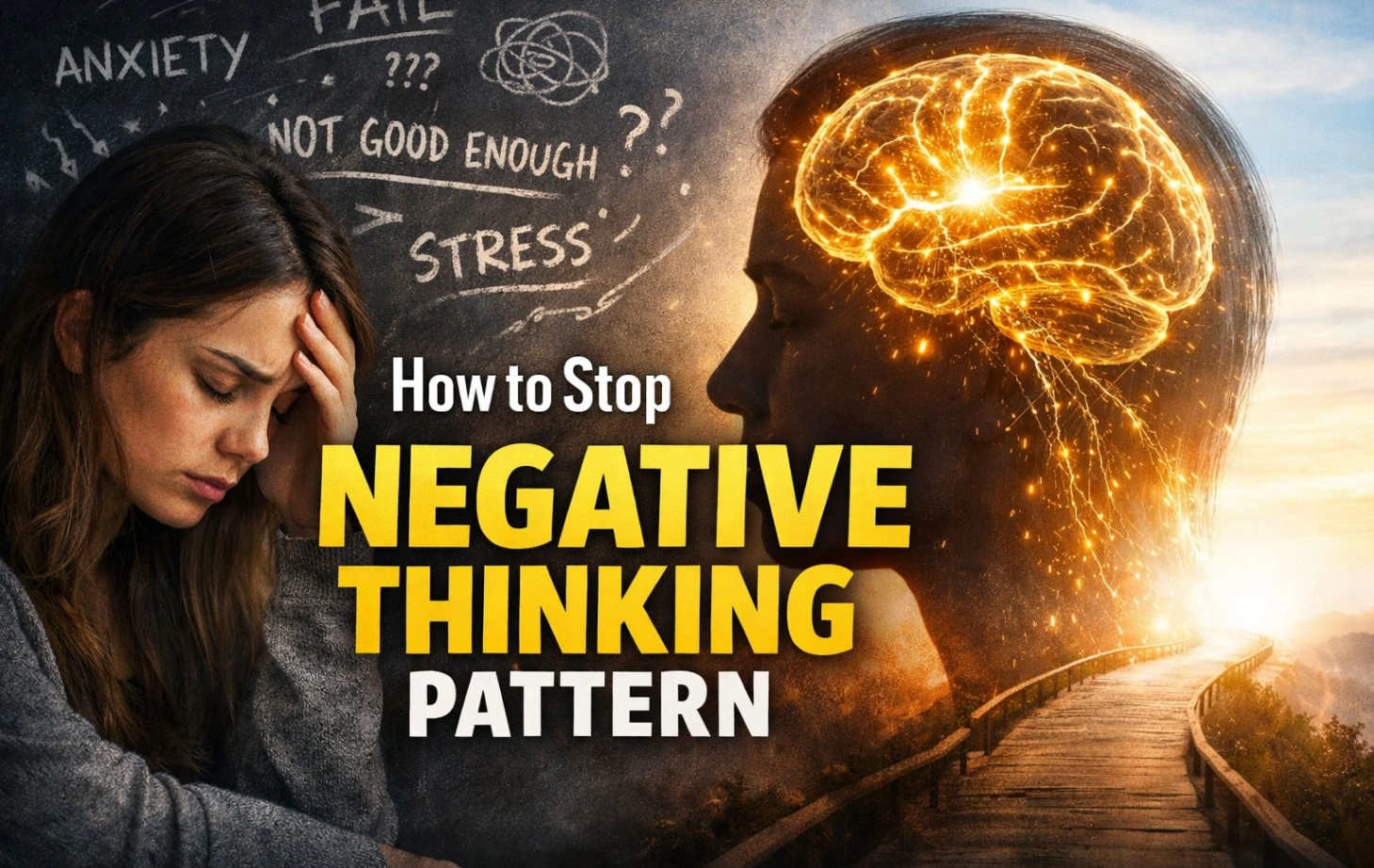
If you’re searching for how to stop negative thinking pattern, you’re not alone. Negative thoughts can feel automatic, overwhelming, and exhausting. Whether it’s constant self-criticism, anxiety at night, or chronic overthinking, negative thinking patterns can quietly control your mood, decisions, and confidence.
The good news? You can change them.
Negative thinking is not a life sentence. With awareness, science-backed techniques, and consistent practice, you can break negative thought patterns and retrain your brain for clarity and calm.
Let’s understand how.
What Are Negative Thinking Patterns?
Negative thinking patterns are repetitive, automatic thoughts that focus on fear, failure, doubt, or worst-case scenarios. In psychology, these are often called automatic negative thoughts (ANTs).
Examples include:
“I’m not good enough.”
“Something bad is going to happen.”
“I always mess things up.”
“They probably hate me.”
Over time, these thoughts create a negative mindset, affecting relationships, productivity, and mental health.
Why Do I Have Constant Negative Thoughts?
If you’ve ever asked, “Why do I have constant negative thoughts?” there are real reasons behind it.
1. Cognitive Distortions
These are thinking errors like:
Catastrophizing
Black-and-white thinking
Mind reading
Overgeneralizing
Understanding cognitive distortions examples is the first step toward change.
2. Anxiety and Stress
Negative thinking and anxiety are closely connected. When your nervous system is overstimulated, your brain looks for threats even imaginary ones.
3. Past Experiences
Childhood criticism, failure, rejection, or trauma can wire the brain toward self-protection through negative anticipation.
4. Neuroplasticity
Your brain strengthens repeated thought patterns. This is called neuroplasticity and negative thinking. The more you think something, the stronger that pathway becomes.
But here’s the powerful part: neuroplasticity works both ways.
How to Stop Negative Thinking Immediately
When negative thoughts spiral, you need quick tools.
1. Interrupt the Pattern
Say (mentally): “Stop.”
Then shift attention to your breath or surroundings.
2. 5-4-3-2-1 Grounding
Name:
5 things you see
4 things you feel
3 things you hear
2 things you smell
1 thing you taste
This helps calm anxiety and negative thoughts fast.
3. Question the Thought
Ask:
Is this fact or fear?
What evidence do I have?
Would I say this to a friend?
This technique comes from cognitive behavioral therapy for negative thoughts.

How to Break Negative Thought Patterns Long-Term
Quick fixes help, but lasting change requires deeper work.
Step 1: Identify Your Triggers
When do negative thoughts appear?
At night?
In relationships?
Before work meetings?
Many people struggle with how to stop negative thinking at night because the mind is less distracted.
Step 2: Replace, Don’t Suppress
You can’t just “stop negative thoughts.”
Instead, replace them.
Old Thought: “I will fail.”
New Thought: “I may feel nervous, but I can prepare.”
This is how you change negative thinking patterns effectively.
Step 3: Practice Mindfulness
Mindfulness for negative thoughts teaches you to observe thoughts without reacting.
Instead of:
“I am a failure.”
Say:
“I’m noticing a thought that I’m a failure.”
That small shift creates distance.
How to Stop Negative Self Talk
Negative self talk often becomes an internal bully.
To overcome it:
Write your top 5 recurring negative beliefs.
Find evidence against each.
Create balanced alternatives.
This is how you retrain your brain to think positive — realistically, not blindly.
Negative Thinking and Anxiety
Negative thinking and anxiety fuel each other.
Anxiety triggers fearful thoughts.
Fearful thoughts increase anxiety.
Breaking this loop involves:
Deep breathing exercises
Meditation for negative thinking
Nervous system regulation
Reducing caffeine
Sleep consistency
If you’re dealing with chronic negative thinking, lifestyle factors matter more than you think.
Effects of Negative Thinking on Brain
Research shows that constant negative thoughts:
Increase stress hormones
Strengthen fear pathways
Reduce emotional resilience
Impact sleep quality
Lower self-esteem
Over time, negative thinking and depression can overlap.
But again, neuroplasticity allows healing.
How to Rewire Your Brain From Negative Thinking
Here’s the long-term blueprint:
1. Daily Thought Journal
Track:
Trigger
Thought
Emotion
Replacement thought
2. Gratitude Rewiring
List 3 specific positive experiences daily.
This strengthens alternative neural pathways.
3. Meditation Practice
Even 10 minutes daily meditation for negative thinking reduces reactivity.
4. CBT Techniques
If needed, therapy using cognitive behavioral therapy helps restructure thought loops.
Is Negative Thinking a Mental Illness?
Negative thinking alone is not a mental illness. It becomes concerning when:
It interferes with daily life
Causes severe anxiety or depression
Leads to avoidance behavior
Impacts relationships or work
If you suspect a negative thinking disorder, professional guidance can help.

How Long Does It Take to Change Negative Thinking?
There’s no fixed timeline.
With daily practice:
Noticeable improvement: 2–4 weeks
Strong rewiring: 8–12 weeks
Deep mindset shifts: 3–6 months
Consistency matters more than intensity.
Can Negative Thoughts Become Reality?
Thoughts influence behavior.
If you constantly think:
“I will fail.”
You may avoid opportunities which increases the chance of failure.
So while thoughts don’t magically create reality, they strongly influence actions and decisions.
How to Develop a Positive Mindset (Without Toxic Positivity)
Avoid fake affirmations.
Instead:
Aim for balanced thinking.
Accept uncomfortable emotions.
Practice self-compassion.
Focus on growth, not perfection.
Developing a positive mindset means reducing the power of automatic negative thoughts, not pretending everything is perfect.
Learning how to stop negative thinking pattern is less about forcing positivity and more about understanding your mind.
Negative thoughts are habits.
Habits can be changed.
With awareness, cognitive tools, mindfulness, and patience, you can break negative thought patterns and create a healthier relationship with your mind.
You are not your thoughts.
You are the observer of them.
Continue Your Healing Journey
Still feeling trapped in repetitive thoughts? Discover how to quiet your mind and regain control with simple, powerful techniques in our next guide.
Read next: How to Stop Overthinking Through Meditation Learn practical meditation methods to calm racing thoughts, reduce anxiety, and create lasting mental clarity.