
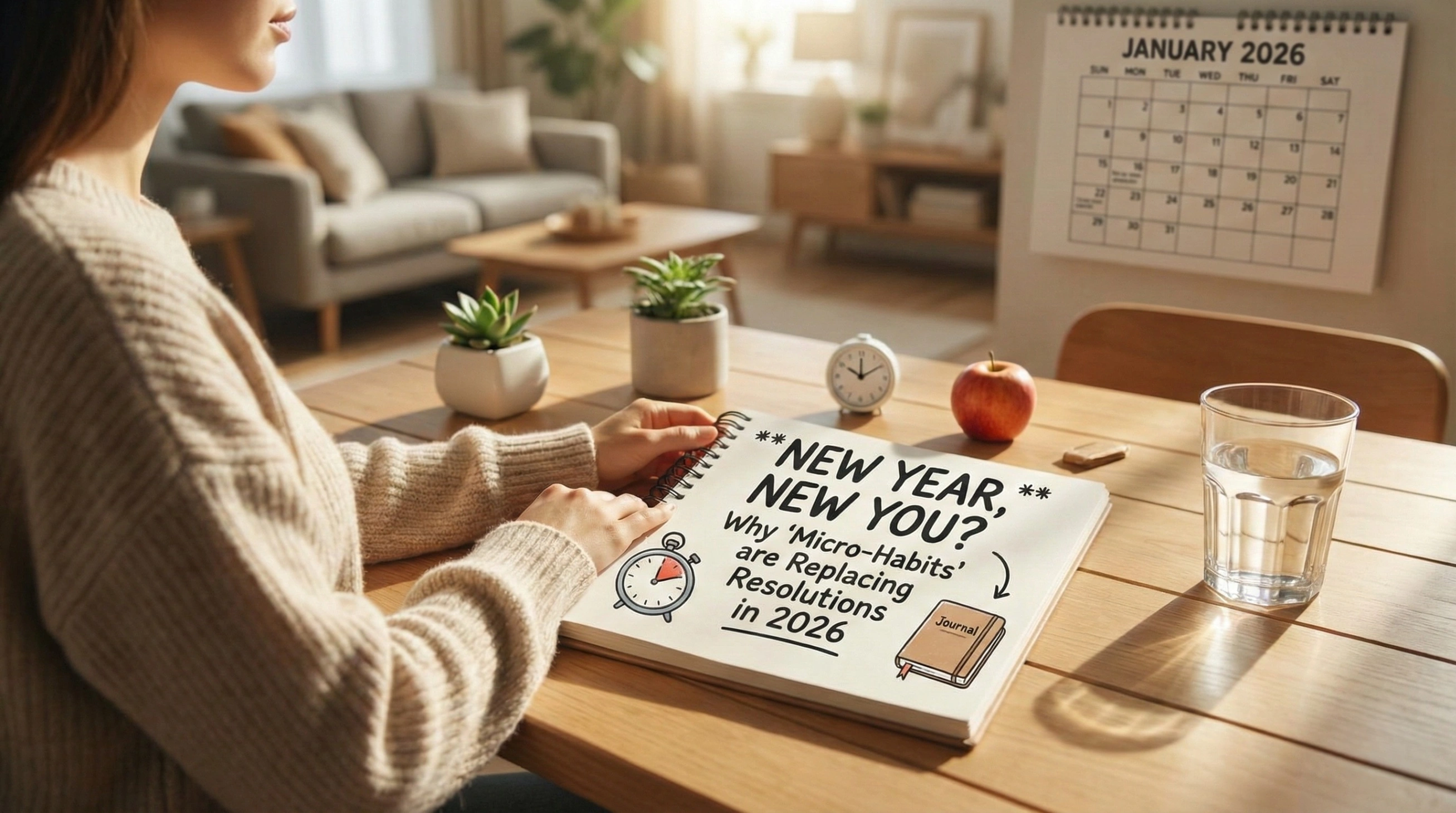
It is late December, and you can feel it in the air. The inevitable pressure to reinvent yourself is building up again. But let’s be honest; how did that go last year? If you are like most people, the "New Year, New You" energy fizzled out by mid-February, leaving you with a cancelled gym membership and a vague sense of guilt.
We are entering 2026, and the collective mood has shifted. We are moving away from the burnout-inducing grind of the early 2020s and leaning into sustainable self-improvement. The era of grand, sweeping declarations is over. This year, it isn't about changing everything at once; it’s about changing one tiny thing at a time.
If you want to know how to start micro-habits that actually stick, you’re in the right place. We are going to ditch the failing resolutions and focus on the science of small wins.
The Problem with Resolutions in 2026
Why do New Year's resolutions 2026 feel so outdated? Because they are often built on a foundation of "hustle culture" that nagging voice telling you that you aren't enough as you are. Resolutions tend to be binary: you either succeed or you fail. You either go to the gym five days a week, or you don't.
This all-or-nothing mentality is exactly why resolutions fail. They rely heavily on motivation, and motivation is a fickle friend. It’s high on January 1st but nowhere to be found on a rainy Tuesday in March.
In contrast, slow productivity is becoming the dominant philosophy of 2026. It prioritizes the quality of your output and your mental well-being over the speed of your grind. It asks for consistency, not intensity. This is where the battle of micro-habits vs. resolutions is won. Resolutions demand willpower; micro-habits demand strategy.
What Are Micro-Habits? (And Why They Work)
A micro-habit is a behavior that is so small, so easy, and so quick that you have no valid excuse not to do it. It requires almost zero motivation.
We aren't talking about "going for a run." We are talking about "putting on your running shoes." We aren't talking about "meditating for 30 minutes." We are talking about "taking one deep breath."
This concept, popularized by books like Atomic Habits and Tiny Habits, has evolved. In 2026, we understand the neuroscience better. Habit formation isn't about discipline; it's about neural pathways. Every time you repeat an action, even a tiny one, you strengthen a connection in your brain. By making the action too small to fail, you are hacking your brain's reward system, generating small wins that release dopamine and encourage you to do it again tomorrow.

Goals vs. Systems: The Shift in Thinking
One of the biggest mistakes people make is focusing entirely on the outcome (the goal) rather than the process (the system).
The Goal: Lose 10 pounds.
The System: Eat one serving of vegetables at dinner.
The Goal: Write a novel.
The System: Write 50 words while drinking coffee.
When you focus on goals vs. systems, you realize that goals are just the destination. The system is the vehicle that gets you there. Micro-habits are the engine parts of that vehicle. They keep you moving forward through daily 1% improvements, regardless of how motivated you feel.
How to Start Micro-Habits: A Step-by-Step Guide
Ready to build a routine that lasts? Here is your blueprint for 2026.
1. Identify and Shrink
Pick a goal you have for the new year. Now, shrink it. Keep shrinking it until it sounds ridiculous. If your goal is to read more books, your micro-habit isn't "read a chapter a day." It is "read one paragraph." The 2-minute rule is your best friend here. If it takes longer than two minutes, shrink it further.
2. Master Habit Stacking
You already have habits that are hardwired into your day: brushing your teeth, brewing coffee, checking your phone. Habit stacking examples involve using these existing behaviors as triggers for new ones.
After I pour my coffee, I will write down one priority for the day.
After I brush my teeth, I will floss one tooth.
After I sit at my desk, I will fill my water bottle.
The formula is: After [Current Habit], I will [Micro-Habit].
3. Celebration is Mandatory
This sounds cheesy, but it’s chemically necessary. When you complete your micro-habit, give yourself a mental high-five or say "nice job." This spikes your dopamine immediately after the action, helping your brain label the behavior as "good" and "worth repeating."
4. Optimize Your Environment
If you want to start a low-dopamine morning routine, don't sleep with your phone on the nightstand. If you want to eat healthier, put an apple on the counter where you can see it. Design your space to make the good habit easy and the bad habit difficult.

Best Micro-Habits for 2026
The landscape of personal growth has changed. We aren't just trying to get abs anymore; we are trying to preserve our sanity in a digital world. Here are the trending categories for 2026.
Digital Hygiene & Mental Health
Digital Detox Habits: Leave your phone in another room for the first 10 minutes of the morning.
Nervous System Regulation: Do a "physiological sigh" (two inhales, one long exhale) whenever you open your email inbox.
Micro-Rest Practices: Close your eyes for 30 seconds after finishing a major task.
Financial & Eco-Conscious Growth
Financial Wellness Micro-Habits: Check your bank balance once every morning (awareness cures anxiety). Transfer $5 to savings every Friday.
Eco-Friendly Daily Habits: Save vegetable scraps in a freezer bag for broth (takes 10 seconds).
Physical Health
Sober Curiosity: Swap your first drink of the weekend for a glass of water or a mocktail.
Movement: Do two squats while waiting for the kettle to boil.
How to Break Bad Habits with Micro-Moves
It’s not just about starting new things; it’s about stopping the old ones. But how to break bad habits is often misunderstood. You cannot simply "delete" a habit; you have to replace it.
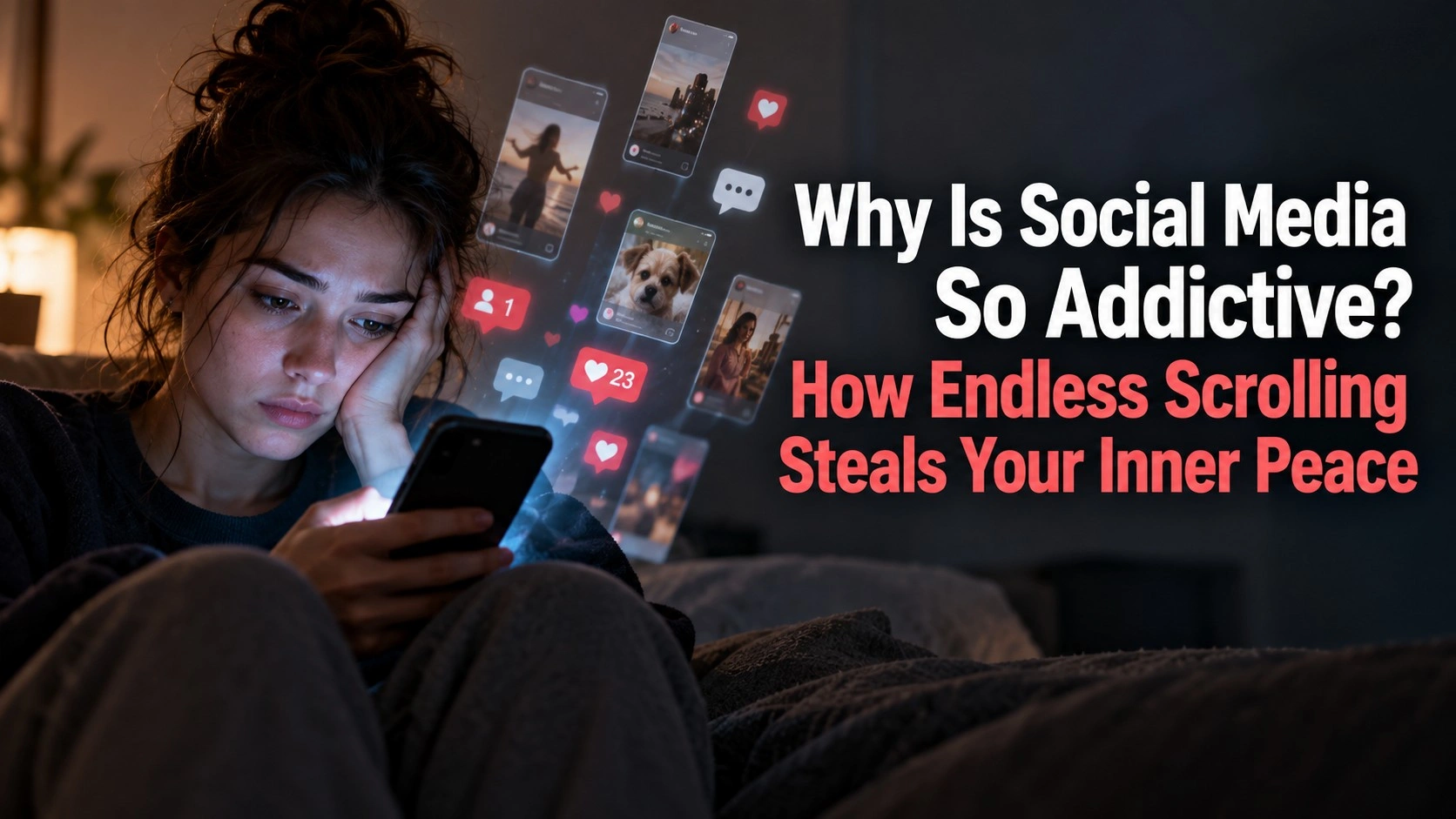
If you doom-scroll Instagram when you’re stressed, your brain has linked stress -> Instagram -> relief. To break this, you need a micro-intervention.
When I feel the urge to open Instagram, I will take three deep breaths first.
You aren't banning the app (yet). You are just inserting a wedge of consciousness. Over time, that wedge grows.
Tools of the Trade: Habit Tracking Apps 2026
While a pen and paper work wonders, technology can help visualize your progress. The top habit tracking apps 2026 are moving away from punishment and toward gamification and gentleness. Look for apps that track streaks but offer "grace days" (because life happens).
Streaks: Great for visual minimalist tracking.
Finch: excellent for mental health and self-care gamification.
Notion: For those who want to build a custom system.
As you step into 2026, relieve yourself of the burden of becoming a "new you" overnight. That person doesn't exist. There is only the current you, taking one small step after another.
Real change isn't an explosion; it's an erosion. It’s the steady drip of water that eventually carves through stone. By embracing micro-habits, you are choosing a path of sustainable self-improvement that honors your humanity.
So, tomorrow morning, don't try to run a marathon. Just put on your shoes. That’s enough.