

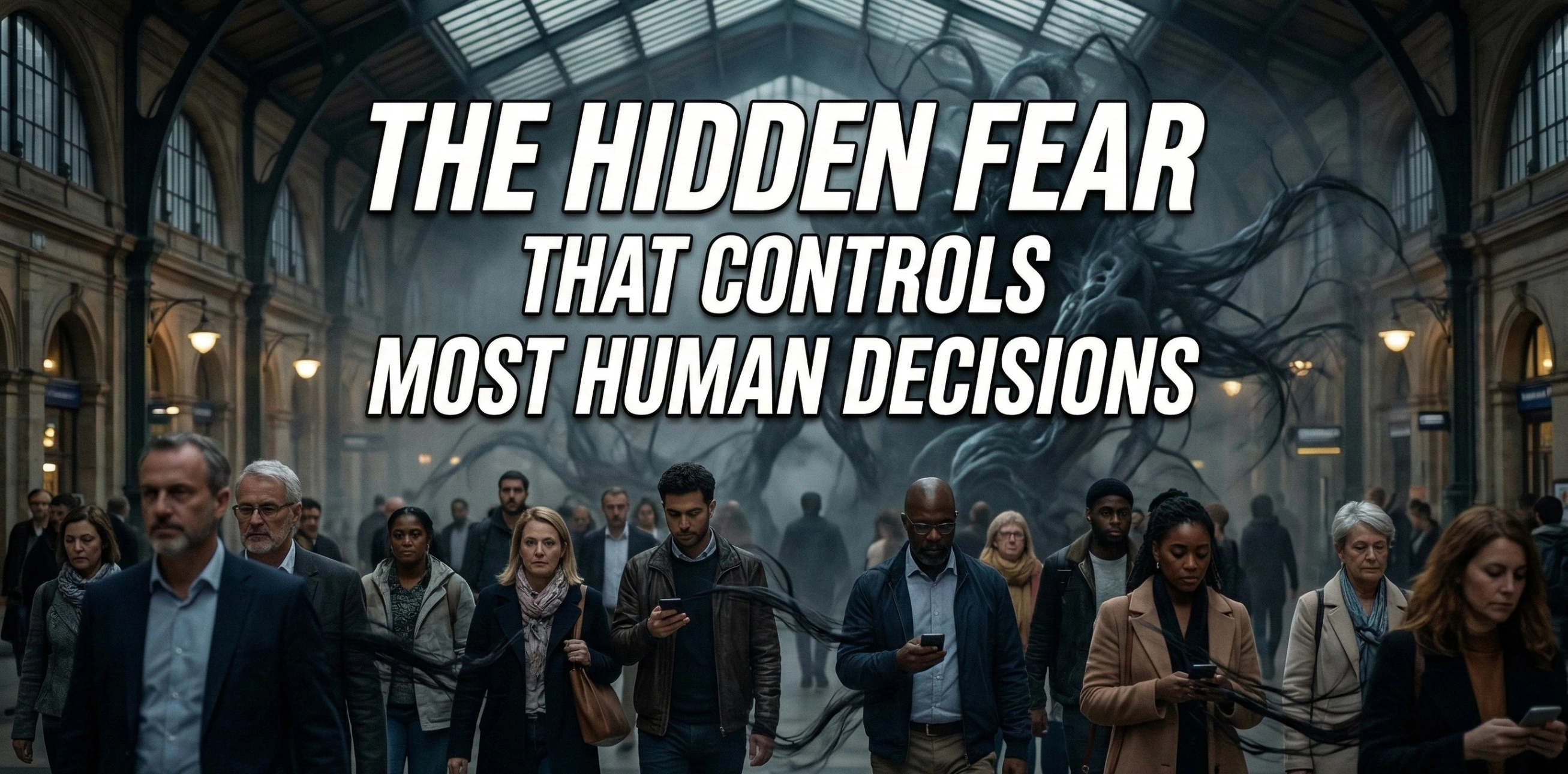
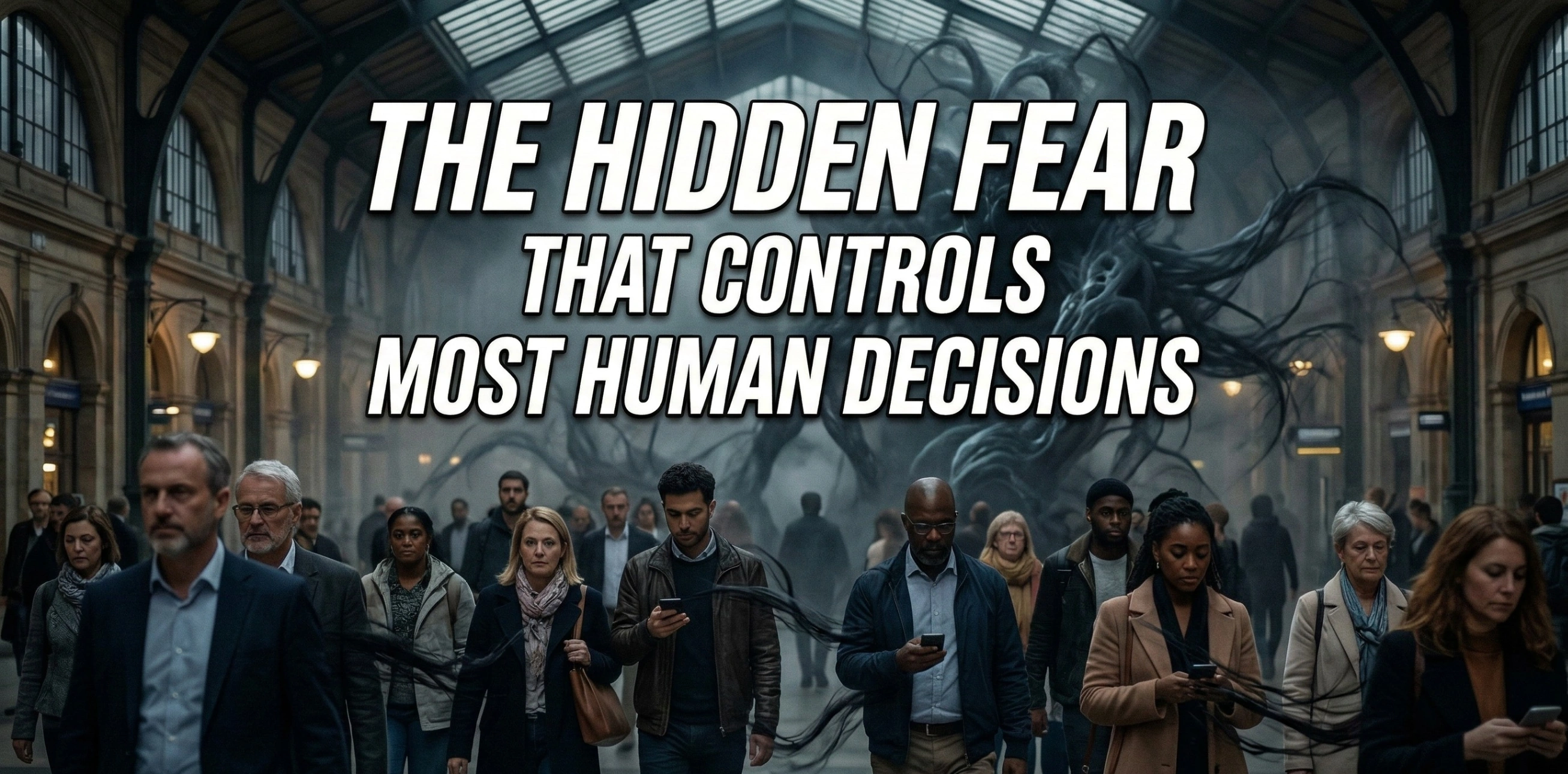
Every day, humans make hundreds of decisions some small, some life-changing. But what if most of these choices are not truly conscious? What if a hidden fear silently controls many of the decisions we make in life?
From career choices to relationships, from speaking up in meetings to pursuing dreams, many of our actions are influenced by fear of decision making. This fear often operates beneath awareness, shaping our thoughts, behavior, and confidence.
Understanding the psychology of fear in decision making is one of the most powerful steps toward personal growth. When you recognize the hidden fears driving your choices, you gain the ability to break free from them.
Let’s explore the invisible fears that shape human behavior and how to overcome them.
Why Fear Controls Human Behavior
Fear is one of the most powerful forces in human psychology. From an evolutionary perspective, fear helped humans survive dangerous environments. It triggered caution, protected us from threats, and helped us avoid risks.
However, in modern life, this survival mechanism often misfires.
Instead of protecting us from real danger, fear begins to control everyday choices. Many people unknowingly make fear based decisions rather than growth-based ones.
For example:
Staying in an unfulfilling job because of fear of uncertainty
Avoiding new opportunities due to fear of failure
Remaining silent because of fear of judgment
Avoiding relationships because of fear of rejection
In such situations, fear quietly shapes behavior. Over time, this pattern can influence human behavior patterns, self-confidence, and personal growth.
The Psychology of Fear in Decision Making
The psychology behind human choices often revolves around emotional responses rather than rational thinking.
When fear enters the mind, it activates the brain’s threat system. The brain then prioritizes safety over growth. As a result, people choose the option that feels safest even if it limits their potential.
This is why people often:
Avoid difficult decisions
Stay in comfort zones
Overthink simple choices
Delay important actions
These behaviors are examples of psychological barriers to decision making.
Even highly intelligent individuals are affected by fear and decision making psychology. The brain’s natural instinct is to protect, not to expand.

Hidden Fears That Control Your Life
Many people believe they are making logical decisions, but deeper analysis often reveals hidden psychological fears influencing them.
Let’s look at the most common fears.
1. Fear of Failure
The fear of failure psychology is one of the strongest mental barriers humans face.
People avoid starting businesses, pursuing passions, or trying new opportunities because they worry about failing.
But the real issue is not failure itself—it is the emotional meaning attached to it. Failure is often linked with embarrassment, judgment, or loss of self-worth.
Because of this, many people unconsciously sabotage opportunities before they even begin.
2. Fear of Judgment
Another powerful force is fear of judgment psychology.
Humans are social beings. Our brains evolved to value acceptance within groups. As a result, people often fear criticism or rejection.
This leads to behaviors such as:
Avoiding speaking honestly
Hiding true opinions
Following social expectations
Seeking constant validation
Over time, this fear of judgment from others limits authenticity and personal freedom.
3. Fear of Rejection
The fear of rejection psychology strongly influences relationships, careers, and social interactions.
People may avoid:
Asking for promotions
Starting conversations
Expressing love
Taking leadership roles
Because rejection feels painful, the brain attempts to avoid situations where rejection might occur.
Ironically, avoiding rejection often leads to missed opportunities and regret.
4. Fear of the Unknown
The fear of the unknown psychology plays a major role in how people approach change.
Humans prefer predictability. When faced with uncertainty, the brain often imagines worst-case scenarios.
This is why people hesitate when making major life changes such as:
Changing careers
Moving to a new city
Starting a business
Leaving unhealthy environments
This fear of uncertainty psychology causes individuals to stay in familiar situations—even when those situations are limiting.
5. Fear of Making the Wrong Decision
Many people experience fear of making wrong decisions.
This fear creates overthinking, analysis paralysis, and hesitation.
People may endlessly compare options, seek external validation, or delay decisions entirely. But the truth is that most decisions in life are adjustable.
The fear of mistakes often becomes a bigger obstacle than the mistake itself.
How Fear Shapes Your Life Choices
Over time, repeated fear-based thinking can shape a person’s identity and lifestyle.
If someone repeatedly avoids risks due to fear of taking risks, they may eventually believe they are not capable of bold actions.
Similarly, limiting beliefs and fear often reinforce each other. The subconscious mind begins to create narratives such as:
“I’m not good enough.”
“What if I fail?”
“People will judge me.”
These beliefs influence the subconscious mind and fear patterns that guide behavior.
In many cases, individuals are not aware that emotional fears are controlling life decisions.
Fear and Self-Sabotage
One of the most surprising aspects of fear psychology is self sabotage.
Sometimes people unconsciously block their own success because success brings new responsibilities, expectations, or visibility.
For example:
Procrastinating important opportunities
Avoiding leadership roles
Rejecting positive relationships
Quitting projects before completion
These behaviors are often linked to fear and self sabotage patterns.
Understanding this connection can be a powerful step toward transformation.
How Fear Affects Decision Making
When fear dominates the mind, decision making becomes distorted.
People may experience:
Overthinking
Decision paralysis
Avoidance behavior
Low confidence
Stress and anxiety
Fear narrows perception. Instead of seeing possibilities, the mind focuses on potential threats.
This explains why fear affects decision making so strongly.
The brain’s goal becomes emotional safety rather than growth or success.
The Role of the Subconscious Mind
Many fears are stored in the subconscious mind.
These fears may come from:
Childhood experiences
Social conditioning
Cultural expectations
Past failures
Over time, these experiences create subconscious patterns that influence choices automatically.
This is why understanding subconscious fear and behavior is essential for personal transformation.
Without awareness, these patterns continue repeating throughout life.
Overcoming Fear in Decision Making
The good news is that fear can be understood, managed, and transformed.
Here are practical ways to overcome fear-based thinking.
1. Increase Self Awareness
The first step is recognizing when fear is influencing your choices.
Ask yourself:
Am I choosing this because of growth or fear?
What is the worst realistic outcome?
What opportunity might I miss by avoiding this?
Developing self awareness around fear and mindset psychology helps break automatic patterns.
2. Reframe Failure
Instead of seeing failure as a threat, view it as feedback.
Every successful person experiences failure multiple times. The difference is that they treat it as learning rather than identity.
This mindset shift reduces the fear of failure in life decisions.
3. Accept Uncertainty
Growth always involves uncertainty.
Learning to accept uncertainty reduces the impact of fear of change psychology and fear of the unknown.
Life rarely provides perfect clarity before action.
Often clarity appears after action.
4. Focus on Long-Term Growth
Fear focuses on immediate discomfort. Growth focuses on long-term benefits.
When making decisions, ask:
“Which choice will help me grow five years from now?”
This perspective helps reduce fear based decisions.
5. Strengthen Self Confidence
Confidence grows through action, not thinking.
Taking small risks gradually reduces fear and self confidence limitations.
Each courageous decision rewires the brain to become more resilient.
Transforming Fear Into Growth
Fear is not the enemy.
Fear is simply information from the mind.
It signals that something feels uncertain or important.
Instead of allowing fear to control your decisions, learn to observe it.
When you develop awareness, fear loses its power.
Your choices begin to come from clarity rather than anxiety.
This transformation leads to stronger personal growth, emotional intelligence, and self mastery.
If you want to break free from fear, overthinking, and limiting beliefs, it's time to redesign your mindset.
Discover powerful tools to transform your thinking, gain clarity, and make confident life decisions through the Design Your Destiny program by Sakshi Shree.