

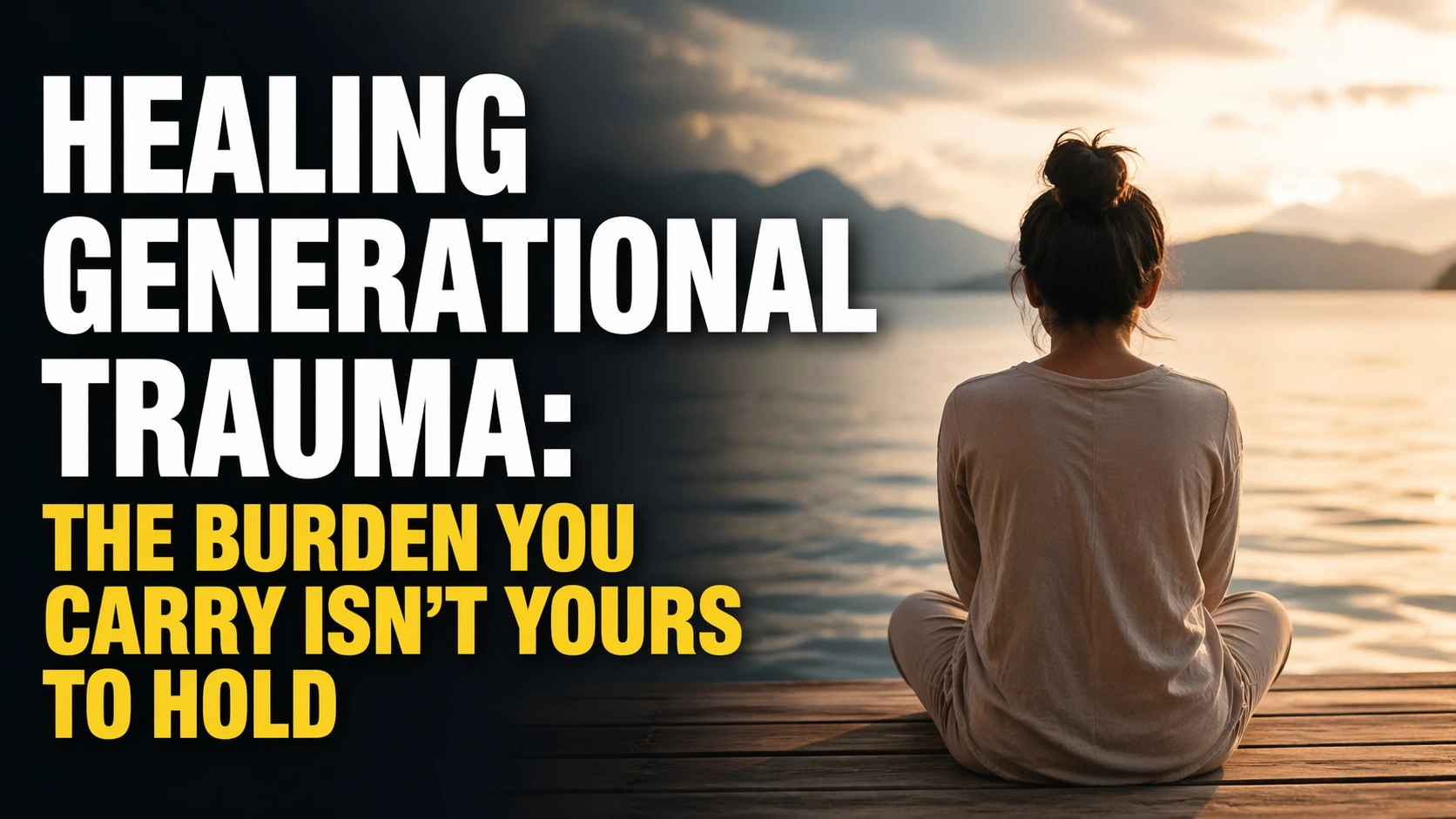
Have you ever felt emotional pain that seems deeper than your own experiences? Like you’re reacting to something you can’t fully explain?
This is where generational trauma comes in.
Generational trauma, also known as inherited trauma or intergenerational trauma, refers to emotional wounds and patterns passed down through families, often without awareness. You didn’t consciously choose this burden, yet you may be carrying it in your thoughts, behaviors, and relationships.
The powerful truth?
You may have inherited the pain, but you don’t have to keep it.
What Is Generational Trauma?
At its core, generational trauma is trauma passed through generations like emotionally, psychologically, and even biologically.
It can originate from:
Unresolved childhood trauma
Family dysfunction
Abuse, neglect, or abandonment
Cultural or societal struggles
Deep emotional suppression
Over time, these experiences form subconscious trauma patterns that influence how people think, feel, and behave often without realizing it.
This is why many people repeat:
Toxic relationship patterns
Emotional triggers
Fear-based behaviors
Anxiety or depression cycles
Even when they consciously want change.
Design Your Destiny
Ready to break free from unconscious patterns and create a life of clarity and purpose? Join our “Design Your Destiny” program and start your transformation today.
Start Your Journey Today!Signs You’re Carrying Generational Trauma
Not all trauma is obvious. Sometimes it shows up quietly in everyday life.
Here are some common generational trauma symptoms:
You feel anxious or overwhelmed without a clear reason
You repeat the same unhealthy relationship patterns
You struggle with emotional regulation
You fear abandonment or rejection deeply
You feel responsible for others’ emotions
You have difficulty setting boundaries
You experience guilt when choosing yourself
These signs often point toward inherited emotional trauma rather than isolated personal experiences.
How Trauma Is Passed Down
You might wonder, how does trauma travel across generations?
There are three key ways:
1. Emotional Conditioning
Children absorb emotional patterns from parents:
How they respond to stress
How they express (or suppress) emotions
Their beliefs about love, safety, and self-worth
This creates emotional patterns from parents that feel “normal.”
2. Behavioral Patterns
Families often pass down:
Coping mechanisms
Communication styles
Conflict responses
For example, if silence was used to avoid conflict, you may unconsciously do the same.
3. Biological Imprints (Epigenetic Trauma)
Research suggests trauma can influence gene expression, often called epigenetic trauma.
This doesn’t mean trauma is fixed.
It means awareness becomes even more powerful in healing.
Effects of Generational Trauma
The impact of generational trauma in families goes beyond emotional discomfort.
It can affect:
Mental Health
Anxiety from generational trauma
Depression and emotional numbness
Chronic stress and overthinking
Relationships
Fear of intimacy
Trauma bonding in families
Repeating toxic cycles
Self-Identity
Low self-worth
Identity confusion
Feeling “not enough”
When left unaddressed, these patterns can continue across generations.
The Truth: You Didn’t Create It, But You Can End It
This is where your power begins.
You didn’t create these patterns, but you are the point of awareness where they can stop.
Breaking generational cycles is not about blaming your past.
It’s about becoming conscious of it.
And consciousness changes everything.

How to Heal Generational Trauma
Healing doesn’t happen overnight, but it does happen through awareness and intentional action.
Here are powerful steps for healing generational trauma:
1. Awareness: See the Pattern Clearly
You cannot heal what you cannot see.
Ask yourself:
What patterns keep repeating in my life?
What emotional triggers feel disproportionate?
Where do I react instead of respond?
This is the beginning of awareness and trauma healing.
2. Inner Child Healing
Much of childhood trauma passed down lives within your inner child.
Healing involves:
Acknowledging past emotional wounds
Validating your feelings
Offering yourself the safety you didn’t receive
This process is often called reparenting yourself.
3. Regulate the Body (Somatic Healing)
Trauma isn’t just in the mind, it’s stored in the body.
Effective somatic healing trauma practices include:
Breathwork
Meditation for trauma release
Grounding exercises
These help release trauma from the nervous system.
4. Break Subconscious Patterns
Most inherited behaviors are unconscious.
To change them:
Notice your automatic reactions
Pause before responding
Choose consciously
This is how you stop repeating family patterns.
5. Emotional Expression
Suppressed emotions fuel trauma cycles.
Healthy outlets include:
Journaling for trauma healing
Talking to a therapist
Expressive practices like art or movement
This supports your emotional healing journey.
6. Spiritual Awareness (Deeper Healing)
From a spiritual lens, ancestral trauma is often seen as unconscious conditioning.
Healing happens when you:
Observe without identifying
Shift from reaction to awareness
Realize: You are not your past
This is where spiritual healing of trauma begins.
Can Generational Trauma Be Fully Healed?
Yes, but not by force.
Healing happens gradually:
Through awareness
Through consistency
Through compassion
You don’t “fix” trauma.
You release your identification with it.
Breaking Generational Cycles Starts With You
It takes courage to break patterns that existed long before you.
But every time you:
Choose awareness over reaction
Set a boundary
Heal an emotional trigger
You shift not just your life, but future generations.
You become the turning point.
The burden you carry may not be yours, but the choice to release it is.
And that choice begins with awareness.
You are not broken.
You are becoming conscious.

Personal Session CTA
Looking for deeper guidance? Book a personal session with Sakshi Shree and begin your journey of healing, awareness, and inner freedom.
Book Now