

 Attachment issues shape the way you connect, love, communicate, and respond to the people closest to you. Whether you experience anxious attachment, avoidant attachment, disorganized attachment, or a mix of them, these patterns are learned; not permanent. The good news? You can heal them.
Attachment styles form in childhood based on the emotional environment you grew up in, and they continue to influence adult relationships until they are consciously understood and rewired. Healing attachment issues is absolutely possible, even if you’ve struggled for years.
In this guide, we’ll explore the main attachment styles, signs of insecure attachment, what causes attachment trauma, and simple, evidence-based ways to become securely attached.
What Are Attachment Styles?
Attachment styles describe how you behave in relationships; how you communicate, trust, depend, and respond to emotional closeness. The four attachment styles are:
1. Secure Attachment
Healthy emotional regulation
Comfortable with intimacy
Can depend on others without losing self
2. Anxious Attachment
Fear of abandonment
Constant reassurance seeking
Overthinking and emotional hypervigilance
3. Avoidant Attachment
Difficulty with vulnerability
Emotional distance or shutting down
Over-valuing independence
4. Disorganized Attachment
Combination of anxious + avoidant behavior
Fear of intimacy and fear of abandonment
Often linked with deeper childhood trauma
Understanding which style you resonate with is the first step toward healing.
Signs You May Have Attachment Issues
Attachment issues manifest differently for everyone, but here are the most common signs:
Signs of Anxious Attachment
You panic when someone pulls away
You need constant reassurance
You worry your partner will leave
You attach quickly and intensely
Signs of Avoidant Attachment
You shut down during emotional conversations
You fear losing independence
You avoid conflict
You feel overwhelmed by intimacy
Signs of Disorganized Attachment
You want closeness but also push people away
You fear being hurt but also fear loneliness
You become unpredictable during conflict
If you see yourself in these, remember: these are patterns, not your identity.
What Causes Attachment Issues?
Attachment issues or attachment trauma usually develop during childhood, based on:
Emotionally inconsistent parenting
Neglect or lack of emotional support
Over-controlling or critical parenting
Childhood trauma or unpredictability
Growing up with emotionally unavailable caregivers
When your emotional needs weren’t consistently met, your body and brain learned to protect you—often through anxious, avoidant, or disorganized attachment.
How to Heal Attachment Issues: Proven Steps That Actually Work
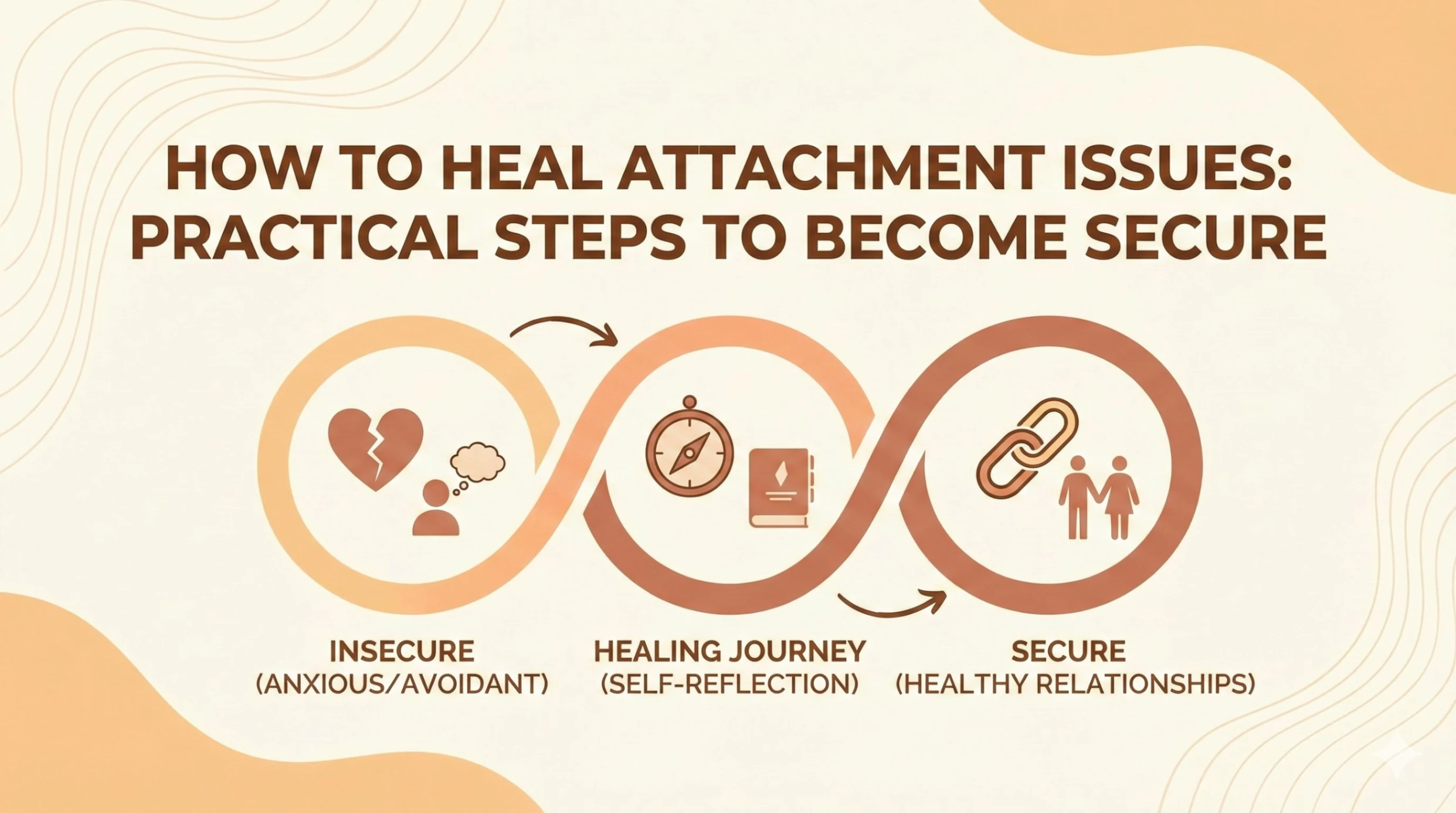
Healing attachment issues means rewiring your emotional patterns, nervous system responses, and beliefs about relationships. It doesn’t happen overnight, but with consistent practice, you can shift into secure attachment.
1. Understand Your Attachment Style (Awareness = Power)
Self-awareness is the first step. Notice how you respond in relationships:
Do you cling? (Anxious)
Do you shut down? (Avoidant)
Do you swing between the two? (Disorganized)
Awareness allows you to interrupt old patterns and create healthier responses.
2. Heal Childhood Attachment Trauma
Attachment wounds come from past experiences, not the present. You heal by:
Journaling past relational experiences
Identifying emotional triggers
Naming the unmet childhood needs behind your reactions
This rewires the brain to recognize what is real now versus what belonged to childhood.
3. Practice Nervous System Regulation
Attachment issues are nervous system issues before they are relationship issues.
Try these regulating practices:
Deep breathing
Grounding exercises
Cold water on wrists
Slow-paced walking
Meditation or mindfulness
A regulated nervous system supports healthier connections.
4. Reparenting Yourself
Reparenting means giving yourself the emotional support you didn’t receive growing up.
Ask yourself:
“What do I need right now?”
“How can I comfort myself without depending on someone else?”
“How can I speak to myself kindly?”
When you soothe yourself, anxious attachment decreases.
When you trust yourself, avoidant attachment softens.
5. Improve Emotional Communication
Secure attachment relies on healthy communication.
Try:
Using “I feel…” statements
Expressing needs without blaming
Being honest instead of withdrawing
Listening without defensiveness
This builds trust and emotional safety.
6. Set Healthy Boundaries
Boundaries are essential for healing:
Anxious attachment needs boundaries for self-respect
Avoidant attachment needs boundaries for emotional safety
Disorganized attachment needs boundaries for stability
Healthy boundaries create healthy relationships.
7. Build Secure Attachment Skills Daily
Secure attachment is a skill; learned and practiced.
Try:
Honesty about your feelings
Taking responsibility for your reactions
Expressing needs calmly
Trusting gradually
Allowing emotional closeness
Small daily habits create secure attachment over time.
8. Seek Therapy for Attachment Issues
Modern therapeutic approaches help heal deeply rooted attachment trauma:
Attachment-based therapy
Inner child healing
EMDR therapy (for trauma)
Somatic therapy (healing through the body)
CBT and DBT (thought and emotional regulation)
Therapy rewires patterns that may be hard to navigate alone.
9. Heal Anxious Attachment
If you’re anxiously attached:
Practice self-soothing
Give space before reacting
Build self-worth
Challenge fear-based thoughts
Communicate instead of assuming
These steps reduce emotional over-dependence.
10. Heal Avoidant Attachment
If you have avoidant tendencies:
Practice small acts of vulnerability
Share your needs and feelings
Stay present during conflict
Let people help you
Challenge beliefs like “I don’t need anyone”
Avoidants heal by learning that closeness is safe.
11. Heal Disorganized Attachment
Disorganized attachment needs:
Consistency
Predictability
Emotional regulation
Trauma-focused therapy
Safety in relationships
It requires combining the steps for both anxious and avoidant healing.
How to Become Securely Attached (The End Goal)
Becoming securely attached is absolutely possible.
You become secure when you learn:
Emotional self-regulation
Healthy communication
Trust and vulnerability
Boundaries and self-respect
Inner emotional stability
Secure attachment is a skill that grows with practice; not perfection.
Attachment Healing Techniques (Quick Daily Practices)
Affirmations: “I am safe. I am loved.”
Journaling triggers and emotions
Inner child check-ins
Slow breathing during conflict
Sharing needs calmly
Practicing gratitude in relationships
These daily habits accelerate healing.
FAQs
1. Can attachment issues really be healed?
Yes. Attachment styles are learned patterns, not permanent traits. With awareness, therapy, and consistent practice, people can become securely attached.
2. How long does it take to fix anxious or avoidant attachment?
It varies for each person. Many people notice changes within months, while deeper healing can take 1–2 years of consistent effort.
3. Can I fix my attachment issues without therapy?
Yes, but therapy speeds up and deepens the healing process, especially for disorganized attachment or trauma.
4. What is the fastest way to become securely attached?
The quickest ways are nervous system regulation, communication skills, self-soothing, and practicing vulnerability in safe relationships.
5. What causes insecure attachment in adults?
Childhood trauma, inconsistent parenting, emotional neglect, or unstable relationships during early years.