
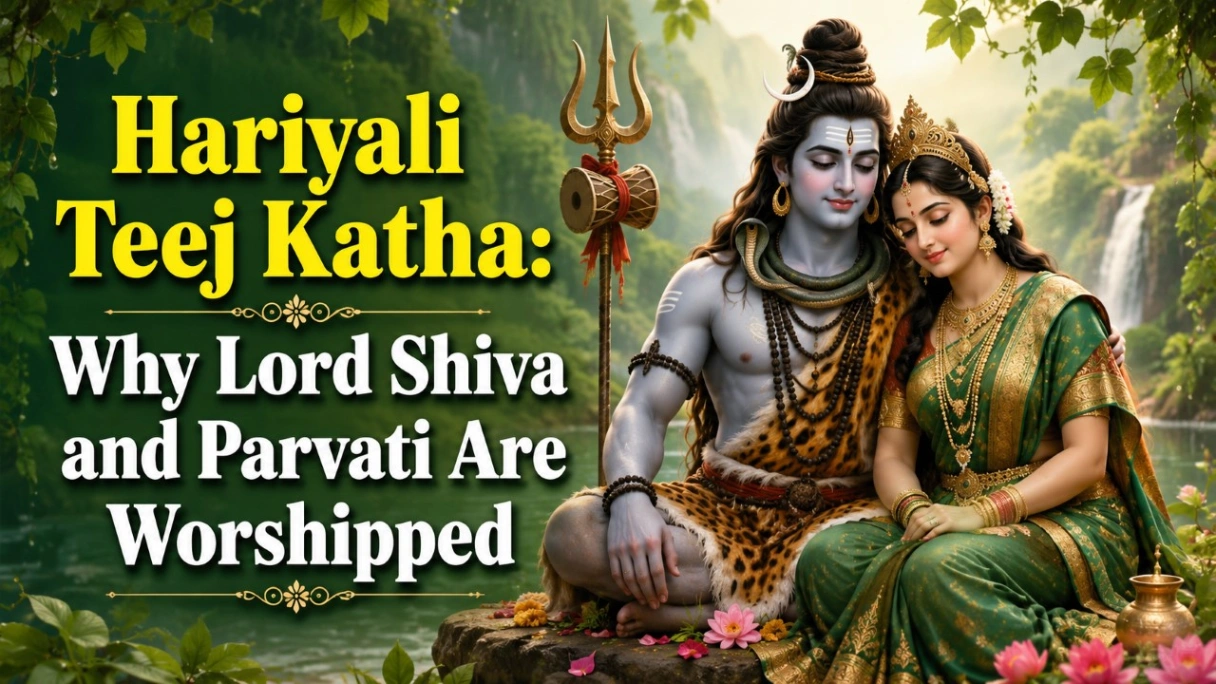
Hariyali Teej is one of the most beautiful festivals associated with the sacred relationship between Lord Shiva and Goddess Parvati. Celebrated during the lush monsoon month of Shravan, the festival combines devotion, nature, love, fasting, prayer and celebration.
But beyond the green clothes, swings, mehndi and festive gatherings lies a profound spiritual story.
The Hariyali Teej Katha revolves around Goddess Parvati's unwavering devotion and determination to unite with Lord Shiva. It is this divine relationship that explains why Lord Shiva and Goddess Parvati are worshipped on Hariyali Teej.
In 2026, Hariyali Teej falls on Saturday, August 15, 2026, on Shukla Paksha Tritiya of the Shravan month. Drik Panchang lists the Tritiya Tithi as beginning on August 14 and ending on August 15, while the Government of India's Incredible India portal also lists Teej on August 15, 2026.
Let us understand the complete Hariyali Teej Vrat Katha, its symbolism and the deeper spiritual message behind the story of Shiva and Parvati.
What Is Hariyali Teej?
Hariyali Teej is observed on the third day of Shukla Paksha in the Hindu month of Shravan. The festival occurs during the monsoon, when the landscape becomes green and nature appears renewed.
This is also where the word Hariyali, meaning greenery, becomes significant.
The Ministry of Tourism describes Hariyali Teej, also known as Shravani Teej, as a festival connected with the monsoon, greenery, women's celebrations and worship of Goddess Parvati.
The festival is especially prominent across parts of northern and western India, with distinctive traditions in Rajasthan, Haryana, Punjab, Uttar Pradesh and surrounding regions.
At its spiritual heart, however, is the Hariyali Teej Shiva Parvati story.
Design Your Destiny
The story of Goddess Parvati reminds us that transformation begins within. Your thoughts, choices and awareness shape the direction of your life. Design Your Destiny is an invitation to understand yourself more deeply, move beyond unconscious patterns and consciously create the life you truly want to live. Begin your journey toward greater awareness, clarity and inner transformation with Design Your Destiny.
Start Your Journey Today!Hariyali Teej Katha: The Story of Goddess Parvati and Lord Shiva
According to the traditional story associated with Teej, Goddess Parvati deeply desired Lord Shiva as her husband.
Lord Shiva represented complete detachment. He was the great yogi absorbed in meditation and free from worldly attachments.
Parvati, however, recognized Shiva as her destined divine companion.
Her desire was not portrayed merely as ordinary attraction. It became an intense spiritual resolve.
Rather than abandoning her purpose when faced with difficulty, Goddess Parvati undertook deep austerities, prayer and meditation.
She devoted herself completely to attaining Shiva.
Popular Teej traditions therefore remember Parvati as an embodiment of devotion, perseverance, inner strength and commitment.
Government cultural and tourism sources similarly describe Teej as commemorating the symbolic union or reunion of Shiva and Parvati following Parvati's austerities and devotion.
Goddess Parvati's Penance for Lord Shiva
One of the most important parts of the Hariyali Teej Katha Shiva Parvati story is Parvati's tapasya, or spiritual austerity.
She remained firm in her intention even when the path was difficult.
Her tapasya symbolizes something much deeper than simply trying to obtain a desired result.
Spiritually, tapasya represents the ability to remain committed to a higher purpose despite discomfort, distraction or uncertainty.
Parvati's devotion gradually demonstrated the depth and purity of her resolve.
The traditional story concludes with Lord Shiva recognizing her steadfast devotion and accepting her as his divine consort.
Their sacred union subsequently became associated with harmony, commitment and marital devotion.
This is why the story of Goddess Parvati and Lord Shiva on Hariyali Teej remains central to the festival.
Why Are Lord Shiva and Goddess Parvati Worshipped on Hariyali Teej?
Lord Shiva and Goddess Parvati are worshipped because Hariyali Teej traditionally celebrates their sacred union.
Shiva and Parvati together represent complementary dimensions of existence.
Shiva is often understood symbolically as pure consciousness, stillness and awareness, while Shakti represented by Parvati is creative energy, movement and manifestation.
A 2025 Press Information Bureau account of an IGNCA Hariyali Teej celebration similarly highlighted the symbolic union of Shiva and Parvati as representing a balance between purusha and prakriti, or stabilizing consciousness and dynamic creative energy.
Their relationship therefore offers a spiritual message that goes beyond marriage.
It represents balance.
Stillness and action.
Consciousness and energy.
Inner awareness and participation in life.
This deeper interpretation makes the Hariyali Teej story of Shiva Parvati relevant even beyond the festival's traditional rituals.
What Is the Story Behind Hariyali Teej?
In simple terms, the story behind Hariyali Teej is about Goddess Parvati's devotion to Lord Shiva and their eventual divine union.
Parvati remained unwavering in her spiritual resolve and performed intense austerities. Eventually, Shiva accepted her devotion and their sacred union became a symbol of commitment, harmony and spiritual partnership.
For devotees, remembering the Hariyali Teej Vrat Katha therefore becomes a way of reflecting on patience, faith, commitment and inner strength.
This is one reason married women traditionally pray for marital happiness and family well-being during Teej celebrations, while the festival itself has also become a larger cultural celebration of women, nature and the monsoon.
Spiritual Meaning of the Hariyali Teej Katha
The Hariyali Teej Katha can be understood on several levels.
1. Devotion Requires Perseverance
Parvati's journey reminds devotees that genuine commitment does not disappear when circumstances become difficult.
Whether one's journey is spiritual or personal, meaningful transformation often requires patience.
Her tapasya represents the strength to continue moving toward a higher goal without becoming controlled by temporary difficulties.
2. Shiva Represents Inner Stillness
Lord Shiva is traditionally associated with meditation and detachment.
From a spiritual perspective, Shiva can therefore represent the silent consciousness within us the awareness that remains untouched by the continuous movement of thoughts and emotions.
Parvati or Shakti represents energy and manifestation.
Their union can therefore be viewed symbolically as harmony between inner stillness and outer action.
3. Parvati Represents Shakti
Goddess Parvati represents divine feminine energy or Shakti.
Her story is not simply one of waiting.
She demonstrates determination, discipline and spiritual strength.
Her devotion is active rather than passive.
The Hariyali Teej Shiva Parvati story therefore also celebrates the extraordinary power of focused intention.
4. True Union Begins Within
Shiva and Parvati can also symbolize two dimensions within human consciousness.
One is awareness.
The other is energy.
When our actions arise from awareness rather than unconscious impulses, there is greater harmony within us.
In this sense, the Hariyali Teej Katha can inspire a deeper question:
Can we bring the awareness of Shiva and the conscious energy of Shakti together within our own lives?
Why Is Hariyali Teej Associated With Greenery?
Hariyali Teej occurs during India's monsoon season.
Rain transforms dry landscapes into green surroundings, giving the festival its strong association with renewal, vegetation and fertility.
Government tourism descriptions of Teej similarly connect the festival with the arrival of the monsoon, greenery and the abundance of nature.
Green clothing, decorated swings, flowers and outdoor celebrations therefore become natural expressions of the season.
The greenery can also be interpreted symbolically.
Just as rain renews the earth, spiritual awareness can renew human life.
Hariyali Teej therefore beautifully joins nature's renewal with inner renewal.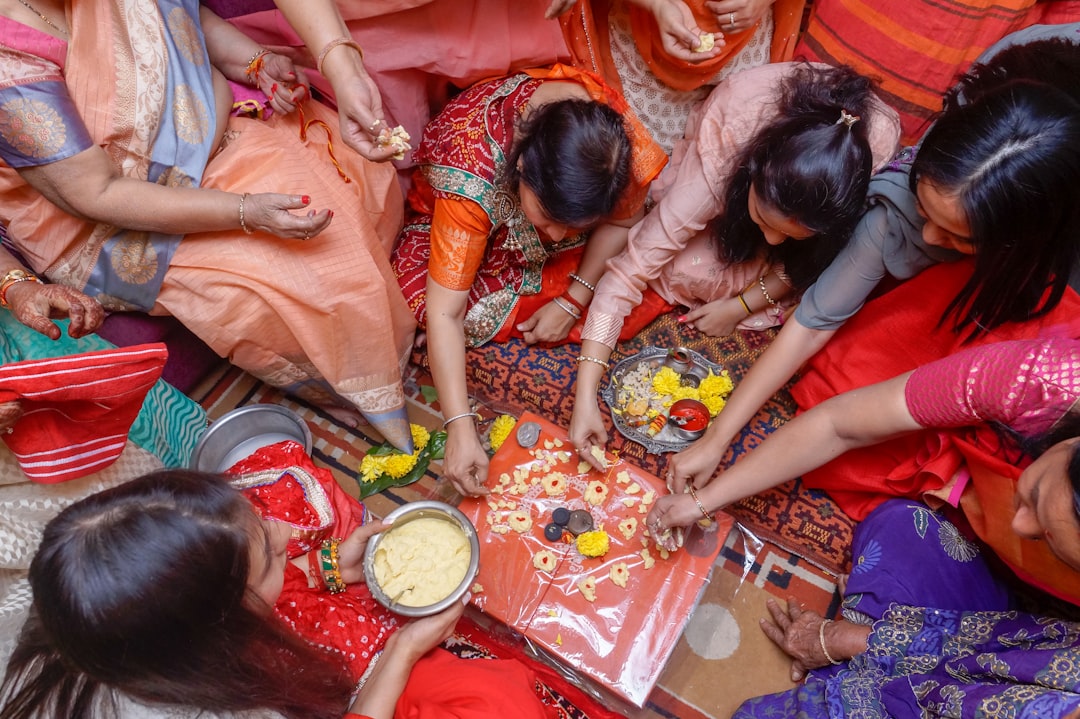
Hariyali Teej Traditions and Celebrations
Although customs vary by region and family tradition, Hariyali Teej celebrations commonly include:
Worship of Goddess Parvati and Lord Shiva
Observing a vrat or fast
Listening to or reciting the Hariyali Teej Vrat Katha
Applying mehndi
Wearing green or colourful traditional clothing
Singing traditional Teej songs
Decorating and enjoying swings
Offering flowers, fruits and sweets
Gathering with family and friends
Seeking blessings for harmony and well-being
Government tourism sources also document colourful clothing, mehndi, devotional songs, swings, folk performances and special puja as important parts of Teej celebrations.
In Rajasthan, Teej is especially famous for elaborate cultural celebrations and processions connected with Teej Mata.
When Is Hariyali Teej 2026? Date, Time and Complete Guide
Hariyali Teej Vrat Katha and Marriage
Hariyali Teej has traditionally held special importance for married women.
The divine partnership of Shiva and Parvati is regarded as an ideal of commitment, balance and harmony.
Women may worship Shiva and Parvati and pray for the health, happiness and well-being of their families and marital relationships.
Unmarried devotees may also worship Goddess Parvati and Lord Shiva with prayers connected with finding a harmonious life partner.
However, the deeper message of the Hariyali Teej Vrat Katha 2026 need not be limited only to marriage.
Parvati's story also teaches:
Choose consciously. Remain committed. Develop patience. Strengthen yourself internally. Let devotion become transformation.
What Can We Learn From Goddess Parvati?
Parvati's greatest lesson may be that transformation requires inner strength.
She did not allow external circumstances to determine the depth of her commitment.
Her journey can therefore be viewed as a movement from desire toward devotion, and from devotion toward transformation.
There is an important distinction here.
Ordinary desire says:
"I want something because it will make me complete."
Spiritual devotion says:
"I am willing to transform myself for what I recognize as sacred."
Seen from this perspective, the Hariyali Teej Katha in English becomes much more than an ancient festival story.
It becomes a lesson about how consciousness, discipline and devotion can reshape our lives.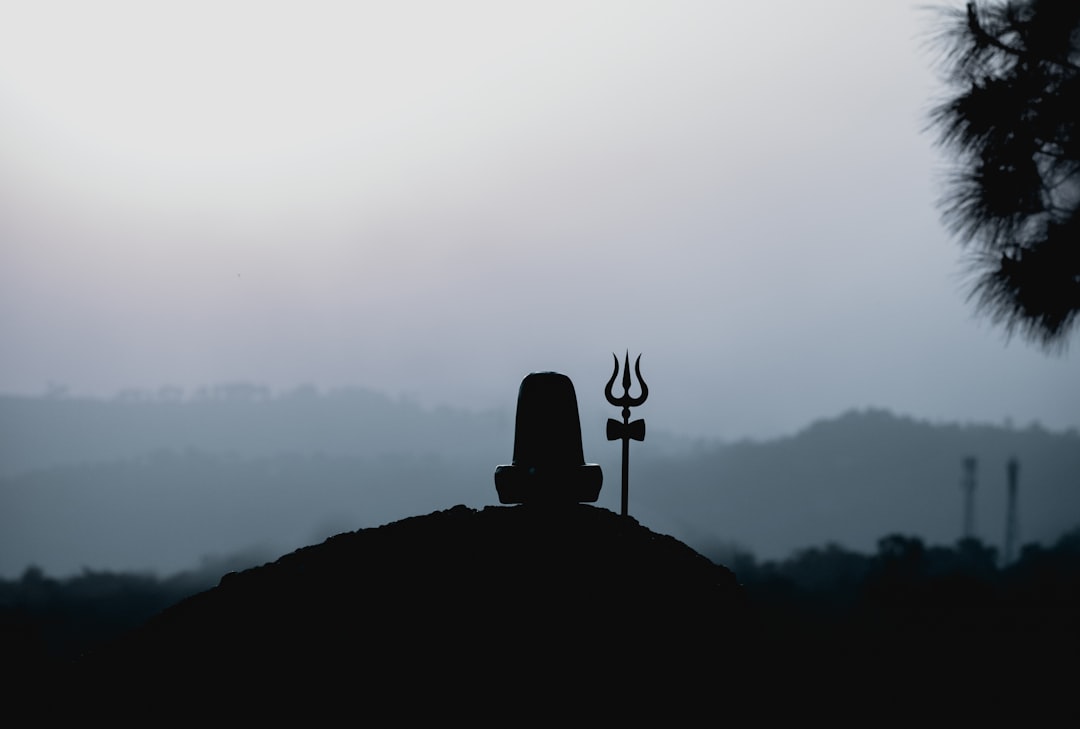
The Deeper Meaning of Shiva and Parvati's Union
Shiva without Shakti represents stillness.
Shakti without Shiva represents movement.
Together, they symbolize wholeness.
Their union reminds us that spiritual life does not necessarily mean escaping the world.
It can mean remaining inwardly aware while participating fully in relationships, responsibilities and everyday life.
The real question becomes:
Can you remain centered like Shiva while living dynamically like Shakti?
That is one of the most powerful spiritual interpretations we can draw from the Hariyali Teej story.
10 Shiva Mantras to Chant Daily: Meaning, Benefits & Rules
Hariyali Teej Katha 2026: A Festival of Love and Consciousness
Hariyali Teej is visually beautiful the greenery, monsoon, mehndi, swings, songs and traditional clothing all create a joyful festival atmosphere.
Yet its inner message is even more meaningful.
The Hariyali Teej Vrat Katha of Shiva and Parvati teaches that devotion becomes powerful when accompanied by patience, awareness and determination.
Parvati's tapasya symbolizes unwavering inner strength.
Shiva symbolizes consciousness and stillness.
Their union represents harmony.
Therefore, when devotees worship Lord Shiva and Goddess Parvati on Hariyali Teej, they are not only remembering a sacred relationship. They are also celebrating qualities that can transform human life: devotion, balance, commitment, awareness and inner strength.
Hariyali Teej can therefore become more than a festival we celebrate once a year.
It can become an invitation to create harmony within ourselves.
Personal Session
Sometimes understanding the path is not enough—we need clarity about our own journey. A personal session can help you explore the patterns, questions and challenges affecting your life and discover a more conscious way forward. Book your personal session and take the next step toward clarity, awareness and inner transformation.
Book Now