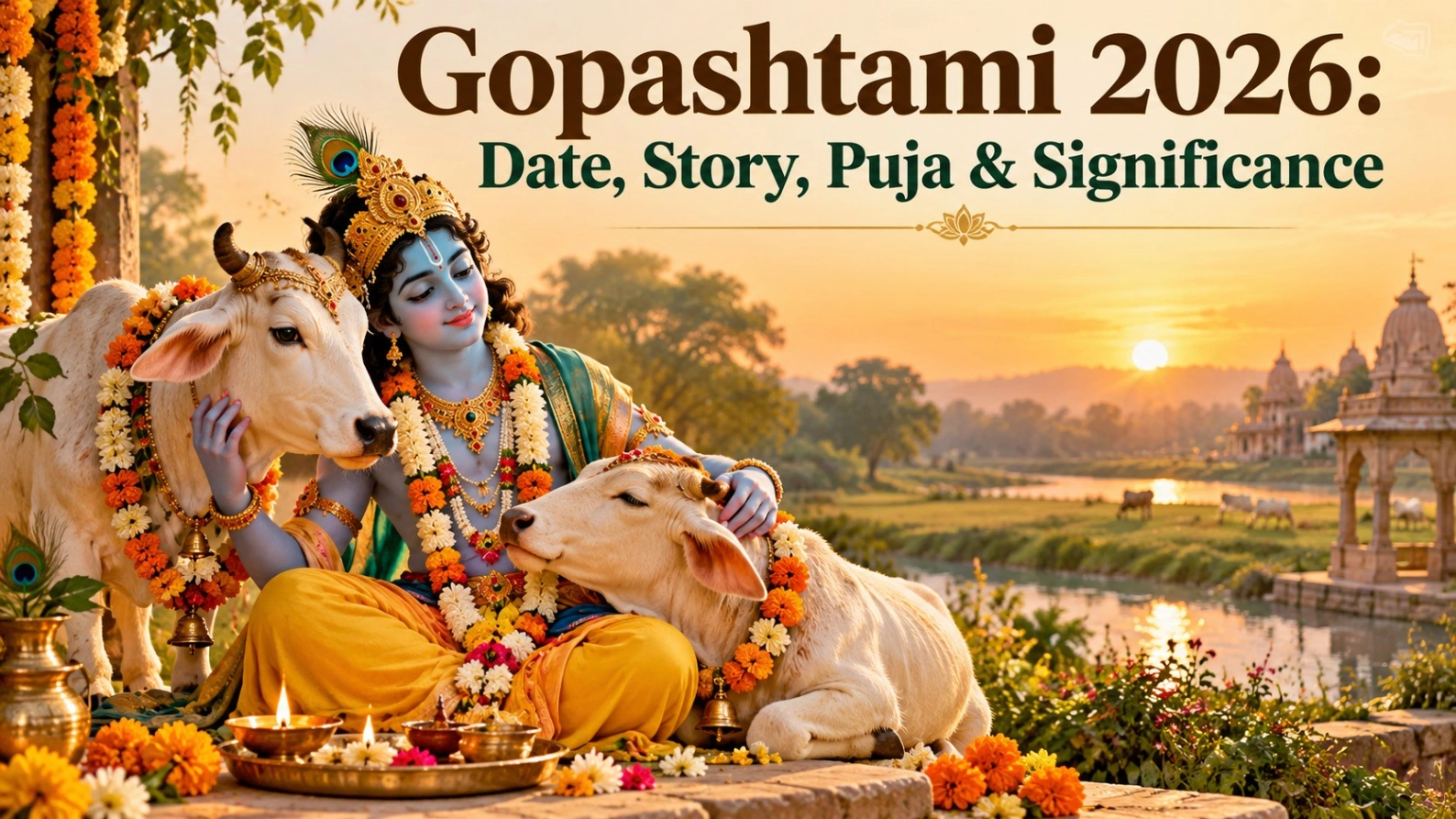
Gopashtami is a sacred Hindu festival dedicated to Lord Krishna, cows and the traditional culture of Braj. Celebrated on the Ashtami Tithi of Shukla Paksha in the month of Kartik, the festival honours Krishna in his beloved form as Govinda and Gopala, the protector and caretaker of cows.
In 2026, Gopashtami will be celebrated on Tuesday, November 17. Current Panchang and ISKCON calendar listings place Gopashtami, also known as Gosthashtami, on this date. The festival is observed on Kartik Shukla Ashtami and is especially important in Mathura, Vrindavan, Govardhan and other parts of the Braj region.
The central story of Gopashtami is connected with the childhood of Lord Krishna. According to Vaishnava tradition, this day marks the occasion when young Krishna, who had previously been entrusted with tending calves, was considered old enough to take responsibility for grazing and caring for the full herd of cows.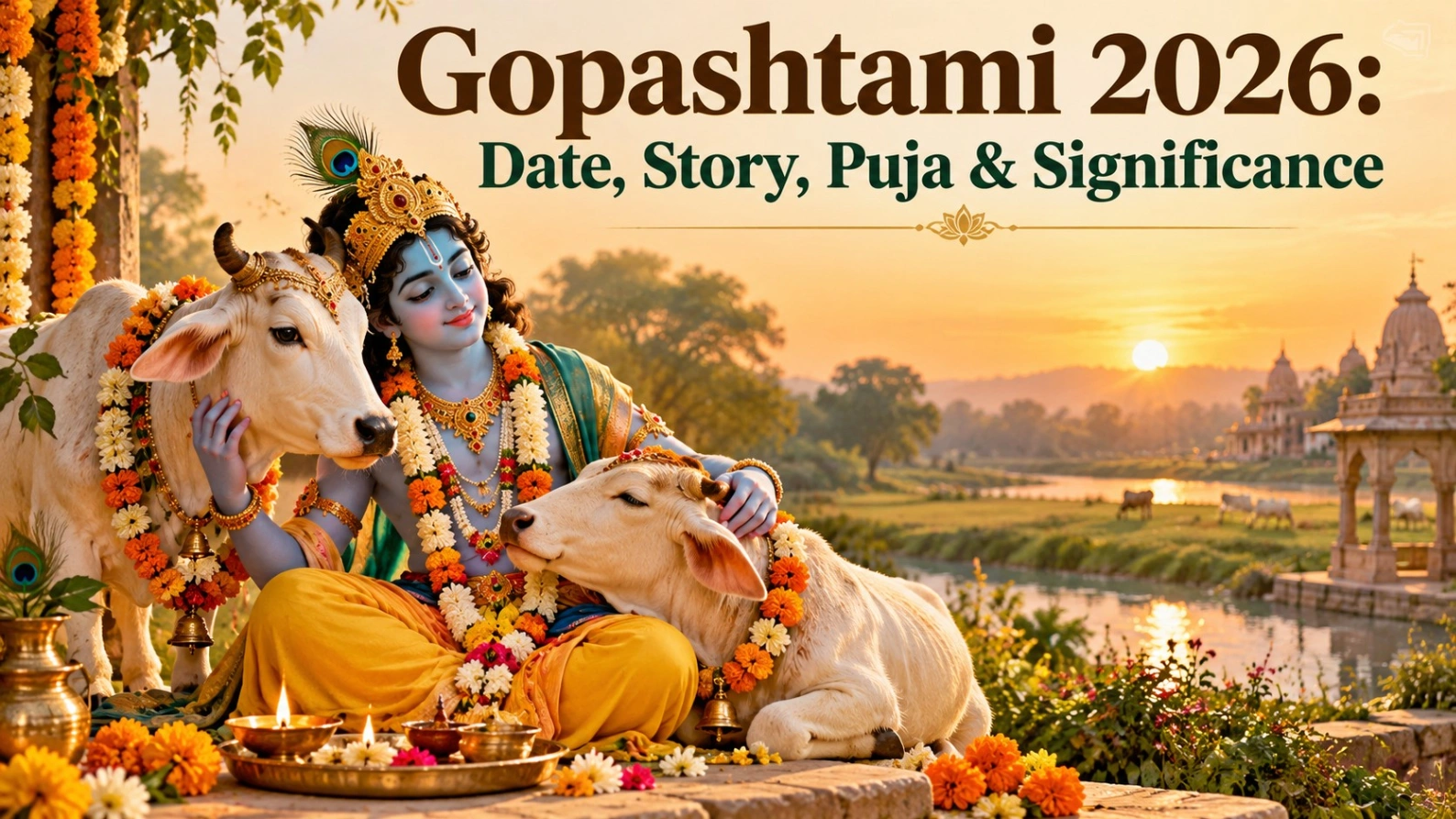
Gopashtami 2026 Date
The important details for Gopashtami 2026 are:
Festival: Gopashtami / Gosthashtami
Date: Tuesday, November 17, 2026
Tithi: Kartik Shukla Ashtami
Main Worship: Lord Krishna and cows
Major Regions: Mathura, Vrindavan, Braj and North India
The festival does not necessarily have one universally fixed short puja muhurat. It is generally observed through the day on Kartik Shukla Ashtami, while exact local Panchang timings can vary from city to city.
What Is Gopashtami?
Gopashtami is a festival that celebrates the close relationship between Lord Krishna and cows.
Krishna spent his childhood in the pastoral region of Braj, surrounded by cowherds, cows, forests and the Yamuna. His association with cows became so central to his identity that several of his famous names reflect this relationship.
Gopala means one who protects or tends cows.
Govinda is another beloved name of Krishna connected with cows, the earth and divine protection.
Gopashtami celebrates this compassionate aspect of Krishna and reminds devotees about kindness, protection and gratitude towards animals and nature.
Design Your Destiny
Gopashtami reminds us that greatness is not measured only by power. Lord Krishna's role as Gopala shows that true strength can also appear as care, responsibility and compassionate service.
Start Your Journey Today!Why Is Gopashtami Celebrated?
Gopashtami is celebrated primarily to commemorate the day when Lord Krishna began taking care of full-grown cows rather than only young calves.
According to traditional Vaishnava accounts, Krishna and Balarama spent their early childhood tending calves. When Krishna reached the appropriate age, Nanda Maharaj and the elders of Braj allowed him to take the cows to the grazing grounds.
This transition was considered an important moment in Krishna's childhood.
The people of Braj celebrated because Krishna was now becoming a true gopa, or cowherd.
Thus, Gopashtami became a festival honouring Krishna's role as protector of cows and celebrating the pastoral culture of Vrindavan.
Gopashtami Story
The Gopashtami story begins in Krishna's childhood in Gokul and Vrindavan.
Young Krishna loved spending time with the calves, cows and his cowherd friends.
As a small child, he was initially allowed to look after the calves close to home. The elders considered him too young to take the full herd deep into the forest.
But as Krishna grew older, he became eager to accompany the other cowherds.
He wanted to walk through the forests of Vrindavan, play his flute and care for the cows himself.
Eventually, Nanda Maharaj and the elders agreed that Krishna and Balarama were ready.
On Kartik Shukla Ashtami, Krishna is traditionally remembered as beginning his responsibility of tending the cows.
This day therefore came to be celebrated as Gopashtami.
The story may sound simple, but it reflects a central theme of Krishna's life: loving service.
Krishna is worshipped as the Supreme Divine, yet in Vrindavan he willingly takes the simple role of a cowherd.
He walks behind the cows, protects them, calls them by name and leads them safely through the forests.
The image of the divine caring personally for animals is one of the reasons Gopashtami remains spiritually powerful.
Why Are Cows Worshipped on Gopashtami?
Cows are central to Gopashtami because they were essential to Krishna's life in Braj.
In traditional agrarian society, cows provided milk, curd, butter, ghee and other resources that supported daily life.
Krishna's childhood stories are filled with cows, milkmaids, butter and grazing fields.
On Gopashtami, devotees honour cows to express gratitude and recognise their role in Krishna's life and traditional Indian culture.
Cow worship on this day may include:
Bathing and cleaning the cow
Decorating the horns and body
Applying tilak
Offering flowers and garlands
Feeding green grass, jaggery or suitable food
Performing Aarti
Circumambulating the cow
Seeking blessings
The emphasis should remain on respectful and humane care for the animal.
Gopashtami 2026 Puja Vidhi
The Gopashtami puja vidhi can be performed at a gaushala, Krishna temple or wherever cows can be respectfully worshipped.
Begin the morning by bathing and wearing clean clothes.
Visit a gaushala or a place where cows are properly cared for.
Clean the worship area.
Traditionally, the cow may be gently bathed or cleaned.
Apply a tilak on the cow's forehead according to tradition.
Decorate her gently with flowers or a garland.
Offer fresh green fodder, fruits, jaggery or other suitable food.
Light a diya where it can be done safely.
Offer prayers to Lord Krishna.
Perform Aarti of the cow and Krishna.
Many devotees also walk around the cow respectfully as a form of parikrama.
End the worship by praying for compassion, prosperity, protection and well-being.
Animal welfare should always come first. Decorations or rituals should never cause stress, discomfort or harm to the cow.
How to Celebrate Gopashtami at Home
If you cannot visit a gaushala, you can still celebrate Gopashtami at home.
Place an image of Lord Krishna with cows in your puja area.
Light a diya.
Offer flowers, fruits, butter, mishri or other traditional Krishna offerings.
Chant Krishna's names such as:
Govinda
Gopala
Madhava
Damodara
You may also donate food or funds to a reputable gaushala or animal welfare organisation.
The central spirit of the festival is compassion, so caring for animals can itself become a meaningful form of worship.
Navratri Day 6:Maa Katyayani Puja Vidhi,Story & Significance
Gopashtami Puja Samagri
Common items used for Gopashtami worship may include:
Flowers
Garlands
Roli or kumkum
Akshat
Diya
Incense
Fresh grass or fodder
Jaggery
Fruits
Water
Krishna image or idol
Puja thali
The ritual can remain simple. Devotion and compassionate action are more important than elaborate decoration.
Gopashtami and Lord Krishna
Gopashtami highlights a beautiful aspect of Krishna's personality.
Krishna is not only worshipped as a king, warrior or divine teacher.
In Braj, he is loved as a simple cowherd boy.
This aspect of Krishna represents intimacy, humility and closeness to nature.
The sight of Krishna playing the flute while surrounded by cows has become one of the most recognisable images in Vaishnava devotion.
Gopashtami celebrates precisely this relationship.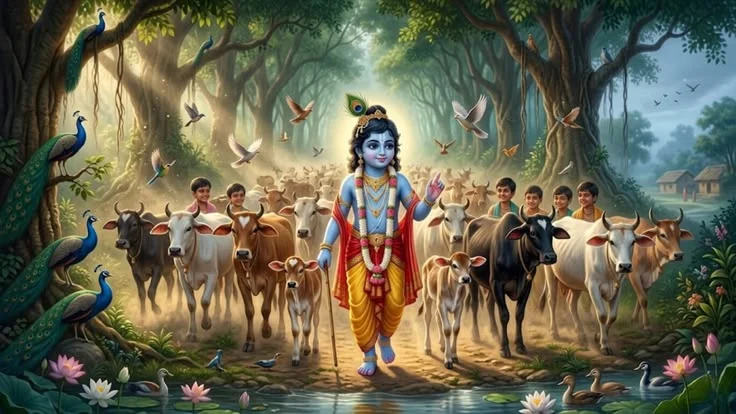
Gopashtami in Mathura and Vrindavan
Gopashtami has special importance in the Braj region, particularly in Mathura, Vrindavan and Govardhan.
Temples dedicated to Krishna may organise special darshan, bhajans and devotional programmes.
Cows are decorated and worshipped, and devotees may visit gaushalas to offer fodder and seva.
Because Krishna's childhood is believed to have unfolded in this region, Gopashtami carries an especially emotional and devotional significance here.
Gopashtami and Govardhan Puja: What Is the Difference?
Gopashtami and Govardhan Puja are both closely associated with Krishna and cows, but they commemorate different traditions.
Govardhan Puja remembers Krishna lifting Govardhan Hill and emphasises gratitude towards nature and Govardhan.
Gopashtami focuses on Krishna's role as a cowherd and the worship and protection of cows.
Both festivals communicate similar values of gratitude, protection and respect for nature.
Spiritual Significance of Gopashtami
The significance of Gopashtami goes beyond the ritual worship of cows.
The festival carries several deeper lessons.
Compassion
Krishna's relationship with cows reflects tenderness and care for living beings.
Responsibility
Gopashtami marks Krishna taking greater responsibility for the herd.
Spiritually, it reminds us that growth also means accepting responsibility.
Humility
Although Krishna is divine, he willingly performs the simple work of caring for animals.
This teaches that no act of sincere service is small.
Gratitude
The festival reminds devotees to acknowledge the animals, people and natural resources that support everyday life.
Protection
The name Gopala itself carries the idea of protection.
Gopashtami therefore encourages people to protect rather than exploit vulnerable beings.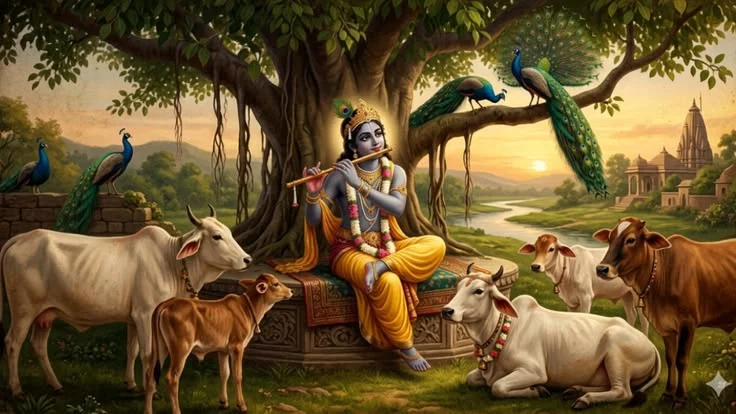
Why Is Krishna Called Gopala?
The name Gopala is one of Krishna's most beloved names.
“Go” refers to cows, while “pala” means protector or caretaker.
Thus, Gopala means protector of cows.
Krishna earned this affectionate identity through his childhood in Braj, where he spent his days caring for cattle and playing with his cowherd friends.
Gopashtami celebrates Krishna specifically in this form.
Vaikunth Chaturdashi: Why Are Vishnu & Shiva Worshipped Together?
Why Is Krishna Called Govinda?
Govinda is another deeply meaningful name of Krishna.
The name has several interpretations in Hindu tradition, but it is strongly associated with cows and Krishna's pastoral life.
For devotees, chanting “Govinda” evokes Krishna as the loving protector of cows, devotees and the natural world.
This makes the name especially meaningful during Gopashtami worship.
What Can We Learn From Gopashtami Today?
Modern life is very different from the pastoral world of Vrindavan, but the teachings of Gopashtami remain relevant.
The festival encourages us to ask:
How respectfully do we treat animals?
Are we grateful for the food and resources we receive?
Do we care for nature or simply consume from it?
Do we see service as something sacred?
Krishna's example suggests that spirituality does not exist only in temples.
It can also appear in the simple act of caring responsibly for another living being.
Gopashtami 2026 at a Glance
Festival: Gopashtami / Gosthashtami
Date: Tuesday, November 17, 2026
Tithi: Kartik Shukla Ashtami
Main Deity: Lord Krishna
Main Worship: Cow Puja
Main Story: Krishna begins tending the full herd of cows
Important Regions: Mathura, Vrindavan and Braj
Core Message: Compassion, protection, service and gratitude
The November 17 date is also listed in the 2026 ISKCON festival calendar for Delhi.
Personal Session
Sometimes finding direction requires looking more deeply at your own life, relationships, career choices and inner patterns. A personal session gives you space to explore those questions with greater awareness and clarity.
Book Now
Read Latest Articles
9 Colour of Navratri 2026: DayWise List, Date & Significance
Bhai Dooj Date: Tilak Muhurat, Puja Time & Complete Vidhi
Frequently Asked Questions
Q.When is Gopashtami 2026 and why is it celebrated?
Gopashtami 2026 will be celebrated on Tuesday, November 17. The festival falls on Kartik Shukla Ashtami and honours Lord Krishna and cows. According to Vaishnava tradition, it commemorates the day young Krishna began tending full-grown cows instead of only calves, symbolising compassion, responsibility and loving protection.Q.When is Gopashtami 2026?
Gopashtami 2026 falls on Tuesday, November 17, 2026.Q.What is Gopashtami?
Gopashtami is a Hindu festival dedicated to Lord Krishna and the worship of cows.Q.Why is Gopashtami celebrated?
It commemorates the traditional occasion when young Krishna began tending the full herd of cows in Braj.Q.Which God is worshipped on Gopashtami?
Lord Krishna is worshipped particularly in his forms as Gopala and Govinda.Q.Why are cows worshipped on Gopashtami?
Cows are honoured because of their central role in Krishna's childhood and traditional Braj culture.Q.How is Gopashtami celebrated?
Devotees worship cows, offer fodder and flowers, perform Aarti, worship Krishna and visit gaushalas.