
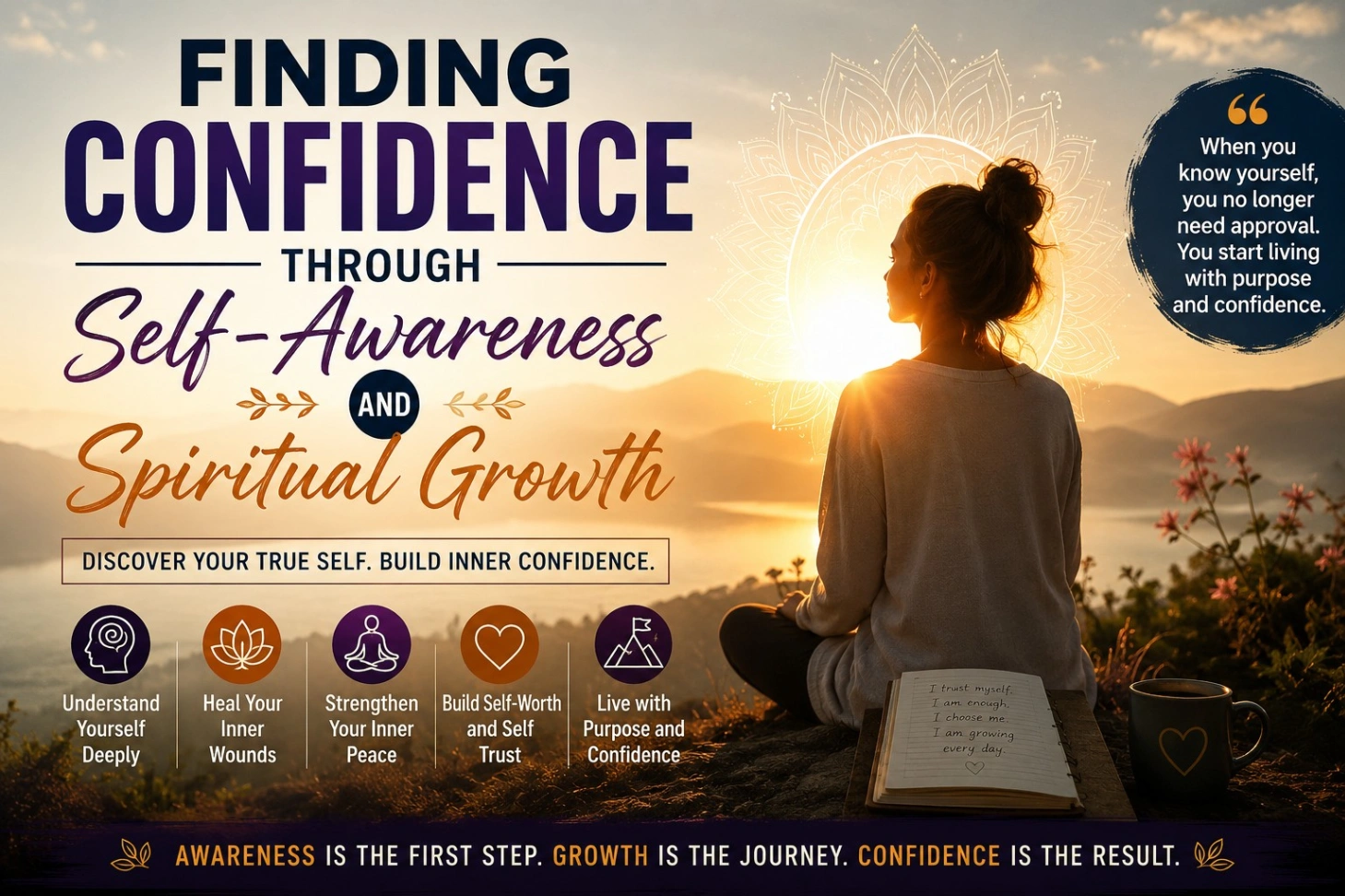
Confidence is often misunderstood. Many people think self confidence comes from success, appearance, praise, or being the loudest person in the room. But real confidence is much quieter than that. It comes from knowing who you are, understanding your emotions, trusting your choices, and staying grounded even when life feels uncertain. That is why self confidence, self awareness, and spiritual growth are deeply connected.
If you’ve been wondering how to build confidence, how to trust yourself more, or how to stop doubting yourself all the time, the answer may not be in forcing yourself to “act confident.” It may be in getting closer to yourself. Often, the path to confidence begins with self-awareness, emotional healing, and inner spiritual work.
When you know your patterns, understand your fears, and learn to listen to your inner voice instead of every outside opinion, something changes. You stop performing confidence and start living it. This is where finding inner confidence through spiritual growth becomes powerful. It is not about becoming someone else. It is about returning to yourself.
What Does Confidence Really Mean?
Confidence is not perfection. It is not never feeling fear. It is not always having the right answer. Real confidence means you can face life without constantly abandoning yourself. It means you can make a decision without needing endless validation. It means you can accept your flaws without turning them into proof that you are not enough.
People with low confidence often believe they need to achieve more before they can feel secure. But low self esteem usually has deeper roots. It may come from comparison, criticism, childhood conditioning, failure, heartbreak, rejection, or simply spending too much time disconnected from your own truth.
That is why confidence building is not only about external habits. It is also about healing the internal beliefs that keep saying, “I’m not ready,” “I’m not good enough,” or “What if I fail?” If you want to learn how to improve self confidence, you have to look at what is happening beneath the surface.
CTA for Design Your Destiny
If you’re ready to stop living from self-doubt and start building real confidence from within, Design Your Destiny can help you take that next step. Through spiritual wisdom, self-awareness practices, and practical inner work, this program helps you reconnect with your true self, strengthen self-worth, and move through life with more clarity, courage, and confidence.
Start Your JourneyWhy Self-Awareness Is the First Step to Self Confidence
Before confidence can grow, self-awareness has to deepen. Self awareness means noticing your thoughts, emotional triggers, fears, habits, strengths, and blind spots without immediately judging them. It is the ability to honestly ask yourself: What am I feeling? Why do I react this way? What do I actually want? What am I afraid of?
This is where many people begin to understand why they struggle with overcoming self doubt. Self-doubt often doesn’t appear randomly. It grows from patterns. Maybe you constantly compare yourself to others. Maybe you were taught to seek approval before trusting your own instincts. Maybe one mistake became a story you keep repeating in your mind.
Self-awareness helps you interrupt these patterns. It gives you language for your inner world. And when you understand your inner world, you stop being controlled by it.
For example, imagine someone who freezes every time they need to speak up in a meeting. On the surface, it looks like a confidence problem. But self-awareness may reveal that the real issue is fear of judgment or a long-standing belief that their voice doesn’t matter. Once that becomes clear, healing can begin.
This is why self awareness practices to improve confidence are so important. Awareness doesn’t instantly remove fear, but it helps you stop living on autopilot. It turns confusion into clarity.
How Spiritual Growth Changes the Way You See Yourself
Self-awareness helps you understand yourself. Spiritual growth helps you relate to yourself differently.
Spiritual growth does not have to mean following one specific religion or lifestyle. At its core, it means becoming more conscious, more grounded, and more connected to something deeper than your temporary fears. It means learning to observe your thoughts instead of believing every negative one. It means moving from ego-based fear to inner trust.
This is one of the reasons how spiritual growth helps build confidence is such an important conversation. When your identity is built only on achievements, appearance, status, or how others see you, your confidence will always feel unstable. But when your confidence is rooted in awareness, values, purpose, and spiritual clarity, it becomes much stronger.
Spiritual growth teaches you that your worth is not created by constant performance. It reminds you that you are still valuable on days when you are confused, tired, imperfect, or in transition. That understanding softens shame and strengthens self-trust.
This is also why so many people experience emotional healing and inner healing as part of their confidence journey. When you begin to slow down, reflect, pray, meditate, journal, or sit with yourself honestly, you start meeting the parts of you that were ignored, criticized, or silenced. And those parts often hold the key to your confidence.
Why Self-Doubt Grows When You Feel Disconnected From Yourself
Most people think self-doubt is the opposite of confidence. In many ways, it is. But self-doubt is also a sign of disconnection. When you are disconnected from your values, your intuition, your emotional truth, and your spiritual center, you become easier to influence by fear, comparison, and outside opinions.
That is why people often search for how to stop doubting yourself or how to trust yourself after self doubt. They are not just looking for motivation. They are looking for stability.
Self-doubt becomes stronger when:
You constantly compare your life to others
You ignore your feelings until they become overwhelming
You define your worth only through results
You speak harshly to yourself after every mistake
You avoid stillness because it forces you to confront what you feel
The more disconnected you are from yourself, the easier it is to believe every insecure thought. But the more aware and spiritually grounded you become, the easier it is to pause and say, “This thought is here, but it is not the whole truth.”
That pause matters. It is where confidence begins to rebuild.
Signs Your Confidence Is Being Shaped by Fear, Not Truth
Sometimes the biggest confidence issue is not lack of ability. It is a distorted inner story. You may need to look deeper if you notice these signs of low self confidence:
You overthink every decision and then still feel unsure
You need constant reassurance before doing anything important
You downplay your strengths because praise feels uncomfortable
You avoid opportunities because you assume you will fail
You compare your progress to everyone else’s timeline
You feel guilty for taking up space or expressing your needs
You trust other people’s opinions more than your own inner voice
These signs do not mean something is wrong with you. They simply show where healing is needed. Confidence does not grow by shaming yourself for feeling insecure. It grows by understanding what created that insecurity and gently replacing it with awareness, truth, and self-respect.

Daily Habits to Build Confidence and Self-Awareness
If you want to know how to build confidence through self awareness, the answer is consistency. Confidence grows through small daily choices that reconnect you to yourself. Here are some practical and spiritual habits that help.
1. Start journaling your inner patterns
Write down what triggers self-doubt, what situations make you shrink, and what thoughts repeat when you feel insecure. Journaling increases self-awareness because it makes your inner world visible. Over time, you begin to notice patterns instead of getting lost in them.
2. Practice stillness every day
Even ten minutes of silence, breathwork, meditation, or prayer can change your relationship with yourself. Stillness helps you hear your own thoughts clearly. It also creates space between you and the anxious voice in your head. This is one of the most powerful spiritual ways to build self confidence because it helps you feel anchored from within.
3. Keep promises to yourself
Confidence is deeply connected to self-trust. If you constantly say you will do something and then don’t follow through, your trust in yourself weakens. Start small. Wake up when you said you would. Finish one task. Take the walk. Keep the promise. These moments teach your mind that your word matters.
4. Speak to yourself with honesty, not cruelty
There is a difference between accountability and self-attack. If you made a mistake, learn from it. But don’t turn one bad day into a full identity crisis. The way you speak to yourself shapes your self worth more than you realize.
5. Limit comparison and return to your own path
Comparison drains confidence because it keeps you focused on someone else’s timeline, personality, success, or appearance. Spiritual growth teaches you to return to your own journey. Your pace is allowed to look different. Your path is allowed to be unique.

6. Ask yourself what you truly value
Sometimes confidence feels weak because you are living according to other people’s expectations. Self-awareness asks a harder question: What matters to me? What kind of life actually feels aligned to who I am? Confidence becomes stronger when your choices reflect your real values.
7. Notice your wins without dismissing them
A lot of people with low confidence move the goalpost every time they do something well. They achieve one thing and immediately focus on what is still missing. Pause and acknowledge your progress. This does not make you arrogant. It makes you aware.
How to Trust Yourself More
Learning how to trust yourself is one of the most important parts of confidence building. Self-trust grows when you stop abandoning your own experience. It grows when you listen to your emotions without letting them control you. It grows when you make decisions from clarity instead of panic. It grows when you forgive yourself for not always knowing the answer immediately.
If you want to strengthen self-trust, ask yourself:
What do I already know but keep ignoring?
Where am I asking everyone else for permission?
What would I choose if I trusted myself more?
What fear is louder than my truth right now?
These questions bring you back to yourself. And every time you come back to yourself, confidence becomes less performative and more real.

Confidence Is Not About Becoming Fearless
One of the biggest myths in the self-help world is that confident people do not feel fear. They do. The difference is that they do not let fear decide everything for them. Confidence is not the absence of uncertainty. It is the willingness to move with uncertainty while staying connected to yourself.
That is why finding confidence through self-awareness and spiritual growth is such a powerful path. It doesn’t ask you to become perfect, loud, or endlessly positive. It asks you to become honest, grounded, aware, and compassionate with yourself.
When you build confidence this way, it becomes harder to lose. It is no longer based only on praise, outcomes, or appearances. It comes from self-knowledge, emotional healing, and spiritual depth.
If you’ve been trying to figure out how to feel confident in yourself, start by getting curious about your inner world. Confidence is not something you force. It is something you uncover. The more self-aware you become, the more clearly you see your patterns, fears, strengths, and needs. The more spiritually grounded you become, the less your worth depends on constant validation from the outside world.
That is the real shift. You stop chasing confidence as an image and begin building it as a relationship with yourself.
If you are walking through low self esteem, healing old wounds, or trying to understand how to increase self worth and confidence, know that growth is possible. Confidence can be rebuilt. Self-trust can return. And spiritual growth can become a powerful part of that journey.
CTA for Personal Session
If you want deeper guidance on confidence, self-doubt, emotional healing, or spiritual growth, book a personal session for one-to-one support. It’s a space to understand your inner blocks, reconnect with self-trust, and receive practical guidance tailored to your personal journey.
Book Now