
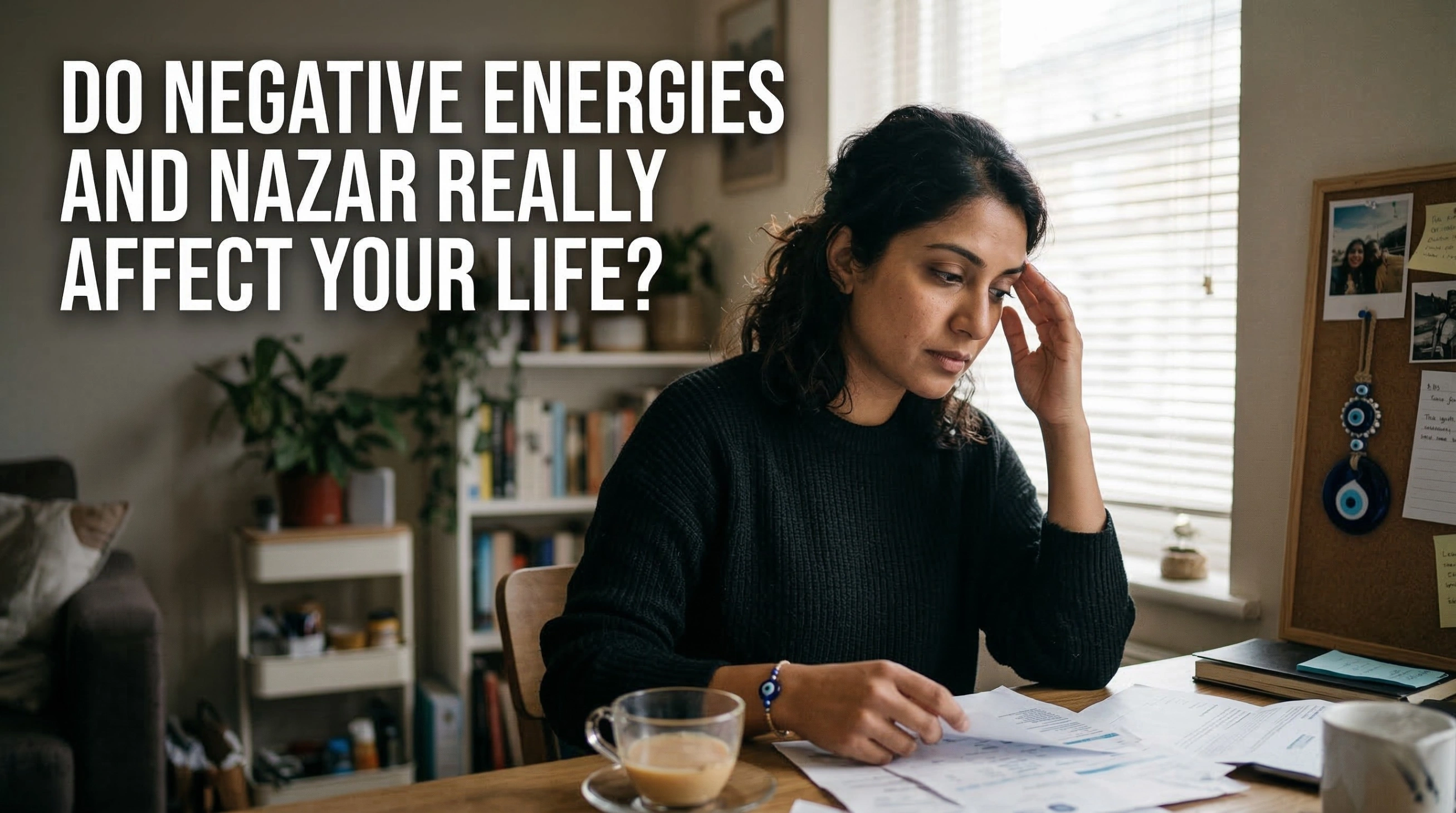
For centuries, people across cultures have believed in the concept of the evil eye, often called nazar in many traditions. From the Mediterranean to India and the Middle East, the belief that jealousy or negative intentions can affect someone’s life has existed for thousands of years. But the question many people still ask today is simple: does evil eye really work, or is it simply a psychological belief?
Understanding the evil eye meaning, the spiritual meaning of evil eye, and the role of negative energy in human relationships can help us approach this topic with clarity. Some people attribute unexplained setbacks to nazar lagna, while others view it through the lens of psychology and emotional influence. In this blog, we will explore the idea of negative energy symptoms, the signs of evil eye on a person, and whether such beliefs truly affect your life.
What Is the Evil Eye? Understanding the Nazar Concept
The evil eye meaning refers to the belief that someone can unintentionally or intentionally harm another person through jealousy, envy, or negative intentions. In many cultures, this phenomenon is called nazar dosh or simply nazar lagna meaning; the idea that a person's success, beauty, happiness, or progress may attract jealousy from others.
Historically, societies believed that envy carries a subtle energetic influence. When someone harbors intense jealousy, it may create what people interpret as negative vibrations or negative energy around the person being envied.
This belief led to the development of many evil eye protection practices. From wearing protective charms to performing spiritual rituals, cultures developed methods intended to remove nazar spiritually and safeguard individuals from harmful influences.
However, modern discussions also explore whether these experiences might be linked to psychological patterns rather than supernatural forces.
Negative Energy and Human Psychology
The concept of negative energy is often used metaphorically to describe emotional environments created by stress, jealousy, anger, or resentment. When people speak about negative energy symptoms, they may actually be referring to emotional or psychological reactions to difficult social dynamics.
For example, jealousy and negative energy in relationships can create tension, insecurity, and emotional stress. When someone constantly compares themselves to others, it can lead to subtle behavioral patterns that affect friendships, work environments, or family relationships.
From a psychological perspective, toxic energy in relationships may manifest through criticism, gossip, manipulation, or resentment. Over time, these behaviors can create a stressful emotional environment that impacts a person’s mood, confidence, and decision-making.
In this sense, the idea that negative energy can affect your life has a practical explanation: human emotions influence social interactions, and social interactions influence life outcomes.

Signs of Evil Eye on a Person: Belief vs Reality
Many people search for signs of evil eye on a person or wonder how to know if someone gave you nazar. In traditional belief systems, certain life disturbances are interpreted as evil eye symptoms.
Commonly mentioned signs include:
Sudden unexplained obstacles in life
Feeling mentally drained or emotionally heavy
Frequent misunderstandings or conflicts
Sudden loss of motivation or clarity
Unusual series of bad luck
However, it is important to approach these interpretations carefully. These experiences may also arise from normal life challenges, stress, or emotional burnout.
Psychologists often explain such experiences through the lens of subconscious belief and energy. If a person strongly believes that someone has affected them negatively, that belief itself can shape their mindset and behavior.
This does not necessarily mean the evil eye is real; it means that belief systems can influence perception and emotional responses.
Can Someone’s Jealousy Affect Your Life?
One of the most common questions people ask is: can someone’s jealousy affect your life?
While jealousy itself cannot magically control events in your life, it can influence social behavior. Jealous individuals may unconsciously create negativity through criticism, passive aggression, or competition.
These behaviors can create environments filled with tension or insecurity. Over time, exposure to such environments may affect confidence, productivity, and emotional well-being.
This is why many spiritual traditions emphasize energy protection techniques—not necessarily to block mystical forces, but to maintain emotional boundaries and inner balance.
Evil Eye Psychology vs Belief
The discussion around evil eye psychology vs belief highlights an interesting intersection between spirituality and psychology.
Belief in evil eye curse or nazar dosh can sometimes act as a cultural explanation for life's unpredictability. Humans naturally seek meaning when things go wrong, and attributing setbacks to external energy can provide emotional comfort.
Psychologists often refer to this as a coping mechanism. When people feel overwhelmed or powerless, attributing difficulties to an external cause can help reduce personal guilt or confusion.
At the same time, spiritual traditions encourage individuals to focus on aura protection spiritual meaning, meditation, and self-awareness practices that promote inner stability.
In this way, spiritual practices may actually support emotional resilience rather than supernatural protection.
Symptoms of Negative Energy Around You
Even without supernatural explanations, people often experience environments that feel heavy or uncomfortable. When discussing symptoms of negative energy around you, people are usually referring to emotional atmospheres rather than mystical forces.
Some common experiences include:
Constant negativity in conversations
Lack of motivation or inspiration
Feeling emotionally drained around certain people
Frequent arguments or misunderstandings
Persistent stress or anxiety
These situations often arise from unresolved emotional conflicts or unhealthy social dynamics.
Recognizing such environments allows people to take practical steps toward spiritual energy cleansing, emotional boundaries, and personal growth.

Spiritual Protection Practices and Energy Cleansing
Across many traditions, people practice methods intended to remove negative vibes and restore emotional balance. These practices are commonly referred to as spiritual protection practices or energy cleansing.
Some commonly practiced methods include:
Meditation and Self-Awareness
Meditation helps individuals observe their thoughts and emotional patterns. Many people believe that awareness itself strengthens spiritual energy protection.
Gratitude and Positive Mindset
Focusing on gratitude can help shift attention away from jealousy, resentment, and fear—emotions that often contribute to feelings of negativity.
Healthy Boundaries
Protecting your emotional space is one of the most effective energy protection techniques. Reducing exposure to toxic environments improves mental clarity and peace.
Environment Cleansing
Some traditions practice symbolic aura cleansing using incense, prayer, or mindful rituals. These practices often serve as psychological reminders to reset emotional energy.
Law of Attraction and Negative Energy
In modern spiritual discussions, the law of attraction and negative energy is frequently mentioned. According to this philosophy, thoughts and emotions influence the experiences we attract into our lives.
While scientific evidence for this concept is limited, the underlying principle is psychologically meaningful. A person who constantly focuses on fear or negativity may unknowingly make choices that reinforce those emotions.
On the other hand, individuals who cultivate awareness, optimism, and resilience often approach challenges differently.
This does not mean positive thinking magically eliminates problems. Instead, it means that mindset can influence how we respond to life's challenges.
Is the Evil Eye Real or Psychological?
So, is evil eye real or psychological?
The answer often depends on perspective.
From a cultural standpoint, belief in nazar reflects centuries of traditions that sought to explain the impact of envy and jealousy on human relationships.
From a psychological standpoint, experiences attributed to the evil eye may be explained through emotional influence, belief systems, and social dynamics.
Regardless of the explanation, the key insight remains the same: human emotions carry influence. Jealousy, resentment, and negativity can shape behavior and relationships, while awareness and compassion can improve them.
How to Protect Your Energy in Everyday Life
Instead of worrying about mystical forces, the most effective way to protect your well-being is to focus on inner stability.
Some simple habits include:
Developing emotional awareness
Practicing mindfulness or meditation
Limiting exposure to toxic environments
Surrounding yourself with supportive people
Maintaining a balanced mindset
These practices promote both inner peace and emotional resilience, allowing you to navigate life without fear of unseen influences.
The belief in nazar and evil eye effects has existed across cultures for centuries. Whether viewed as spiritual energy or psychological influence, the idea reflects a deeper truth about human relationships.
Jealousy, negativity, and emotional tension can affect how people interact with one another. At the same time, awareness, compassion, and inner clarity can help individuals maintain balance.
Rather than living in fear of evil eye curse or negative vibrations, it may be more empowering to focus on personal growth and emotional wisdom.
Understanding the difference between belief and reality allows us to approach life with both spiritual openness and rational clarity.
True transformation does not come from fearing negative energy; it comes from understanding your mind and mastering your inner world.
If you want to learn how to build clarity, emotional balance, and conscious living, explore the Design Your Destiny program by Sakshi Shree.
This course helps you understand the deeper science of awareness, mindset, and personal transformation so you can create a life guided by wisdom rather than fear.