
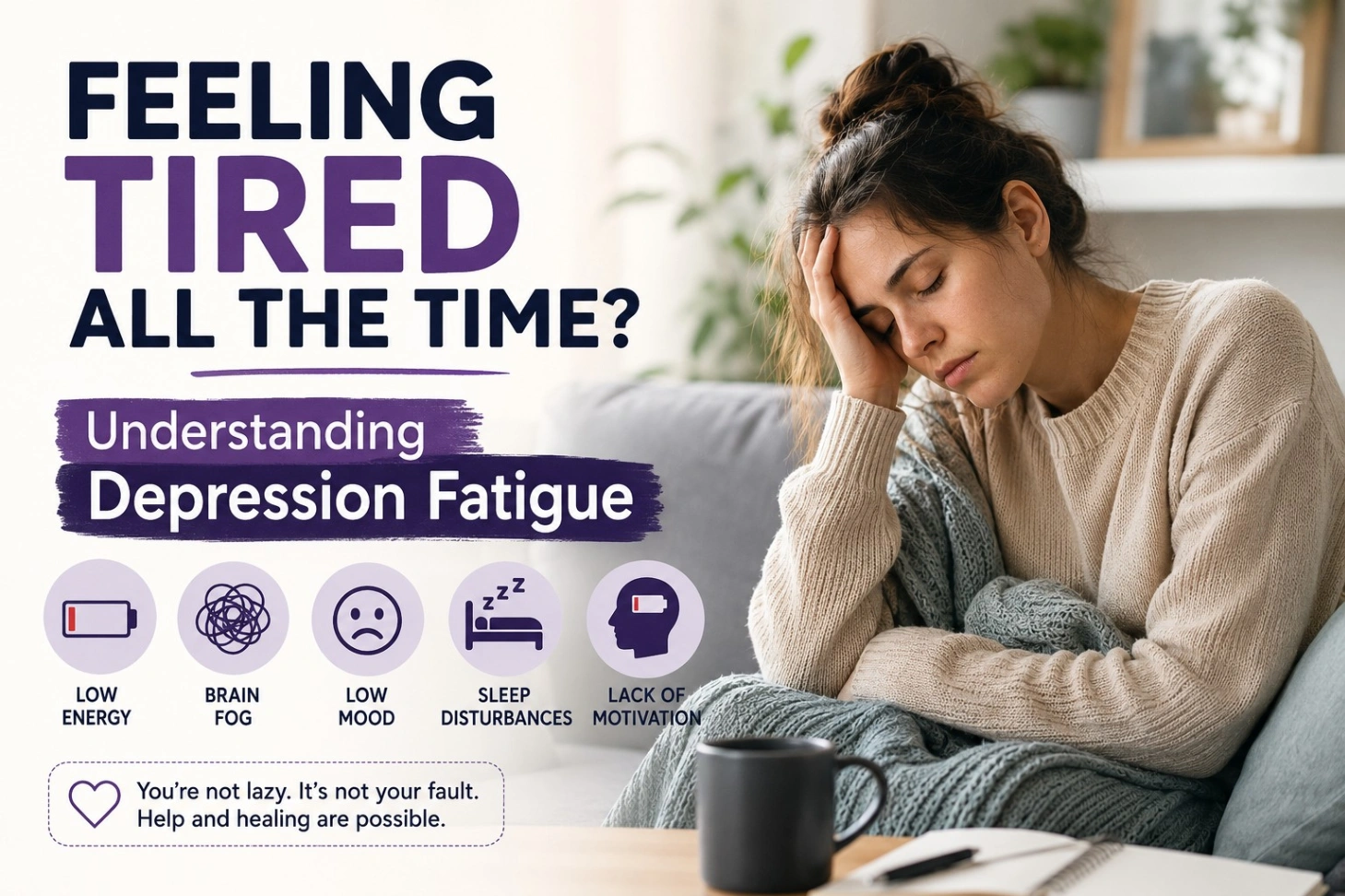
Some days, tiredness has an obvious reason: a late night, a long commute, or too much on your to-do list. But on other days, the exhaustion feels deeper. You sleep, rest, cancel plans, and still wake up with a heavy body, a foggy mind, and very little energy to begin. This experience is often described as depression fatigue.
Depression fatigue is not a formal diagnosis by itself. It is an everyday term for the deep exhaustion, low energy, slowed thinking, and lack of motivation that can accompany depression. It can make ordinary tasks feel unusually hard, from replying to a message to taking a shower, cooking a meal, or focusing at work.
This kind of tiredness can be confusing because it is not always fixed by sleeping longer. You may feel tired even after sleeping, sleepy during the day, or physically still while your mind feels completely worn out. Understanding the link between depression and tiredness can help you respond with more compassion and take the next helpful step.
What Does Depression Fatigue Feel Like?
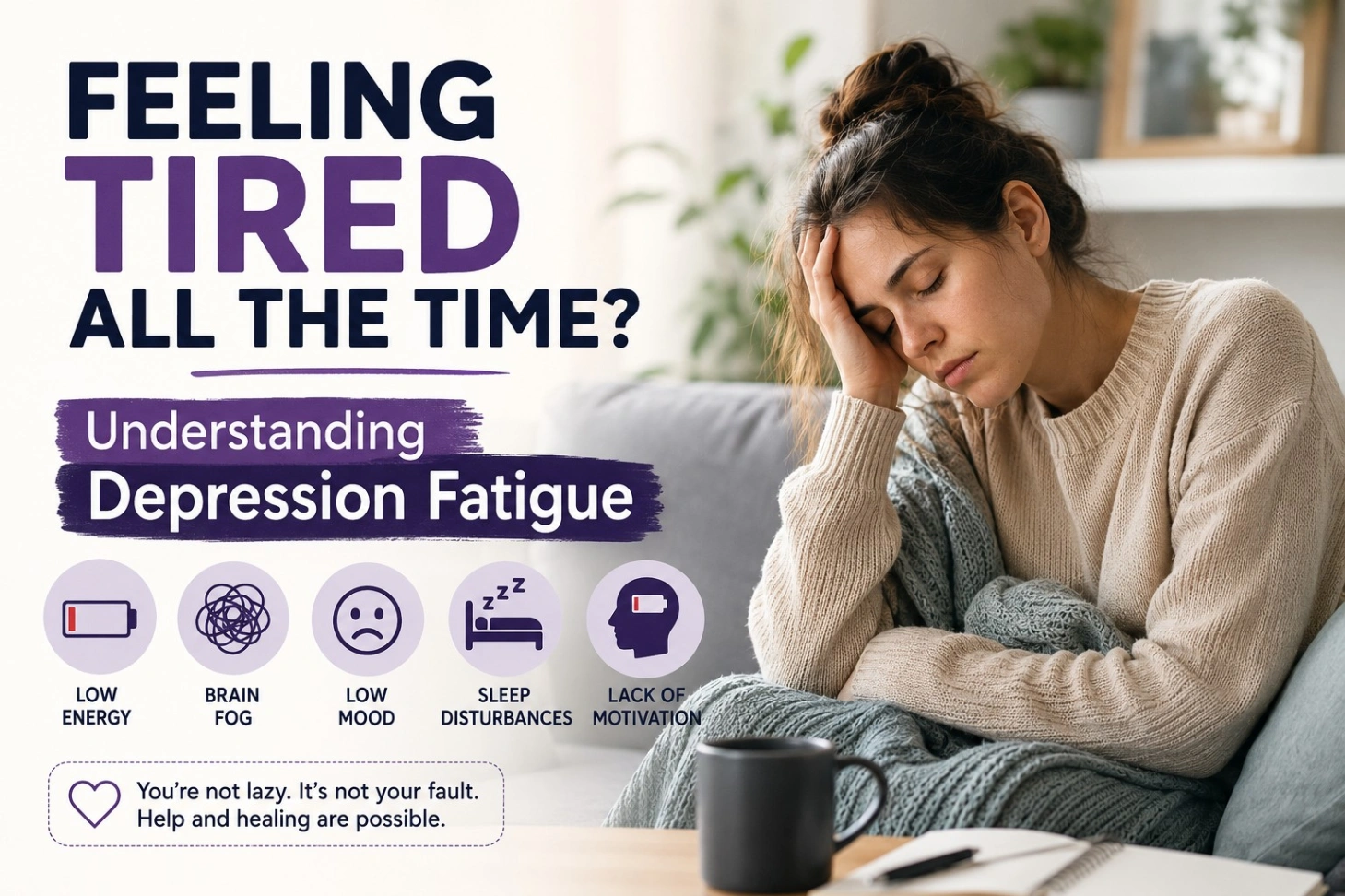
Depression fatigue is more than a little sleepiness after a busy week. It can feel as though your energy has been turned down from the inside. Your body may feel heavy, your thoughts may move slowly, and even small choices can feel draining.
For some people, the fatigue is mainly physical. Getting out of bed feels difficult, chores seem much bigger than they are, and the body feels weak or weighed down. For others, it is mostly mental. They may stare at a task without knowing how to start, lose their train of thought, or feel unable to make simple decisions.
Emotional exhaustion often comes with it. You may want to care about people, plans, or work, but feel too drained to respond. This is why depression fatigue and lack of motivation are often discussed together. It is not laziness, a lack of willpower, or a personal failure. It can be a sign that your emotional and mental resources are under strain.
CTA for Design Your Destiny
Feeling emotionally drained, disconnected or lost in constant overthinking? Design Your Destiny offers practical tools for deeper self-awareness, emotional balance and a more conscious way of living. Begin your journey towards clarity, inner strength and a life shaped with intention.
Start Your JourneyWhy Does Depression Make You Tired?
There is rarely one single reason. Depression can affect mood, sleep, concentration, appetite, activity levels, and the way a person moves through daily life. When several of these changes happen together, they can leave you feeling exhausted all the time.
Sleep is one part of the picture. Some people find it hard to fall asleep or wake often at night. Others sleep more than usual but still do not feel refreshed. Depression may also make concentration harder. When your mind is working through worries, emotions, decisions, and routine tasks with less ease, a normal day can feel mentally exhausting.
Low mood can also change your routine. You may eat irregularly, move less, spend more time alone, or stop doing activities that once gave structure to your day. These changes do not mean you are doing anything wrong. They show how depression can affect the body and mind together.
Depression Symptoms That Can Appear Alongside Fatigue
Feeling tired all the time can be one part of depression, but it is usually not the only change. Alongside low energy, some people notice a persistent low mood, numbness, hopelessness, irritability, or a loss of interest in things they once enjoyed.
Other depression symptoms may include sleep changes, changes in appetite, difficulty concentrating, feelings of guilt or low self-worth, and withdrawing from friends or family. Some people feel restless and unable to relax, while others feel slowed down and disconnected.
Rather than using a checklist to label yourself, notice patterns. Has your tiredness lasted for weeks? Is it affecting work, relationships, personal care, or your ability to enjoy life? Are you also experiencing low mood, loss of interest, or a strong sense of hopelessness? These are signs worth taking seriously.
Tired Even After Sleeping? Look Beyond Sleep Alone
Many people ask, “Why am I tired all the time, even after enough sleep?” Sleep matters, but more hours in bed do not always resolve emotional exhaustion or depression fatigue. You may be tired even after sleeping because the issue is not only the number of hours you slept.
Look at the wider pattern. Are you sleeping at very different times each day? Has stress made your sleep lighter or broken? Are you using screens late at night because your mind will not switch off? Have you stopped moving, eating regularly, or spending time with people who help you feel grounded?
It is also important not to assume that depression is the only explanation. Constant tiredness can have many causes, including sleep problems, some health conditions, medications, or nutritional issues. A healthcare professional can help you consider these possibilities instead of relying on self-diagnosis.
No Energy or Motivation: Why Both Can Disappear
Low energy and low motivation often feed each other. When your body feels exhausted, it is harder to begin a task. When tasks remain unfinished, you may feel guilt, pressure, or frustration. That emotional weight can make the next task feel even harder.
You may know what would help, such as stepping outside, calling someone, taking a shower, or working on an assignment, but the gap between knowing and doing feels huge. That gap is real. It deserves patience rather than harsh self-talk.
Try reducing the size of the next step. Open a window, drink water, or stand outside for two minutes. Choose one small task that can be completed today. Small actions do not cure depression, but they can gently interrupt the feeling of being completely powerless.

Depression and Sleepiness: Can You Feel Tired All Day?
Yes, some people with depression feel sleepy and tired all day, while others feel wired but exhausted. You may nap often, struggle to get out of bed, or feel a strong pull to lie down even when you have not been physically active. This can be frustrating, especially when rest does not feel restorative.
Do not judge yourself for needing rest. Instead, notice whether rest is helping or whether it is becoming the only way you can cope. A gentle routine can be more supportive than pushing yourself hard or giving up on the day. Choose a regular wake-up time when possible, eat something simple at steady intervals, and include a small amount of movement that feels manageable.
The aim is not to force energy. It is to create a little rhythm around a difficult time.
Brain Fog and Depression: When Thinking Feels Heavy
Brain fog is a common way people describe mental fatigue. It may feel like forgetfulness, slow thinking, difficulty finding words, poor focus, or a struggle to make decisions. You may read the same paragraph several times or feel unable to organise what needs to happen next.
This does not mean you are incapable. It may mean your mind is overloaded and needs support. Simplify your environment where you can. Write down one or two priorities, use reminders, break work into short blocks, and give yourself extra time for tasks that normally feel easy.
Burnout vs Depression Fatigue: What Is the Difference?
Burnout and depression fatigue can overlap, especially when work pressure, caregiving, studies, or prolonged stress are involved. Burnout is often connected to demands in a specific area of life and may feel most intense around that area. Someone may dread work but still feel moments of relief or enjoyment away from it.
Depression can affect many areas of life, not only one stressful situation. A person may lose interest in activities they once loved, feel low or hopeless across different settings, and struggle even when there is no immediate demand in front of them.
It is not always easy to separate the two. Stress can worsen depression, and depression can make work stress harder to manage. Instead of trying to diagnose yourself by comparison, ask, “How much is this affecting my life, and what support do I need now?”

Depression Fatigue in Women and Men
Depression fatigue symptoms in women and men can include low energy, sleep changes, poor concentration, and reduced motivation. Depression is personal, and it does not follow one fixed pattern based on gender.
Some people describe sadness or tearfulness. Others notice irritation, anger, physical aches, withdrawal, or a constant sense of pressure. Focus less on whether your symptoms look “typical” and more on whether you have been struggling and need support.
How to Deal With Depression Fatigue Gently
When you feel depleted, advice that asks you to completely transform your life can feel unrealistic. Start smaller. Your goal is not to become energetic overnight. It is to support your mind and body in ways that are possible today.
Try to wake at roughly the same time each day, even if your sleep has been poor. Eat regular meals or simple snacks if full meals feel hard. Step into daylight, sit near a window, or take a brief walk if you can. Movement does not need to be intense to be meaningful.
Create a low-pressure plan for the day. Choose one necessary task, one caring task, and one comforting task. The necessary task might be sending an email. The caring task might be taking a shower. The comforting task might be listening to music, prayer, journaling, or sitting quietly with tea.
Stay connected in a small way. Depression often encourages isolation, but you do not need to have a long conversation to feel less alone. Send a simple message, sit with a family member, or ask someone to check in.
Most importantly, consider professional help. A therapist, counsellor, psychologist, psychiatrist, or primary care clinician can help you understand what is happening and discuss suitable options. Depression fatigue treatment is not one-size-fits-all. Support may involve therapy, lifestyle support, medication, or a combination, depending on your needs and a clinician’s assessment.
When to Seek Help for Constant Tiredness
Please reach out to a healthcare professional if you have been feeling exhausted for weeks, your tiredness is disrupting daily life, or you are also noticing persistent low mood, hopelessness, sleep changes, loss of interest, or difficulty functioning.
Seek urgent local emergency or crisis support if you are having thoughts of harming yourself, feel that life is not worth living, or do not feel able to keep yourself safe. You deserve immediate care and you do not have to manage that moment alone.

Feeling tired all the time can make you question yourself. Try not to turn that question into blame. Depression fatigue is not proof that you are lazy, weak, or falling behind. It is a signal to slow down, look honestly at what you are carrying, and seek support that helps you recover. One small step, repeated gently, can become a path back to energy, clarity, and hope.
CTA for Personal Session
When life feels heavy, a personal session can offer a safe space to reflect, understand your emotional patterns and find a clearer direction forward. Book a personal session for guidance tailored to your inner journey. For depression symptoms or thoughts of self-harm, seek support from a qualified mental-health professional or emergency service immediately.
Book NowRead Latest Articles
Laughing Outside, Crying Within: A Spiritual Disconnect
Frequently Asked Questions
Q. Does depression make you tired all the time?
Depression can cause fatigue, low energy, sleep changes and slowed thinking, so some people feel exhausted even after resting. However, constant tiredness can have many causes, including sleep problems, health conditions and medicines. If it lasts for weeks or affects daily life, it is important to speak with a qualified healthcare professional.Can depression cause extreme fatigue?
Yes, depression can be accompanied by profound tiredness, low energy and a feeling of moving slowly. However, extreme fatigue can also be related to physical health, sleep or medication factors, so it is best not to assume one cause without professional guidance.Why do I feel tired even after enough sleep?
Sleep quantity is only one part of feeling rested. Stress, irregular sleep patterns, low mood, sleep disorders, health conditions and some medicines can all affect energy. Persistent tiredness deserves attention, especially when it impacts daily functioning.Is depression fatigue the same as burnout?
Not always. Burnout is often linked to continuing pressure in one area, such as work or caregiving. Depression may affect mood, interest and functioning across many parts of life. The two can overlap, so professional support can help clarify what is happening.How can I get energy when depressed?
Start with small, realistic actions: drink water, eat something simple, sit in daylight, take a short walk, and complete one manageable task. These steps are not a replacement for treatment, but they can create a gentler routine while you seek support.Is constant tiredness a sign of depression?
It can be, particularly when it occurs with low mood, loss of interest, sleep changes, hopelessness or difficulty functioning. But tiredness alone does not confirm depression, because many emotional, lifestyle and medical factors may contribute.