
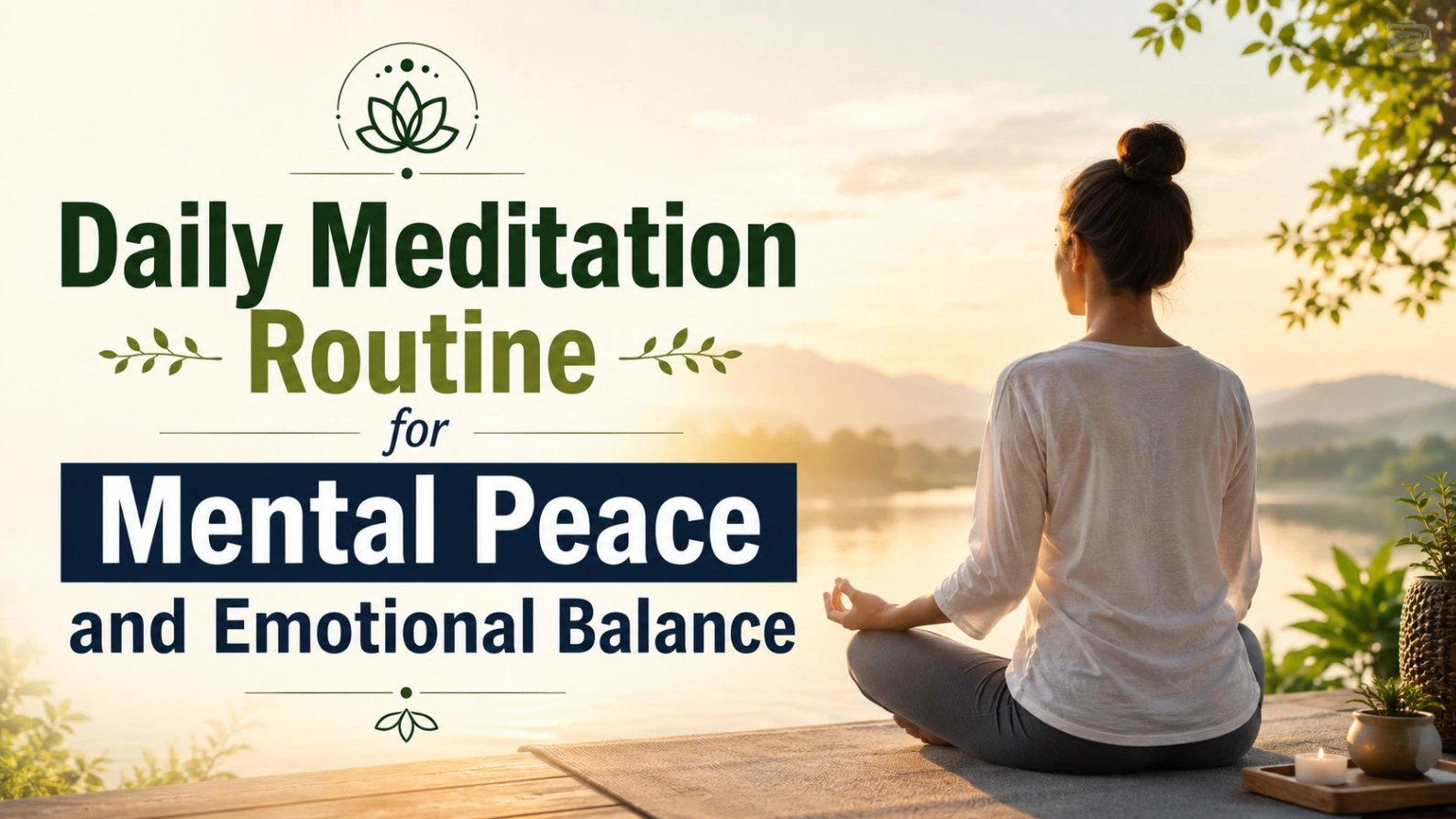
A daily meditation routine can become one of the simplest ways to bring mental peace, emotional balance, and inner calm into your everyday life. In a world where the mind is constantly busy with responsibilities, worries, expectations, and endless thoughts, meditation helps you pause, breathe, and return to yourself. It does not require a perfect place, long hours, or advanced knowledge. Even a few mindful minutes every day can help you create a calm mind meditation practice that supports peace of mind and emotional stability.
Many people begin meditation because they want relief from stress, anxiety, negative thoughts, or overthinking. But with regular practice, meditation becomes much more than a technique. It becomes a way of living with awareness. Whether you are a beginner or someone who has tried meditation before, a simple daily meditation routine for mental peace can help you feel more centered, clear, and emotionally balanced.
Why a Daily Meditation Routine Matters
The mind is naturally active. It jumps from the past to the future, from one worry to another, from one desire to another. This constant movement can create restlessness, stress, and emotional imbalance. A daily meditation practice gives the mind a gentle direction. It teaches you to sit with yourself, observe your thoughts, and create space between you and your reactions.
Meditation for mental peace is not about forcing the mind to become blank. It is about learning how to remain calm even when thoughts are present. When you meditate daily, you slowly understand that thoughts come and go, emotions rise and settle, and you do not have to get carried away by everything that appears in the mind.
This is why meditation for emotional balance is so powerful. It helps you respond instead of react. It gives you the inner strength to deal with stress, anxiety, and emotional ups and downs with more patience and clarity.
CTA for Design Your Destiny
Ready to create a calmer, more balanced life? Join the Design Your Destiny program and learn powerful spiritual practices, meditation techniques, and inner awareness tools to bring clarity, peace, and positive transformation into your daily life.
Start Your Journey Today!Best Time to Start Your Daily Meditation
Many people ask, “What is the best time to meditate?” The best time is the time you can follow consistently. However, morning meditation is often considered helpful because the mind is usually quieter after waking up. A morning meditation routine for positive energy can set the tone for the entire day.
When you meditate in the morning, you begin the day with awareness instead of rushing into stress. You can sit for 10 minutes, breathe deeply, repeat a mantra, or simply observe your thoughts. This small practice can help you feel grounded before you enter your daily responsibilities.
Evening meditation is also useful, especially if your goal is stress relief. After a busy day, guided meditation, breathing meditation, or mindfulness meditation can help release mental tiredness and bring peace of mind before sleep.
A Simple Daily Meditation Routine for Beginners
If you are new to meditation, keep your routine simple. The goal is not to do everything perfectly. The goal is to show up every day with sincerity.
Start by choosing a quiet space where you can sit comfortably. You can sit on a chair, cushion, or mat. Keep your spine straight but relaxed. Close your eyes gently and take a few deep breaths.
For the first two minutes, simply notice your breathing. Feel the air entering and leaving your body. Do not try to control it too much. Just observe.
For the next five minutes, practice breathing meditation. Inhale slowly, pause for a moment, and exhale gently. As you breathe out, feel that stress and anxiety are leaving your body. This is a simple meditation practice to calm the mind.
For the next few minutes, observe your thoughts. If your mind wanders, do not judge yourself. Bring your attention back to your breath. This is mindfulness practice. You are training your mind to return to the present moment.
End your meditation by placing your attention on your heart. Silently repeat, “I am peaceful. I am balanced. I am aware.” This small affirmation can support emotional stability and mental clarity.
10 Minute Meditation for Peace of Mind
A 10 minute meditation for peace of mind is perfect for beginners and busy people. You do not need a long session to begin. What matters is regularity.
Here is a simple 10 minute structure:
Minute 1 to 2: Sit comfortably and take deep breaths. Relax your face, shoulders, and body.
Minute 3 to 5: Focus on your natural breathing. Watch each inhale and exhale.
Minute 6 to 8: Observe your thoughts without reacting. Let them pass like clouds.
Minute 9: Repeat a peaceful mantra or affirmation.
Minute 10: Sit in silence and feel gratitude for the present moment.
This simple meditation routine for beginners can be practiced every morning or evening. Over time, it can help you build a strong habit of daily meditation.
Breathing Meditation for Anxiety Relief
Breathing meditation is one of the easiest meditation techniques for stress and anxiety. When the mind feels restless, the breath often becomes fast or shallow. By gently slowing the breath, you send a calming signal to your body and mind.
To practice breathing meditation for anxiety relief, sit comfortably and inhale slowly through your nose. Hold the breath for a second or two, then exhale slowly. Keep your attention on the exhale. A long, relaxed exhale helps the body settle.
While doing this, you can silently say, “Breathing in, I receive calm. Breathing out, I release stress.” This simple practice is helpful when you feel anxious, overwhelmed, or emotionally disturbed.
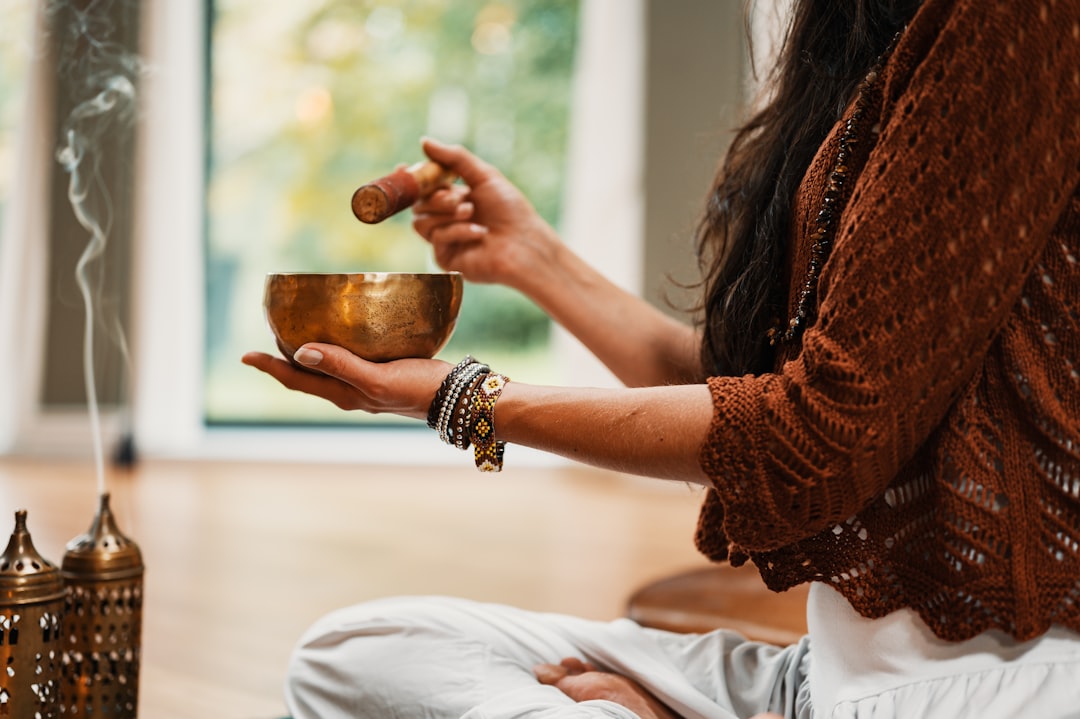
Mindfulness Meditation for Mental Clarity
Mindfulness meditation is the practice of being fully present. It teaches you to observe your thoughts, emotions, and sensations without judgment. This is very useful for mental clarity because it reduces the habit of getting lost in unnecessary thoughts.
To practice mindfulness meditation, sit quietly and notice what is happening inside you. Maybe there is a thought, a feeling, a sound, or a body sensation. Instead of labeling it as good or bad, simply observe it.
If a thought comes, notice it as “thinking.” If an emotion comes, notice it as “feeling.” Then return to your breath. This simple awareness creates distance from overthinking and helps you experience peace of mind.
Mindfulness meditation is also helpful for emotional balance. When you become aware of your emotions, you do not suppress them, but you also do not become controlled by them. You learn to witness them with calmness.
Mantra Meditation for Inner Peace
Mantra meditation is a beautiful spiritual meditation practice. A mantra is a sacred sound, word, or phrase repeated with attention and devotion. It helps focus the mind and create positive vibrations.
For mental peace, you can repeat a simple mantra such as “Om,” “So Hum,” or any spiritual mantra that feels meaningful to you. Sit comfortably, close your eyes, and repeat the mantra slowly. Let the sound become your anchor.
Mantra meditation is especially useful when the mind is filled with negative thoughts and overthinking. Instead of fighting with thoughts, you give the mind something pure and peaceful to rest upon.
This practice can support inner peace, emotional stability, and spiritual connection.
Guided Meditation for Mental Peace
Guided meditation is helpful for people who find it difficult to meditate alone. In guided meditation, a teacher or audio gently leads you through breathing, relaxation, visualization, or awareness.
A guided meditation for mental peace may ask you to relax your body, observe your breath, imagine a peaceful place, or release stress from the mind. This can be especially useful for beginners because it gives structure to the practice.
You can use guided meditation in the morning for positive energy or at night to calm the mind before sleep. The key is to choose a calm, simple, and spiritually uplifting practice that supports your goal of peace and emotional balance.
Meditation for Negative Thoughts and Overthinking
Negative thoughts often become stronger when we keep fighting them. Meditation teaches a different approach. Instead of arguing with every thought, you learn to observe it.
When a negative thought appears, do not immediately believe it. Pause and notice it. Say silently, “This is a thought. I am the observer.” This small shift can reduce the power of overthinking.
Meditation for negative thoughts and overthinking helps you understand that you are not every thought that comes into your mind. Thoughts are temporary. Awareness is deeper.
With daily practice, your relationship with your thoughts changes. You become less reactive, more peaceful, and more emotionally balanced.
How Many Minutes Should You Meditate Daily?
For beginners, 10 minutes a day is enough to start. Once the habit becomes natural, you can increase it to 15, 20, or 30 minutes. The most important thing is consistency.
A short daily meditation practice is better than a long session done once in a while. When you meditate daily, the mind slowly becomes familiar with silence and awareness.
Do not pressure yourself to meditate perfectly. Some days your mind may be calm. Some days it may be full of thoughts. Both are okay. Your only job is to sit, breathe, observe, and return.
How Meditation Helps Reduce Stress and Anxiety
Meditation for stress relief works by helping you slow down mentally and emotionally. When you sit in silence, breathe deeply, and observe your thoughts, the mind gets a chance to rest.
Stress often comes from constant mental pressure. Anxiety often comes from fear of the future. Meditation brings you back to the present moment. It reminds you that right now, you can breathe, pause, and become aware.
Daily meditation also helps you create a peaceful inner space. This inner space becomes your support during difficult moments. Instead of reacting immediately, you learn to pause and respond with clarity.

Building a Meditation Habit That Lasts
To build a daily meditation routine, start small. Choose a fixed time and place. Morning meditation is ideal for many people, but you can choose any time that works for you.
Keep your practice simple. Do not change techniques too often. You can begin with breathing meditation, then add mindfulness meditation or mantra meditation later.
You can also keep a meditation journal. After each session, write one or two lines about how you feel. This helps you notice your progress and stay motivated.
Most importantly, be gentle with yourself. Meditation is not a competition. It is a journey toward inner peace, mental clarity, and emotional balance.
Spiritual Meditation for Inner Peace
Spiritual meditation goes beyond relaxation. It helps you connect with your deeper self. When you sit in silence, repeat a mantra, or observe your inner world, you slowly move closer to your true nature.
Spiritual meditation for inner peace can include prayer, gratitude, mantra chanting, breath awareness, or simply sitting in the presence of the divine. It helps you remember that peace is not something outside you. It is already within you, waiting to be experienced.
When practiced daily, spiritual meditation can bring a sense of purpose, surrender, and emotional strength. It helps you live with more awareness and less fear.
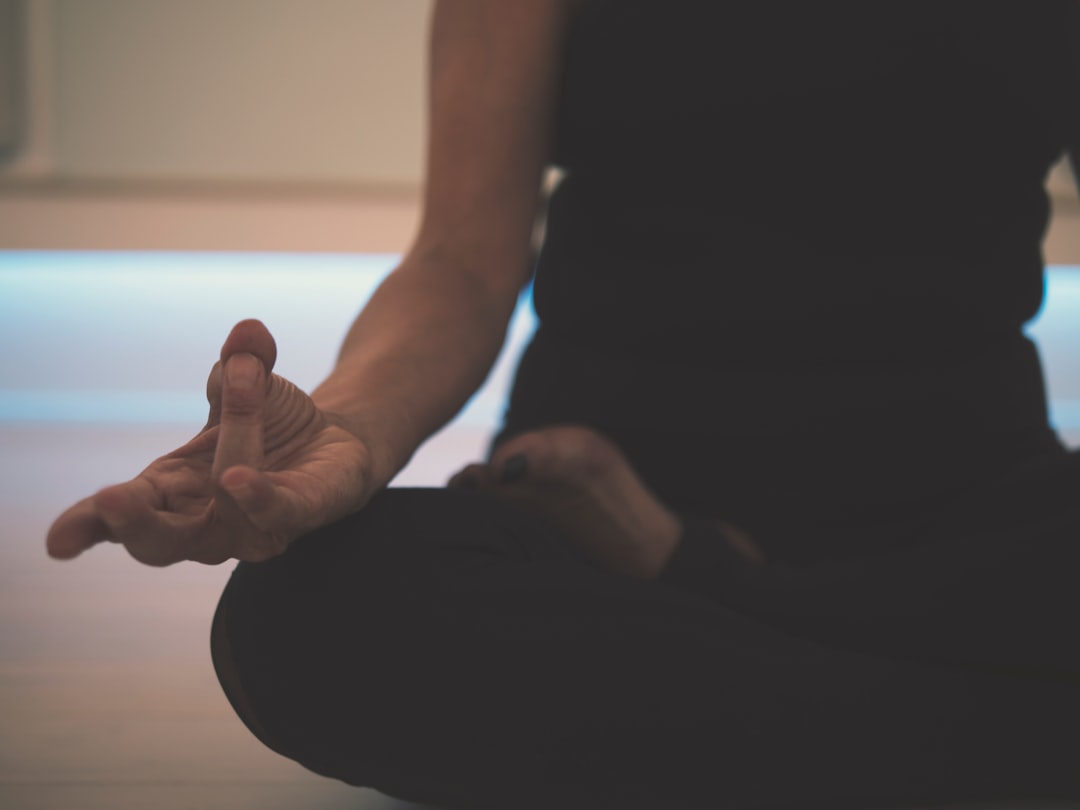
A daily meditation routine for mental peace and emotional balance does not need to be complicated. You can begin with 10 minutes of breathing, mindfulness, mantra, or guided meditation. What matters most is your willingness to sit with yourself every day.
Meditation helps calm the mind, reduce stress and anxiety, improve emotional stability, and bring mental clarity. It teaches you to observe thoughts without becoming trapped in them. It helps you return to the present moment, where peace is always available.
Start small. Sit daily. Breathe gently. Observe patiently. Over time, meditation will not remain just a practice. It will become a peaceful way of living.
CTA for Personal Session
Need personal guidance for stress, anxiety, emotional imbalance, or spiritual growth? Book a personal session and receive one-on-one support to understand your inner challenges, calm your mind, and move toward a more peaceful and conscious life.
Book Now