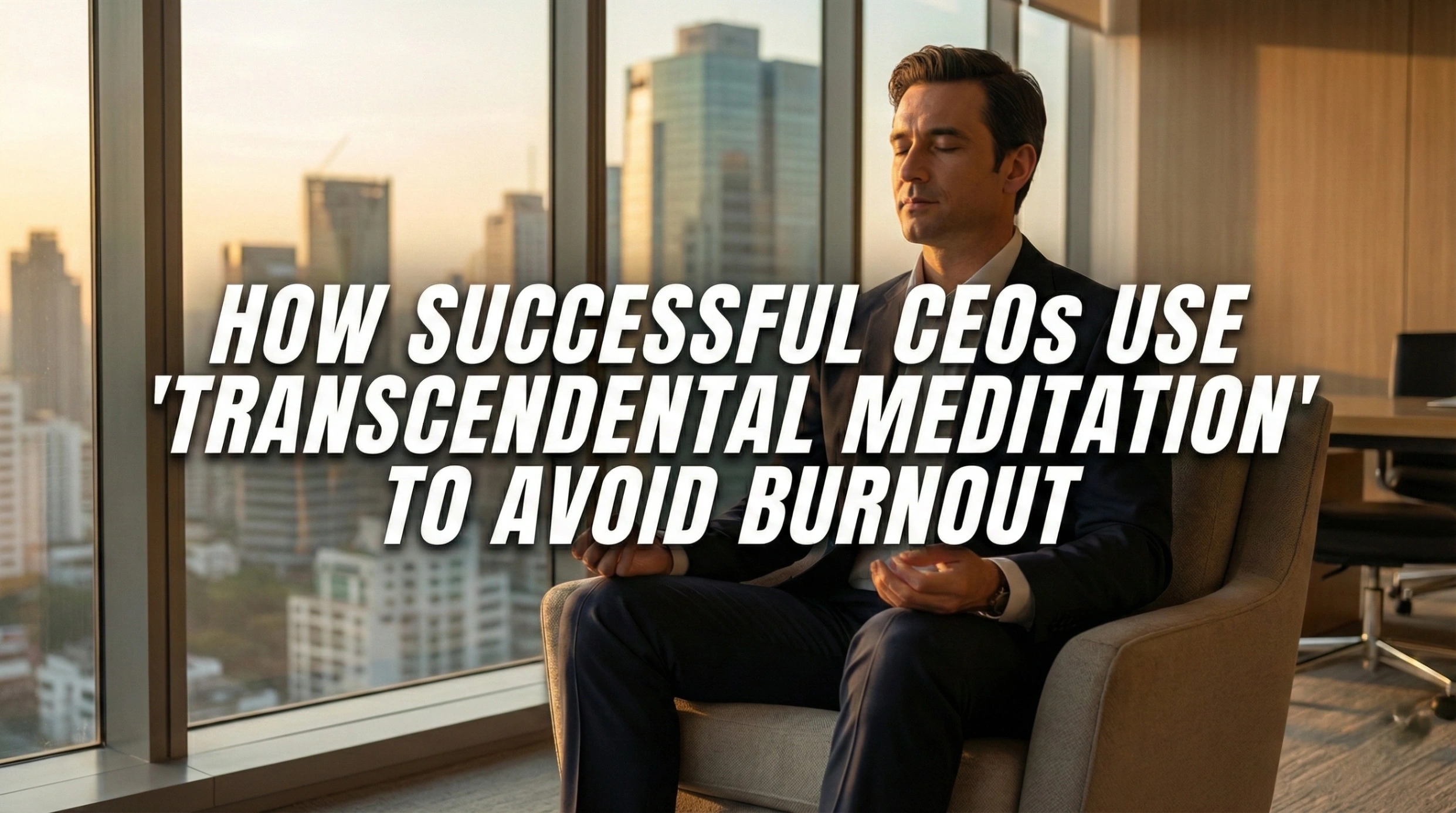
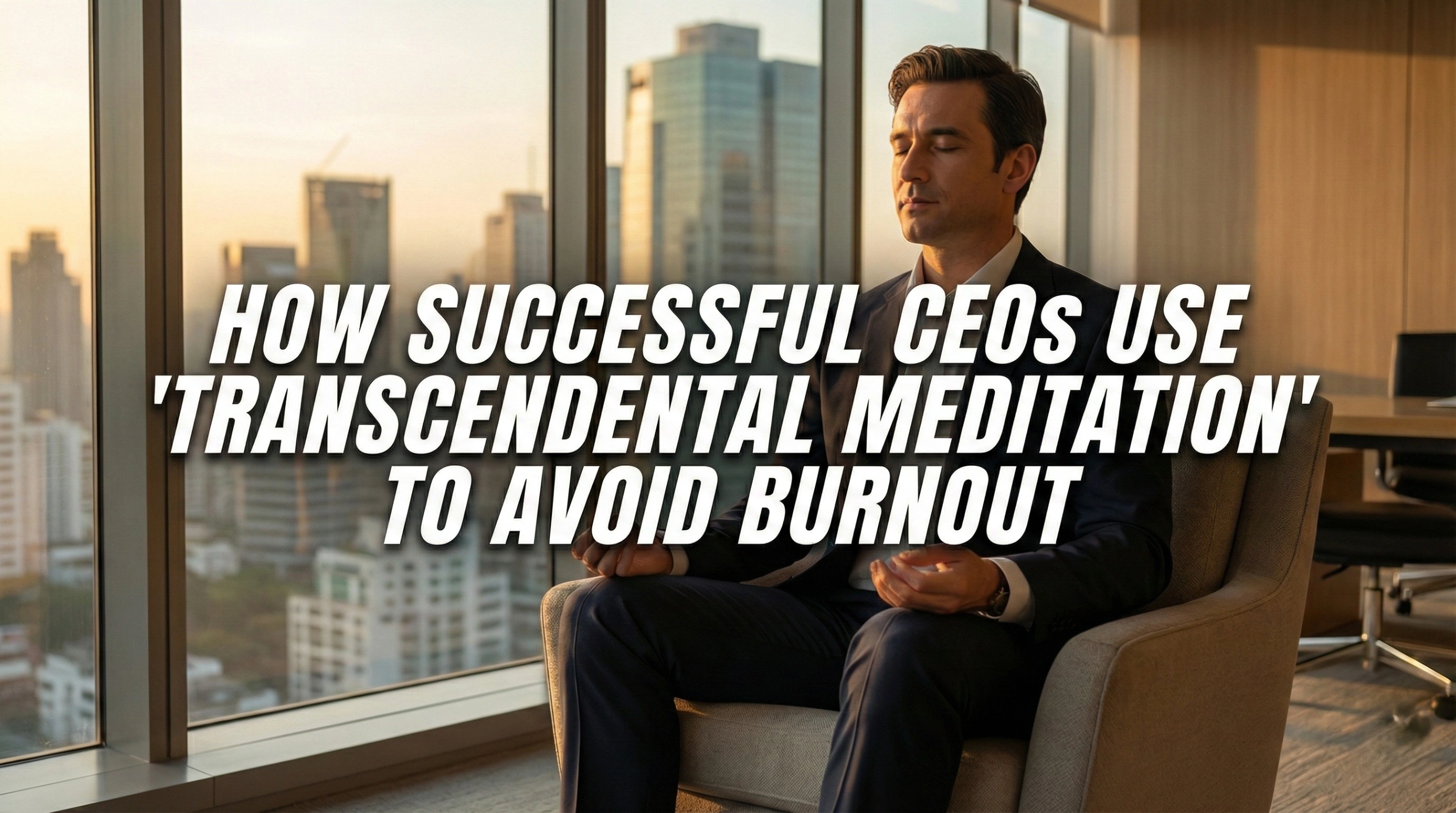
If you think sitting still for twenty minutes is a waste of time, you might want to check the calendars of the world’s most powerful leaders. In the high-stakes world of business, where a single decision can cost millions, CEOs who meditate have found that doing "nothing" is actually the most productive thing they can do.
We are no longer in an era where burnout is a badge of honor. Today, executive stress management is a competitive advantage. Whether it’s the quiet intensity of Silicon Valley or the bustling studios of Hollywood, the secret weapon isn't more coffee; it’s consciousness.
From the Silicon Valley meditation culture birthed by Steve Jobs to the corporate mindfulness programs championed by Salesforce, the verdict is in: silence for success is real. Let’s dive into why heavy hitters like Ray Dalio, Oprah, and Marc Benioff swear by meditation, and how you can use these productivity hacks for CEOs to transform your own career.
The ROI of Silence: Why Leaders Are Turning Inward
For years, the image of a successful CEO was someone who slept four hours a night and was constantly glued to a Blackberry. But that model is broken. Tech industry burnout and executive burnout are at all-time highs, costing companies billions in lost talent and poor decision-making.
Enter Transcendental Meditation (TM) and mindfulness.
This isn't about incense or chanting; it’s about biology. Meditation for business leaders is strictly strategic. When you are under constant pressure, your brain’s "fight or flight" mechanism (the amygdala) hijacks your prefrontal cortex—the part of the brain responsible for logic, strategy, and empathy.
By practicing meditation for stress, leaders can manually reset their nervous systems. The result? A decision fatigue cure that allows them to make fewer, but better, decisions. The meditation ROI is measurable: better focus, higher emotional intelligence (EQ), and a distinct lack of the reactivity that sinks ships.
The Billionaire Case Studies
Let’s look at the specific routines of the titans who have integrated mindfulness at work.
1. Ray Dalio: The Hedge Fund Monk
If you mention Ray Dalio meditation in finance circles, everyone knows what you’re talking about. The founder of Bridgewater Associates; the world’s largest hedge fund doesn't mince words about his success. He explicitly states that Transcendental Meditation has been the single biggest influence on his life, even more than his education.
Dalio practices TM for 20 minutes, twice a day. In the volatile world of finance, where markets crash and emotions run high, Dalio credits this practice with giving him the "equanimity" to remain calm. For Dalio, it’s about mental clarity for business. It allows him to look at problems objectively, without the cloud of emotional bias, which is the cornerstone of his famous "Radical Truth" and "Radical Transparency" principles.
2. Oprah Winfrey: Stillness in the Storm
Oprah Transcendental Meditation is another powerful example. Running a media empire requires an immense amount of energy. Oprah has famously brought TM instructors into her companies to teach her entire staff.
She describes the practice as a way to get back to the center. For women leaders and entrepreneurs facing the double bind of professional and public scrutiny, meditation for entrepreneurs offers a shield. It prevents the noise of the world from drowning out your own intuition. Oprah cites her practice as a key factor in her ability to connect with millions—you cannot be present for others if you are not present for yourself.
3. Steve Jobs: The Zen of Innovation
While Dalio and Oprah lean toward TM, Steve Jobs' mindfulness was rooted in Zen Buddhism. Jobs was a serious practitioner, even considering becoming a monk at one point in his life.
His practice wasn't just for stress; it was meditation for creativity and innovation. If you look at an iPhone, you see the principles of Zen: simplicity, focus, and the removal of the unnecessary. Jobs used mindfulness for high performers to filter out distractions. In a world of feature-bloat, he had the discipline to say "no." That laser-like focus; the ability to ignore the noise and focus on the signal; is a direct benefit of Steve Jobs' Zen Buddhism.
4. Marc Benioff: Wellness at Scale
Marc Benioff wellness initiatives at Salesforce are legendary. Benioff, a friend of Jobs, took the baton and ran with it. He didn't just practice privately; he installed "mindfulness zones" on every floor of Salesforce Tower.
Benioff understands that workplace wellness isn't a perk; it’s a retention strategy. In the competitive tech landscape, mindfulness for developers helps prevent the burnout that plagues coding teams. By encouraging meditation for success within the company culture, Benioff has built one of the most resilient workforces in the world.
5. Jeff Weiner and Jerry Seinfeld: Compassion and Consistency
Former LinkedIn CEO Jeff Weiner meditation habits led to a management style defined by "compassionate management." He used apps and guided practices to create a gap between a stimulus and his reaction, allowing him to lead with empathy rather than anger.
On the creative side, Jerry Seinfeld meditation (also TM) is what he credits for his survival in the grueling world of stand-up comedy and television. For Seinfeld, it’s about energy management. He likens his afternoon meditation session to a phone charger; it provides the second wind needed to work late into the night without the crash that comes from caffeine.
How to Avoid Executive Burnout (Practical Steps)
You don’t need to manage a hedge fund to reap these benefits. If you are looking for how to avoid executive burnout or simply reduce work anxiety, here is how to apply these lessons.
Stop Treating it as "Optional"
The common excuse is, "I don't have time." Ray Dalio runs a 160-billion-dollar fund and he finds 40 minutes a day. The busiest people prioritize meditation for high pressure jobs because they know the cost of not doing it. Treat it like a board meeting with yourself.
Choose Your Style: TM vs. Mindfulness
Transcendental Meditation: Great for deep rest and recharging. It involves a mantra and is often cited as the best for burnout prevention.
Mindfulness/Vipassana: Great for improve focus and concentration. This involves observing thoughts and breath, similar to the Steve Jobs mindfulness approach.

Integrate it into the Work Day
Work-life balance for executives is often a myth; it's more about work-life integration. Close your door for 20 minutes before lunch. If you are a leader, normalize this behavior. Attend events like the Wisdom 2.0 conference, where tech and consciousness meet, to see how other leaders are structuring their days.
Use Technology (Ironically)
While the goal is to disconnect, apps can help you start. However, the true tech leadership habits regarding meditation usually involve putting the phone in another room. The goal is to cure decision fatigue, and you can't do that if you are reacting to notifications.
The Future: Corporate Mindfulness Programs
We are seeing a massive shift. Corporate mindfulness programs are moving from "nice-to-have" to essential operations. Companies are realizing that meditation benefits the bottom line.
When employees practice mindfulness at work, sick days go down, and innovation goes up. Executive coaching now almost always involves a component of mental fitness. If you are an aspiring leader, mastering your internal state is now just as important as reading a balance sheet.
The narrative has shifted. The "hustle culture" of working until you drop is being replaced by the "alignment culture" of working with clarity. Ray Dalio, Oprah, Jeff Weiner, and Marc Benioff have proven that you don't have to sacrifice your mental health to reach the top of the Forbes list.
If you want to improve focus and concentration, reduce work anxiety, and build a legacy that lasts, it might be time to stop talking and start sitting. The silence for success is waiting for you.