
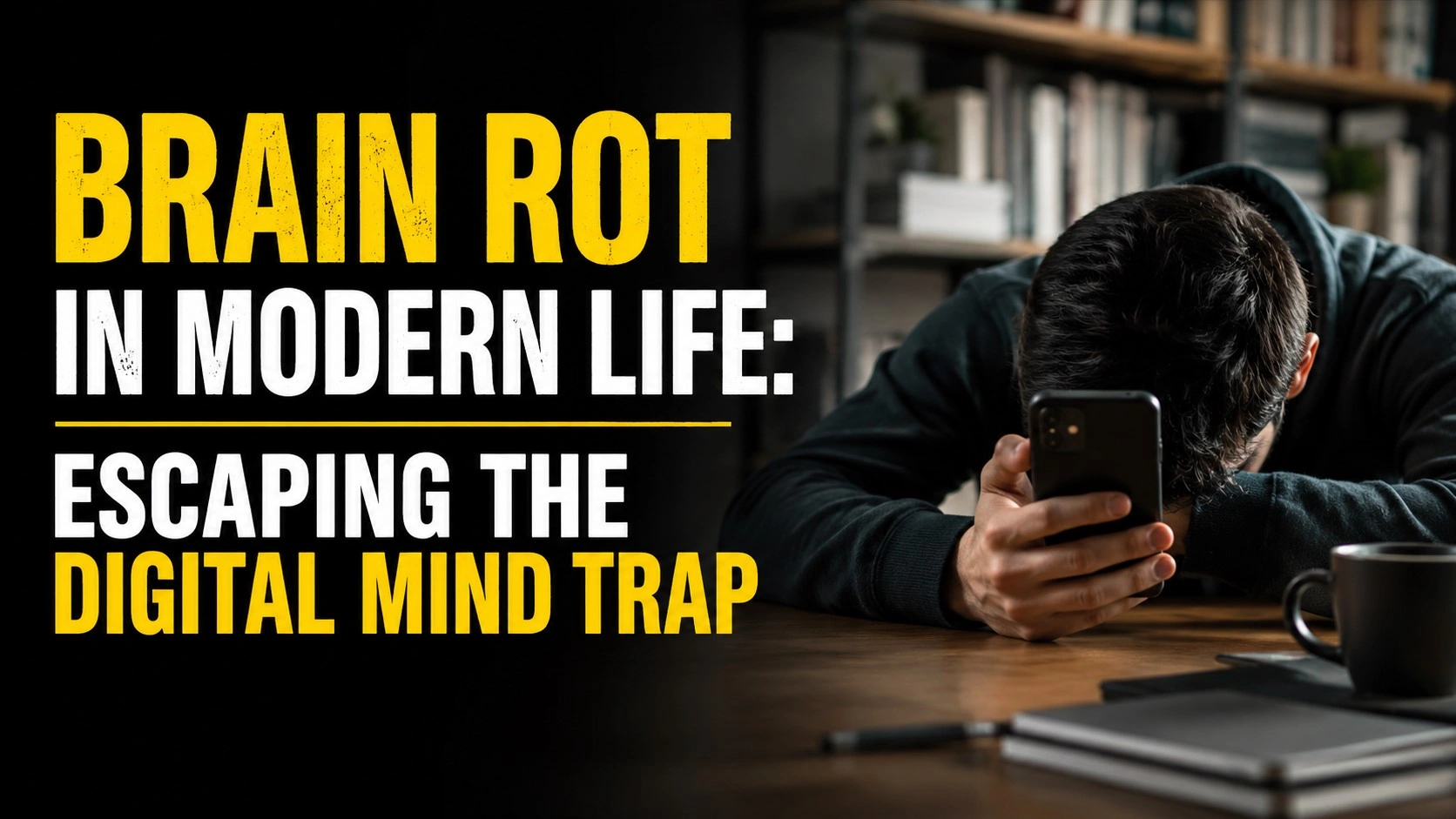
We live in a world where our minds are constantly under attack. Notifications, short-form videos, endless scrolling, viral trends, and dopamine-driven content have transformed the way we think, focus, and even feel. Brain rot in modern life is becoming a growing concern as people struggle with reduced attention spans, mental exhaustion, digital burnout, and emotional overwhelm.
The modern digital world was designed to keep our attention hooked. Every swipe, click, and notification activates the brain’s reward system, creating patterns of dopamine addiction that can slowly affect mental clarity and emotional wellbeing. Many people today feel mentally drained without understanding why. They struggle to focus, feel anxious when away from their phones, and experience constant overstimulation from digital overload.
This is the reality of the digital mind trap, a cycle where technology controls attention, emotions, and behavior without us even realizing it.
But the good news is this: awareness is the first step toward freedom. By understanding how brain rot develops and learning mindful ways to reclaim focus, we can break free from the endless cycle of distraction and reconnect with conscious living.
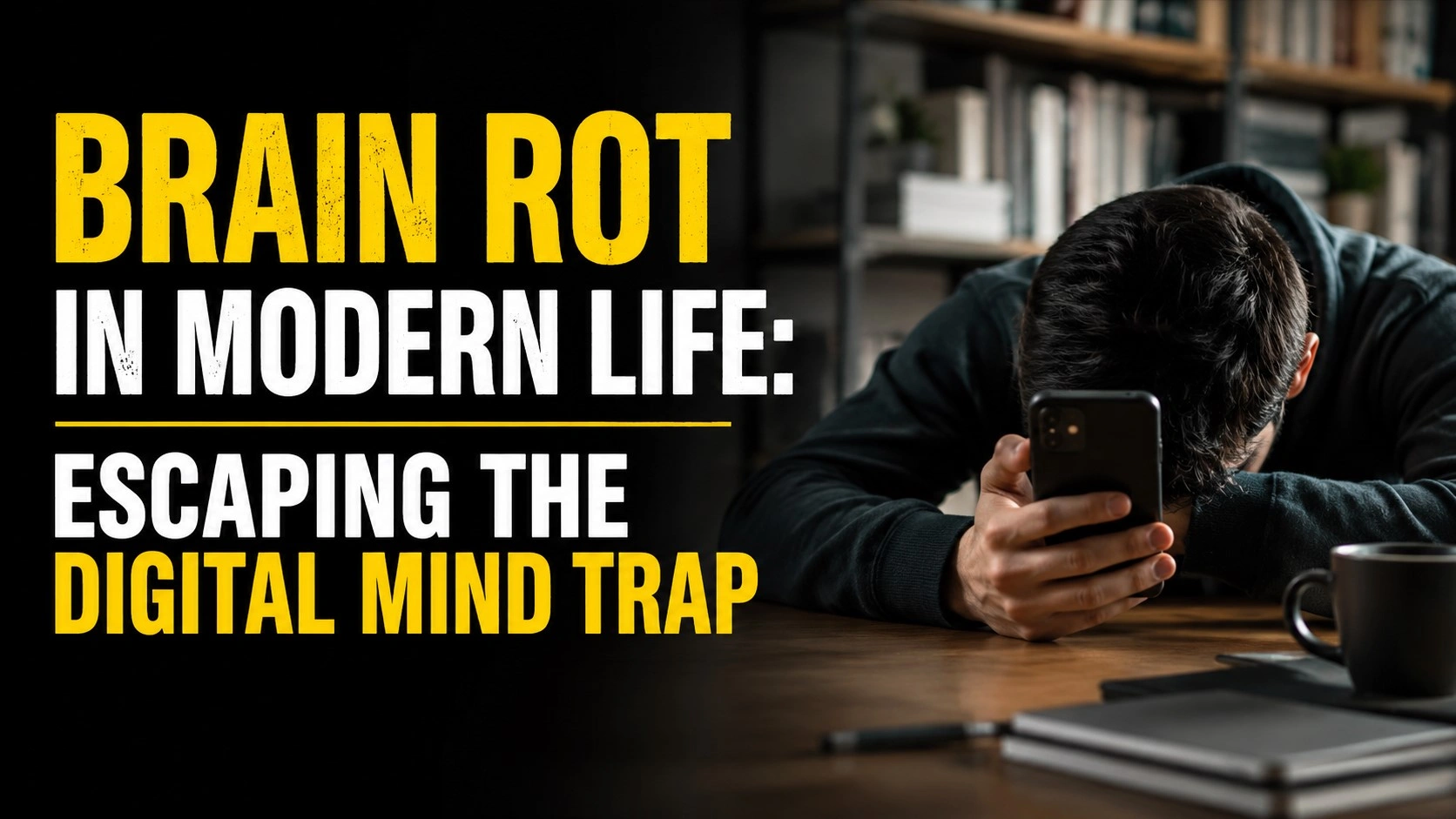
What Is Brain Rot?
The term “brain rot” describes the feeling of mental decline caused by excessive consumption of low-quality digital content. It doesn’t mean the brain is physically damaged, but it reflects a state where constant stimulation weakens focus, reduces deep thinking, and creates emotional exhaustion.
Many people experience brain rot without noticing it. Signs include:
Mindless scrolling for hours
Difficulty concentrating on important tasks
Reduced attention span
Constant need for stimulation
Brain fog and mental fatigue
Feeling anxious without your phone
Overthinking and emotional burnout
In the age of smartphones and social media addiction, the brain rarely gets time to rest. Every moment of silence is filled with content. Instead of processing emotions or thoughts, people distract themselves with endless scrolling.
This constant consumption creates a state of cognitive overload, where the brain becomes overwhelmed by information but lacks meaningful clarity.
How Social Media Fuels Brain Rot
Social media platforms are designed to capture and hold attention for as long as possible. Algorithms constantly study behavior, showing content that triggers emotional reactions and keeps users engaged.
The problem is that the human brain was never designed for this level of stimulation. Short-form videos, instant gratification, and endless notifications condition the brain to seek quick dopamine hits instead of meaningful engagement.
Over time, this affects:
1. Attention Span
People find it harder to focus on long conversations, books, or deep work. The brain becomes trained for constant novelty and fast entertainment.
2. Mental Clarity
Too much digital input creates brain fog. Thoughts feel scattered, and mental stillness becomes rare.
3. Emotional Health
Comparison culture, doomscrolling, and overstimulation increase anxiety and emotional burnout.
4. Productivity
Frequent interruptions reduce focus and weaken the ability to complete meaningful tasks.
5. Sleep Quality
Late-night scrolling overstimulates the nervous system and disrupts healthy sleep patterns.
This is why so many people today feel mentally tired even when they haven’t done physically demanding work.
Design Your Destiny
Your mind was never meant to be controlled by endless scrolling and digital noise. Join our Design Your Destiny program to learn mindfulness, conscious living, emotional clarity, and powerful techniques to break free from the digital mind trap. Reclaim your focus, energy, and inner peace starting today.
Start Your Journey Today!Dopamine Addiction and Mindless Scrolling
One of the biggest causes of digital addiction is dopamine-driven behavior. Dopamine is a neurotransmitter linked to reward and motivation. Every notification, like, or entertaining video gives the brain a small dopamine spike.
Over time, the brain starts craving constant stimulation. This creates habits like:
Checking your phone repeatedly
Opening social media without thinking
Feeling restless during silence
Struggling to enjoy slow activities
Needing entertainment all the time
Mindless scrolling becomes automatic. Many people unlock their phones without even knowing why.
The danger is not just lost time, it’s the gradual weakening of self-awareness and conscious thinking. When the brain is constantly overstimulated, it becomes difficult to sit with thoughts, emotions, or silence.
This is where the digital mind trap becomes deeply emotional and spiritual, not just technological.
The Spiritual Effects of Digital Overload
Modern life is noisy. The mind rarely gets space to breathe.
Excessive screen addiction disconnects people from themselves. Instead of experiencing life directly, many people consume endless versions of other people’s lives online. This creates inner emptiness, comparison, and emotional fatigue.
The spiritual effects of digital overload include:
Feeling disconnected from the present moment
Loss of inner peace
Constant overthinking
Reduced self-awareness
Emotional numbness
Difficulty experiencing stillness
Mindfulness in the digital age has become more important than ever because modern technology constantly pulls attention outward.
True mental wellness begins when we reclaim the ability to sit quietly with ourselves without needing constant stimulation.
Signs You Are Stuck in the Digital Mind Trap
Many people don’t realize how deeply technology affects their thoughts and emotions. Here are some common signs of digital burnout and brain rot:
You wake up and check your phone immediately
You struggle to focus without background content
You feel mentally exhausted after scrolling
Your attention span feels shorter than before
You constantly multitask digitally
Silence feels uncomfortable
You experience brain fog regularly
You feel emotionally drained after social media use
You scroll even when you don’t enjoy it
Recognizing these signs is important because awareness creates the possibility for change.

How to Escape the Digital Mind Trap
Escaping brain rot doesn’t mean rejecting technology completely. It means building a healthier relationship with it.
1. Practice a Digital Detox
A digital detox helps reset the nervous system. Start small:
Avoid screens for the first hour after waking up
Take short social media breaks
Keep your phone away during meals
Turn off unnecessary notifications
These simple habits reduce overstimulation and improve mental clarity.
2. Rebuild Your Attention Span
The brain can recover focus with intentional practice.
Ways to improve attention span naturally include:
Reading books regularly
Practicing meditation
Doing single-task work
Spending time in nature
Limiting short-form content
Deep focus is like a muscle, it strengthens with practice.
3. Practice Mindfulness
Mindfulness helps bring awareness back to the present moment.
Simple mindfulness practices include:
Conscious breathing
Silent walks
Journaling thoughts
Observing emotions without reacting
Spending time away from screens
Mindfulness interrupts automatic scrolling behavior and strengthens conscious living.
4. Create Tech Boundaries
Healthy digital wellbeing requires boundaries.
Examples include:
No phones before sleep
Scheduled screen-free hours
Limiting social media usage
Using apps intentionally instead of automatically
Technology should serve your life, not control it.
5. Reconnect With Real Life Experiences
One major cause of mental exhaustion is spending more time consuming life online than actually living it.
Reconnect with activities that create genuine presence:
Face-to-face conversations
Creative hobbies
Exercise and movement
Spiritual practices
Nature and sunlight
Real experiences nourish the mind in ways endless content never can.
The Link Between Brain Fog and Screen Addiction
Brain fog caused by social media and excessive screen time is becoming increasingly common. People often describe it as feeling mentally cloudy, unfocused, or emotionally disconnected.
This happens because the brain becomes overloaded with stimulation while lacking meaningful rest. Constant switching between apps, videos, and notifications fragments attention and weakens mental clarity.
Reducing screen addiction can significantly improve:
Focus and productivity
Emotional balance
Sleep quality
Memory retention
Creativity
Even small changes in digital habits can create noticeable mental improvement.
Why Digital Wellbeing Matters Today
Digital wellbeing is not just about reducing screen time. It’s about protecting mental health, emotional peace, and conscious awareness in a hyperconnected world.
Modern society rewards constant consumption and endless engagement, but human beings need silence, reflection, and stillness to function emotionally and spiritually.
Without mindful living, people risk becoming trapped in cycles of distraction, anxiety, and emotional burnout.
Escaping brain rot means reclaiming ownership of your attention. Because where attention goes, energy follows.

Reclaiming Mental Clarity in the Digital Age
The modern world constantly competes for attention. Every app, platform, and notification is fighting for space in your mind.
But your attention is your power.
When you become intentional about what you consume, your mind becomes calmer, clearer, and more focused. Over time, mental wellness improves naturally.
The goal is not perfection. It’s awareness.
You don’t need to quit technology completely to escape the digital mind trap. You simply need to stop living unconsciously inside it.
Personal Session
Feeling mentally exhausted, emotionally overwhelmed, or trapped in digital overload? Book a personal session for personalized guidance on overcoming brain rot, rebuilding mental clarity, and creating a healthier, more conscious relationship with technology and life.
Book Now