Bhai Dooj is one of India's most cherished festivals dedicated to the bond between brothers and sisters. Celebrated around the conclusion of the Diwali festivities, the occasion is marked by prayers, tilak, sweets, family gatherings and heartfelt wishes for a sibling's happiness and well-being.
But behind these familiar rituals lies a fascinating Bhai Dooj story that has been passed down through generations.
The most widely known Bhai Dooj origin story revolves around Yamraj, the god of death, and his sister Yamuna. Their story explains not only why sisters apply tilak to their brothers but also why the festival is known in many traditions as Yama Dwitiya.
Traditional accounts describe Yamuna lovingly welcoming her brother Yama, applying a ceremonial mark to his forehead and serving him food. Pleased by her affection, Yama is said to have granted a blessing associated with brothers who receive their sisters' loving welcome on this sacred day.
There are also other legends associated with Bhai Dooj, including a popular tradition involving Lord Krishna and his sister Subhadra. Together, these narratives emphasize love, protection, gratitude and the enduring relationship between siblings.
What Is Bhai Dooj?
Bhai Dooj is a Hindu festival celebrating the relationship between brothers and sisters. The word “Bhai” means brother, while “Dooj” refers to the second lunar day.
The festival traditionally falls on the Dwitiya Tithi of the Shukla Paksha in the Hindu month of Kartik and is closely associated with the period following Diwali. It is also known by different regional names, including Yama Dwitiya, Bhau Beej and Bhai Phonta, among others.
Although traditions differ from one part of India to another, the central idea remains the same: sisters pray for the happiness, prosperity and long life of their brothers, while brothers express affection, gratitude and support for their sisters.
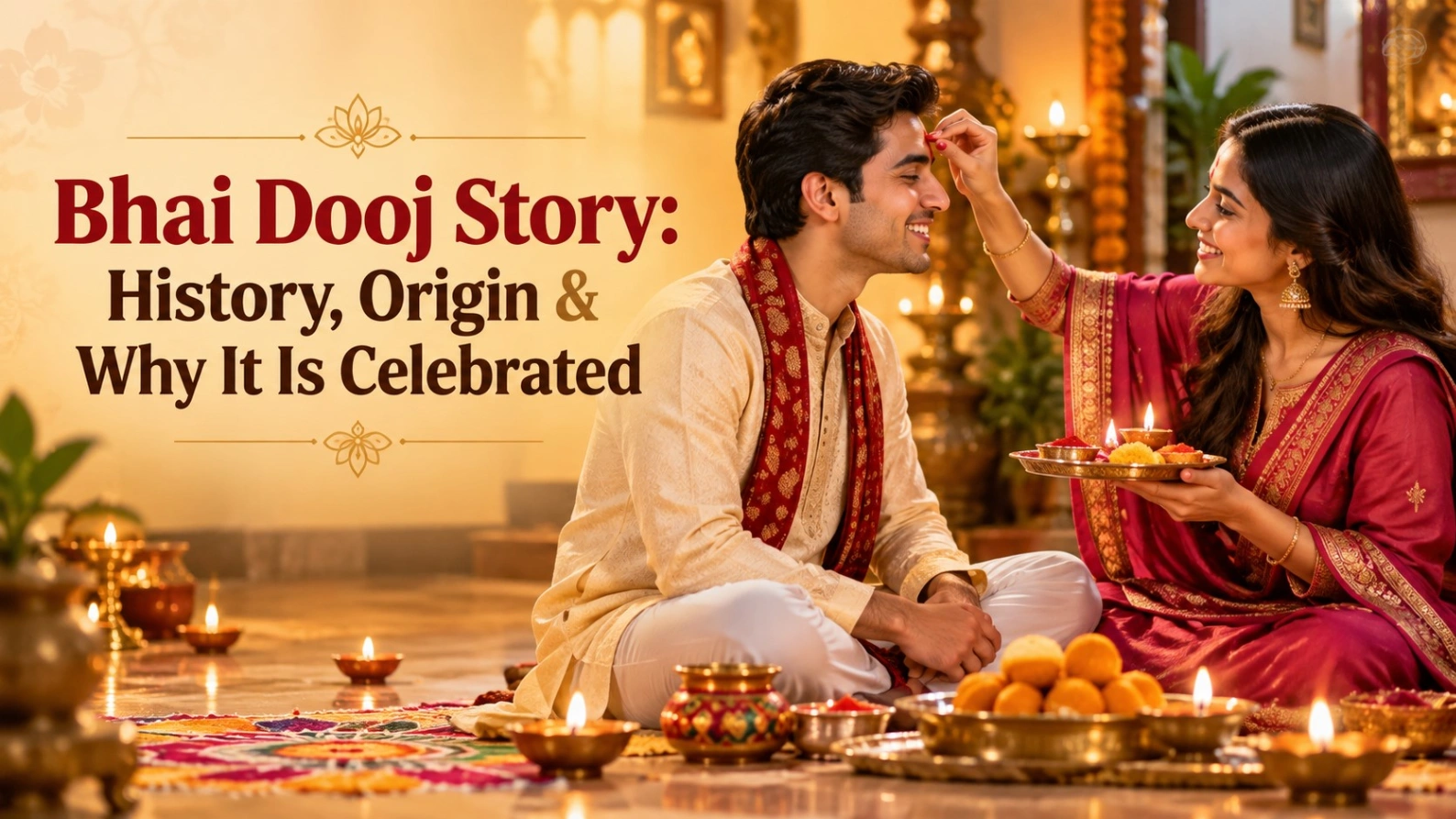
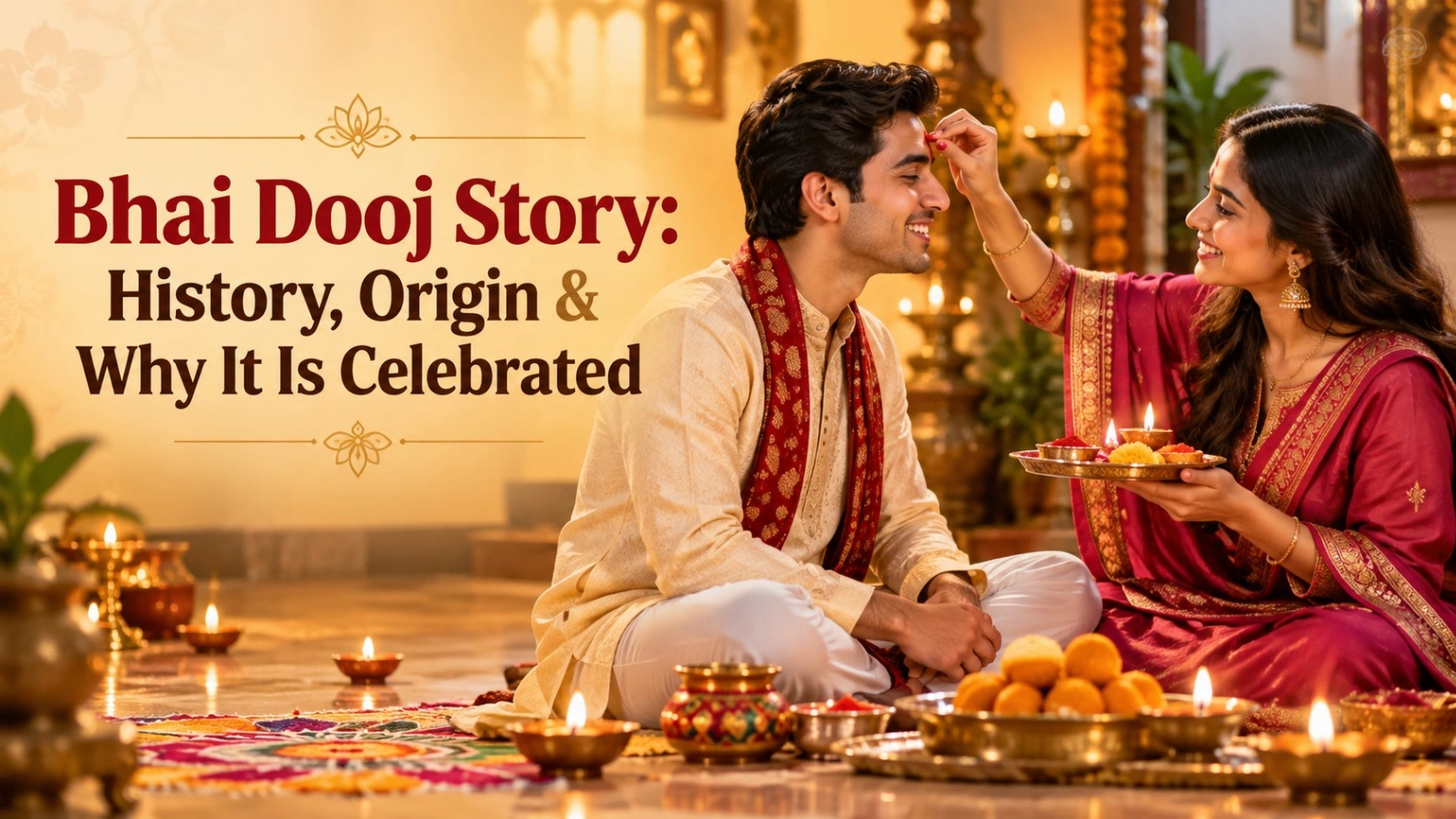
A traditional Bhai Dooj celebration often involves a sister welcoming her brother, performing aarti, applying tilak on his forehead, offering sweets or a festive meal and praying for his well-being.
Design Your Destiny
Festivals remind us that transformation begins when wisdom becomes part of everyday life. Through Design Your Destiny, discover practical spiritual tools to understand your mind, transform limiting patterns and create a more conscious, purposeful and fulfilling life.
Transform Your Journey Today!Bhai Dooj Story: The Famous Yama and Yamuna Katha
The most famous Bhai Dooj katha is the story of Lord Yama and his sister Yamuna.
According to traditional accounts, Yamuna deeply loved her brother Yamraj and repeatedly invited him to visit her home. Because of his responsibilities, Yama was not always able to accept her invitation.
Eventually, on the sacred day of Kartik Shukla Dwitiya, Yama visited his sister.
Yamuna was delighted to see him.
She welcomed her brother with immense affection, prepared food for him and performed the traditional rites of hospitality. She applied a sacred tilak to his forehead and prayed for his well-being.
Yama was deeply moved by his sister's love.
He asked Yamuna to request a boon.
Rather than asking for wealth or personal benefit, Yamuna wished that the special bond between brothers and sisters should be honoured. Traditional retellings say Yama granted a blessing connected with brothers who are lovingly welcomed and honoured by their sisters on this day.
This became the foundation of the Bhai Dooj story and is why the festival is also called Yama Dwitiya.
Even today, the tilak ceremony is regarded as one of the most important parts of Bhai Dooj because it symbolically carries a sister's prayers and blessings for her brother.
Why Is Bhai Dooj Celebrated?
One of the most commonly searched questions is: Why is Bhai Dooj celebrated?
Bhai Dooj is celebrated to honour the loving and lifelong relationship between brothers and sisters.
According to the Yama-Yamuna legend, Yamuna's affection for her brother and Yama's blessing transformed their reunion into a sacred tradition.
Over time, the celebration came to represent several values: sibling love, emotional support, gratitude, family unity and prayers for one another's well-being.
For sisters, the ritual is traditionally an opportunity to pray for their brothers.
For brothers, the day represents affection, gratitude and a commitment to remain supportive of their sisters.
Therefore, Bhai Dooj is not merely a ceremonial occasion. It celebrates the idea that relationships become sacred when they are filled with unconditional love, responsibility and goodwill.
Bhai Dooj Date: Tilak Muhurat, Puja Time & Complete Vidhi
Bhai Dooj History and Origin
The exact historical beginning of Bhai Dooj cannot be pinned down to a single modern date. Its history and origin are rooted in longstanding religious traditions, mythology and regional customs.
The Yama-Yamuna narrative is one of its oldest and most widespread explanations.
An official Census of India village study recording local customs also describes the Yama-Yamuna tradition in connection with Bhai Dooj and the ritual of applying a ceremonial mark to the brother's forehead.
The association with Yama explains the name Yama Dwitiya.
“Dwitiya” means the second lunar day, while Yama refers to Yamraj.
Over generations, communities across India developed their own methods of celebrating the festival. Ritual details may differ, but the central theme of honouring siblings remains remarkably consistent.
This is what makes the history of Bhai Dooj especially interesting: rather than being limited to one region, the festival evolved into numerous regional expressions of the same emotional idea.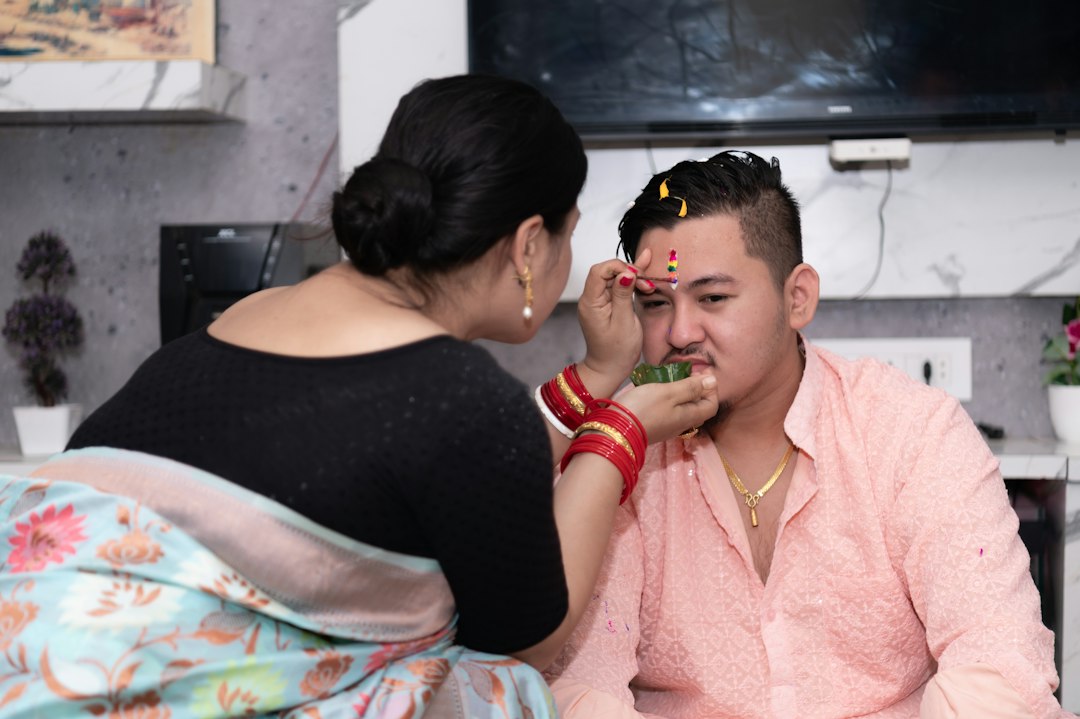
Bhai Dooj Origin Story of Krishna and Subhadra
Another popular Bhai Dooj origin story is associated with Lord Krishna and his sister Subhadra.
According to one widely repeated legend, after Lord Krishna defeated Narakasura, he visited his sister Subhadra.
Subhadra welcomed him lovingly, performed aarti, applied tilak to his forehead and offered him sweets.
The story is often cited as another explanation for the traditions of welcoming brothers with tilak and food on Bhai Dooj.
It is important to understand that Indian festivals often carry multiple regional and devotional narratives rather than one universally accepted historical account.
The Yama-Yamuna story remains the tradition most directly associated with Yama Dwitiya, while the Krishna-Subhadra legend is also popularly narrated in discussions of Bhai Dooj.
Spiritual Meaning of the Bhai Dooj Story
The Bhai Dooj story contains a deeper spiritual lesson beyond the external ritual.
Yamuna's love was selfless. When offered a boon, the traditional story does not portray her as seeking material wealth for herself. Instead, her wish reflects concern for the well-being of others.
This makes Bhai Dooj a celebration of selfless love.
The festival reminds us that genuine relationships are built not merely through gifts or ceremonies but through presence, prayer, gratitude and care.
The tilak applied by the sister can therefore be understood symbolically as a blessing.
The festive meal represents hospitality and togetherness.
The brother's gift represents gratitude.
Together, these simple rituals transform a family relationship into a practice of mindfulness, appreciation and affection.
Happy Bhai Dooj 2025 Wishes, Messages, Quotes & Greetings for Brother and Sister
Why Is Tilak Applied on Bhai Dooj?
Tilak is one of the most recognizable rituals of Bhai Dooj.
In the Yama-Yamuna tradition, Yamuna welcomed her brother and honoured him ceremonially. Traditional observances therefore include applying a sacred mark to the brother's forehead.
Historically recorded descriptions of the festival also mention sisters placing a ceremonial tilak or “rochna” on their brothers as part of the occasion.
Spiritually, the tilak represents blessings, auspiciousness and positive intention.
As the sister applies it, she traditionally prays for her brother's happiness, health and long life.
The ritual should therefore be understood as more than decoration it expresses a heartfelt prayer.
Bhai Dooj Traditions Across India
One of the beautiful aspects of Bhai Dooj is the diversity of its celebration.
In North India, the festival is commonly known as Bhai Dooj or Yama Dwitiya.
In Maharashtra, a related celebration is widely known as Bhau Beej.
In Bengal, the sibling festival is celebrated as Bhai Phonta.
Rituals, food, prayers and regional customs may differ, but each version celebrates the same emotional connection between siblings.
These variations show how Indian traditions can change in form while retaining their underlying meaning.
Bhai Dooj and Raksha Bandhan: Are They the Same?
Bhai Dooj and Raksha Bandhan both celebrate sibling relationships, but their rituals are different.
During Raksha Bandhan, the sister traditionally ties a rakhi around her brother's wrist.
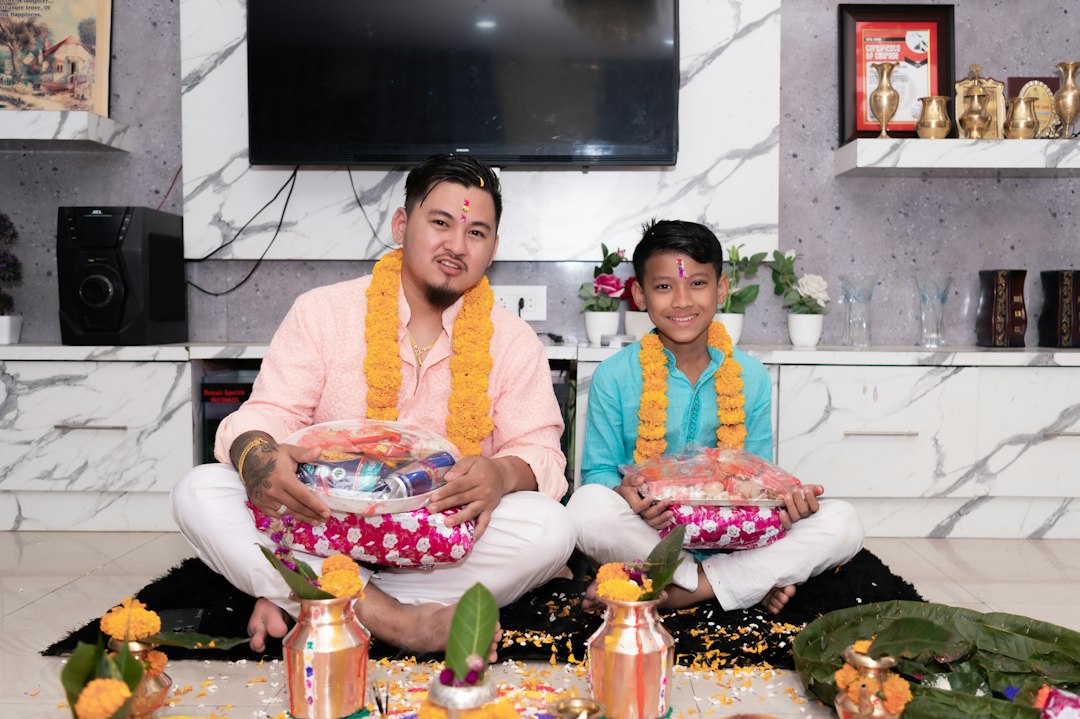
During Bhai Dooj, the central ceremony usually revolves around welcoming the brother, applying tilak, performing aarti and sharing food.
Bhai Dooj is also particularly connected with the Yama-Yamuna story.
Although both festivals celebrate sibling affection, they are separate occasions with distinct traditions and cultural backgrounds.
What Does Bhai Dooj Teach Us Today?
Modern families may live in different cities or even different countries, but the message of Bhai Dooj remains relevant.
The festival reminds us to consciously appreciate the people who have supported us throughout life.
In busy routines, relationships can sometimes be taken for granted. Festivals such as Bhai Dooj encourage families to reconnect.
Even when siblings cannot celebrate physically together, a phone call, prayer, thoughtful message or simple expression of gratitude can preserve the spirit of the festival.
The deeper lesson of the Bhai Dooj story is therefore timeless: relationships grow stronger when affection is expressed rather than assumed.
The Bhai Dooj story is much more than an ancient legend.
At its heart lies the beautiful relationship between Yamuna and Yama—a sister whose affection welcomed her brother and a brother who honoured that devotion.
This traditional narrative explains the origin of many Bhai Dooj rituals and the festival's alternate name, Yama Dwitiya.
Another popular story involving Krishna and Subhadra further reinforces the themes of welcome, love and protection associated with the occasion.
Whether one explores Bhai Dooj history, the Bhai Dooj origin story, or simply asks why we celebrate Bhai Dooj, the answer ultimately returns to the same idea: cherishing the bond between siblings.
Bhai Dooj teaches us to celebrate relationships with gratitude, prayer, respect and unconditional love.
Personal Session
Every inner journey is different. If you are seeking clarity about relationships, emotions, purpose or personal growth, a personal session can help you understand your challenges from a deeper perspective and move forward with greater awareness.
Book NowRead Latest Articles
9 Colour of Navratri 2026: DayWise List, Date & Significance
Bhai Dooj Date: Tilak Muhurat, Puja Time & Complete Vidhi
Frequently Asked Questions
What is the story behind Bhai Dooj?
The most famous Bhai Dooj story involves Yamraj and his sister Yamuna. Yamuna welcomed Yama to her home, applied tilak to his forehead and served him food. Pleased by her affection, Yama granted a blessing connected with brothers honoured by their sisters on this sacred day.Why is Bhai Dooj celebrated?
Bhai Dooj is celebrated to honour the bond between brothers and sisters. According to the traditional Yama-Yamuna story, Yamuna welcomed her brother Yamraj with tilak, prayers and food. Moved by her affection, Yama granted a blessing associated with brothers receiving their sisters' loving welcome on this day. The festival therefore symbolizes sibling love, well-being and family unity.What is the origin of Bhai Dooj?
The origin of Bhai Dooj is traditionally associated with the Yama-Yamuna legend, which is also why the festival is known as Yama Dwitiya. Other popular traditions connect Bhai Dooj with Krishna and his sister Subhadra.Why is Bhai Dooj also called Yama Dwitiya?
It is called Yama Dwitiya because the festival is associated with Lord Yama and falls on Dwitiya, the second lunar day of the relevant fortnight in the Hindu calendar.Who are Yama and Yamuna in the Bhai Dooj katha?
Yama or Yamraj is traditionally regarded as the god of death, while Yamuna is his sister. Their affectionate reunion forms the best-known Bhai Dooj kathaIs Bhai Dooj the same as Raksha Bandhan?
No. Both celebrate sibling relationships, but their customs differ. Raksha Bandhan centres on tying a rakhi, whereas Bhai Dooj traditionally centres on tilak, aarti, prayers and a shared meal.