

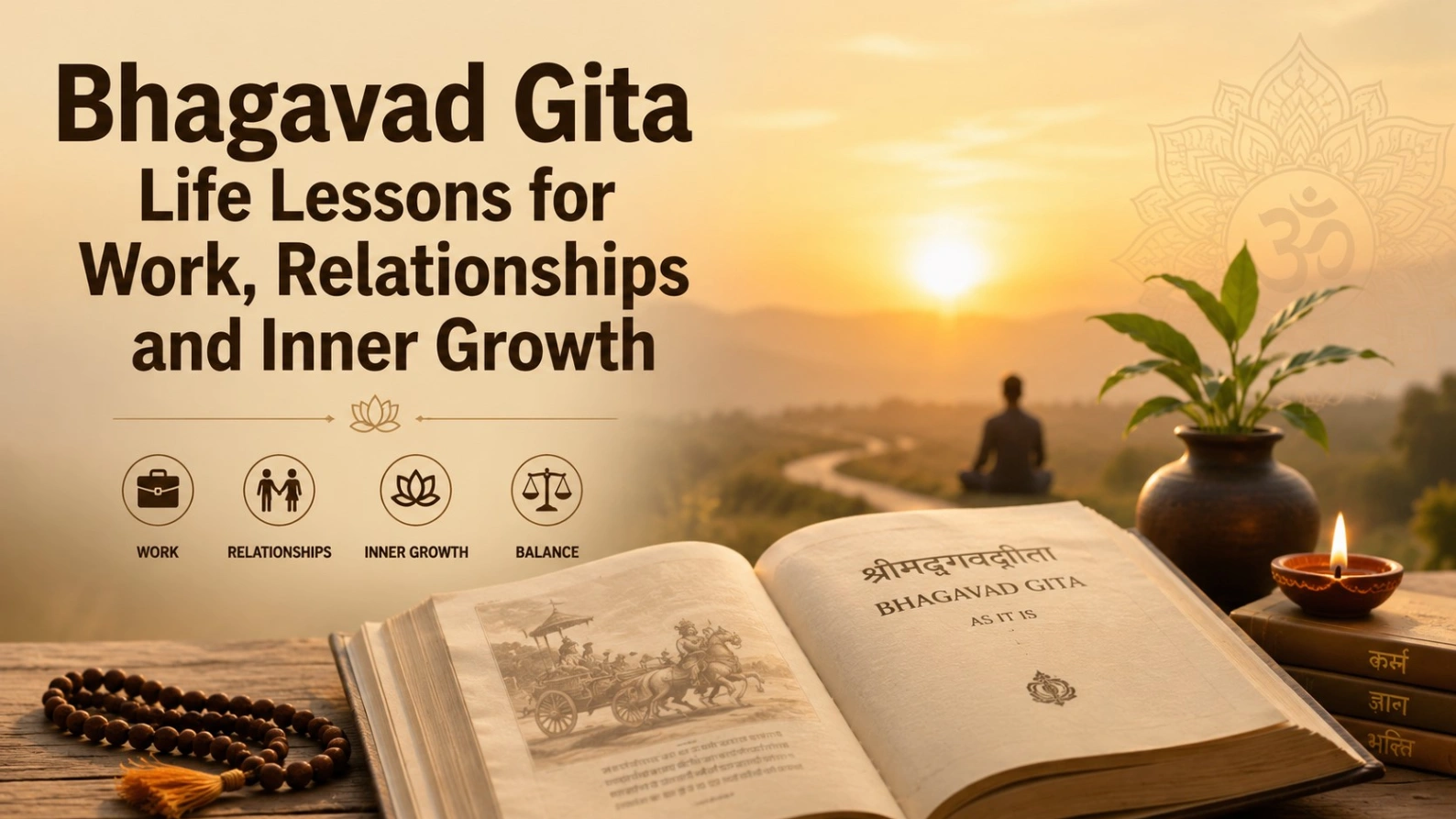
Bhagavad Gita life lessons are not limited to temples, scriptures or spiritual discussions. They are deeply practical teachings that can guide us in our work, relationships, emotions, choices and personal growth. The Bhagavad Gita is not just a book to be read; it is wisdom to be lived every day.
In today’s fast-moving world, people are constantly searching for peace, success, emotional balance and clarity. We want to perform well at work, maintain healthy relationships, make better decisions and grow from within. Yet, stress, overthinking, expectations, comparison and confusion often disturb the mind.
This is where the teachings of Bhagavad Gita become truly powerful. Through the conversation between Lord Krishna and Arjuna, the Gita gives timeless guidance on duty, action, detachment, self-control, devotion and self-realization. These lessons are as relevant for modern life as they were on the battlefield of Kurukshetra.
Whether you are a student, professional, homemaker, leader or seeker, the Bhagavad Gita for daily life offers practical wisdom to live with purpose, peace and inner strength.
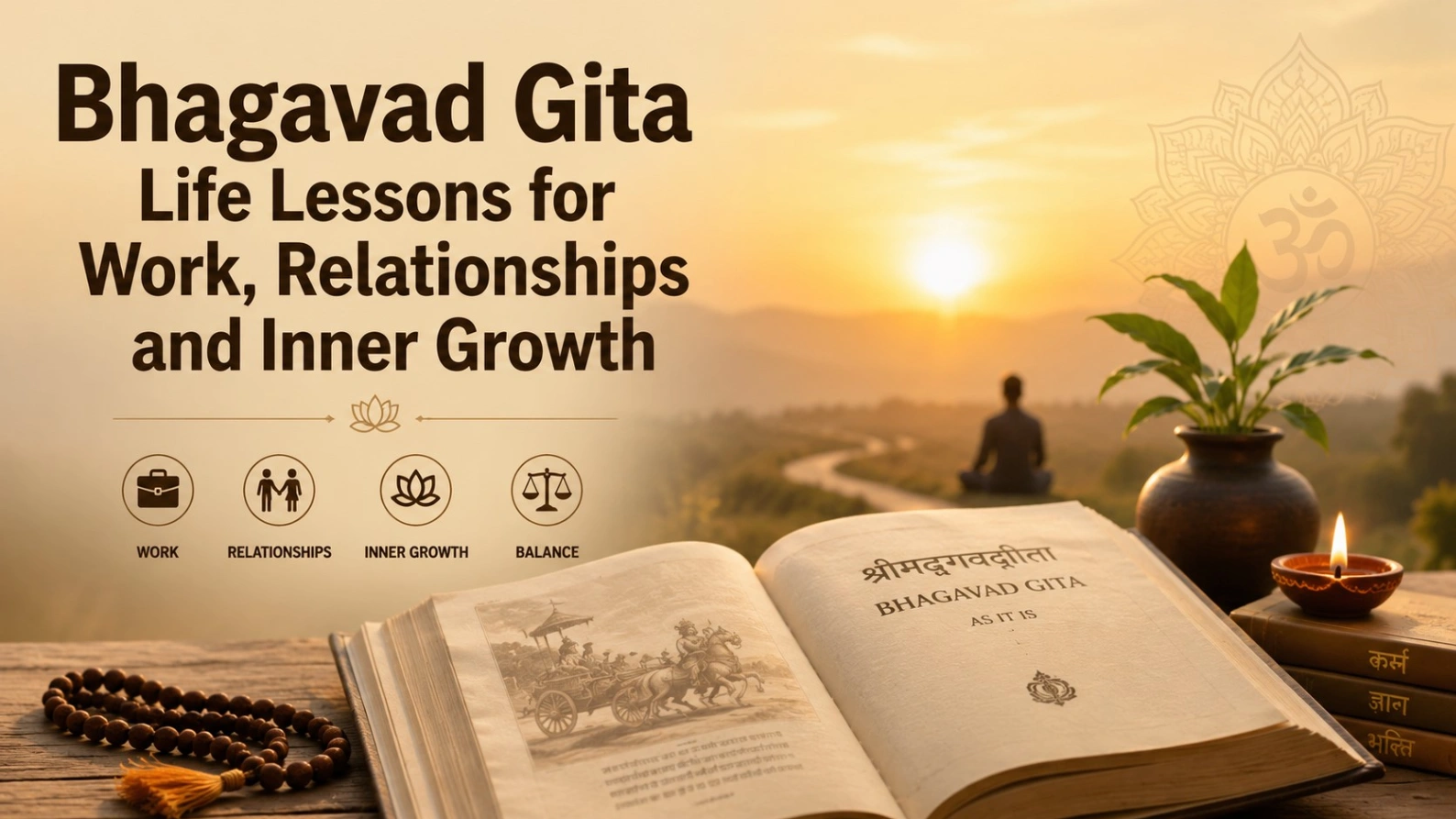
What Makes Bhagavad Gita Wisdom Relevant Today?
The Bhagavad Gita begins in a moment of deep confusion. Arjuna is standing on the battlefield, surrounded by pressure, responsibility and emotional conflict. He feels overwhelmed and unable to act. In many ways, this reflects our own life.
We may not be standing in a physical battlefield, but we face mental and emotional battles every day. Work pressure, relationship issues, career decisions, family expectations, stress, fear and self-doubt can make us feel stuck.
Lord Krishna’s teachings help Arjuna see clearly. He does not simply tell him to run away from life. Instead, he teaches him how to act with wisdom, courage and balance.
That is why Bhagavad Gita teachings for modern life are so important. They show us how to live fully without losing inner peace.
Design Your Destiny
Ready to live with more clarity, peace and purpose? Join Design Your Destiny and learn how to apply spiritual wisdom in everyday life. Discover how to master your thoughts, balance your emotions and create a life guided by awareness, not confusion.
Start Your Journey!1. Bhagavad Gita Lessons for Work: Do Your Duty with Dedication
One of the most powerful Bhagavad Gita lessons for work is the teaching of karma yoga. Karma yoga means performing your duties sincerely without being attached to the results.
In modern work life, we often become anxious because we focus too much on outcomes. Will I get success? Will people appreciate me? Will I be promoted? Will my effort be noticed?
The Gita teaches us to focus on right action. When we give our best without constantly worrying about the result, our mind becomes calmer and our work becomes more powerful.
This does not mean we stop caring about success. It means we stop becoming mentally dependent on the result. We work with discipline, honesty and commitment, but we do not allow fear of failure or hunger for praise to control us.
This is the real meaning of work without attachment.
For professionals, this lesson is deeply useful. It helps us stay focused, productive and emotionally stable. Instead of being disturbed by office politics, comparison or delayed results, we learn to stay committed to our duty.
The Bhagavad Gita for career teaches that success comes when action is guided by clarity, patience and inner balance.
2. Bhagavad Gita for Success: Balance Effort and Surrender
Many people think success means controlling everything. But the Bhagavad Gita for success teaches a more balanced approach.
Lord Krishna emphasizes action, but also surrender. This means we should give our best effort while accepting that not everything is in our hands.
This lesson is extremely important in today’s world. We often feel stressed because we want instant results. We want every plan to go exactly as expected. But life does not always move according to our timeline.
The Gita teaches us to act with full sincerity and then surrender the outcome to a higher wisdom.
This creates peace.
When we stop fighting every situation mentally, we become more patient. When we stop obsessing over results, we become more focused. When we stop comparing our journey with others, we become more confident.
True success is not only about achievement. It is also about maintaining peace while walking toward your goals.
That is why Krishna teachings are not against ambition. They simply teach us to pursue ambition without losing ourselves.
3. Bhagavad Gita on Relationships: Love Without Possessiveness
The Bhagavad Gita on relationships gives deep insight into attachment, expectations and emotional balance.
Most relationship problems arise because love becomes mixed with control. We expect others to behave exactly as we want. We become hurt when people do not meet our expectations. We confuse attachment with love.
The Gita teaches detachment, but detachment does not mean becoming cold or careless. It means loving with wisdom.
Healthy relationships need love, respect, patience and understanding. But they also need inner freedom. When we become too dependent on another person for our happiness, we create emotional pressure for both ourselves and them.
Bhagavad Gita relationship advice reminds us that we should do our part with sincerity, but we cannot control another person’s thoughts, actions or emotions.
This is a powerful lesson for family life, friendships, marriage and professional relationships.
When we reduce expectations, relationships become lighter. When we control our anger, communication improves. When we stop reacting from ego, love becomes more peaceful.
The Gita helps us understand that true love is not possession. True love is respect, patience and emotional maturity.
4. Bhagavad Gita on Attachment and Expectations
One of the most important life lessons from Bhagavad Gita is learning how attachment creates suffering.
Attachment is not just love. Attachment is the fear of losing something. It is the need to control people, outcomes and situations. It makes the mind restless.
For example, we may become attached to praise, status, relationships, career growth or comfort. When these things change, we feel disturbed.
The Bhagavad Gita on attachment teaches that everything in life is temporary. People change, situations change, success changes, and even our emotions change. When we understand this truth, we become less reactive.
This does not mean we stop caring. It means we stop clinging.
Expectations also create pain. When we expect too much from others, we become disappointed. When we expect life to be perfect, we become frustrated. When we expect results too quickly, we become impatient.
The Gita guides us to act with love and sincerity, but without becoming trapped in expectation.
This creates emotional freedom.

5. Bhagavad Gita for Inner Peace: Control the Mind
The Bhagavad Gita for inner peace repeatedly highlights the importance of mastering the mind. A controlled mind becomes a friend. An uncontrolled mind becomes an enemy.
In daily life, the mind often jumps from one thought to another. It worries about the future, regrets the past and compares itself with others. This constant movement creates stress and overthinking.
Lord Krishna’s teachings show that inner peace does not come from external situations alone. It comes from mental discipline.
When the mind is steady, even difficult situations do not break us. When the mind is disturbed, even small problems feel heavy.
This is why Bhagavad Gita for mental peace is so relevant today. It teaches us to observe our thoughts, control our impulses and act with awareness.
Meditation, self-reflection, devotion and mindful action are all ways to bring the mind into balance.
Inner peace is not the absence of problems. It is the ability to remain centered even when life is uncertain.
6. Bhagavad Gita for Personal Growth and Self-Improvement
The Bhagavad Gita for personal growth teaches that real growth begins within. Before changing the world, we must understand ourselves.
Self-improvement is not only about building habits, earning more or becoming more successful. It is also about becoming more aware, humble, disciplined and truthful.
The Gita encourages us to rise above laziness, fear, anger, ego and confusion. These inner weaknesses often block our progress more than external challenges.
When we study Bhagavad Gita wisdom, we begin to ask deeper questions:
Who am I beyond my role and identity?
What is my duty?
What kind of person am I becoming?
Am I acting from ego or awareness?
Am I chasing success without peace?
These questions lead to inner growth.
The Gita teaches that a mature person is not someone who never faces difficulty. A mature person is someone who remains balanced in pleasure and pain, success and failure, praise and criticism.
That is true self-growth.
7. Bhagavad Gita on Emotional Balance
Emotional balance is one of the greatest needs of modern life. People are more connected digitally, yet more disturbed mentally. Anxiety, anger, comparison and insecurity have become common.
The Bhagavad Gita on emotional balance teaches us not to become slaves of our emotions.
Emotions are natural, but they should not control our decisions. Anger can destroy understanding. Fear can block action. Attachment can cloud judgment. Ego can damage relationships.
Lord Krishna teaches Arjuna to rise above emotional confusion and see the situation with wisdom.
This does not mean suppressing emotions. It means understanding them.
When you feel angry, pause before reacting.
When you feel anxious, return to your duty.
When you feel hurt, look beyond ego.
When you feel confused, seek clarity.
This is how the Gita helps us become emotionally strong.

8. Bhagavad Gita for Decision Making
The Bhagavad Gita for decision making is especially useful because Arjuna’s crisis is actually a decision-making crisis. He does not know what is right. His emotions, relationships and duties are all in conflict.
Lord Krishna helps him see the difference between emotional weakness and true wisdom.
In life, we also face decisions where the heart and mind feel divided. Should I choose comfort or duty? Should I speak the truth or avoid conflict? Should I follow purpose or fear?
The Gita teaches that right decisions come from a calm mind, clear values and awareness of duty.
When your mind is restless, your decisions may come from fear. When your mind is attached, your decisions may come from insecurity. But when your mind is steady, your decisions become wiser.
That is why the Bhagavad Gita for daily life is not just spiritual knowledge. It is a guide for practical living.
9. Bhagavad Gita for Spiritual Growth and Self-Realization
Beyond work, relationships and success, the highest teaching of the Gita is self-realization.
The Bhagavad Gita for spiritual growth reminds us that we are not just the body, mind or social identity. We are the soul, the conscious self, beyond temporary changes.
This understanding changes the way we live.
When we identify only with the body, we fear aging and loss.
When we identify only with the mind, we are disturbed by thoughts.
When we identify only with success, we suffer from comparison.
When we identify with the soul, we discover inner strength.
The Bhagavad Gita for self realization teaches us to live with awareness of our higher nature. This brings peace, compassion and freedom.
Inner growth is not about escaping life. It is about living life with a deeper understanding.
10. How to Apply Bhagavad Gita in Daily Life
Many people ask, how to apply Bhagavad Gita in daily life? The answer is simple: begin with small actions.
You do not need to renounce your work or responsibilities. You can live the Gita through your everyday choices.
At work, do your duty sincerely without being attached to praise.
In relationships, love without controlling others.
During stress, calm your mind before reacting.
During success, stay humble.
During failure, stay steady.
During confusion, return to dharma.
During overthinking, focus on action.
This is how to live according to Bhagavad Gita.
The real beauty of the Gita is that it does not ask us to run away from life. It teaches us how to live life with wisdom.

Don’t Just Read the Gita, Live the Gita
The Bhagavad Gita life lessons are timeless because they speak directly to the human condition. Work pressure, relationship struggles, emotional confusion, fear, attachment and the search for purpose have always been part of life.
Through Lord Krishna’s teachings, the Gita shows us how to act with courage, love with maturity, succeed with balance and grow from within.
The Gita is not only a scripture of knowledge. It is a guide to conscious living.
When we live its teachings, work becomes worship, relationships become more peaceful, success becomes more meaningful and inner growth becomes natural.
To read the Gita is beautiful.
To understand the Gita is powerful.
But to live the Gita is life-changing.
Personal Session
Feeling stuck in work, relationships or inner growth? Book a personal session and receive practical spiritual guidance to understand your challenges, calm your mind and move forward with clarity, confidence and inner peace.
Book Now