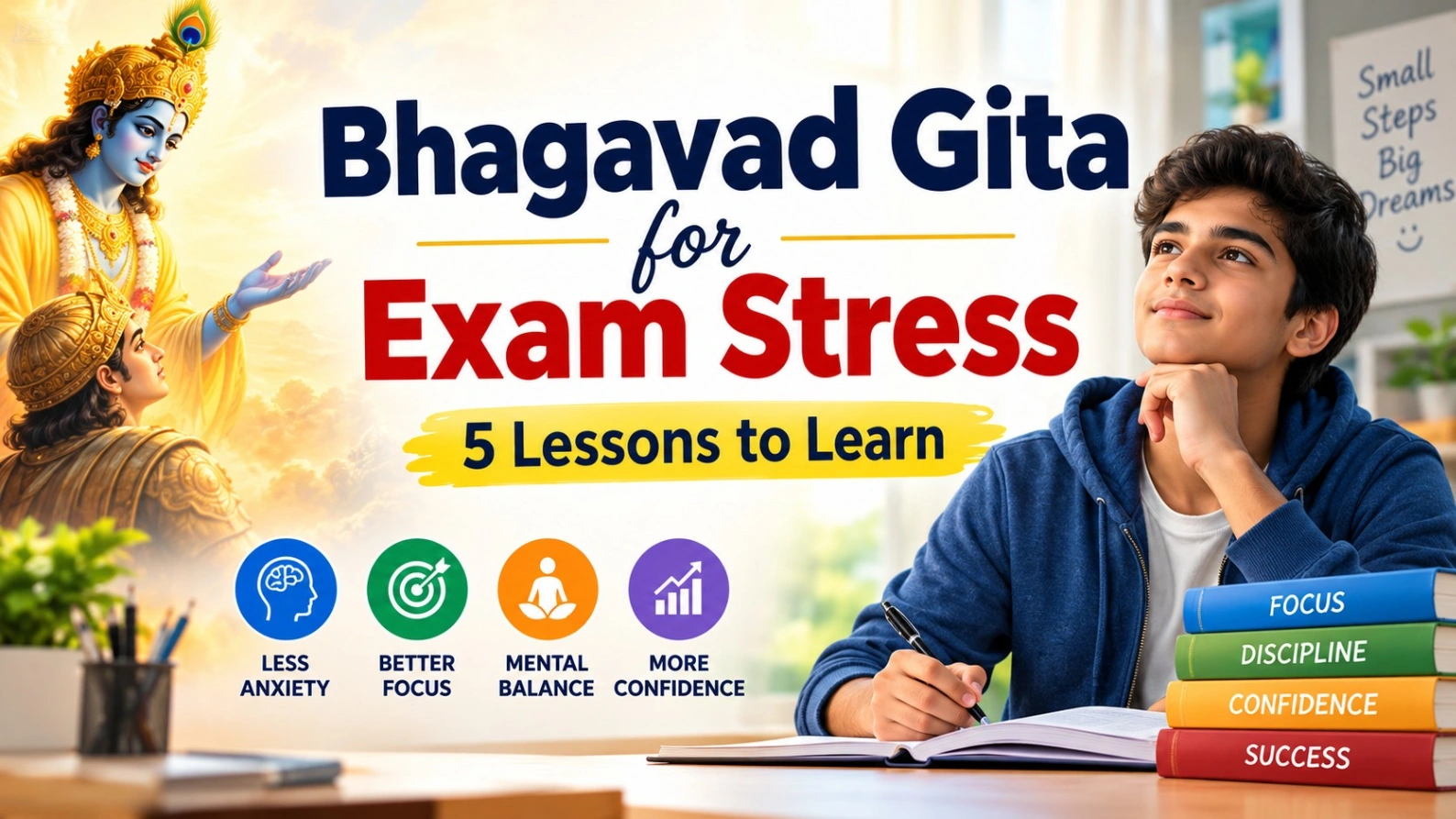

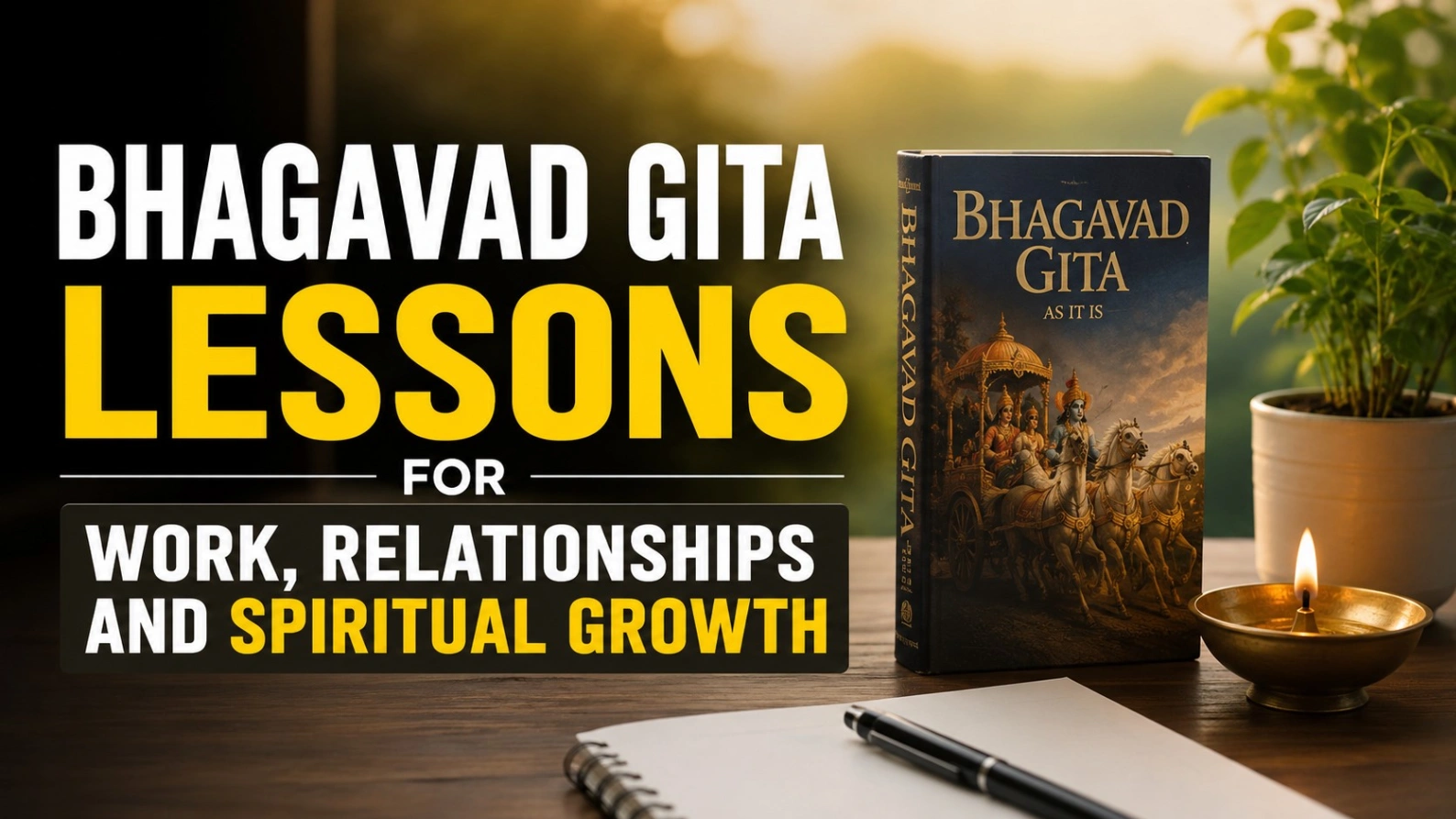
Bhagavad Gita lessons are not limited to temples, scriptures or spiritual discussions. They are deeply practical teachings that can guide us in everyday life are at work, in relationships, during emotional struggles and on the path of spiritual growth. The beauty of the Bhagavad Gita is that it speaks to the human condition. Whether you are dealing with pressure, confusion, attachment, expectations or inner conflict, the Gita offers wisdom that helps you live with clarity and balance.
In modern life, people often feel pulled in many directions. Work demands focus and performance. Relationships require patience and emotional maturity. Personal growth asks for discipline, self-awareness and inner honesty. The Bhagavad Gita brings all these areas together by teaching us how to act wisely, think clearly and remain connected to our higher self.
The Gita is not just about renunciation or philosophy. It is about living fully, but with awareness. It teaches us how to perform our duties without becoming trapped by stress, ego or attachment. This is why Bhagavad Gita teachings remain relevant even today.
Why Bhagavad Gita Lessons Matter in Modern Life
Modern life is fast, competitive and emotionally demanding. Many people are constantly trying to balance career goals, family responsibilities, relationships, personal expectations and spiritual needs. In this pressure, the mind becomes restless.
The Bhagavad Gita gives a practical way to live without losing yourself in the noise of the world. It teaches that peace does not come from controlling everything outside. Peace begins when we learn to manage our thoughts, emotions, desires and reactions.
One of the most powerful life lessons from Bhagavad Gita is that we must focus on the right action, not constantly worry about the result. This does not mean we should stop caring about success. It means we should give our best effort without letting anxiety, fear or expectation disturb our inner balance.
This one teaching alone can transform how we work, love and grow spiritually.
Design Your Destiny
Are you ready to bring Bhagavad Gita wisdom into your daily life? Join Design Your Destiny and learn how to live with clarity, purpose, emotional balance and spiritual awareness. Transform the way you think, work, love and grow from within.
Start Your Journey Today!Bhagavad Gita Lessons for Work and Career
Work is one of the biggest sources of stress in modern life. Deadlines, competition, office politics, career uncertainty and the pressure to succeed can easily disturb the mind. The Bhagavad Gita offers a powerful approach to work through the idea of karma yoga.
Karma yoga in Bhagavad Gita teaches us to perform our duty sincerely, without becoming attached to the outcome. This is often misunderstood. Detachment does not mean laziness or lack of ambition. It means doing your work with dedication, but not allowing the result to control your peace.
When you work only for praise, promotion or validation, your mind becomes dependent on external approval. But when you work with sincerity, discipline and purpose, your work becomes a form of growth.
Bhagavad Gita lessons for work remind us that success is not only about achievement. It is also about character. Are you honest in your efforts? Are you disciplined? Are you focused? Are you able to stay calm under pressure? These qualities matter as much as the final result.
Work Without Attachment
One of the most practical Bhagavad Gita teachings for career growth is learning how to work without attachment. This does not mean you should not have goals. Goals give direction. But attachment creates fear.
When you are too attached to results, you may start feeling anxious before even beginning the work. You may compare yourself with others. You may lose confidence if things do not go your way. The Gita teaches that your right is over your action, not over the result.
In daily work life, this means:
Give your best effort.
Stay focused on your responsibilities.
Do not let success make you arrogant.
Do not let failure break your confidence.
Keep improving without losing your inner peace.
This mindset is useful for students, professionals, business owners and anyone trying to build a meaningful life.
Bhagavad Gita on Duty and Discipline
Another important teaching of Bhagavad Gita is dharma, or duty. Dharma means doing what is right according to your role, responsibility and inner truth. In work life, this means being responsible, ethical and committed.
Many people want success, but they do not want discipline. The Gita reminds us that growth requires consistent action. Discipline is not punishment. It is a way of aligning your actions with your purpose.
Bhagavad Gita on duty teaches that every role has a responsibility. As a student, your duty is to learn. As a professional, your duty is to work sincerely. As a family member, your duty is to act with care and understanding. As a spiritual seeker, your duty is to become aware of your thoughts and actions.
When you live with this awareness, life becomes more meaningful.
Bhagavad Gita Lessons for Relationships
Relationships are beautiful, but they also test our patience, ego and emotional balance. Many conflicts happen because of attachment, expectations, control and misunderstanding. The Bhagavad Gita on relationships gives us a deeper way to love without losing ourselves.
The Gita teaches self-awareness. Before blaming others, it asks us to look within. Are we reacting from ego? Are we expecting too much? Are we trying to control someone? Are we listening with love or only defending our own point of view?
Bhagavad Gita relationship advice is not about becoming emotionless. It is about becoming emotionally mature. Love should bring expansion, not bondage. A true relationship supports growth, peace and understanding.

Bhagavad Gita on Attachment and Expectations
Attachment is one of the biggest causes of suffering in relationships. We often confuse love with possession. We think that if we love someone, they must behave exactly according to our expectations. But this creates pressure and pain.
Bhagavad Gita on attachment teaches us to love with awareness. Attachment says, “You must make me happy.” Love says, “I wish for your growth and well-being.” Attachment creates fear of loss. Love creates trust.
Expectations are natural, but when they become rigid, they create disappointment. The Gita teaches balance. We can care deeply, but we must not make our peace completely dependent on another person’s behavior.
This lesson is especially useful in family relationships, marriage, friendships and workplace connections. When we reduce unnecessary expectations, relationships become lighter and more respectful.
Bhagavad Gita on Emotional Balance
Emotional balance is one of the most important spiritual lessons from Bhagavad Gita. Life will always bring praise and criticism, success and failure, happiness and sadness. The question is not whether life will change. The question is whether we can remain steady through those changes.
The Gita teaches equanimity and the ability to stay balanced in different situations. This does not mean suppressing emotions. It means not becoming completely controlled by them.
For example, if someone criticizes you, your first reaction may be anger or hurt. But with awareness, you can pause and ask: Is this criticism useful? Is my ego reacting? What can I learn from this? This pause creates inner freedom.
Bhagavad Gita lessons for emotional balance help us respond instead of react. This improves relationships, decision-making and mental peace.
Bhagavad Gita for Spiritual Growth
Spiritual growth is not about escaping life. It is about living with higher awareness. The Bhagavad Gita for spiritual growth teaches that the real journey is inward. We may achieve many things outside, but without inner clarity, we still feel incomplete.
The Gita reminds us that we are more than the body, mind, emotions and social identity. There is a deeper self within us like calm, aware and connected to the divine. Spiritual growth begins when we stop identifying only with temporary thoughts and situations.
This does not mean ignoring practical life. In fact, the Gita teaches us to live in the world with greater wisdom. Work becomes worship when done with sincerity. Relationships become spiritual practice when lived with compassion. Challenges become opportunities when faced with awareness.

Bhagavad Gita on Self-Realization
Self-realization is one of the highest teachings of the Bhagavad Gita. It means understanding who you truly are beyond ego, fear and external labels. Most people define themselves by their job, relationships, achievements or failures. But the Gita points toward a deeper identity.
You are not only your thoughts. You are not only your emotions. You are not only your success or failure. You are the conscious presence behind all experiences.
When this understanding deepens, life becomes less frightening. You stop chasing validation from every direction. You become more centered. You begin to act from wisdom rather than insecurity.
This is why Bhagavad Gita wisdom is so powerful. It does not only tell us what to do. It changes how we see ourselves.
Bhagavad Gita on Mind Control and Inner Peace
The mind can be your greatest friend or your greatest obstacle. A restless mind creates stress, confusion, overthinking and emotional pain. A disciplined mind creates clarity, confidence and peace.
Bhagavad Gita on mind control teaches that the mind must be trained with practice and detachment. You cannot control the mind by force. You control it through awareness, discipline and repeated effort.
Simple practices like meditation, self-reflection, mindful action and spiritual reading can help calm the mind. Even a few minutes of daily silence can create a shift.
Bhagavad Gita for inner peace teaches that peace is not found by running away from responsibilities. Peace comes when your actions, thoughts and values become aligned.
Bhagavad Gita Lessons for Decision Making
Many people struggle with decision making because they are afraid of making mistakes. The Bhagavad Gita teaches us to make decisions based on dharma, clarity and inner wisdom.
Before making an important decision, ask yourself:
Is this action right?
Is it guided by fear or wisdom?
Will it create long-term growth?
Am I acting from ego, attachment or truth?
Does this decision align with my values?
When decisions are made only from fear, they create confusion. When decisions are made with awareness, they bring strength, even if the path is difficult.
This is one reason Bhagavad Gita for modern life is so relevant. It teaches us not only to choose what is easy, but to choose what is right.

Practical Ways to Apply Bhagavad Gita Teachings Daily
The Bhagavad Gita becomes powerful when we live it, not just read it. Here are simple ways to apply Bhagavad Gita lessons in daily life:
Start your day with a calm mind instead of rushing immediately into stress.
Before work, remind yourself to focus on effort, not anxiety about results.
When dealing with people, listen before reacting.
When expectations hurt you, practice letting go with awareness.
When you feel confused, choose the action that aligns with truth and responsibility.
When you succeed, stay humble.
When you fail, learn and continue.
Spend a few minutes daily in meditation or self-reflection.
Read one teaching from the Gita and think about how it applies to your life.
These small practices can slowly transform your mindset.
Bhagavad Gita for Work, Relationships and Inner Growth
The deepest message of the Bhagavad Gita is balance. It does not ask us to reject work, relationships or ambition. It teaches us how to engage with life without losing our inner stability.
At work, it teaches dedication without anxiety.
In relationships, it teaches love without unhealthy attachment.
In spiritual life, it teaches awareness beyond ego.
In challenges, it teaches courage.
In success, it teaches humility.
In failure, it teaches resilience.
This is why Bhagavad Gita lessons are timeless. They help us become better professionals, better partners, better family members and better human beings.
When we apply these teachings, life does not become free from challenges. But we become stronger, calmer and wiser in facing them.
Bhagavad Gita lessons for work, relationships and spiritual growth offer a complete guide to living with peace, purpose and awareness. The Gita teaches us to work sincerely without attachment, love deeply without control, and grow spiritually without escaping our responsibilities.
In today’s world, where stress, comparison and emotional confusion are common, Bhagavad Gita wisdom gives us a practical path. It reminds us that true success is not only outside achievement. True success is inner balance, clear action, loving relationships and connection with the higher self.
The more we apply these teachings in daily life, the more we understand that the Bhagavad Gita is not just a scripture to be read. It is wisdom to be lived.
Personal Session
If you feel stuck in work, relationships or inner confusion, book a personal session for deeper guidance. Understand your life challenges through spiritual wisdom and receive practical direction to move forward with peace, clarity and confidence.
Book Now