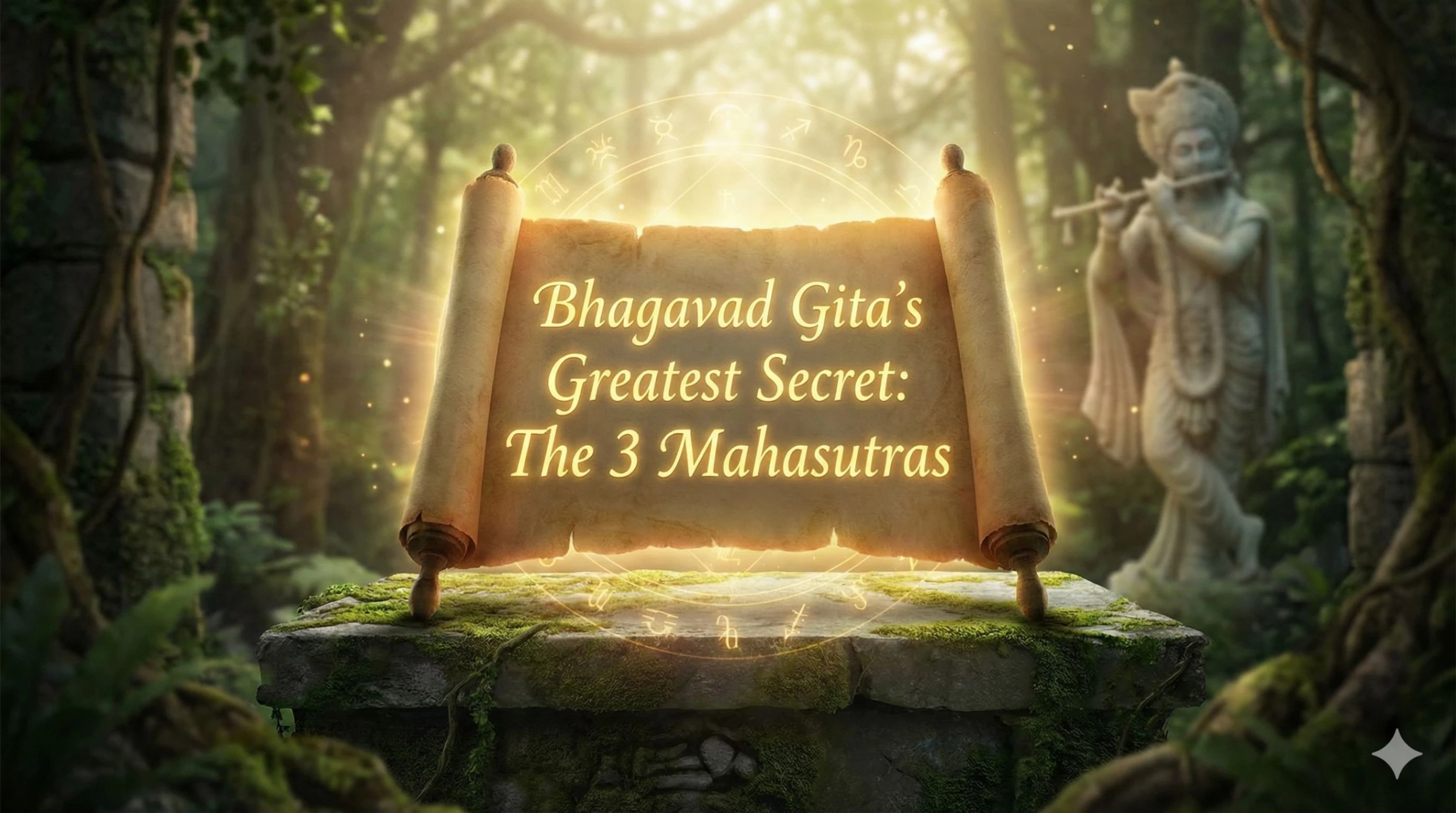
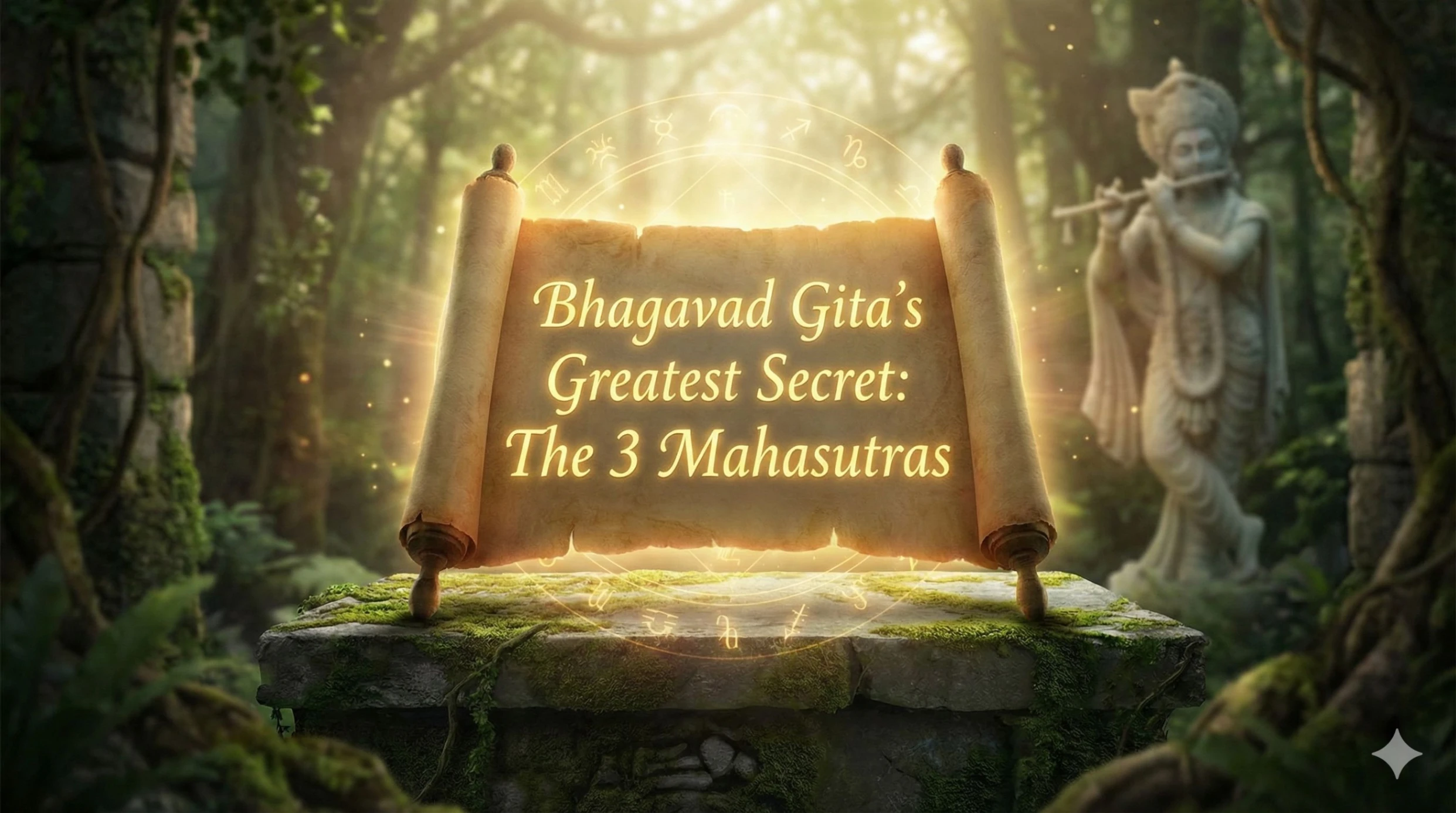
The Bhagavad Gita is not just an ancient scripture; it is a timeless manual for human psychology and the art of living. Among the 10 Mahasutras (Great Sutras) of the Gita, the third sutra is pivotal. It revolves around the three celebrated paths: Karma Yoga (The Path of Action), Jnana Yoga (The Path of Knowledge), and Bhakti Yoga (The Path of Devotion).
For thousands of years, humanity has discussed these paths found in the Gita, the Quran, the Bible, and the Torah. However, a great tragedy persists: instead of becoming bridges to spiritual awakening, these paths often become barriers.
Why do we get stuck? And what is the "Greatest Secret" that Lord Krishna revealed to Arjuna 5,000 years ago to unlock the true power of these paths? Let’s decode this ancient wisdom.
The Three Layers of the Mind: Why We Get Trapped
To understand Krishna’s teachings, we must first understand the structure of the human mind. The three paths of Yoga correspond directly to the three layers of the human psyche:
The Layer of Action (Karma): The mind cannot sit still. It constantly craves activity ("doing"). This is the domain of Karma Yoga.
The Layer of Intellect (Vichara): The mind is obsessed with thinking, analyzing, and gathering information. This is the domain of Jnana Yoga.
The Layer of Emotion (Bhav): The mind is submerged in feelings— love, anger, jealousy, devotion. This is the domain of Bhakti Yoga.
The problem arises when we remain entangled within these layers. True spiritual enlightenment requires transcending the mind, reaching a state of no mind (what Saint Kabir called Amani Dasha). If you only perform rituals, memorize scriptures, or indulge in emotional outbursts, you remain trapped in the mind’s web, never reaching the soul.
The Missing Link: The Science of Witnessing (Sakshi Bhav)
The "Greatest Secret" is that Karma, Knowledge, and Devotion are merely vehicles. The fuel that makes them work is Meditation (Dhyana) or Sakshi Bhav (Witness Consciousness). Without the element of witnessing, these paths are incomplete.
Here is how to apply the "Master Key" to the three paths:
1. Karma Yoga: Action + Meditation
Many people ask, "What is the meaning of Karma Yoga?" It is often misunderstood as merely doing charity or rituals.
The Trap: Being obsessed with "doing" or the results of the action.
The Solution: When you add meditation to action, it becomes Nishkam Karma (Action without desire for fruit).
Technique: Perform every action with total awareness. Pour your entire energy into the act itself, not the future result. When the action itself becomes the meditation, you are free from bondage.
2. Jnana Yoga: Intellect + Self-Inquiry
In the age of Google, information is cheap. But information is not wisdom.
The Trap: Memorizing scriptures or intellectualizing the "Unknown" (God). You cannot think your way to the Truth.
The Solution: True Jnana Yoga is the experiential answer to the question, "Who am I?"
Technique: Practice mindfulness. Watch your thoughts. Just as you watch traffic on the road, watch the traffic of thoughts in your mind without judgment. You will notice a "gap" between thoughts. In that silence, you find mental clarity and a glimpse of the Self.
3. Bhakti Yoga: Emotion + Awareness
Bhakti Yoga is the path of love. But without awareness, love can turn into attachment or projection.
The Trap: Projecting your own ideas onto the Divine. As the saying goes, "As is your feeling, so is your God."
The Solution: Be a witness to your emotions.
Technique: When an emotion arises, be it anger or love; do not suppress it. Witness it. If anger comes, simply observe, "Anger is happening." The moment you witness it, the negative charge dissipates, and pure energy remains.
The Art of Akarma: Living as the Hollow Bamboo
The deepest philosophy of the Gita is the concept of Karma vs. Akarma. Lord Krishna advises Arjuna to surrender all dharmas and take refuge in Him. This means surrendering the "Ego of the Doer."
Understanding Vikarma and Akarma
To practice Akarma (Inaction in Action), realize that the most critical functions of your life are already happening without your effort. These are called Vikarma:
You do not beat your heart.
You do not digest your food.
You did not choose your birth or your death.
Existence manages the essentials. When you realize this, you stop trying to control everything. You become like a hollow bamboo (flute). You allow the divine breath to pass through you. You become the instrument, and Existence becomes the musician. This brings profound inner peace.
Practical Meditation Techniques for Beginners
How do we apply this ancient wisdom in the 21st century? Here are three practical steps based on the transcript:
Vipassana Meditation: To break your identification with the body, practice Vipassana benefits. Sit silently and observe the sensations in your body. If an itch arises, don't scratch immediately— just watch it. This separates "You" (the witness) from the "Body" (the object).
Watching the Thoughts: Spend 10 minutes daily observing the arrival and departure of your thoughts. Do not fight them. You will realize you are the sky, and thoughts are just clouds passing by.
Sanjeevani Kriya (Deep Relaxation): Self-realization techniques rely on relaxation. When you are deeply relaxed, you naturally remember your true nature. This "Self-Remembrance" is the essence of spirituality.
The teachings of the Bhagavad Gita are not about escaping life but about waking up within it. Whether you are an intellectual, an emotional person, or a man of action, the secret is the same: Sakshi Bhav (Witness Consciousness).
By adding the element of "Witnessing" to your daily life, you transform every action into Yoga. You move from the chaos of the mind to the silence of the soul. This is the path to true spiritual awakening.
The 10 Hidden Mahasutras of Bhagavad Gita Revealing Eternal Secrets || Sakshi Shree - YouTube