



If you’ve ever found yourself scrolling through WebMD at 2 AM wondering why your stomach hurts again, you aren’t alone. Gut issues are the silent epidemic of our time. From that uncomfortable post-meal heaviness to chronic conditions that disrupt daily life, our digestion is often the first thing to go when stress hits.
Usually, there are two paths people take to fix this. You either head to the pharmacy for an antacid, or you start brewing ginger tea and looking up ancient remedies. This brings us to the ultimate showdown: Ayurveda vs Western medicine.
But here is the truth; it shouldn't be a war. While the difference between Ayurveda and Allopathy (modern medicine) is vast, the most effective path to healing often lies somewhere in the middle. If you want to achieve true holistic gut health, you need to understand what both systems bring to the table.
Let’s dig into how these two medical worlds view your gut, and how you can combine them to finally fix that bloating, heal leaky gut naturally, and feel like yourself again.
The Western Approach: The Firefighter
Western medicine is incredible. If you have an acute infection, a blockage, or a life-threatening emergency, this is where you want to be. When it comes to gut health, Western medicine relies heavily on anatomy, biochemistry, and diagnostics.
Doctors look for structural problems. They use endoscopes and blood tests to find ulcers, inflammation, or bacteria like H. pylori. The focus is often on the gut microbiome health; the trillions of bacteria living in your digestive tract.
However, Western medicine is often reactive. It treats the symptom.
Got heartburn? Take a proton pump inhibitor (PPI).
Have IBS? Here is an antispasmodic.
Bacterial overgrowth? Here is an antibiotic.
While this provides relief, it doesn't always answer why the problem started. This is where many people feel stuck. They treat the symptoms of chronic indigestion treatment, but the root cause remains.

The Ayurvedic Approach: The Architect
Ayurveda, the 5,000-year-old system of medicine from India, looks at the gut differently. In Ayurveda, your gut isn't just a tube for processing food; it is the center of your entire well-being.
The core concept here is Agni digestive fire. Think of Agni as a campfire in your stomach. When the fire is strong and bright, it burns up your food efficiently, extracting nutrients and eliminating waste. When the fire is weak or smoky, food sits there, ferments, and creates toxins. In Ayurveda, these toxins are called Ama, and they are considered the root of all disease.
Ayurveda doesn't just ask "What is the symptom?" It asks "Who is the patient?" It categorizes your health based on your Dosha (energy type):
Vata: Prone to gas, bloating, and constipation.
Pitta: Prone to acidity, heartburn, and inflammation.
Kapha: Prone to sluggish digestion and heaviness.
By understanding your type, you can tailor a Vata dosha diet for digestion or cool down a Pitta imbalance gut health issue before it becomes chronic.
The Core Conflict: Symptom vs. System
When analyzing holistic medicine vs Western medicine, the distinction is clear. Western medicine isolates the organ; Ayurveda connects the organ to the whole.
Western medicine might say you have "Irritable Bowel Syndrome" (IBS). It’s a label that describes a collection of symptoms. Ayurveda looks at that same patient and sees a Vata imbalance caused by stress, cold foods, and irregular eating times. The Ayurvedic treatment for IBS wouldn't just be a pill; it would be a warm, grounding diet, specific breathing exercises, and herbs to calm the nervous system.
Does this mean one is wrong? Absolutely not.
Western medicine excels at diagnostics and acute care.
Ayurveda excels at prevention and chronic management.
Bridging the Gap: The Holistic Approach
The most exciting development in modern science is that it is finally catching up to ancient wisdom. Take the gut-brain axis, for example. Western science has confirmed that your gut and brain talk to each other via the vagus nerve. Stress causes stomach issues; stomach issues cause anxiety.
Ayurveda has known this for millennia. That’s why an Ayurvedic detox for gut health often involves meditation and yoga, not just food changes.
To truly heal, we need an integrative approach to gut health. We can use Western diagnostics to rule out serious disease, and Ayurvedic lifestyle changes to rebuild health.
1. Handling Indigestion and Acidity
The Western Way: Antacids. They neutralize stomach acid immediately. But long-term use can mess up your digestion because you need acid to break down food. The Ayurvedic Way: To cure acidity permanently Ayurveda suggests looking at the heat in your body (Pitta). Instead of just suppressing acid, you avoid trigger foods (spicy, fermented) and use cooling herbs like coriander and fennel. You treat the fire, you don't just spray water on the smoke.
2. The Leaky Gut Dilemma
The Western Way: "Leaky Gut" is still debated in some medical circles, but it is generally recognized as increased intestinal permeability. Functional medicine doctors often prescribe a microbiome diet, focusing on bone broth and removing gluten. The Ayurvedic Way: Heal leaky gut naturally by removing Ama (toxins). Ayurveda suggests a "Mono-diet" (like Kitchari cleansing) to give the digestive system a rest, allowing the gut lining to repair itself.
3. Bloating and Gas
The Western Way: Simethicone or probiotics. The Ayurvedic Way: Natural remedies for bloating and gas focus on how you eat. Are you eating while stressed? Are you drinking ice water (which puts out your Agni)? Ayurveda suggests chewing fresh ginger with rock salt before meals to ignite digestion.
Practical Steps to Heal Your Gut
So, how do we combine these worlds? Here is a practical roadmap to functional medicine gut health using Ayurvedic principles.
Step 1: Ignite Your Agni
You cannot heal if you aren't digesting. Regardless of what medicine you take, you need to fix your Agni digestive fire.
Stop snacking: Give your body 3–4 hours between meals to fully digest.
Eat warm: warm, cooked foods are easier to digest than raw salads, especially if you have leaky gut symptoms.
Hydrate correctly: Sip warm water throughout the day. Avoid ice-cold drinks during meals.
Step 2: Know Your Herbs
This is where probiotics vs Ayurvedic herbs comes into play. Probiotics add bacteria, but herbs prepare the environment for them to survive.
Triphala: If there is one herb to know, it is this. Triphala for gut health is legendary. It’s a blend of three fruits that gently cleanses the colon without creating dependency. It’s great for an Ayurvedic diet for constipation.
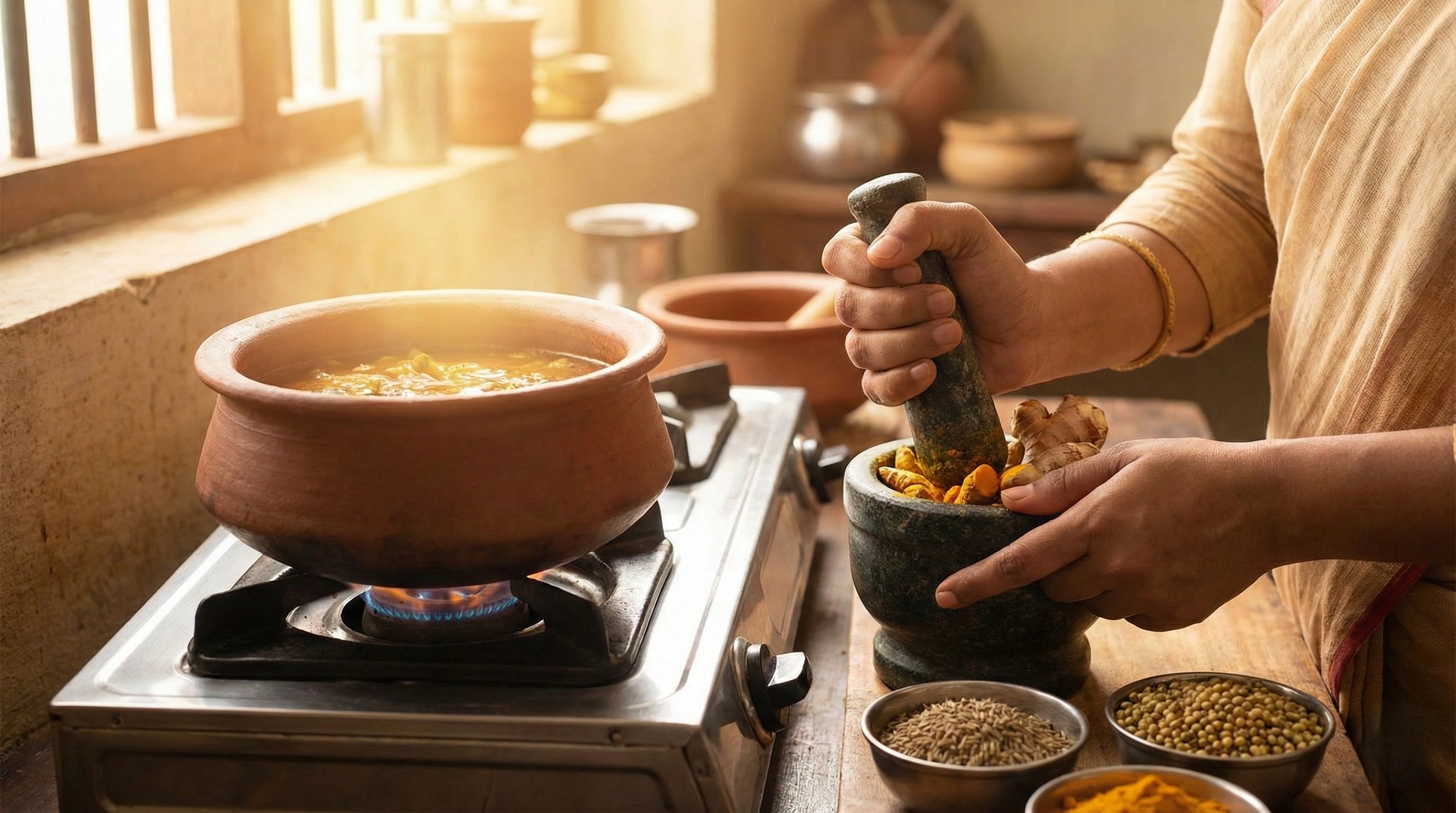
Ginger & Cumin: The best natural remedies for bloating and gas. Make a tea with cumin, coriander, and fennel seeds (CCF Tea) to sip after meals.
Aloe Vera: Excellent for cooling inflammation and soothing the lining of the stomach.
Step 3: Listen to Your Body (and Science)
If you have severe symptoms, get the blood work. Get the endoscopy. Use Western diagnostics to ensure you are safe. Once you have the clear, use Ayurveda to rebuild. If you are looking for the best ayurvedic herbs for digestion, don't just guess. Consult a practitioner. Ayurveda is potent medicine.
We don't need to choose sides. The debate of Ayurveda vs Western medicine shouldn't be about who is right, but about what works for you.
Western medicine saves lives; Ayurveda builds health. By respecting the science of the microbiome diet and the wisdom of Dosha imbalance, you can build a gut that isn't just "not sick," but is vibrant, strong, and happy.