
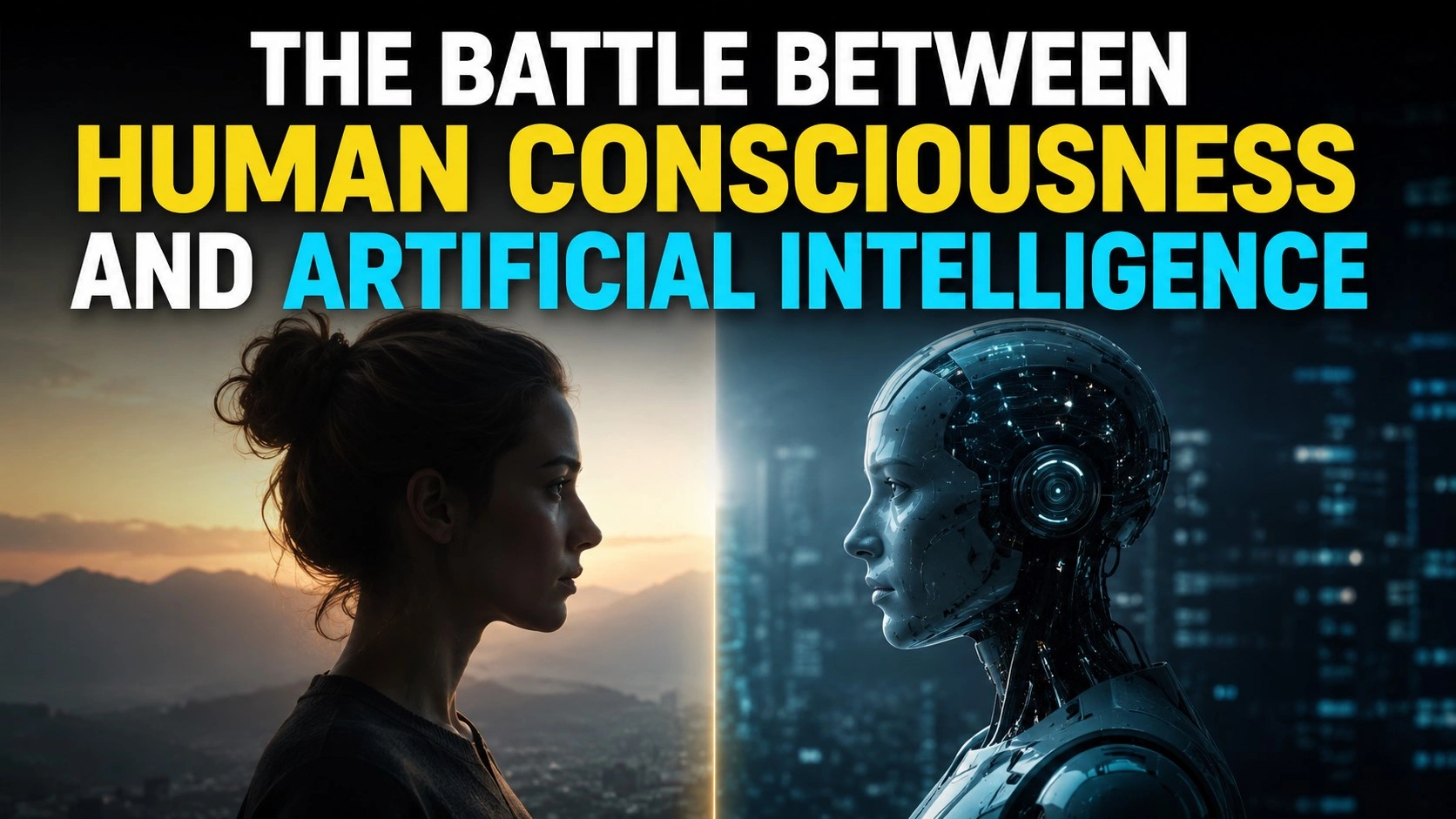
Artificial intelligence is no longer a futuristic idea from science fiction movies. Today, AI tools write content, create art, automate businesses, answer questions, and even imitate human conversations. As the rise of artificial intelligence continues, one important question is becoming more relevant than ever: Can human consciousness survive and stay balanced in the AI era?
The conversation around AI and human consciousness is growing rapidly because people are beginning to notice how technology affects emotions, attention span, relationships, and even identity. While artificial intelligence offers convenience and innovation, many fear that humans are becoming emotionally disconnected, digitally addicted, and overly dependent on machines.
This growing debate between human vs artificial intelligence is not just about technology. It is about the future of humanity itself.
Understanding Human Consciousness
Human consciousness is the awareness of thoughts, emotions, surroundings, and personal identity. It is what allows people to feel compassion, creativity, intuition, love, empathy, and spirituality. Unlike machines, humans experience emotions deeply and connect with life through awareness.
Consciousness is not simply intelligence. A person may know facts, solve problems, and process information, but consciousness goes beyond logic. It involves emotional intelligence, morality, self-awareness, imagination, and inner experience.
This is where the comparison between artificial intelligence vs human brain becomes fascinating. AI can process huge amounts of data within seconds, but it still cannot truly feel emotions or experience consciousness the way humans do.
Design Your Destiny
In a world filled with digital distractions and artificial intelligence, true power lies in mastering your inner consciousness. Join our Design Your Destiny program to develop emotional balance, mindfulness, clarity, and conscious living practices that help you thrive in the AI era.
Start Your Journey Today!The Rise of Artificial Intelligence
The rise of AI is changing the world at incredible speed. Businesses are using automation to improve productivity, healthcare systems are using machine learning to diagnose diseases, and social media platforms rely heavily on algorithms to influence user behavior.
From chatbots to self-driving cars, artificial intelligence is becoming part of everyday life. Experts believe AI will continue transforming industries, communication, education, and entertainment over the next decade.
However, with every advancement comes a new concern. Many people worry about the impact of artificial intelligence on society and question whether technology is improving life or slowly controlling it.
The fear of an AI takeover often comes from the idea that humans may lose their creativity, emotional connection, and independent thinking while depending too heavily on machines.
Human Intelligence vs Artificial Intelligence
The comparison between human intelligence vs artificial intelligence is often misunderstood. AI is designed to imitate certain human abilities such as learning patterns, analyzing data, and solving tasks efficiently. But human intelligence is much deeper.
Humans can:
Feel emotions
Build meaningful relationships
Create original ideas
Understand morality
Experience spirituality
Adapt emotionally to situations
Artificial intelligence, on the other hand, depends entirely on programming and data. It can simulate conversation and decision-making, but it does not possess self-awareness or genuine emotions.
This difference is important because society sometimes mistakes technological advancement for consciousness. Just because AI can speak like humans does not mean it experiences life like humans.
Can AI Become Conscious?
One of the biggest questions in modern technology is: Can AI become conscious?
Currently, there is no scientific proof that artificial intelligence possesses consciousness or self-awareness. AI systems generate responses based on patterns, training data, and algorithms. They do not feel happiness, pain, fear, or love.
Still, advancements in machine learning continue to blur the line between machines and humans. Some researchers believe future AI could imitate emotional behavior so realistically that distinguishing between humans and machines may become difficult.
But imitation is not the same as consciousness.
A machine can describe sadness without actually feeling sad. Human consciousness involves lived experience, emotions, memories, intuition, and awareness beyond calculations.
How AI Affects Human Life
The impact of AI on humans is both positive and concerning.
Positive Effects
Faster communication
Improved healthcare systems
Better accessibility to information
Increased business efficiency
Automation of repetitive work
Negative Effects
Digital addiction
Reduced human interaction
Shorter attention spans
Mental health issues
Dependency on technology
Many people today spend more time interacting with screens than with real human beings. Social media algorithms, AI-generated content, and constant digital stimulation are affecting focus, emotional balance, and self-worth.
This is why conversations around AI and mental health are becoming increasingly important.
Technology and Human Connection
Technology was meant to connect people, but in many ways, it has also created emotional distance. Families sit together while staring at separate screens. Friendships exist online but lack real emotional depth. Conversations are becoming shorter, faster, and less personal.
The relationship between technology and human connection is complicated. While AI makes communication convenient, it cannot replace genuine emotional bonding.
Human beings naturally seek empathy, understanding, touch, compassion, and presence. These qualities cannot be fully replicated by machines.
As the world becomes more automated, preserving authentic human relationships becomes more important than ever.
AI and Human Emotions
Artificial intelligence can analyze emotions through facial recognition, voice patterns, and behavior tracking. Some AI systems can even respond in emotionally supportive ways.
But there is a major difference between recognizing emotions and actually feeling them.
Humans experience emotional depth through memories, relationships, pain, growth, and consciousness. Machines simply identify patterns.
This distinction matters because emotional intelligence is a major part of human identity. Compassion, forgiveness, creativity, and love are experiences rooted in consciousness.
The future challenge is ensuring that humans do not lose emotional sensitivity while interacting constantly with emotionally simulated technologies.
Digital Addiction and the Human Mind
One of the biggest dangers of the AI era is digital addiction.
Modern apps and platforms are designed to capture attention using AI-driven recommendations and personalized algorithms. These systems encourage endless scrolling, content consumption, and dopamine-driven behavior.
Over time, excessive digital stimulation affects:
Focus
Sleep quality
Mental peace
Emotional health
Productivity
The effects of technology on human behavior are becoming increasingly visible, especially among younger generations.
People are struggling with anxiety, comparison, loneliness, and emotional exhaustion despite being constantly connected online.
This is why mindfulness and conscious living are becoming essential in modern life.
Conscious Living in the AI Era
To survive emotionally and mentally in a technology-driven world, humans must strengthen awareness and conscious living.
Conscious living means:
Using technology mindfully
Maintaining emotional balance
Prioritizing real relationships
Practicing self-awareness
Protecting mental peace
The goal is not to reject technology but to create balance between innovation and inner awareness.
People can protect their consciousness by:
Taking breaks from screens
Practicing meditation
Spending time in nature
Building genuine human relationships
Limiting digital distractions
In a world dominated by machines, human awareness becomes a superpower.
AI and Spirituality
As artificial intelligence grows more advanced, many people are turning toward spirituality for deeper meaning and emotional grounding.
The relationship between AI and spirituality may seem unusual, but it reflects a growing desire to reconnect with humanity. Technology provides information, but spirituality provides inner understanding.
AI can answer questions, but it cannot replace wisdom gained through human experience, silence, meditation, compassion, and consciousness.
Many spiritual thinkers believe the future of humanity depends not only on technological growth but also on emotional and spiritual evolution.
Will AI Replace Humans?
The fear that AI will replace humans is widespread. Automation is already changing industries and reducing the need for repetitive tasks.
However, while AI may replace certain jobs, it cannot fully replace uniquely human qualities such as:
Creativity
Emotional intelligence
Spiritual awareness
Intuition
Ethical judgment
Human connection
The future will likely involve collaboration between humans and AI rather than complete replacement.
The challenge is ensuring humans remain emotionally conscious and ethically aware while using powerful technologies responsibly.
The Future of Human Consciousness
The future of human consciousness depends on choices made today.
If society becomes completely dependent on algorithms and automation, people may lose critical thinking, emotional depth, and real-world connection. But if technology is used wisely, AI can support human growth instead of controlling it.
The key lies in balance.
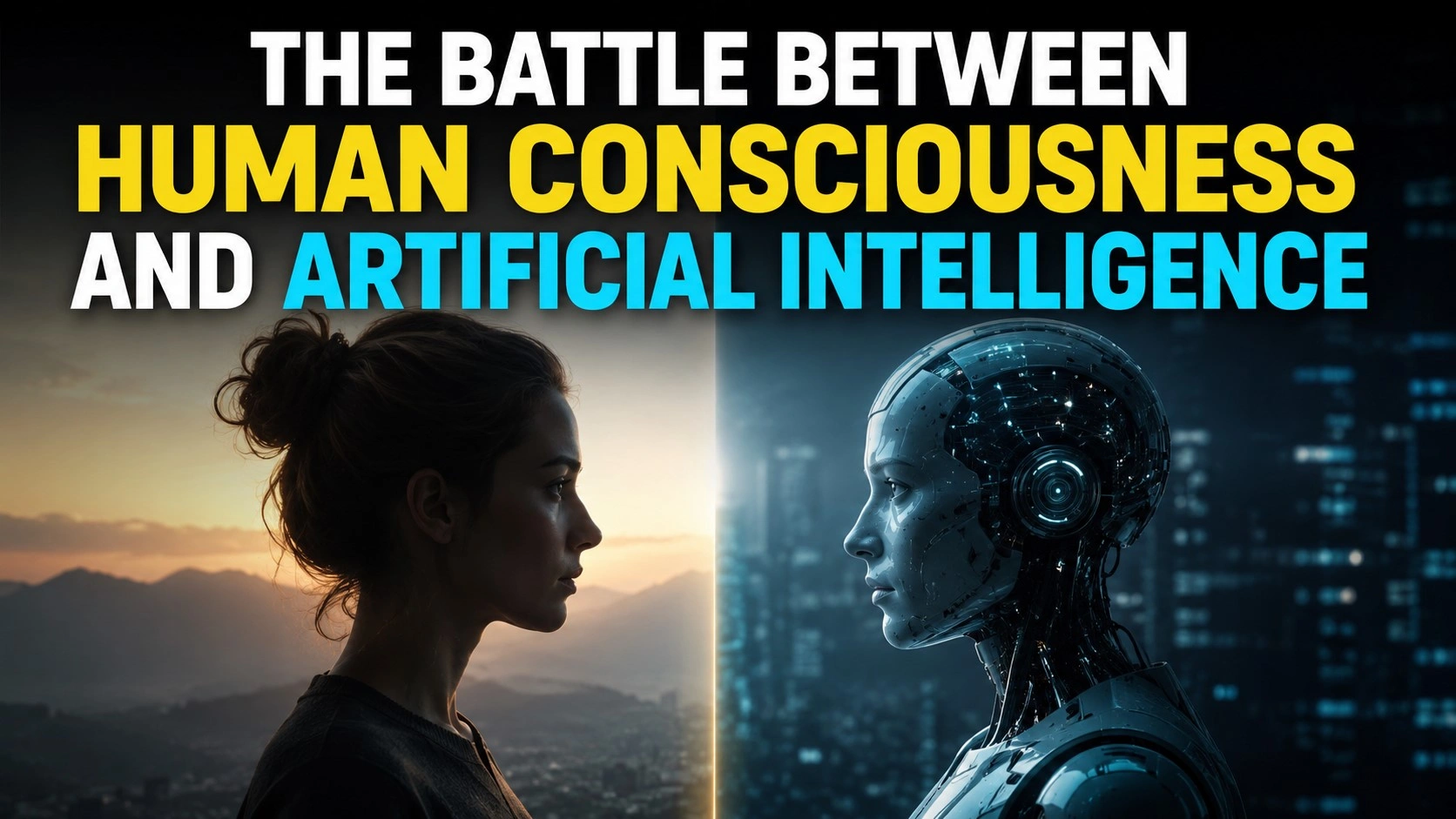
Artificial intelligence can improve efficiency, but human consciousness gives life meaning. Machines may become smarter, but humans possess awareness, compassion, imagination, and spiritual depth.
In the battle between AI and human consciousness, the real victory will come from learning how to use technology without losing humanity.
Book a Personal Session
Feeling overwhelmed by stress, digital overload, or emotional imbalance? Book a personalized one-on-one session to explore mindfulness, self-awareness, emotional healing, and practical guidance for creating balance between technology and inner peace.
Book Now