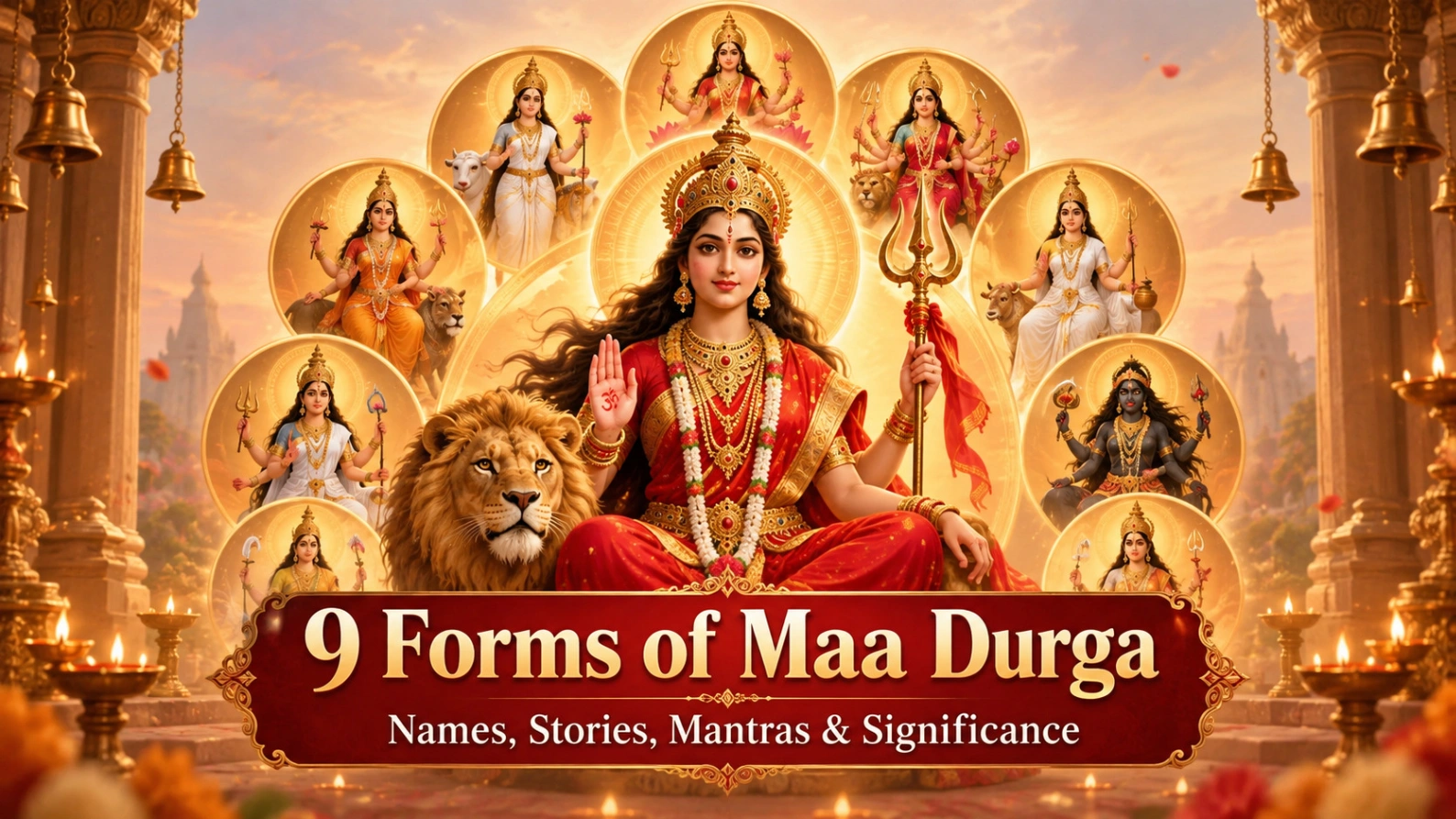
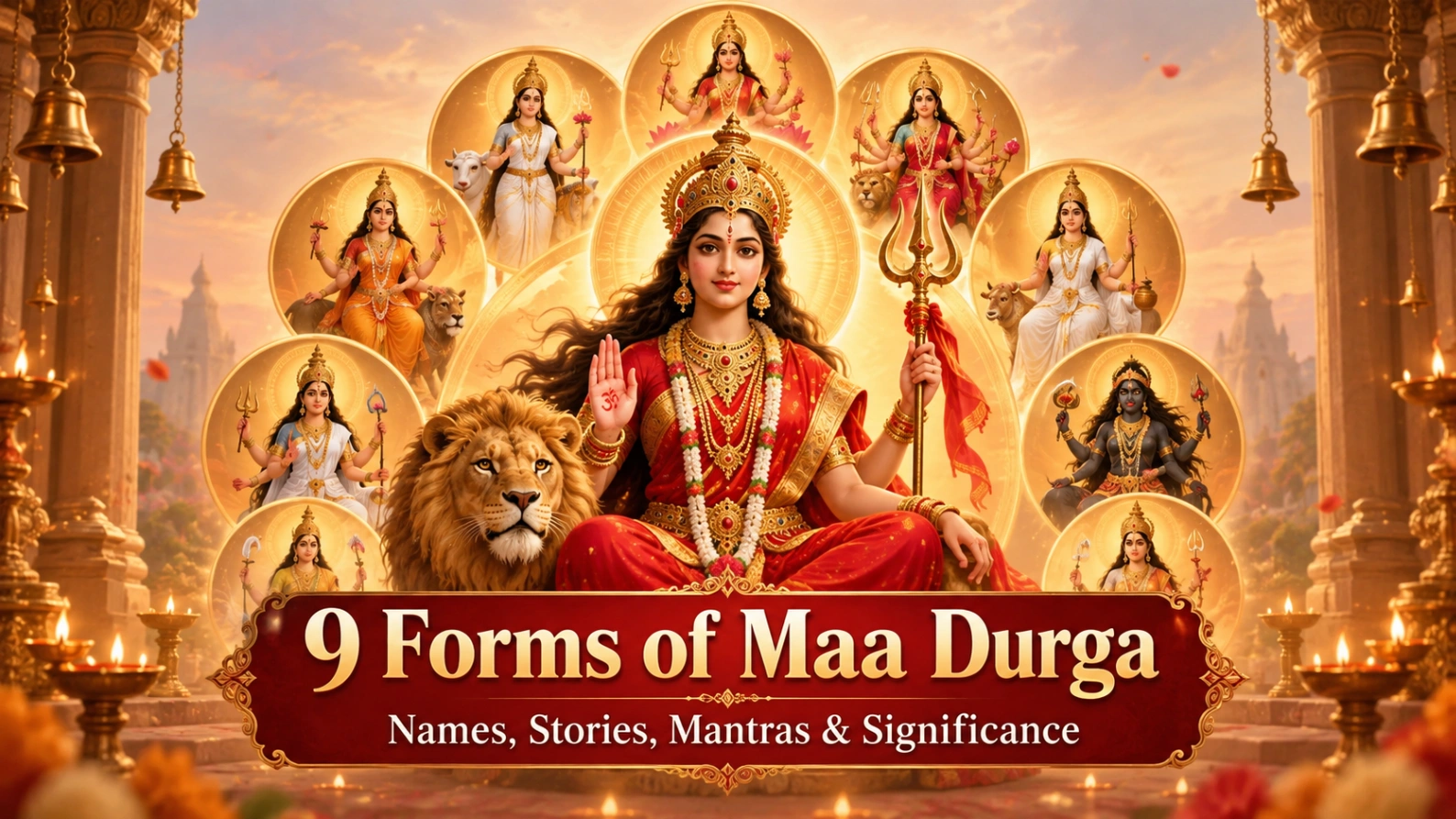
Navratri is more than a celebration of divine power. At its heart lies a profound spiritual journey through the 9 forms of Maa Durga, collectively known as Navdurga. Each form represents a distinct quality of the Divine Mother, from courage and discipline to compassion, fearlessness, purity and spiritual fulfilment.
The word Navdurga combines “Nav”, meaning nine, with Durga, referring to the powerful form of the Divine Feminine. During the nine days and nights of Navratri, devotees traditionally worship one manifestation of Maa Durga each day. The widely followed order is Shailputri, Brahmacharini, Chandraghanta, Kushmanda, Skandamata, Katyayani, Kalaratri, Mahagauri and Siddhidatri. This sequence is also associated with the traditional Navdurga names found in Devi worship traditions.
But the Navdurga 9 forms need not be understood only as nine religious images. Each one can also be contemplated as a quality to awaken within ourselves. Together, they take a seeker from stability and discipline to courage, compassion, transformation and finally inner completeness.
Let us understand the 9 forms of Durga in order, along with their stories, mantras and spiritual significance.
1. Maa Shailputri — The Power of Stability
The first of the Navdurga names in order is Maa Shailputri. Her name literally means “daughter of the mountain”, as Shail means mountain and Putri means daughter. According to Hindu tradition, after Goddess Sati left her mortal body, she was reborn as Parvati, the daughter of King Himavan, and became known as Shailputri.
She is traditionally depicted riding the bull Nandi, carrying a trident in one hand and a lotus in the other. The mountain in her name carries an important spiritual symbolism. A mountain remains grounded even when storms surround it. Similarly, Shailputri represents steadiness, inner strength and a strong foundation.
The first day of Navratri therefore invites us to become grounded before beginning any journey of transformation. Before seeking higher wisdom, the mind must first become stable.
Mantra: Om Devi Shailputryai Namah.
The significance of Maa Shailputri lies in developing stability, courage and faith. She reminds us that genuine spiritual growth begins when we learn to stand firmly within ourselves.
Design Your Destiny
Don’t Just Understand Your Inner Power. Learn to Live It. Every form of Maa Durga reminds us that the power to transform our life begins within. Design Your Destiny is an invitation to move beyond simply knowing spiritual wisdom and begin applying it to your thoughts, choices, relationships and everyday life. Start your journey with Design Your Destiny and discover how conscious inner transformation can change the direction of your life.
Start Your Journey Today!2. Maa Brahmacharini — The Power of Discipline
The second form of Maa Durga is Brahmacharini, the ascetic form of Goddess Parvati. She represents deep devotion, austerity, patience and unwavering determination.
Traditional stories describe Parvati undertaking intense penance with the resolve to unite with Lord Shiva. Rather than giving up when faced with difficulty, she remained devoted to her purpose. This makes Maa Brahmacharini one of the clearest symbols of perseverance in the Navdurga journey.
She is generally depicted walking barefoot, holding a rosary or japa mala in one hand and a kamandalu in the other.
Mantra: Om Devi Brahmacharinyai Namah.
Her message is especially relevant to modern life. Whether someone is pursuing spiritual growth, education, a career or a personal goal, meaningful achievement requires discipline. Maa Brahmacharini teaches that determination becomes powerful when it is supported by patience.
3. Maa Chandraghanta — The Power of Courage
Maa Chandraghanta is worshipped on the third day of Navratri. Her name is associated with the crescent moon on her forehead, traditionally described as resembling a bell or ghanta.
Unlike the calm ascetic form of Brahmacharini, Chandraghanta represents courage, readiness and protection. She is often shown riding a lion or tiger and carrying weapons, symbolising the ability to confront negativity and injustice.
Her fierce appearance does not represent uncontrolled anger. Rather, it symbolises conscious strength—the courage to defend what is right without losing inner balance.
Mantra: Om Devi Chandraghantayai Namah.
The spiritual significance of Chandraghanta is the transformation of fear into courage. Difficult situations may not always disappear, but our relationship with fear can change. Her form reminds devotees that inner peace and strength can exist together.
Navratri: Dates, Puja Timings, Vrat Rule & Spiritual Meaning
4. Maa Kushmanda — The Power of Creation
The fourth among the 9 forms of Maa Durga is Maa Kushmanda. She is traditionally associated with cosmic creation, light and life energy.
Devotional traditions describe Kushmanda as the goddess whose divine radiance brought light into darkness. Because of this association, she represents creative energy, vitality and the power through which possibilities emerge.
She is often depicted riding a lion and carrying multiple divine objects and weapons in her hands.
Mantra: Om Devi Kushmandayai Namah.
The deeper meaning of Kushmanda can be understood through creativity. Human beings continuously create through their thoughts, actions, words and decisions. Maa Kushmanda encourages us to become conscious of what we are creating within ourselves and around us.
Instead of allowing negativity to dominate the mind, her symbolism encourages the cultivation of light, enthusiasm and constructive action.
5. Maa Skandamata — The Power of Compassion
Maa Skandamata is the fifth of the Navratri 9 goddess names. She is worshipped as the mother of Skanda, also known as Kartikeya.
She is commonly shown carrying the young Skanda in her lap, making her one of the most nurturing representations of the Divine Mother. Yet motherhood here represents much more than biological motherhood. Skandamata symbolises selfless love, protection, responsibility and compassion.
Mantra: Om Devi Skandamatayai Namah.
Her significance lies in teaching us that genuine strength is not always aggressive or forceful. Sometimes strength appears as patience, care and the willingness to support another person.
Skandamata therefore represents a beautiful transition in the Navdurga journey. After developing stability, discipline, courage and creative power, the seeker learns that true power must also contain compassion.
6. Maa Katyayani — The Power to Take Action
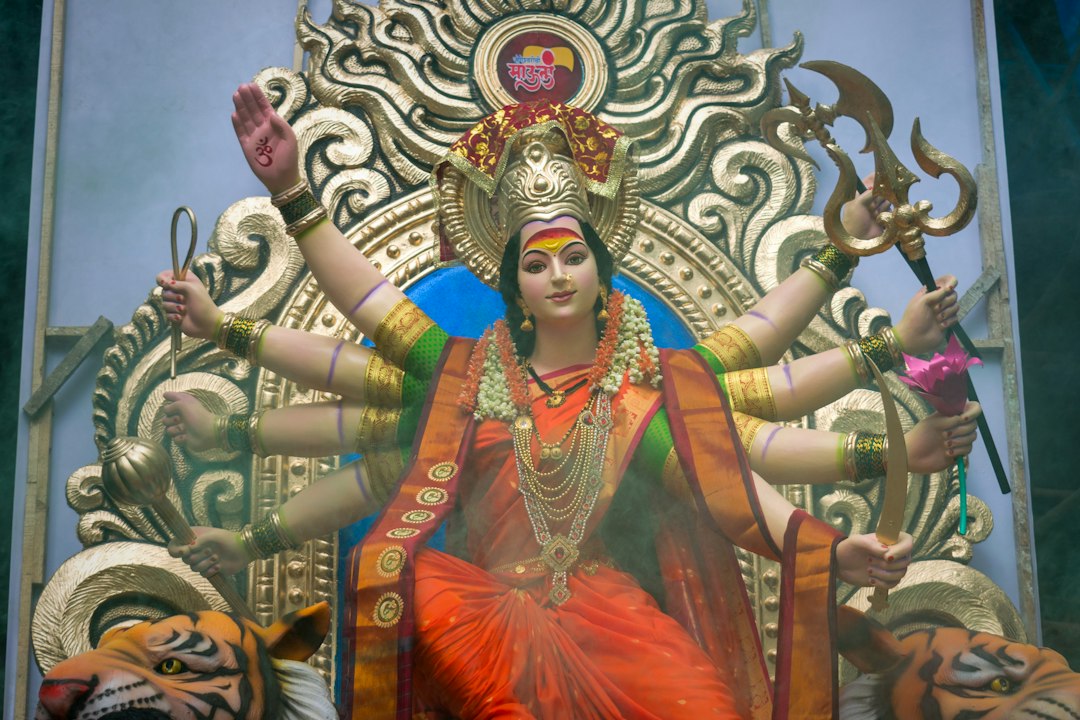
Maa Katyayani is worshipped on the sixth day of Navratri and is one of the warrior manifestations of the Goddess.
Traditional accounts associate her with Sage Katyayana, from whose name she is called Katyayani. She represents decisive action, courage and the destruction of forces that prevent righteousness from prevailing.
She is usually portrayed as a powerful warrior goddess riding a lion.
Mantra: Om Devi Katyayanyai Namah.
Katyayani teaches an important spiritual lesson: awareness alone is not enough. There comes a moment when knowledge must turn into action.
We may understand what is wrong in our habits, relationships or lives, but transformation begins only when we act upon that understanding. Maa Katyayani represents this transition from intention to courageous action.
7. Maa Kalaratri — The Power to Face Darkness
Maa Kalaratri is perhaps the most visually fierce of the Navdurga 9 forms. She is worshipped on the seventh day of Navratri.
Her dark complexion and powerful appearance symbolise the destruction of fear, ignorance and negative forces. Despite her fearsome form, she is traditionally regarded as protective and auspicious for sincere devotees.
Mantra: Om Devi Kalaratryai Namah.
The significance of Maa Kalaratri becomes clearer when viewed psychologically and spiritually. Every individual encounters internal darkness like fear, anger, insecurity, attachment or ignorance. Avoiding these experiences often gives them greater power.
Kalaratri represents the courage required to look directly at what frightens us. Her symbolism teaches that darkness begins to lose its hold when we become conscious of it.
Thus, the seventh stage of Navdurga is not about escaping fear. It is about developing the awareness and strength to move through it.
9 Spiritual Lessons Navratri Teaches About Life and Consciousness
8. Maa Mahagauri — The Power of Purity and Renewal
After the intense form of Kalaratri comes Maa Mahagauri, worshipped on the eighth day.
Mahagauri represents serenity, purity, peace and renewal. Her transition after Kalaratri carries a beautiful spiritual message: when we confront and move beyond inner darkness, clarity begins to emerge.
She is traditionally portrayed with a radiant and peaceful appearance, often dressed in white.
Mantra: Om Devi Mahagauryai Namah.
The significance of Mahagauri is not simply external purity. At a deeper level, she represents cleansing the mind of unnecessary resentment, ego, anger and emotional burdens.
Her presence in the sequence of the 9 forms of Durga and their significance reminds us that transformation involves releasing what no longer serves us. When mental clutter reduces, peace naturally becomes more accessible.
9. Maa Siddhidatri — The Power of Fulfilment
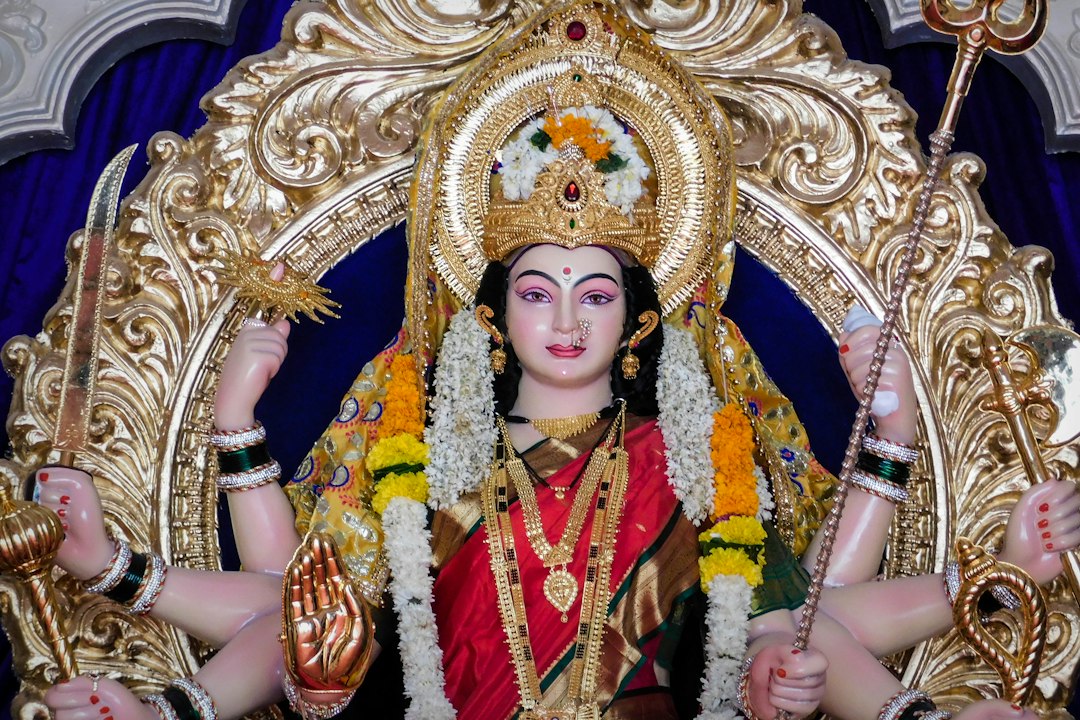
The ninth and final form of Navdurga is Maa Siddhidatri. Her name combines Siddhi, meaning spiritual accomplishment or attainment, with Datri, meaning giver.
She represents fulfilment, wisdom and spiritual completeness. Siddhidatri appears at the culmination of the Navdurga sequence because genuine fulfilment is understood as the result of an inner journey rather than instant achievement.
Mantra: Om Devi Siddhidatryai Namah.
After stability comes discipline. Discipline develops courage. Courage enables creation and compassionate action. The seeker then develops the strength to confront negativity, moves toward purification and eventually arrives at deeper wisdom.
Siddhidatri therefore symbolises the completion of this spiritual progression.
The Deeper Significance of the 9 Forms of Maa Durga
When viewed together, the 9 forms of Maa Durga reveal much more than nine individual stories. They can be understood as a complete map of inner evolution.
Shailputri teaches us to become grounded. Brahmacharini develops discipline. Chandraghanta awakens courage. Kushmanda represents creative energy. Skandamata introduces compassion. Katyayani turns awareness into action. Kalaratri teaches us to confront fear. Mahagauri represents purification, and Siddhidatri symbolises wisdom and fulfilment.
This is why the Navdurga significance remains relevant even beyond the rituals of Navratri. The external worship of the Goddess can become an opportunity for internal reflection.
Instead of asking only, “Which Goddess is worshipped today?”, one may also ask, “Which quality represented by the Goddess can I practise today?”
That shift turns Navratri from only a festival we celebrate into wisdom we can consciously live.
Why Are the Nine Forms of Durga Worshipped During Navratri?
Navratri literally refers to “nine nights”, and different traditions across India celebrate the festival through fasting, prayers, devotional music, Garba, Durga Puja and various regional customs. The nine forms of the Goddess are worshipped sequentially through the festival as manifestations of Shakti, the Divine Feminine.
The stories and ritual details connected with individual forms can vary between regions and devotional lineages, while the widely recognised Navdurga sequence remains Shailputri through Siddhidatri.
For Shardiya Navratri 2026, widely published panchang-based calendars place the beginning of Navratri on 11 October 2026, with Vijayadashami following the Navratri observances on 20 October 2026. Local traditions and panchangs should always be checked for precise puja timings.
From Worshipping the Goddess to Living Her Qualities
Understanding the Navdurga story becomes more meaningful when the stories are not treated only as events belonging to the distant past.
The courage of Chandraghanta can be practised when we stand up for what is right. The discipline of Brahmacharini can appear in our commitment to a goal. The compassion of Skandamata can be expressed through how we treat others. The fearlessness of Kalaratri can emerge when we face our own insecurities rather than running away from them.
This is where spiritual knowledge becomes practical wisdom.
The purpose of learning about the 9 forms of Durga with names and mantra need not end with memorising names or chanting words. The deeper invitation is to understand what each form represents and gradually bring those qualities into everyday life.
Navratri then becomes an inner journey from knowing the Divine to recognising and living the divine qualities already present within us.
The 9 forms of Maa Durga: Shailputri, Brahmacharini, Chandraghanta, Kushmanda, Skandamata, Katyayani, Kalaratri, Mahagauri and Siddhidatri, represent different expressions of strength, devotion, courage, creativity, compassion, transformation and wisdom.
Together, these Navdurga names and mantras tell a larger story of human evolution. We begin by establishing a foundation, strengthen ourselves through discipline, learn courage and compassionate action, confront our inner darkness and eventually move towards greater clarity and fulfilment.
The true significance of Navdurga therefore extends beyond nine days of worship. Maa Durga's nine forms can become nine reminders for everyday life: remain grounded, stay disciplined, act courageously, create consciously, love compassionately, face fear, release negativity and continue moving towards wisdom.
Perhaps that is one of the deepest ways to celebrate Navratri, not simply by knowing the nine forms of the Goddess, but by allowing their qualities to transform the way we live.
Personal Session
Looking for Personal Guidance on Your Inner Journey? Sometimes the answers we seek require deeper reflection and personalised guidance. A Personal Session can help you understand the patterns, questions and challenges that may be holding you back and bring greater clarity to your path forward. Take the next step towards deeper self-awareness, clarity and conscious transformation with a personalised session.
Book NowRead Latest Articles