

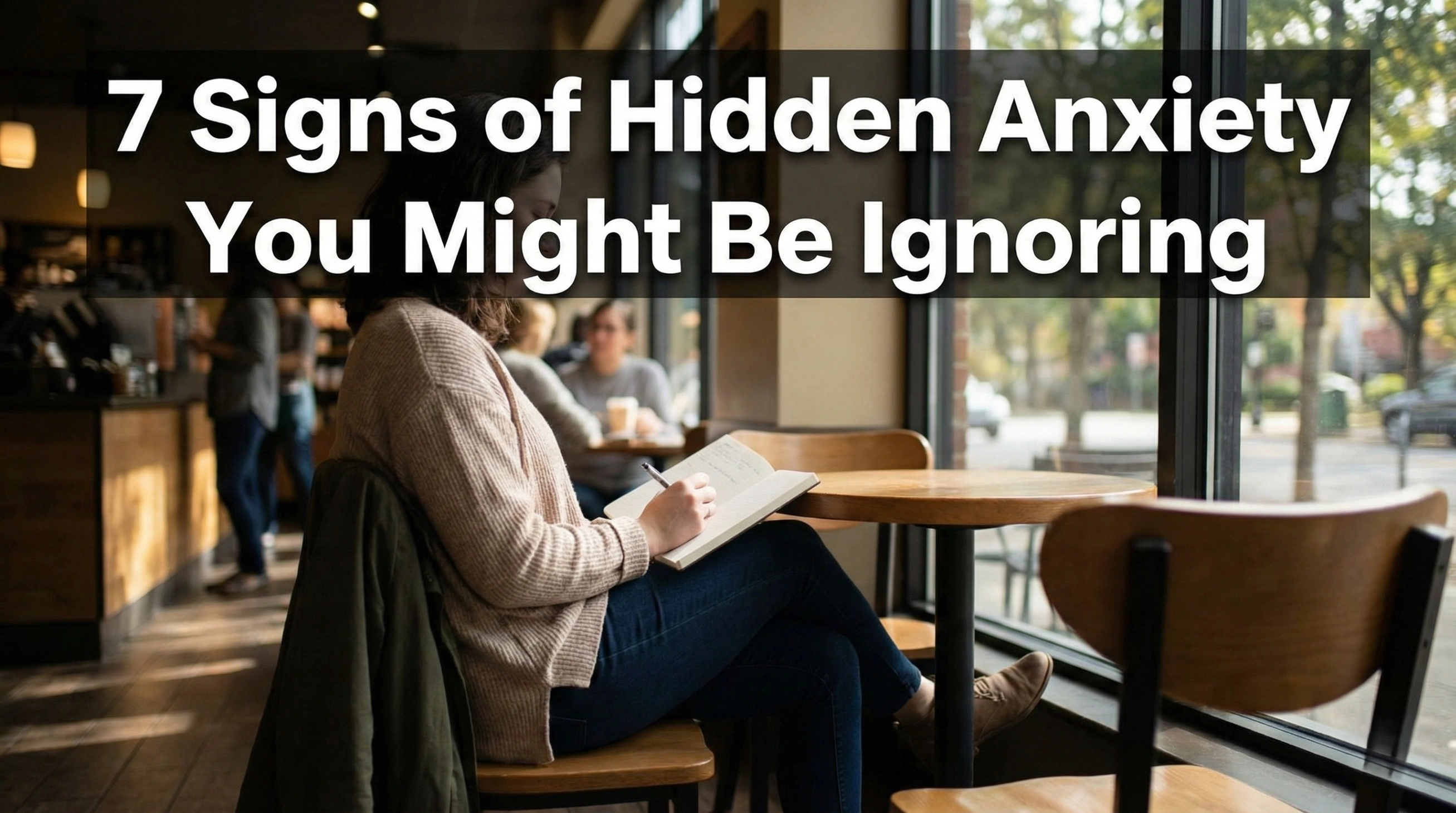
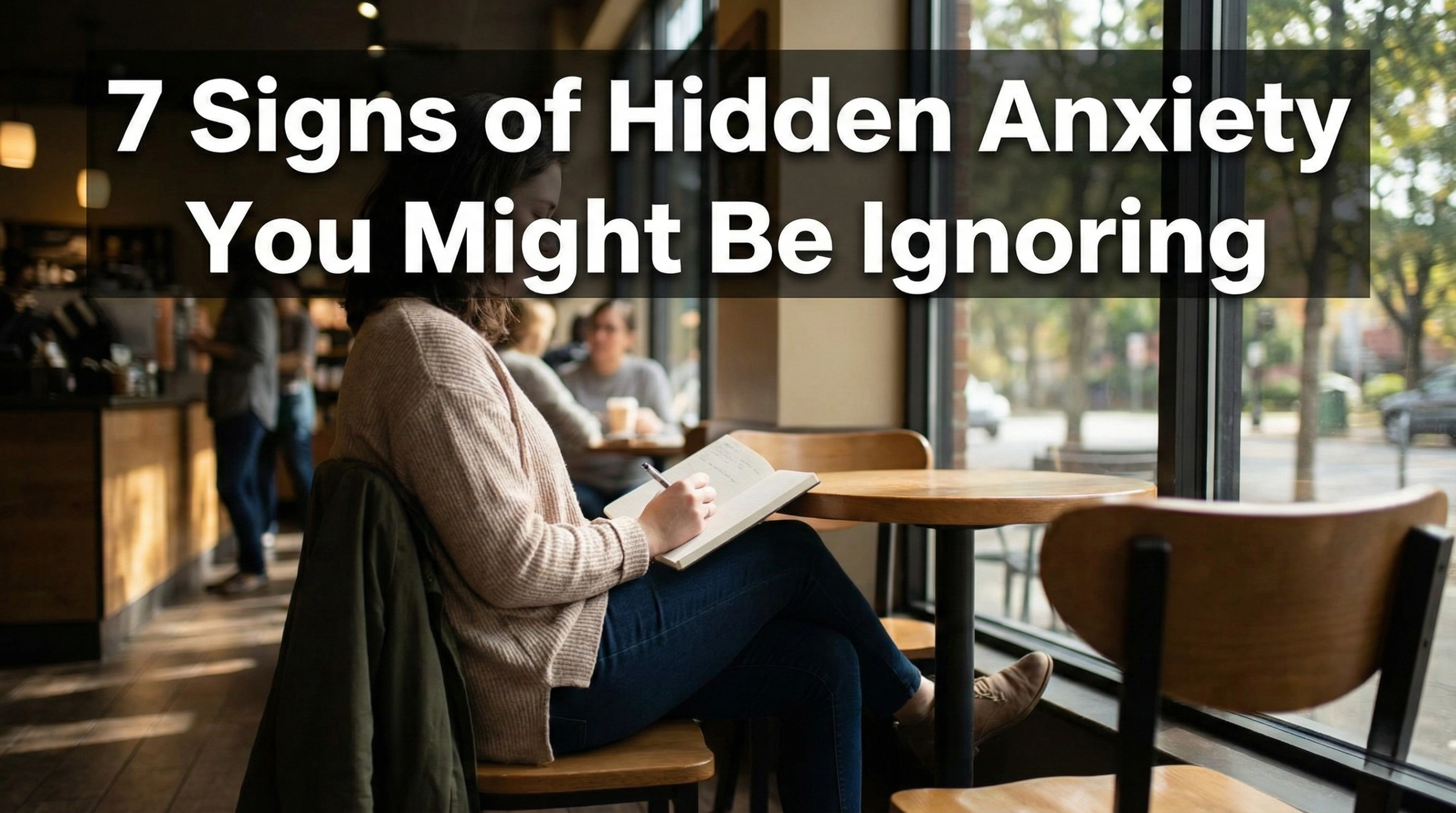
We often picture anxiety as a dramatic event: hyperventilating, shaking, or having a full-blown panic attack. But for millions of people, anxiety isn’t a loud explosion; it’s a quiet, constant hum in the background. If you look calm and collected on the outside but feel like a swan frantically paddling beneath the water, you might be missing the signs of hidden anxiety.
This subtle form of distress, often referred to as high-functioning anxiety, is tricky to spot because it often masquerades as ambition, organization, or just "being on top of things." You get to work on time. You meet your deadlines. You smile at dinner parties. But internally, the engine never stops running.
In this guide, we’ll peel back the layers of these silent anxiety symptoms to help you understand what’s really going on—and more importantly, how to find some peace.
What is High-Functioning Anxiety?
Before we dive into the specific signs, it's important to differentiate this from standard nervousness vs anxiety. Everyone gets nervous before a big presentation. That is a temporary physiological response.
High-functioning anxiety, however, is a persistent state. It isn't a clinical diagnosis in the DSM-5 (it usually falls under Generalized Anxiety Disorder or GAD), but it is a very real experience. It describes individuals who are often incredibly successful and productive but are driven by fear rather than desire. The "fuel" that keeps you going is nervous energy and a fear of failure, leading to profound emotional exhaustion.
If you’ve ever asked yourself, "Why am I so tired even though I just sat at my desk all day?" the answer might be the sheer amount of energy it takes to suppress that internal alarm bell.

The 7 Signs of Hidden Anxiety
Because these symptoms are internal, they are easy to dismiss as just "part of your personality." Here are seven indicators that your "personality quirk" might actually be hidden anxiety.
1. The "Buzz" (Internal Tremors and Restlessness)
Do you ever sit still but feel like your insides are vibrating? You aren't visibly shaking, but there is a sensation of electricity running through your limbs.
This is often described as internal tremors anxiety. It’s a sensory experience where the body is in a state of high alert, preparing for "fight or flight," even when you are just sitting on the couch watching Netflix.
This often manifests as feeling restless inside. You might find yourself constantly shifting your weight, tapping your foot, or feeling an urge to "do something" even when there is nothing to do. It’s not just boredom; it’s a physiological inability to settle down.
2. Unexplained Physical Symptoms
We tend to think of anxiety as purely mental, but the physical symptoms of anxiety are vast and often ignored. When your brain is constantly scanning for threats, your body releases cortisol and adrenaline. Over time, this chronic stress manifests physically.
Common physical signs include:
Muscle tension: Especially in the jaw, neck, and shoulders.
GI issues: An upset stomach or nausea before events.
Headaches: Frequent tension headaches or migraines.
Psychomotor agitation: This is the clinical term for that fidgety, can't-sit-still behavior, like skin picking, pacing, or nail-biting.
If you’ve visited the doctor for ailments that don’t seem to have a clear cause, it’s worth considering if unexplained anxiety is the culprit.
3. Perfectionism and Over-Planning
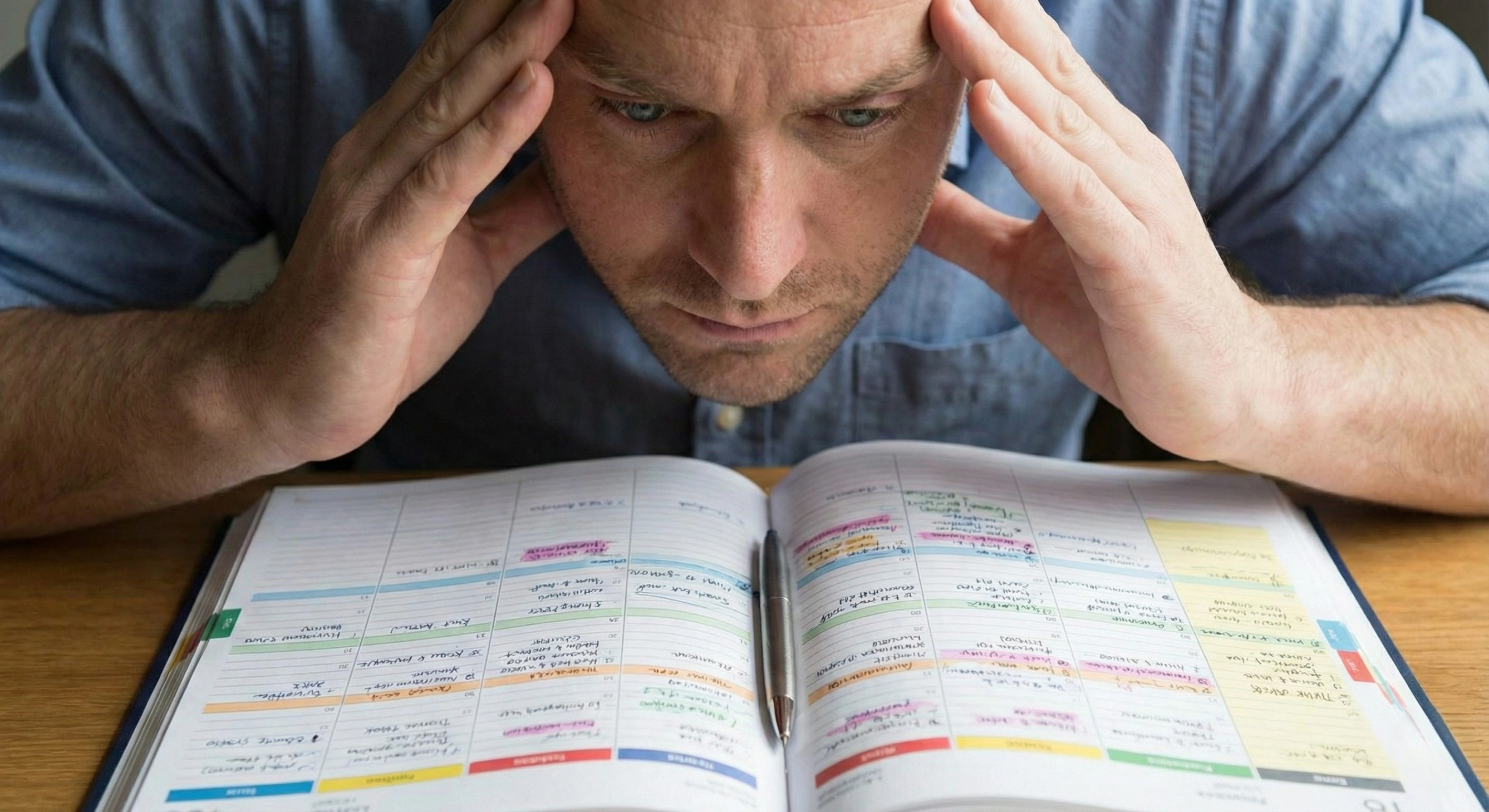
Are you the person who has a Plan A, a Plan B, and a Plan C for everything?
While being organized is a great skill, for those with hidden anxiety, planning is a defense mechanism. It’s a way to control the uncontrollable. You might feel that if you aren’t perfect, everything will fall apart.
This chronic worry disguises itself as being "detail-oriented." But ask yourself: Does making a list make me feel prepared, or does the thought of deviating from the list make me panic? If it’s the latter, that’s anxiety holding the pen.
4. The Inability to Relax (Relaxation-Induced Anxiety)
This is one of the hallmarks of high-functioning anxiety. You finally have a free Saturday, but instead of enjoying it, you feel guilty. You feel like you should be doing something productive.
When you try to rest, the inner nervousness spikes. This is because your brain has become addicted to the stress hormones associated with being busy. Silence and stillness feel dangerous because they leave room for intrusive thoughts to creep in. So, you clean the house, answer emails, or scroll endlessly—anything to avoid the quiet.
5. Irritability and "Feeling on Edge"
Do you snap at your partner for chewing too loudly? Do you feel a sudden flash of rage when the WiFi is slow?
When your nervous system is constantly dialed up to an 8 or 9 out of 10, you have very little emotional bandwidth left for small annoyances. This is often described as feeling on edge. You aren't necessarily angry; you are overstimulated.
This irritability is often a sign of emotional exhaustion. You are holding it together so tightly all day that the smallest trigger causes the dam to break.
6. The "Wired but Tired" Sleep Cycle
You are exhausted all day. You can barely keep your eyes open during meetings. But the second your head hits the pillow? Ping. Your eyes are wide open.
This is restlessness and anxiety teaming up to ruin your sleep. Your body is tired, but your mind is racing with a highlight reel of today’s mistakes and a preview of tomorrow’s worries. This lack of restorative sleep feeds back into the anxiety loop, making you more reactive the next day.
7. Catastrophizing (The "What If" Game)
Hidden anxiety is a master storyteller, but it only tells tragedies.
“What if I made a typo in that email and I get fired?”
“What if that pain in my leg is a serious illness?”
This is the core of Generalized Anxiety Disorder (GAD). Your brain jumps to the worst-case scenario immediately. To the outside world, you seem cautious. Inside, you are living through a disaster that hasn't happened yet.
"Why Do I Feel Anxious for No Reason?"
This is one of the most common searches on Google for a reason. It is frustrating to feel fear without a lion in the room.
If you find yourself asking, "Why do I feel anxious for no reason?" understand that "no reason" usually means "no immediate danger." However, there is always a cause. It might be:
Delayed Processing: You handled a crisis last week like a pro, and now that it’s over, your body is finally releasing the stress.
Biological Triggers: Caffeine, lack of sleep, or hormonal changes can mimic anxiety triggers.
Subconscious Triggers: A smell, a song, or a tone of voice might remind your brain of a past stressful event, triggering silent anxiety symptoms without you realizing it.
How to Stop Feeling On Edge: Coping Strategies
Recognizing the signs is the first step. The second is learning how to stop feeling on edge. You don't have to quit your job or change your entire life to find relief, but you do need to introduce new tools to your toolkit.
1. Name the Feeling
When you feel that inner nervousness rising, acknowledge it. Say to yourself, "I am feeling anxious right now, and that is okay." Trying to suppress the feeling usually makes the internal tremors worse. Acceptance lowers the resistance.
2. Burn off the Adrenaline
If you are experiencing psychomotor agitation or feel like you want to jump out of your skin, meditation might be too difficult in that moment. You have excess energy that needs an outlet.
Go for a brisk walk.
Do ten jumping jacks.
Shake your hands and arms vigorously.
Use that nervous energy physically so it doesn't get stuck in your mind.
3. Schedule "Worry Time"
This sounds counterintuitive, but it works for chronic worry. If your brain wants to obsess over the future, give it permission but only for 15 minutes at 4:00 PM. If a worry pops up at 10:00 AM, write it down and tell yourself, "I will worry about this at 4:00 PM." often, by the time 4:00 PM rolls around, the worry no longer feels urgent.
4. Limit Sensory Input
If you are feeling restless inside, you might be overstimulated. Turn off the podcast. Dim the lights. Put your phone in another room. Give your nervous system a break from the constant stream of information.
5. Seek Professional Support
There is a difference between stress and an anxiety disorder. If your anxiety symptoms are interfering with your daily life, relationships, or ability to sleep, it is time to talk to a professional. Therapies like CBT (Cognitive Behavioral Therapy) are incredibly effective for high-functioning anxiety.
Living with hidden anxiety is exhausting because you are doing two jobs: managing your life and managing your mask.
If you recognized yourself in these signs of hidden anxiety, know that you aren't broken. You are likely resilient, capable, and empathetic. But you also deserve to feel as calm on the inside as you look on the outside.
Start by acknowledging the subtle restlessness. Listen to the physical symptoms of anxiety your body is showing you. You don't have to carry the weight of the world without trembling. It’s okay to let the guard down.