
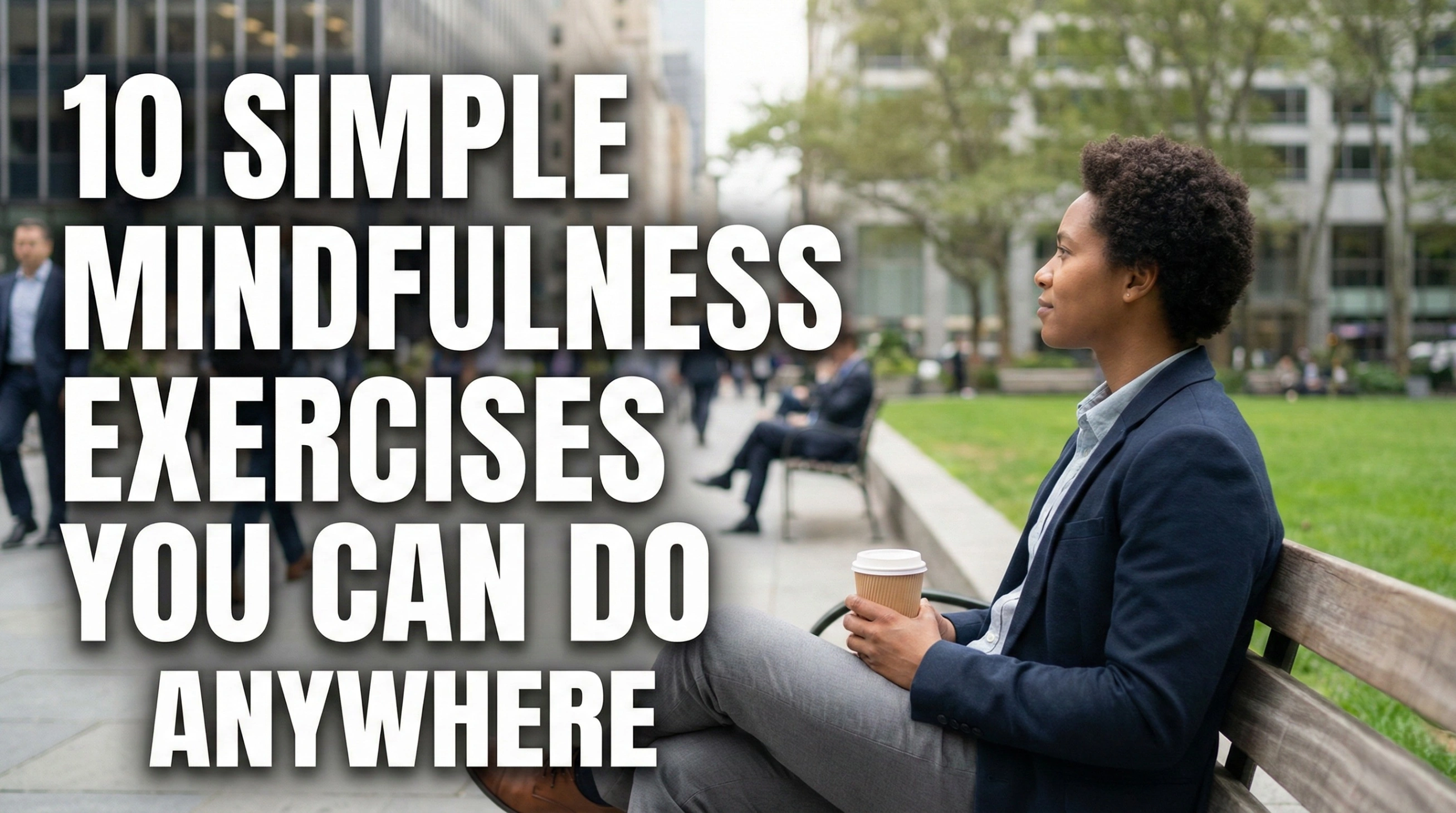
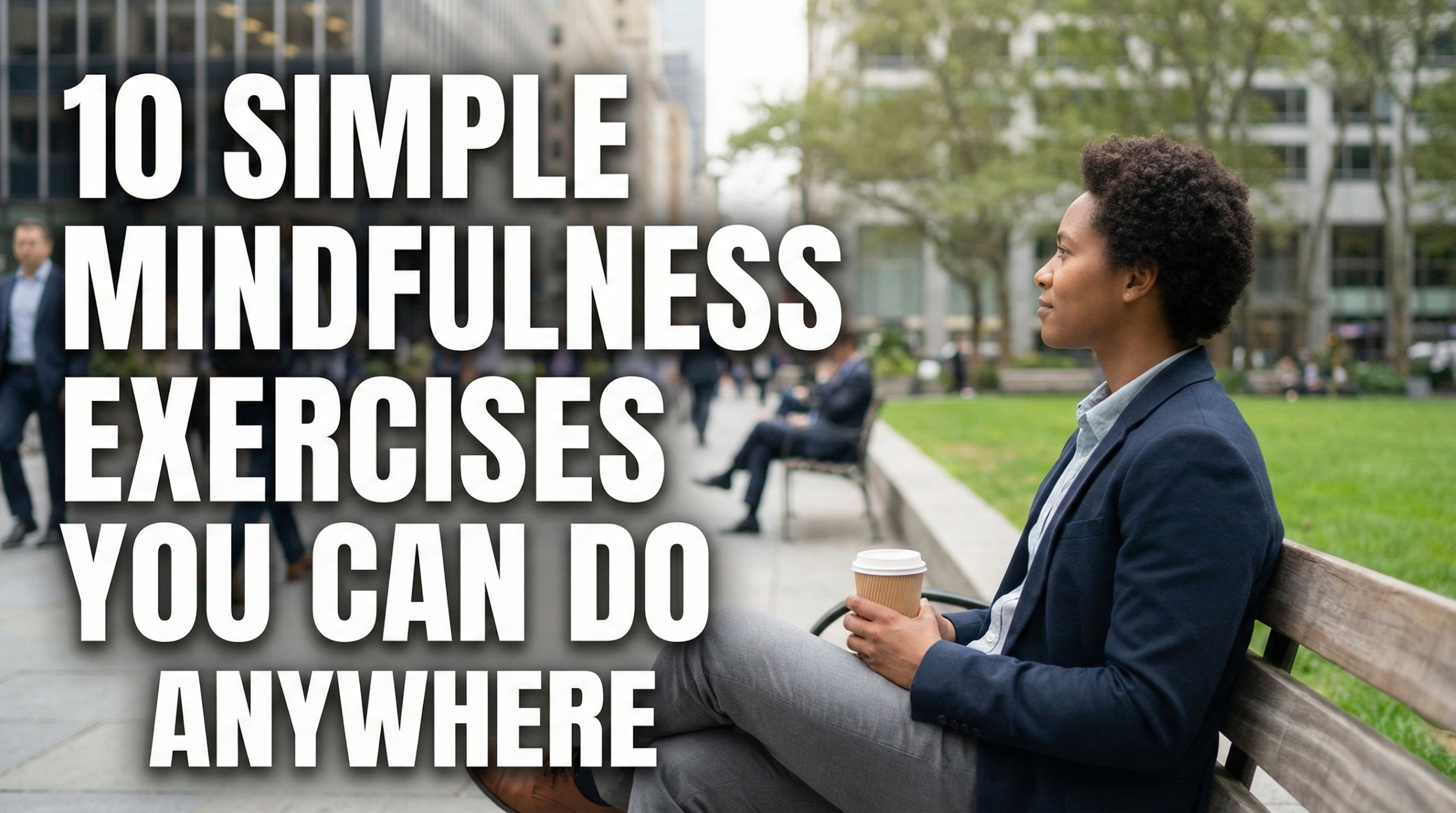
Let’s be honest: life is loud. Between the constant ping of notifications, work deadlines, and the endless mental to-do lists, finding a moment of silence feels almost impossible. You might think you need a silent retreat in the mountains or a dedicated yoga studio to find peace, but that’s a myth.
The truth is, you can practice effective mindfulness exercises right where you are whether you’re stuck in traffic, waiting in line for coffee, or sitting at your office desk.
If you are looking for mindfulness for beginners, you have come to the right place. You don’t need 30 minutes of silence or fancy equipment. You just need a few moments and a little bit of intention. In this guide, we are going to explore ten high-impact, simple meditation techniques that fit seamlessly into a busy schedule. These are designed to lower stress, improve focus, and help you reclaim your day.
Let’s dive into how you can bring a daily mindfulness routine into the real world.
Why "Micro-Meditations" Work
Before we get to the list, it is helpful to understand why shorter sessions are so effective. We often associate meditation with long, grueling sessions of sitting still. But for most of us, that is daunting.
Micro-meditations are brief bursts of focused awareness. They work because they interrupt the stress cycle. When you are spiraling into worry, a two-minute grounding technique can reset your nervous system. It pulls you out of "fight or flight" mode and back into the present moment.
Consistent, short bursts of mindfulness are often more sustainable than trying to force an hour-long session once a week. Think of these as "mental snacks" rather than a heavy meal. They keep you sustained throughout the day.
1. The 5-4-3-2-1 Grounding Technique
Best for: Sudden anxiety and panic
If you feel your mind racing or panic setting in, this is the gold standard of grounding techniques. It forces your brain to switch from "worry mode" to "sensing mode." It is incredibly discreet; you can do it in a meeting or on the bus without anyone knowing.
How to do it: Take a deep breath, look around, and silently acknowledge:
5 things you can see: The light on the wall, a pen, a cloud, your shoe, a coffee cup.
4 things you can feel: The fabric of your shirt, the cool air, the chair against your back, your feet on the floor.
3 things you can hear: Traffic outside, the hum of the AC, typing sounds.
2 things you can smell: Coffee, rain, or just fresh air.
1 thing you can taste: The lingering taste of toothpaste or a sip of water.
This is a powerful tool in meditation for anxiety because it physically anchors you to the present moment.
2. Box Breathing (Square Breathing)
Best for: Regulating the nervous system before a big event
Used by Navy SEALs and high-performance athletes, box breathing is one of the most effective deep breathing exercises available. It regulates your autonomic nervous system, lowering cortisol levels almost instantly.
How to do it: Visualize a box. You are going to travel up, over, down, and back across the sides of the box with your breath.
Inhale deeply through your nose for a count of 4.
Hold that breath at the top for a count of 4.
Exhale slowly through your mouth for a count of 4.
Hold the empty lungs for a count of 4.
Repeat this cycle four times. It’s perfect for mindfulness at work right before a presentation or a difficult conversation.
3. The "Desktop" Body Scan
Best for: Releasing physical tension at work
We hold a tremendous amount of stress in our bodies; tight jaws, raised shoulders, and clenched stomachs. A body scan meditation is usually done lying down, but you can adapt it for the office. This is a vital desk meditation technique.
How to do it:
Sit back in your chair and plant both feet flat on the floor.
Close your eyes (or soften your gaze at your screen).
Start at the top of your head. Is your forehead furrowed? Relax it.
Move to your jaw. Unclench your teeth. Drop your tongue from the roof of your mouth.
Lower your shoulders. Let them drop away from your ears.
Scan down to your hands. Are they clenched? Open them.
Finally, feel your feet on the ground.
Taking just 5 minute mindfulness breaks to scan your body can prevent the physical pain associated with workplace stress.

4. Mindful Eating
Best for: Lunch breaks and appreciating small pleasures
How often do you eat lunch while scrolling through emails or watching a video? Mindful eating turns a daily necessity into a meditation practice. It improves digestion and helps you feel more satisfied with less food.
How to do it:
Put your phone away.
Look at your food. Notice the colors and textures.
Take a small bite. Put your fork down.
Chew slowly. Notice the temperature, the texture, and the changing flavors.
Don't pick up your fork again until you have swallowed.
This transforms a rushed lunch into a restorative break.
5. Walking Meditation
Best for: Commuting or getting fresh air
If you can’t sit still, walking meditation is the answer. It bridges the gap between physical activity and mental stillness. You don’t need to walk slowly or look strange; you can do this at a normal pace walking to your car or the bus stop.
How to do it:
As you walk, bring your attention to the soles of your feet.
Feel the sensation of the heel striking the ground, then the roll to the toe.
Notice the rhythm of your stride.
If your mind wanders to your destination, gently bring it back to the sensation of your feet hitting the pavement.
This is one of the best mindfulness activities for people who feel restless when trying to meditate.

6. The "Stop" Method
Best for: Interrupting reactive behavior
This is a classic mindfulness exercise for adults who deal with high-stress environments. It prevents you from reacting impulsively to a rude email or a frustrating situation.
How to do it:
S: Stop what you are doing. Put the pen down, stop typing, stop moving.
T: Take a breath. A deep, conscious inhale and exhale.
O: Observe. What are you feeling? Anger? Fatigue? Hunger? Observe without judging it.
P: Proceed. Move forward with intention rather than reaction.
7. Listening Observation
Best for: Noisy environments
Usually, noise is a distraction. In this exercise, noise is the object of focus. This is a great way to practice mindfulness meditation when you are in a crowded place like a subway or a busy park.
How to do it:
Close your eyes or pick a focal point.
Imagine your ears are microphones.
Listen to the sounds furthest away from you (a siren, a plane).
Then, listen to sounds closer to you (footsteps, voices).
Finally, listen to the sounds inside your own body (your breath, your heartbeat).
Don’t label the sounds (e.g., "that's a car"). Just hear the raw sound waves, the pitch, and the volume.
8. Gratitude Anchoring
Best for: Shifting a negative mindset
Gratitude is often treated as a journaling exercise, but it works as a real-time mindfulness tool, too. This helps rewire the brain to scan for positives rather than threats.
How to do it:
Identify a cue that happens often in your day (e.g., opening a door, starting your car, or hearing a notification).
Every time that cue happens, think of one thing you are grateful for.
It can be tiny: "I'm grateful for this coffee," or "I'm grateful my legs work."
Anchoring gratitude to a physical action makes it a daily mindfulness routine that sticks without effort.
9. The "Three Conscious Breaths"
Best for: The busiest days
Sometimes you don’t even have five minutes. Do you have 30 seconds? Then you can do this. This is the epitome of quick mindfulness exercises.
How to do it:
Breath 1: Focus entirely on the physical sensation of the air entering your nose and leaving your mouth.
Breath 2: Relax your body on the exhale. Drop the shoulders.
Breath 3: Ask yourself, "What is the most important thing for me to do right now?"
This works exceptionally well as a transition ritual; for example, doing it in the car before you walk into your house after work.
10. Task Immersion (Single-Tasking)
Best for: Chores and mundane tasks
We often try to rush through chores like washing dishes or folding laundry. Mindfulness activities don't always require sitting; they can be about doing a task with total immersion.
How to do it:
Choose a chore (e.g., washing dishes).
Feel the warm water on your hands. Smell the soap. Watch the bubbles.
Feel the weight of the plate.
If your mind wanders to your to-do list, bring it back to the scrubbing motion.
This turns a boring chore into a brain break.
Tips for Building a Consistency
Knowing these simple meditation techniques is step one. Step two is actually remembering to do them.
Many people fail at mindfulness because they set the bar too high. They aim for 20 minutes a day, miss three days, feel guilty, and quit. The secret is to lower the bar.
Trigger Stacking: Attach your mindfulness practice to a habit you already have. Do your box breathing while your coffee brews. Do your body scan the moment your head hits the pillow at night.
Start Small: A one-minute practice you actually do is infinitely better than a 20-minute practice you only think about doing.
Be Kind to Yourself: Your mind will wander. That is what minds do. Mindfulness isn't about stopping thoughts; it's about noticing that you've wandered and gently coming back.
Mindfulness is not about escaping your life; it is about experiencing it more fully. It allows you to step off the hamster wheel of stress and find a pocket of calm in the chaos.
Whether you choose mindfulness at work to stay cool under pressure, or mindful eating to enjoy your meals, the goal is the same: presence.
Pick one of these exercises today. Just one. Try it the next time you feel overwhelmed. You might be surprised at how much peace you can find in just sixty seconds.